Commercial Roofing in Deming, WA
Commercial roofing in Deming, WA on the Nooksack River: small government office roofs, decision memos, metal retrofit options, gutters and wet-season planning.
Commercial Roofing in Deming, WA
Commercial roofing in Deming, WA on the Nooksack River: small government office roofs, decision memos, metal retrofit options, gutters and wet-season planning.
Service Areas
Deming in Bellingham
A roof decision in a small government office starts with one page. Deming, WA sits on the Nooksack River about 16 miles from Bellingham, hosts the Nooksack Tribe government offices within a 2,500-acre reservation and had 339 residents in 2020. A place that small has a short list of people who approve spending on a building. The roof bid should be short too, with a price a council or a director can read in one sitting.
We write a decision memo first and the long scope second. The memo says what the roof is doing, what each option costs, what happens if the work waits and which year the money should land in. The scope backs it up with unit prices, allowances and a schedule.
Overview
Deming
The decision memo
One page. Four parts. Condition. Options. Cost. Timing.
Condition states what we found on the roof in plain terms: seams, flashing, drains, moisture. A photo or two backs each point. Options lists repair, recover and replace, each with a price and a note on what it does not fix. Cost names the drivers: area, access, layers, details, phasing. Timing says when the work should happen, what the wet season does to the window and when approval must arrive to hold it.
A director can put that page in a packet and carry it to a meeting. A capital plan with the same four parts spreads several roofs across years, so one budget season does not carry them all.
The memo also carries a risk line. What leaks first if nothing changes? What does it damage? A roof that drips on a records room has a different risk from one that drips on a storage closet. The director sees the consequence next to the cost and can rank roofs by it.
Government offices stay open
Tribal and public offices keep their hours. Clients arrive. Staff answer phones. A tear-off over a front counter is not an option on a Tuesday.
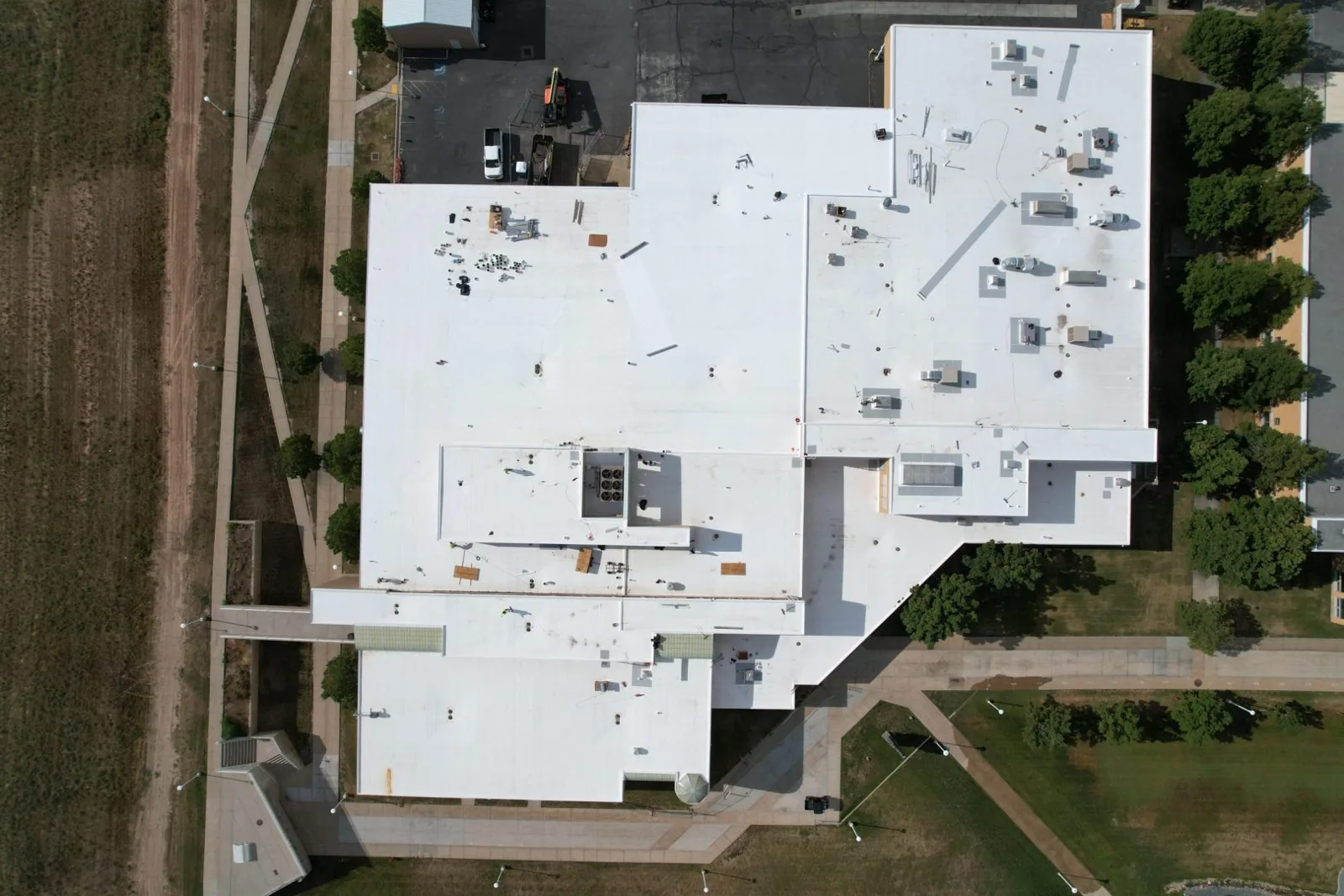
We phase the roof by section. Each section opens in the morning and is closed again by afternoon. Loud work moves to hours when the office is quiet, and the crane stays away from the front door and the accessible parking. We map the walking route around the work and put barriers on the plan. For longer projects, the same method runs through government building roofing, where the open counter shapes the whole schedule.
Records matter on a government job. Daily photos. A log of who was on the roof and when. A closeout binder. The owner keeps one set and we keep one set.
Deliveries follow the same care. A truck that blocks the client lot costs the office a morning. We schedule material for early hours, stage it behind the building and carry only what the crew installs that day. Disposal containers sit where they cut off neither parking nor the entrance.
River valley damp
A river valley can stay damp. The nearest reference is Bellingham, where a year brings about 34.8 inches of rain and roughly 1,866 hours of sun. Moss and algae take hold on shaded north slopes and under trees, holding water against shingles and edges and clogging gutters.
A gentle wash and an approved treatment remove the moss, and the laps get rechecked. Gutters fill with needles and debris. A clogged gutter overflows at the eave and soaks the fascia. A yearly visit clears them and flags any rot. The visit costs little and gives the owner a dated record.
Interior signs of damp deserve a look from inside. Staining on ceiling tile, a musty smell near an exterior wall and peeling paint at the top of a wall each point to moisture. We match each sign to a spot on the roof plan, so the repair goes where the water actually enters, not where the stain happens to show.
Metal over an aging roof
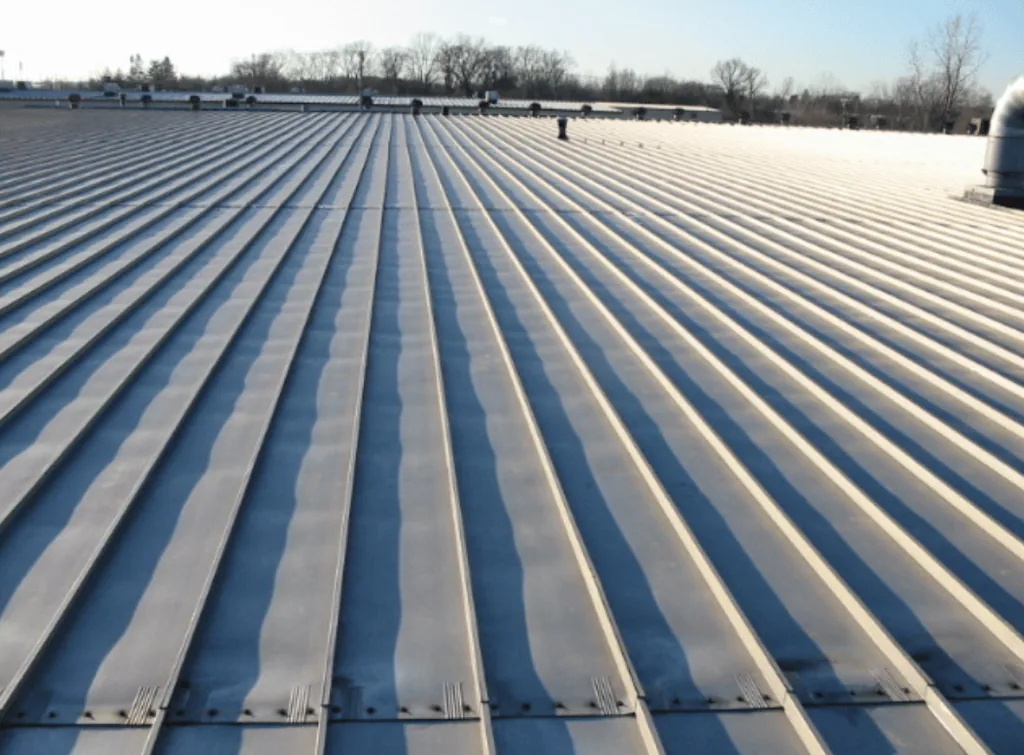
Small office roofs often get a second life from metal. A metal roof retrofit goes over the existing roof on purlins or sleepers. It avoids a tear-off, keeps the building enclosed during the work and sheds water and snow. The deck and the structure must pass first, so we probe and measure ahead of pricing and carry a structure allowance on the retrofit line.
A standing seam panel hides its fasteners and lasts. Panels are cut to length, so the order carries a lead time. The calendar shows the order date next to the work date, since a late order pushes a job into the wet season. Where the existing roof is low-slope, a welded single-ply or a restoration coating may fit better. The memo lists both.
Cost drivers for a retrofit are specific. Panel gauge and finish set the material. Roof area and pitch set the labor and the fall protection. Trim, flashings and penetrations add detail time. The old roof stays, so disposal drops to almost nothing, and the building stays dry through the job. That is why a small office often prefers it.
Gutters and where the water goes
Water leaves a roof through gutters and downspouts. Where it lands matters. A downspout that spills against a wall or onto a walkway makes ice in winter and rot in summer. Snow in Bellingham totals roughly 10 inches a year, almost all in December through February, and a cold snap can freeze a slow drain.
We size gutters and edge metal for the whole slope that drains to each outlet. We route downspouts away from doors and foundations. Hangers get closer spacing under snow load. The bid names the size and the spacing, so a director can see what the fix is and why it costs what it does.
Wind and the dry window
Bellingham took 67 mph gusts in March 2016, and a bomb cyclone in November 2024 pushed easterly winds across the region, with at least 16 Sudden Valley homes damaged and 22 storm incidents logged by the South Whatcom Fire Authority. Edge metal takes the first hit. Perimeter fastening goes on every bid.
July is the driest month and November the wettest. We plan terminations and metal for summer and keep standby crew and tarps for any open section. A tarp is a patch, not a plan. For work up the valley, Maple Falls sits in the Cascade foothills where snow is heavier, and Everson lies on the same river.
Punch and records
At closeout we walk the roof with the facilities lead. Flashing is tight. Gutters flow. Sealant is tooled. Photos go in the binder with the warranty papers and the decision memo. A yearly visit keeps it current. Send the roof plan, the approval calendar and your target dry-in window. We will price every item before the bid closes, and the owner decides what stays in. A public agency that tracks its roofs this way knows which one needs money next year.
Commercial Roofing Questions
What goes in a roof decision memo?
Condition, options, cost and timing on one page, with photos behind the condition notes.
Can an office stay open during a reroof?
Yes. Sections open and close within the day, loud work moves to quiet hours and barriers protect the walking route.
Why probe the structure before a metal retrofit?
The deck and purlins must carry a second roof. A probe and a measure confirm it before the price.
How often should gutters be cleared?
At least once a year, plus after a storm that drops debris on the roof.
When should approval arrive?
Early enough to order metal and hold a summer slot. The memo names the month.
Send the roof plan and the approval calendar
Send the roof plan, the approval calendar and your target dry-in window. We will price every termination, option and metal line before the bid closes, so the owner decides what stays in.