Data Center Roofing in Bellingham, WA
Roof replacement, repair and leak monitoring for data centers and server rooms in Bellingham, WA, planned around uptime, hot-work limits and rooftop cooling.
Data Center Roofing in Bellingham, WA
Roof replacement, repair and leak monitoring for data centers and server rooms in Bellingham, WA, planned around uptime, hot-work limits and rooftop cooling.
Property Types We Roof
Data Center Roofing in Bellingham
A data hall does not tolerate a drip tray. One failed seam over a row of racks is not a maintenance ticket. It is an outage. A reroof in Bellingham, WA starts with the question of what sits under each section of deck. The answer sets the sequence, the protection and the bid.
Uptime rules the schedule. Roofing has to fit around it. Send us the drawings, the equipment layout and the maintenance windows. We will price every curb, every conduit and every termination before the bid closes.
Overview
Data Center Roofing
Uptime comes first
The owner and the operator set the rules. Which halls can have a crew above them? Which cannot? Can any deck be opened at all? Many operators require phasing by hall, with the interior protected and monitored the whole time.
We map the roof against the floor plan. Each zone gets a risk rating. High-risk zones get a tighter plan: smaller open areas, a standby tarp crew, and a leak sensor under the deck where the plant allows. Low-risk zones move faster. The bid shows each zone and its cost so the operator can see where the money goes.
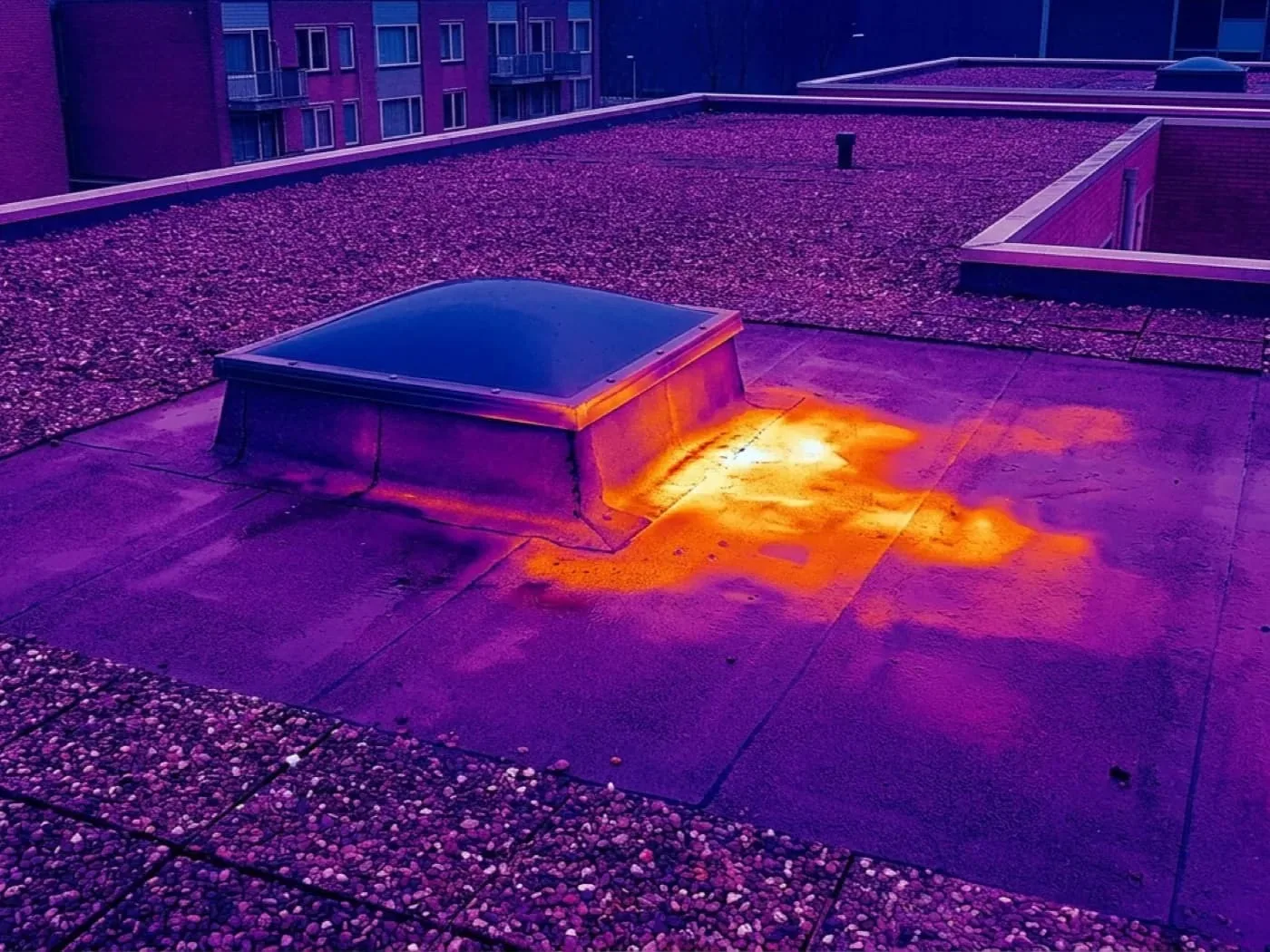
A recover is often attractive in a data center. It leaves the old deck and the old roof in place. No tear-off dust, no open deck. We check moisture first with an infrared moisture survey. Only a dry assembly qualifies.
Communication is part of the scope. We send a daily plan before work starts and a close-out note when the section is sealed. The operator's facilities lead can stop work at any hour. That right goes in writing. We would rather lose an hour than a rack.
Chillers, curbs and conduit
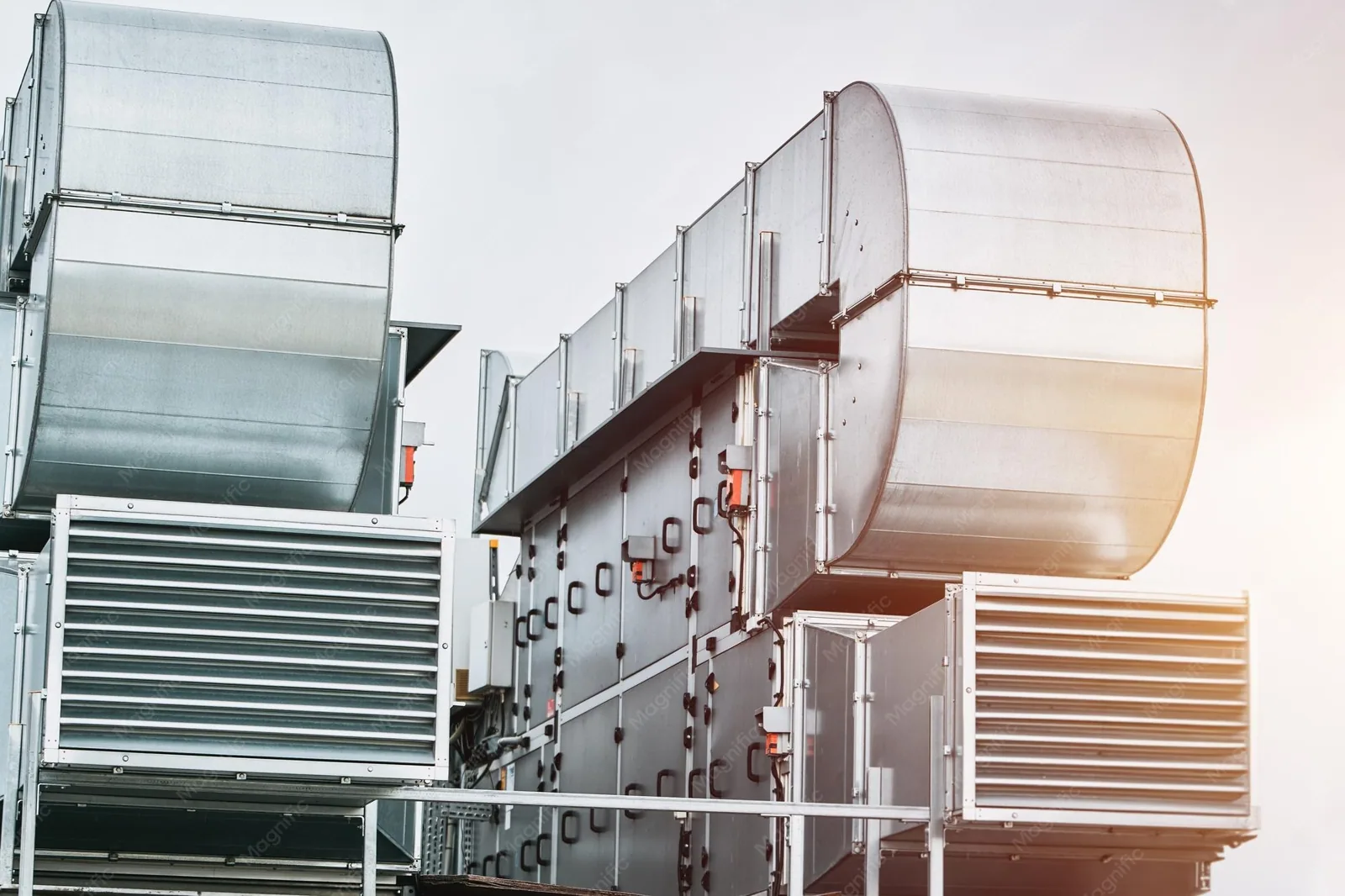
Data center roofs carry heavy cooling equipment. Chillers, dry coolers and air handlers sit on steel and curbs. Conduit and refrigerant lines cross the field. Each support is a point load and a flashing detail.
We count and map every support. We check curb height, base flashing and sealant age. Pipe supports that sit directly on the membrane get walk pads or pitch pans, depending on the system. Where equipment will be replaced soon, we coordinate so the curb is rebuilt once, not twice. The curb and support list becomes its own bid line.
Vibration matters. A chiller that shakes loosens its fasteners over time. We specify isolation where needed and log the check dates.
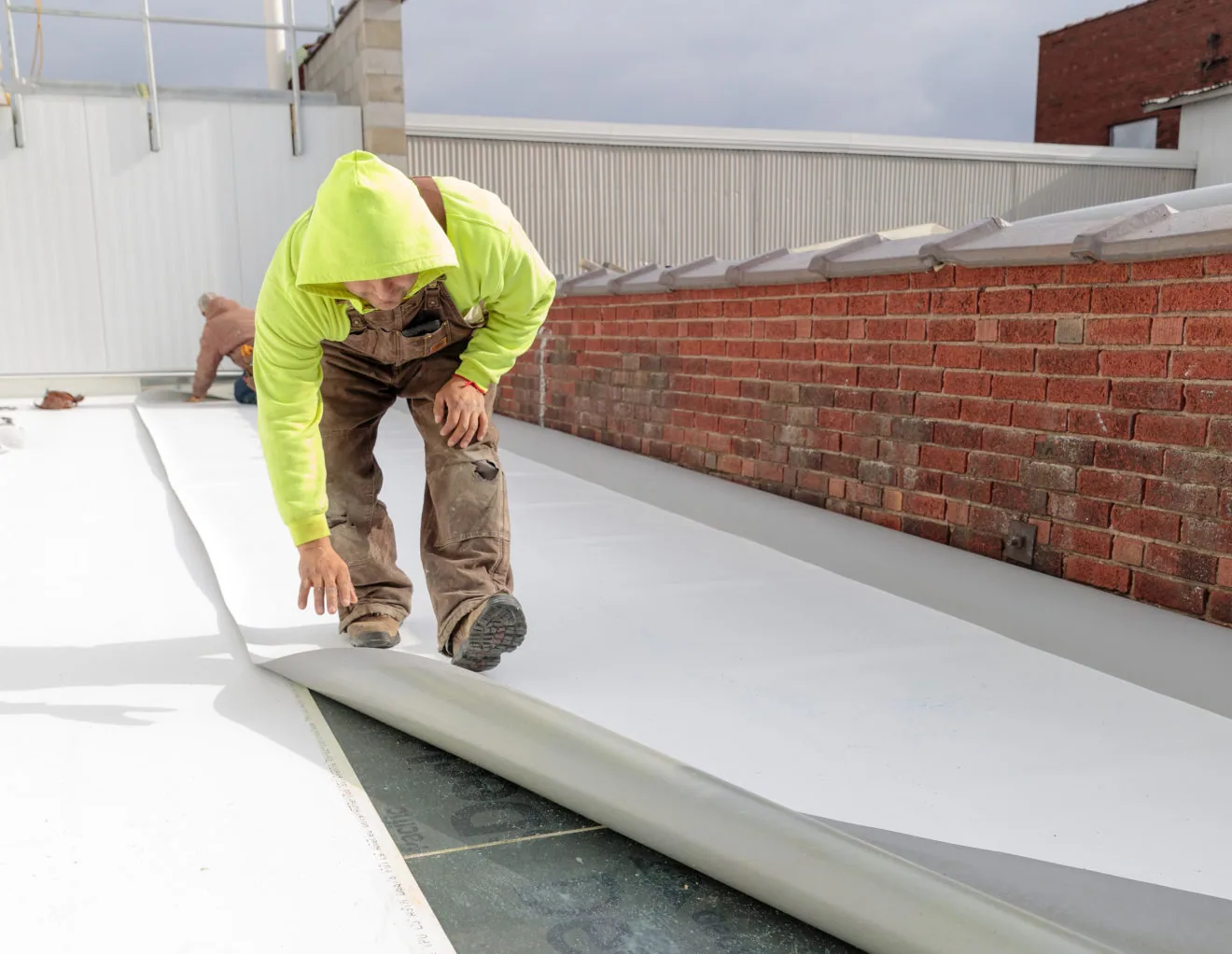
Membrane choice follows the equipment. Heavy foot traffic from service techs wears a thin sheet fast. A thicker sheet or a protective layer on service paths lasts longer. A PVC sheet is one option where fluids or heat from equipment reach the roof. We pick the sheet after we see the equipment list.
Hot work, fire watch and the price
Torches over server halls are a hard no. Most operators ban open flame on the roof. Heat-welded and cold-applied systems answer that rule. Hot-air welding uses no open flame, and adhered systems use no heat at all.
Washington's 2021 International Fire Code took effect statewide on March 15, 2024. The owner and the fire marshal should agree on hot work rules in writing. We confirm permit, fire watch and extinguisher placement before day one. Fire watch time is a bid line. It steals daylight from the crew, so the dry-in plan carries it.
Four items move a data center roof price. They are phasing, interior protection, equipment support work and the energy code. Energy code changes took effect on March 15, 2024, and they set requirements for new roof assemblies over server halls. Insulation thickness follows it, and thicker board lifts every flashing.
Phasing and protection are the two lines owners notice. More phases cost more in setup. Fewer phases cost more in risk. We price the plans side by side. The owner picks the point on that line that fits the uptime promise to the tenants.
Wet season risk
Rain adds up to about 34.8 inches a year in Bellingham, and any of it that reaches a server hall is a bad day. November brings the most rain and July the least. Sunshine totals about 1,866 hours a year, so a damp deck is slow to dry and slow to close. A lost morning can become a lost dry-in day.
Data center work cannot afford a wet gamble. We open only what we can close. Material stays under cover. Temporary protection goes on every open section at night. If the forecast turns, the crew stops and seals. The bid shows how much float the schedule holds.
Summer is the cheaper time for this work. Terminations and metal close in good light. The same scope in November costs more in labor and delay.
Spring is the second good window. The ground is thawed, the rain is easing and the cooling load is low. Chillers can sit idle for a day while the curb is rebuilt. Late summer works too, but cooling demand is high then and operators resist shutting units.
Wind and edge security
Wind reached 67 mph in March 2016 and damaged a Bellingham storefront. The bomb cyclone of November 2024 sent easterly wind through Sudden Valley, and rooftop screens felt the same pressure. Equipment on a roof catches wind too. Edge fastening is part of every data hall bid. The scope states the metal gauge and the fastener spacing for each edge, and every seam is probed and every cap pull-tested before handover. A loose cap or flashing can drop debris into air intakes, so edge security is also an operations issue.
Rooftop screens deserve a second look. A louver panel that loosens in a gust can strike a membrane or a fan. We inspect screen posts and base plates at each visit. Anything loose gets tightened and logged. The check takes minutes and removes a risk that is easy to miss from the ground.
Closeout and monitoring
The punch walk is detailed. Every seam is probed. Every curb is checked. Drains are tested with water. We log every penetration and every sensor location. The operator receives a roof map and a photo set.
Many owners add leak detection after a reroof. A grid of sensors under the membrane or in the insulation gives early warning. We install it with the roof, not after. The cost is small, and an alert can save a hall. An office building with a server room, or a warehouse that houses racks, follows the same logic, whether it stands near the Airport Industrial Area or in Cordata.
Commercial Roofing Questions
Can a data center roof be replaced while the halls are live?
Yes, with phasing and protection. We map the roof to the floor plan, set risk zones and add interior monitoring in the high-risk areas.
Why do operators prefer a recover?
It avoids tear-off and an open deck. A dry existing assembly can take a new membrane on top, and the interior sees less disturbance.
Does hot work ever apply on a server building?
Rarely. Most operators ban open flame. Heat welding and cold-applied systems fit those rules, and we confirm permits in writing.
What is leak detection on a roof?
A sensor grid in or under the membrane that alarms when moisture appears. It gives hours or days of warning instead of waiting for a drip.
Who is on site during a phase?
A lead who reports to the operator and the general contractor, plus a standby crew for tarping. Roles and phone numbers go on the daily plan.
What does a spring check on a data center roof include?
A seam probe, curb and screen fastener check, drain test and a photo set. Sensor readings are reviewed, and any change from last year goes in the log.
Send the drawings and the maintenance windows
Send the roof plan, the equipment layout and your allowed work windows. We will price every curb, conduit and termination before the bid closes.