Roofing for Real Estate Investors and REITs in Bellingham, WA
Roof diligence and capital planning for investors and REITs buying Bellingham, WA commercial property: condition grades, priced repair lines and exit records.
Roofing for Real Estate Investors and REITs in Bellingham, WA
Roof diligence and capital planning for investors and REITs buying Bellingham, WA commercial property: condition grades, priced repair lines and exit records.
Industries We Serve
Roofing for Real Estate Investors and REITs in Bellingham
Diligence windows are short. The roof report has to fit inside one. An investor looking at a Bellingham, WA building gets a broker package, a seller's word and a few weeks. The roof sits under all three. It can be a large deferred item, and it is the one nobody can see from the lot. The city gets about 34.8 inches of rain a year with very little sun. A roof that looks fine in August can be hiding a saturated deck.
We write the roof report for a deal. A condition grade. A remaining-life estimate. A repair list with a price on each line. A replacement range with a year attached. The buyer can use it to ask for a credit, adjust a reserve or walk.
Timing is the other discipline. A report that arrives after the contingency expires is a diary. We commit to a delivery date at kickoff and tell the buyer if weather moves it.
Overview
Roofing for Real Estate Investors and REITs
Diligence inside the window
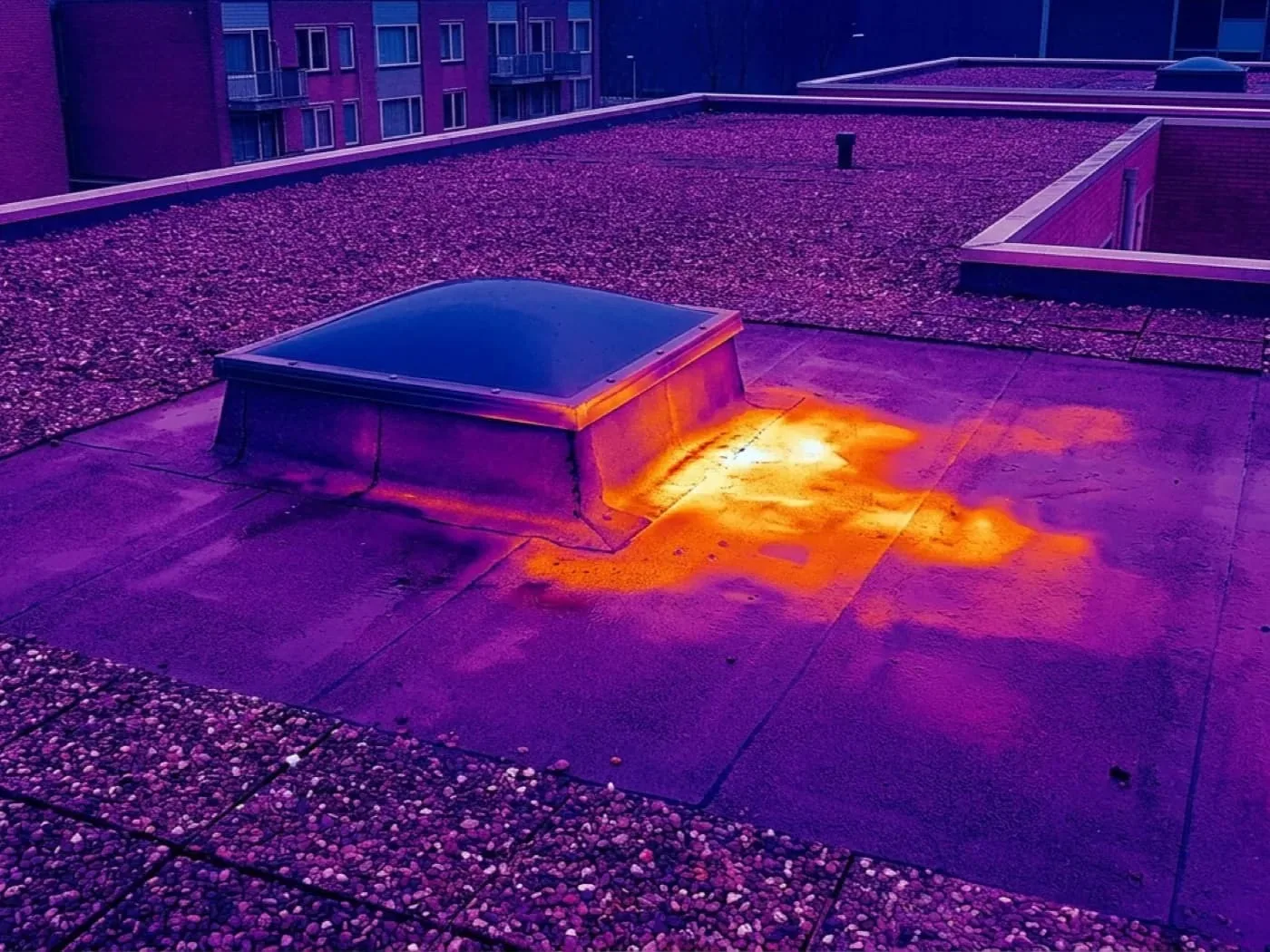
The field work is short. A hands-on walk. Photographs tied to a roof plan. Drain count and heights. Penetration count. Moss lines. Past repairs. Where moisture is suspected, an infrared moisture survey at dusk, plus core cuts to confirm.
Wet weather slows the scan. The sun-poor climate, about 1,866 hours a year, leaves decks damp, and a scan needs a clear evening. We tell the buyer on day one whether the window allows it. If not, we use cores and surface meters and say which method gave each number. The written report follows the walk by a few days. It follows the structure of our due diligence roof surveys, which are built for transaction pace.
Records get requested at the start. Past invoices. Warranty letters. Leak logs. Permits. Whatever the seller has, we read. Gaps get listed as gaps. A buyer who knows what is missing can price the risk.
What the market offers
Bellingham's building stock gives an investor a spread. Health care is a major roof user, and PeaceHealth St. Joseph Medical Center employs about 3,116 people, the most of any employer in the city. Space that health systems lease carries dense rooftop equipment. Institutional space is large: Western Washington University draws more than 16,000 students, with Whatcom Community College and Bellingham Technical College adding campuses. Retail clusters around Bellis Fair. The Port of Bellingham runs industrial parks. Near downtown Bellingham, the old Georgia-Pacific mill waterfront is becoming a mixed-use neighborhood, with 19 acres under Harcourt Developments.
Each type carries a different roof profile. Medical use means dense rooftop equipment and little tolerance for leaks. Retail means shared drains and tenant changes. Industrial means large surfaces with few details. The same grade is a different risk in each.
The Port of Bellingham adds the industrial piece, with parks at the airport, on Marine Drive and in Fairhaven, plus the Bellingham Shipping Terminal. Industrial roofs near the water see more salt and more wind. We flag both in the grade.
Wind and edges in the underwriting
Wind belongs in the model. Gusts reached 67 mph in Bellingham in March 2016. The storm of November 19 and 20, 2024 followed with unusually damaging easterly winds, and 22 South Whatcom Fire Authority storm incidents came with it. Edges are the first failure. A building with loose coping or thin perimeter fastening carries a cost the seller's package may not show.
We price perimeter fastening as its own line. A buyer sees what securing the edges costs before closing. Insurers ask about it too. A dated record of the edge condition helps at renewal and at claim time.
Roof-top equipment also shows up in underwriting. Units that sit on rotted curbs or crushed sleepers are a near-term cost. We count them and price curb repair by unit.
Keep the line short. Perimeter fastening. Coping reset. Edge metal replaced. Each by the foot. The buyer adds them up.
Carrying cost across the hold
Hold period drives the call. A roof with ten good years is an asset on a five-year hold. A roof with three is a bill. We estimate service life with and without work, such as a coating or a recover, and show how each choice moves the big spend.
A full replacement may trigger insulation rules that a coating does not, since the 2021 Washington State Energy Code has applied statewide since March 15, 2024. The range we give shows both paths, with the code effect marked. The committee can then compare a staged plan against replace-now using the same sheet of numbers. Moss, ponding and saturated board each push the date forward, and the report says which are present.
Moisture is the swing factor. A scan can turn a recover candidate into a replacement. We show the break-even: how much saturated area makes a recover a bad buy. The buyer sees the line before the scan result arrives and can read the result against it.
One scale across markets
Funds that buy across regions need roof data that compare. We use one grading scale, one layout and one set of cost drivers. An analyst can read a Bellingham industrial roof next to one from another state. The local part is the climate note: a long wet season, low sun, moss, wind and modest snow. The structure stays the same.
For owners with several local buildings, roof asset management keeps the register current and flags roofs that reach decision points. The property management company that runs the building day to day holds the leak tickets we need, so it joins the process early.
Reporting travels. Lenders, partners and investment committees all see the same pages. We avoid roofing jargon on the cover sheet and put the glossary at the back. The numbers lead.
Tenant leases matter. Some leases put the roof on the landlord. Others pass costs through. We flag how a planned roof project interacts with those terms when the lease is supplied. The price and the operating assumptions then agree.
Preparing the sale
On the sell side, a documented roof sells better. A current condition report, a record of visits and photographs of recent repairs give a buyer's inspector less to dispute. We prepare that file before listing and update it if the sale runs long.
Near-end roofs force a choice. Replace before sale. Offer a credit. Disclose and price. We give the numbers for each. The decision becomes arithmetic. A new roof with a clear warranty can widen the buyer pool. A clean credit can keep a deal alive.
Closing day is not the end of the file. The buyer inherits the register, the photographs and the open-item list. We update the register after closing with any work done in the first year, so the new owner starts with a current picture and a dated baseline for every roof.
Commercial Roofing Questions
How fast can a roof survey be done during diligence?
Field work on one building fits in a few days. The written grade and cost ranges follow soon after. A moisture scan adds an evening visit.
Do you give a replacement budget?
We give a range, with the drivers named: area, access, insulation, drainage, system and code. The range tightens after cores and measurements.
Can I use your report to negotiate a credit?
It is written to be shared with sellers and brokers. Findings are itemized with photographs. Repairs due now are separate from spending expected later.
What if the seller has no roof records?
We rebuild what we can from the roof itself: layers, fastener patterns, patches and moisture. The grade rests on what is physically there.
Will a lender want to see the roof report?
A lender may ask for one. The file we prepare for the buyer can usually be handed over without rewriting.
Send the target list and the closing timeline
Send the addresses, the diligence window and the planned hold. We will return condition grades, service-life estimates and priced repair lines.