Commercial Roofing in Maple Falls, WA
Commercial roofing in Maple Falls, WA on the Mount Baker Highway: foothill snow loads, drainage and edge details, and roof work timed to the dry months.
Commercial Roofing in Maple Falls, WA
Commercial roofing in Maple Falls, WA on the Mount Baker Highway: foothill snow loads, drainage and edge details, and roof work timed to the dry months.
Service Areas
Maple Falls in Bellingham
Snow load is the first line on a foothill roof bid. Maple Falls, WA sits on the Mount Baker Highway (SR 542) at 633 feet, east of Bellingham, in the Cascade foothills where snow runs heavier than in the city. A roof here carries more weight for more weeks, and every drain, valley and gutter has to move melt that arrives in bursts.
The town counted 291 residents in 2020, and SR 547 links it over a low pass to Sumas and the border. That is a small place on a mountain road. We plan a commercial roof job here around the road, the weather and the crew's drive, and we price the travel as a line.
Overview
Maple Falls
What the snow asks of a roof
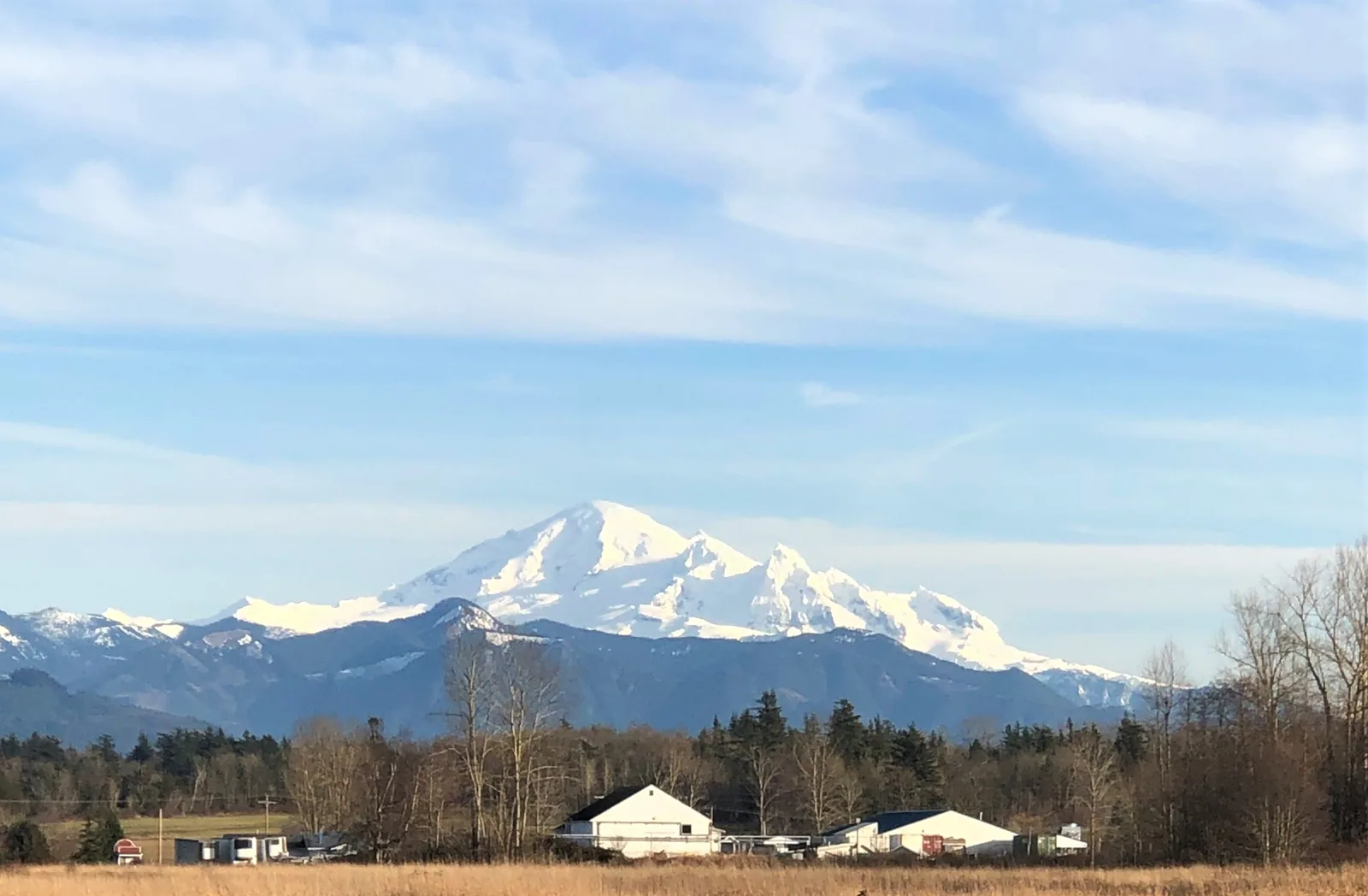
Snow adds dead weight, then melts and refreezes. Bellingham's yearly total is roughly 10 inches, mostly December through February. The foothills get more. Mount Baker rises to 10,778 feet, and loads climb toward it. The engineer of record sets the design load for a Maple Falls site. On a first walk, we watch how the roof behaves under it. Is the deck deflecting? Do valleys hold drifts? Are the drains clear, or buried until the thaw? A low-slope roof that ponds meltwater under snow can freeze and lift its edges.
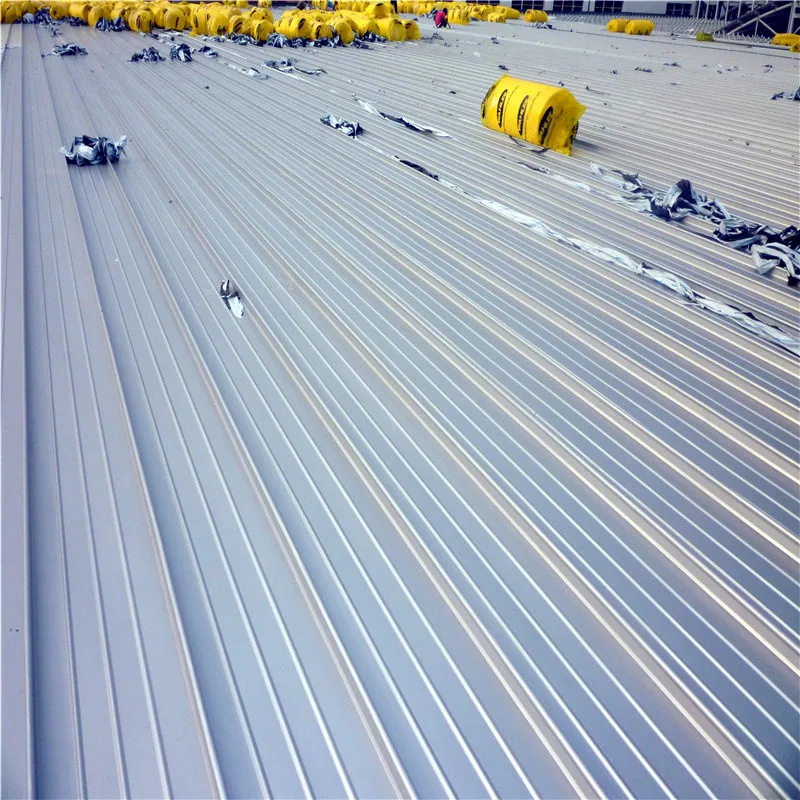
Roof type shapes the answer. A standing seam metal roof sheds snow quickly. It wants retention rails over doors and walkways. A low-slope membrane holds snow in place. It wants open drains and tight edges. Drifting is the hidden load. Wind piles snow against parapets, taller units and the high side of a stepped roof, and a local drift can outweigh the open field. We mark drift zones on the plan and look at the framing under them. Where a roof has sagged, the owner hears before winter, not after.
Drains, gutters and ice
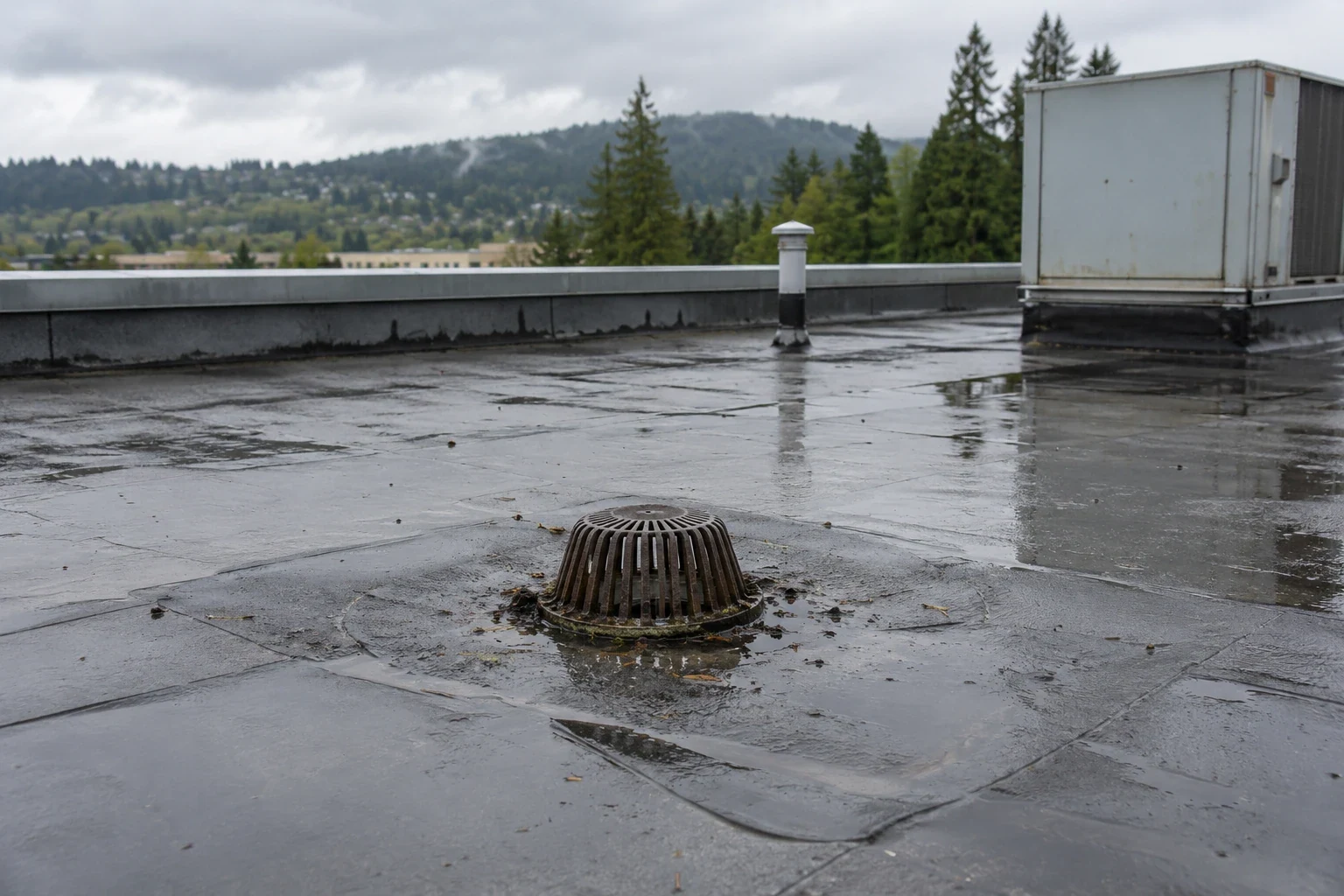
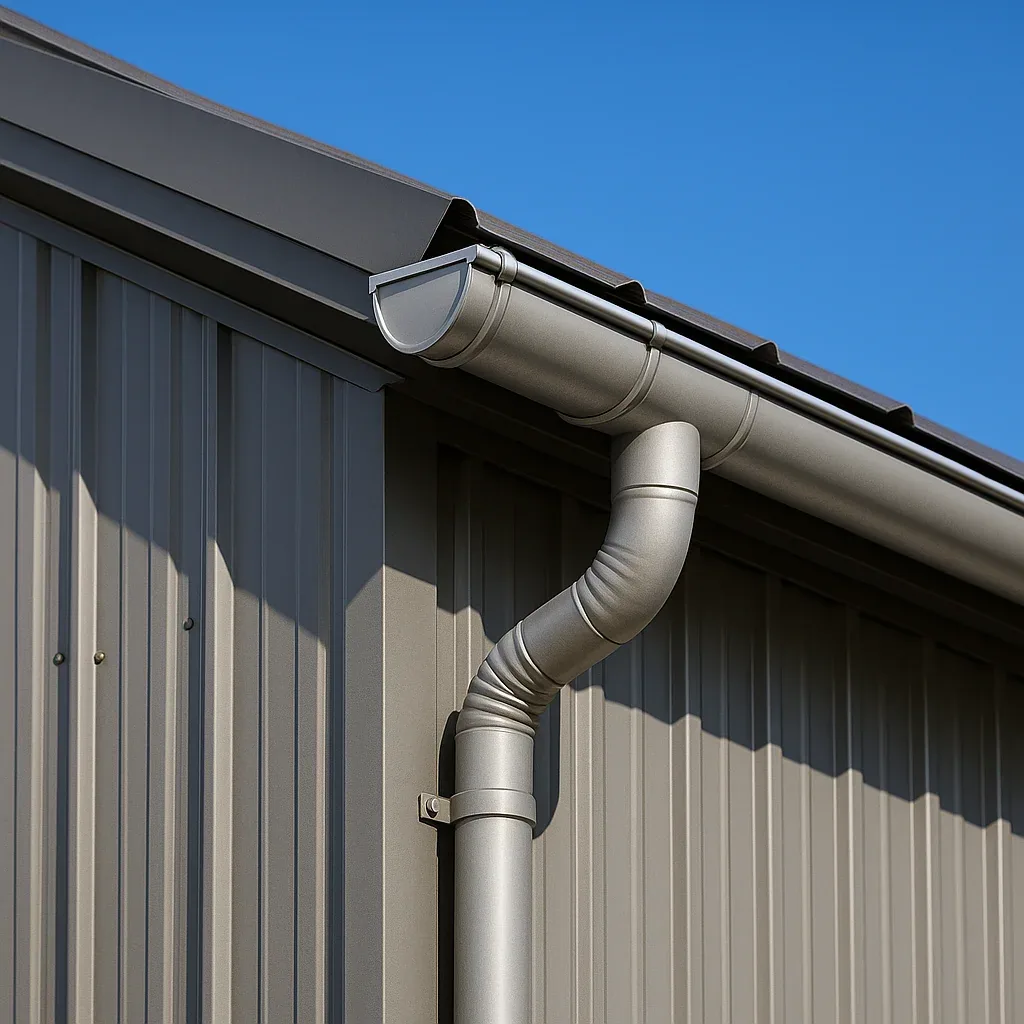
Melt has to reach a drain. Outlets that freeze back water up behind the snow, and ice at an eave pries up metal and shingles. Heat trace at a sump or gutter keeps a channel open. It adds cost over a bare gutter, and on a roof with real winters it pays for itself. Sliding snow tears off gutters that are not strapped on close centers, so hangers, joints and downspouts get checked, and replacements are sized with snow in mind.
A drain or scupper set at the wrong elevation, or undersized for a thaw burst, can fail in January after passing in July. We trace the likely melt path across the plan and mark the weak points. Ice damming is a design problem as much as a weather one. Warm air leaking into the assembly melts snow from below, and the water refreezes at the cold eave. Air sealing, insulation and ventilation cut it back. On a replacement we raise those with the design team, since insulation depth follows the energy code adopted statewide in March 2024.
Edges and wind on a mountain road
Foothill sites are open to the air, so edges take the gust first. Bellingham saw 67 mph in March 2016, and in November 2024 a bomb cyclone's easterly winds damaged at least 16 homes in Sudden Valley. We check coping, drip edge and fascia on the first walk. Loose fasteners, open laps and torn sealant get marked, and a tested edge and gutter detail goes on the bid as its own line.
Snow guards and uplift pull against each other. Rails fastened to a metal roof add sail area and load at the seam, so the fastener schedule has to answer both. Cold, wet wood and metal loosen screws over the seasons, and freeze and thaw walk them out of decking and trim. A sample pull test tells us which ones to replace. An edge that held in July can lift in a January gust.
The work window
Dry months are for installs, so we aim for summer and leave winter to emergencies and snow damage. In Bellingham, the market city, about 34.8 inches of rain fall a year and July is the dry month. Cold nights shorten the useful day, since adhesives and coatings stall below their rated temperature and a frozen deck stops a weld. The crew starts when the deck reads dry and the air warms.
Deliveries and cranes travel the Mount Baker Highway, so lifts and trucks get booked early and staging gets confirmed before mobilization. A winter storm repair call here depends on the state of the highway as much as on the weather.
What we check on a first walk
The first walk reads the whole roof. We check the deck for sag and fastener backout, probe seams and flashings, count penetrations and photograph every drain. Ponding gets mapped, and stains inside tell us where leaks have been. Where insulation may be wet, a moisture survey finds the extent. The result is a short list, repair now, repair before winter or plan to replace, with a location, a scope and a cost range on each line. The owner decides what moves ahead, and the rest waits for the next budget.
Access gets noted: a snowed-in hatch, an iced ladder or a roof with no safe tie-off all change the visit, so the report records a safe way up for the next crew. Interior signs count as much as the roof. Water stains on a ceiling grid, a door that binds in January and cracks that open near a wall all point to a roof carrying more than it should, so we read the building from below and compare it with what the membrane shows from above.
What drives the number
Four things move the price: roof system and condition, snow details such as rails, heat trace and stronger gutters, travel and staging on a mountain road, and the calendar. Neighboring towns share these drivers. Glacier sits farther up the highway in snow country, and Acme and Kendall lie where SR 542 meets SR 547. Grouping the trip lowers the per-roof cost. Owners with several buildings can set the standard once in a multi-site program and spread the travel across the route. Distance gets its own line. The drive up SR 542 is part of every visit, so the bid carries travel, a weather hold and a staging day as separate items.
Commercial Roofing Questions
Who sets the design snow load for a Maple Falls roof?
The engineer of record, for the site and the building. We compare the roof with that number and flag deflection, drift zones and drain trouble.
Do foothill roofs need snow guards?
Over doors, walkways and lower roofs, yes, when the roof is metal and slick. Rails hold snow until it melts. We place them by what sits below, not by habit.
What does winter do to repair scheduling?
Winter confines the work to emergency and temporary repairs, and the permanent fix waits for a dry spell.
Can one trip cover several roofs?
Yes, when sites sit on the same stretch of road. We group work to cut travel time and cost. Owners with more than one building save the most.
How do you handle a leak found under snow?
We locate it from inside first, clear a path on the roof if safe and make a temporary seal. The permanent fix waits for the weather.
What does a first visit cost the schedule?
A half day on a small roof, plus the drive. We aim the walk at a dry spell so the surface reads clearly, then send the ranked list with photos within days.
Send the roof plan and the snow history
Send the roof plan, any photos of past leaks and your target window. We will price the repairs, the snow details and the travel as separate lines before the bid closes.