Standing Seam Metal Roofing in Bellingham, WA
Standing seam metal roofing in Bellingham, WA: concealed clips, thermal movement, snow and wind detailing, and coil lead times that set the schedule.
Standing Seam Metal Roofing in Bellingham, WA
Standing seam metal roofing in Bellingham, WA: concealed clips, thermal movement, snow and wind detailing, and coil lead times that set the schedule.
Roof Systems
Standing Seam Metal Roofing in Bellingham
The panels are cut to length at the factory, and the lead time is the longest line on the schedule. A standing seam order placed in March can be on the roof by summer. One placed in September lands in the wet season. In Bellingham, WA, that gap decides whether the crew installs in July or fights November rain on a steep, slick deck.
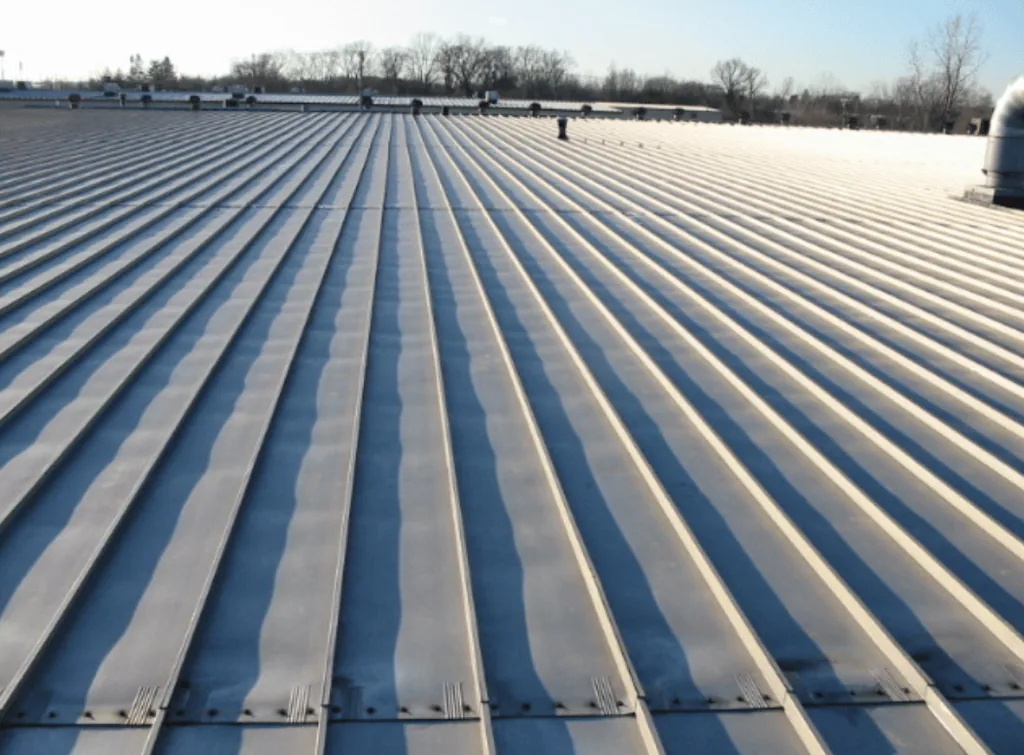
Standing seam is a metal roof with raised seams that run from eave to ridge. The panels lock together over concealed clips, so the fasteners sit out of the weather. It sheds water and snow fast, handles wind well and lasts a long time when the details are right. We price the clips, the trim and the crane day with as much care as the panel.
Overview
Standing Seam Metal Roofing
The panel and the clip
Each panel has a flat pan and a raised rib on each side. The ribs interlock, and a seamer crimps them tight in the field. Underneath, clips fasten to the deck and hold the panel while letting it slide.
That sliding is the point. Metal expands and contracts with temperature. A panel pinned at every point will buckle or tear its fastener holes. Floating clips let it move, and a fixed point near the middle holds it in place.
Panels are formed from coil steel or aluminum, with a painted finish. Gauge, profile and coating all affect cost and wind rating. We read the spec for the uplift rating and confirm it in the submittal, since the clip spacing follows the rating.
Profiles vary. Some panels have a snap-lock seam that closes by pressure, others have a mechanical double-lock that a seamer folds twice. The mechanical lock is tighter and suits low slopes, where standing water can push at the seam. Snap-lock is faster and suits steeper pitches. Minimum slope is a spec line, and we check it against the actual deck before we order a profile.
Underlayment matters as much as the panel. A high-temperature membrane under the metal protects the deck during the install and catches any water that finds a way past a seam. It also lets the roof be dried in before the panels arrive, which splits the schedule in two useful halves.
Coil, lead time and the calendar
Panels are roll-formed to length, often on site, from coil ordered months ahead. A late order cannot be rushed. So the first question on any metal job is when the coil can arrive, and the second is whether that date lands in a dry month.
July is Bellingham's driest month. November is the wettest, with the city averaging about 34.8 inches of rain a year. A roof that dries in during July is closed before the fall rain. A roof that starts in October fights every shower.
We work back from the dry-in date. If the coil cannot land in time, we say so before the contract and offer a phased plan. Trim, flashings and clips arrive on their own timeline, and each gets a line on the calendar.
Crane or lift days are their own line. Long panels need a reach, and a hoist day cannot slide if wind or rain stops the work. We book equipment against the dry window and name a backup date on the calendar.
Wind and edges
Metal panels catch wind at the edges. Gusts reached 67 mph in March 2016, and the November 2024 bomb cyclone sent easterly winds through Sudden Valley. Eave, rake and corner zones see the highest uplift, so clip spacing tightens there.
The trim ties the whole roof together. Eave drip, rake trim, ridge cap and hip details all lock the panel ends. A loose rake trim is how a gust finds the panel edge. We fasten trim on close centers and seal laps.
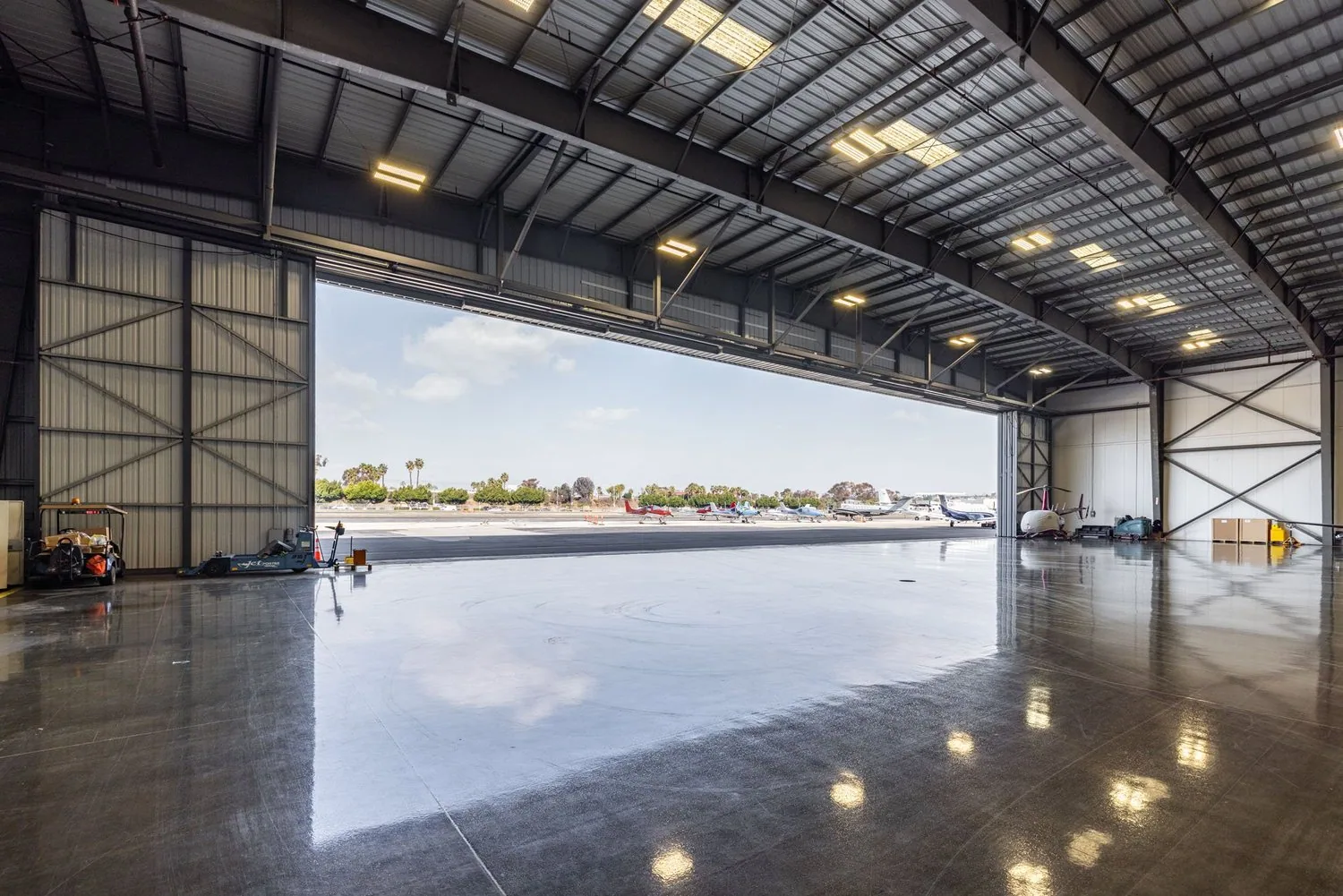
For a hangar roof or a large industrial roof, the corner zones span a lot of area, and the wind engineer's pressure map drives the clip count. We follow the map.
The deck below needs to hold the clips. Plywood or metal deck with a sound fastener pattern gives the pull-out strength the engineer expects. On a re-roof, we probe the deck at clip lines and replace soft areas before the first panel goes on. A clip fastened into rotted plywood is a clip that fails in the first big storm.
Snow, ice and slide
Metal sheds snow fast. In Bellingham the average is roughly 10 inches a year, mostly December through February, and it slides off cleanly. In the foothills near Maple Falls and Glacier, snow load increases, and a sliding sheet can fall onto walkways, vehicles and lower roofs.
Snow retention solves it. Rails or guards fasten to the seams and hold snow in place until it melts. They are placed over entries, parking and lower roofs, and their count follows the snow load and the roof pitch.
Valleys and sidewall transitions need extra care. Snow piles at those joints, and melt runs behind the trim. A cricket or a diverter keeps water moving. We detail these at the bid stage, not in the field.
Gutters and downspouts feel the same snow load. Ice dams form at eaves where heated space below melts the snow above. Insulation, ventilation and heat trace at problem eaves all reduce it. A cold-roof detail on a large building is cheaper than ice damage on a loading dock, and we ask about heating patterns before we draw the eave.
Salt air and finish
Waterfront buildings put a finish to the test. Salt and wind work on edges, cut ends and fasteners. On the border at Blaine the waterfront takes salt air, with roughly 42 inches of precipitation a year, and Semiahmoo Spit sits in wind and spray.
Coating choice matters. A high-performance paint system resists chalking and fade. Cut edges should be sealed, and exposed fasteners at trim should be stainless or coated. Cheap fasteners rust through in a few seasons and stain the panel below.
Aluminum resists corrosion better than steel in salt air and costs more. We offer both on waterfront jobs and price the difference.
Where it suits and how it connects
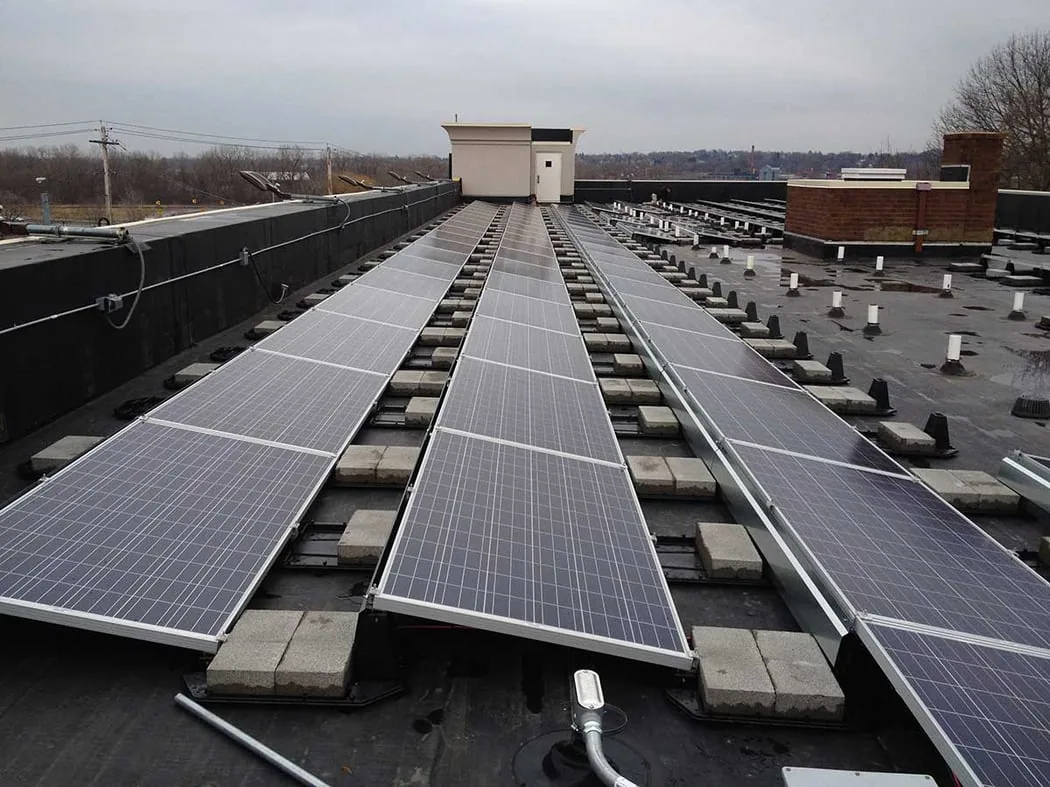
Metal fits roofs with a slope, long runs and a long expected life. Warehouses, churches, schools, hangars and light-industrial buildings are the usual candidates. It pairs well with solar arrays, since clamps grip the seams without penetrating the panel.
An older exposed-fastener roof can be converted through a metal roof retrofit. Coatings such as silicone restore sound metal without a tear-off. The right edge details come from edge metal and gutters.
In Sudden Valley and the east side, the combination of wind and a long wet season puts a premium on a roof that sheds debris and water quickly. Smooth metal does that well.
Commercial Roofing Questions
How long does coil take to arrive?
Weeks to months, depending on the finish and the mill. We ask for the order date and the expected delivery in the first coordination call, then back the install into a dry month.
Why do clips matter more than panels?
Clips hold the roof to the deck and let it move. Wrong spacing causes buckling or loss in a gust. We set spacing from the wind pressure map and check every clip row before the panels lock.
Do I need snow guards in Bellingham?
Over entries, parking and lower roofs, yes, particularly toward the foothills. In the city, snow is lighter, but a slide off a long panel can still injure someone. We place guards by use below, not by habit.
Can panels be installed in the wet season?
They can, with limits. Seaming needs dry panels, and a wet deck underneath slows the dry-in. We prefer July and plan fall installs with tighter phasing and temporary covers.
What does salt air do to the finish?
It attacks cut edges and fasteners first. Sealed edges, stainless trim fasteners and a high-grade coating slow it. Waterfront owners should expect to wash the roof as part of maintenance.
Send the drawings and the coil lead time
Send the drawings, the roof spec and your target dry-in window. We will price the panels, the clips and every trim line separately before the bid closes.