KEE Roofing in Bellingham, WA
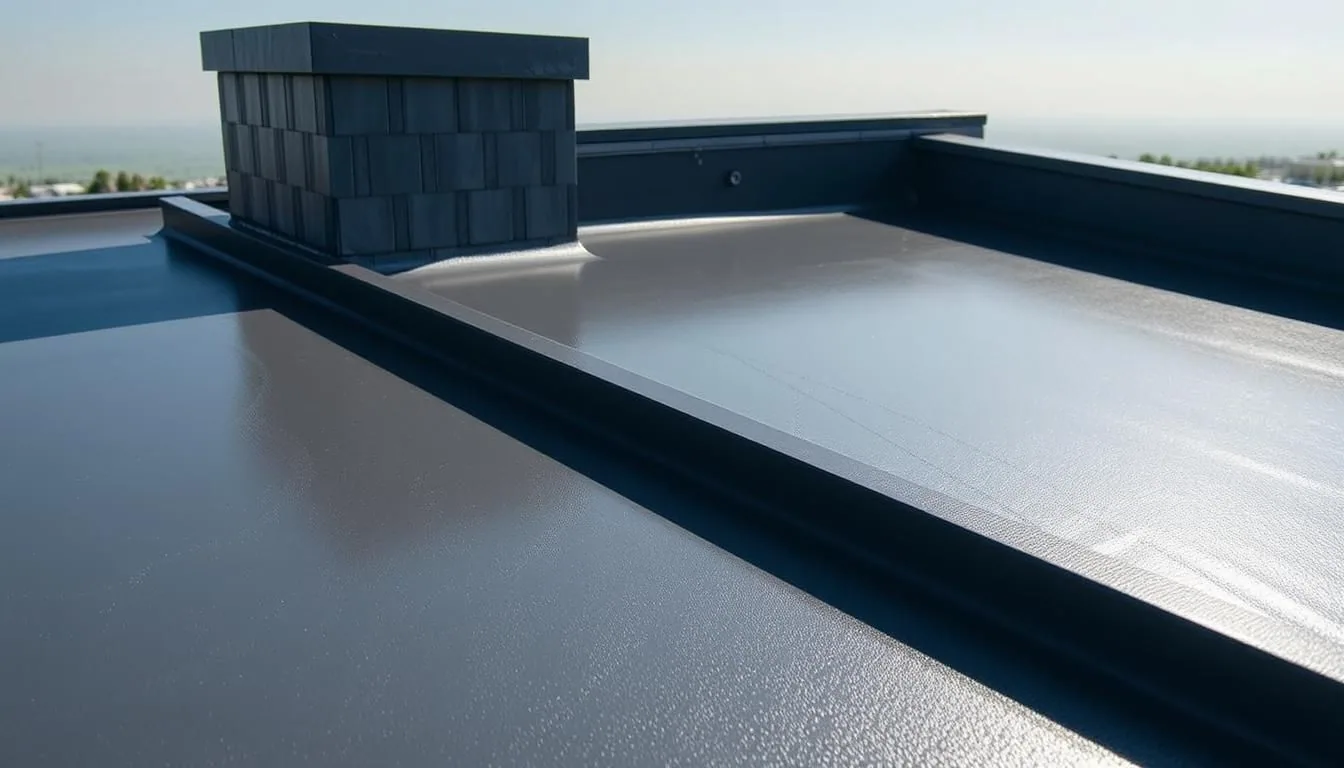
KEE membrane roofing in Bellingham, WA: a PVC-alloy sheet for roofs that face oils, fats and chemical exhaust, with welded seams and tested flashing.
KEE Roofing in Bellingham, WA
KEE membrane roofing in Bellingham, WA: a PVC-alloy sheet for roofs that face oils, fats and chemical exhaust, with welded seams and tested flashing.
Roof Systems
KEE Roofing in Bellingham
Some roofs are dirty by design. A cannery vents oil, a plant stack drops condensate and a lab hood leaves a film. On those roofs a plain membrane ages in a few seasons, and the owner pays for a second tear-off. KEE exists for that problem. In Bellingham, WA, the roofs that qualify are a short list.
KEE stands for ketone ethylene ester. It is a PVC-alloy sheet, blended so the plasticizer stays locked in the material instead of leaching out. The result is a membrane that keeps its flexibility, resists oils and chemicals, and welds at the seams like PVC. We treat it as a specialty system and price it that way.
Overview
KEE Roofing
What the alloy changes
Ordinary PVC loses plasticizer over time. The sheet stiffens, shrinks and cracks at flashings. In a KEE blend, the ketone ester binds the plasticizer in place, so the sheet stays pliable far longer under heat and chemical exposure.
That stability matters most where the roof gets hot or wet with chemicals. A rooftop duct that runs warm all winter, or an exhaust that drips onto the same ten square feet each day, will test any membrane. KEE handles that better than most.
The cost is higher. Material is more expensive than TPO or standard PVC, and installers need experience with the sheet. We use it where the exposure justifies the premium, and we say so when the exposure does not.
The sheet is typically reinforced with polyester or fiberglass and comes in thicker gauges than most single-ply roofs. A thicker sheet takes foot traffic and drips better, and it gives the welder more material to fuse. On a roof that sees daily service visits, that thickness is the point, not an extra.
Which roofs it suits
Food and seafood processing sits at the top of the list. Hog fat, fish oil and wash-down residue are hard on rubber and thin plastic. Whatcom County's agriculture and processing base, from dairy to berries, may produce that kind of roof, around Lynden and Everson among other places.
Industrial plants come next. The Ferndale industrial zone east of the Nooksack River, the Brooks Sports shoe plant and the Cherry Point refinery area all raise the question of what vents onto the roof. We ask for the exhaust schedule and read the chemical list before naming a system.
Hospitals and labs add generator exhaust and chemical vapor. A manufacturing plant roof or a food plant is the textbook case. For a plain office or a dry warehouse, KEE is more sheet than the building needs.
Retail kitchens and brewery vents sit in the same category on a smaller scale. A brewery in an older light-industrial building may vent steam and cleaning agents over a small patch of roof. In that case, a KEE patch zone under the vent, tied into a standard field sheet, can solve the problem for less than a full KEE roof. We price both options.
Welds, adhesive and the substrate
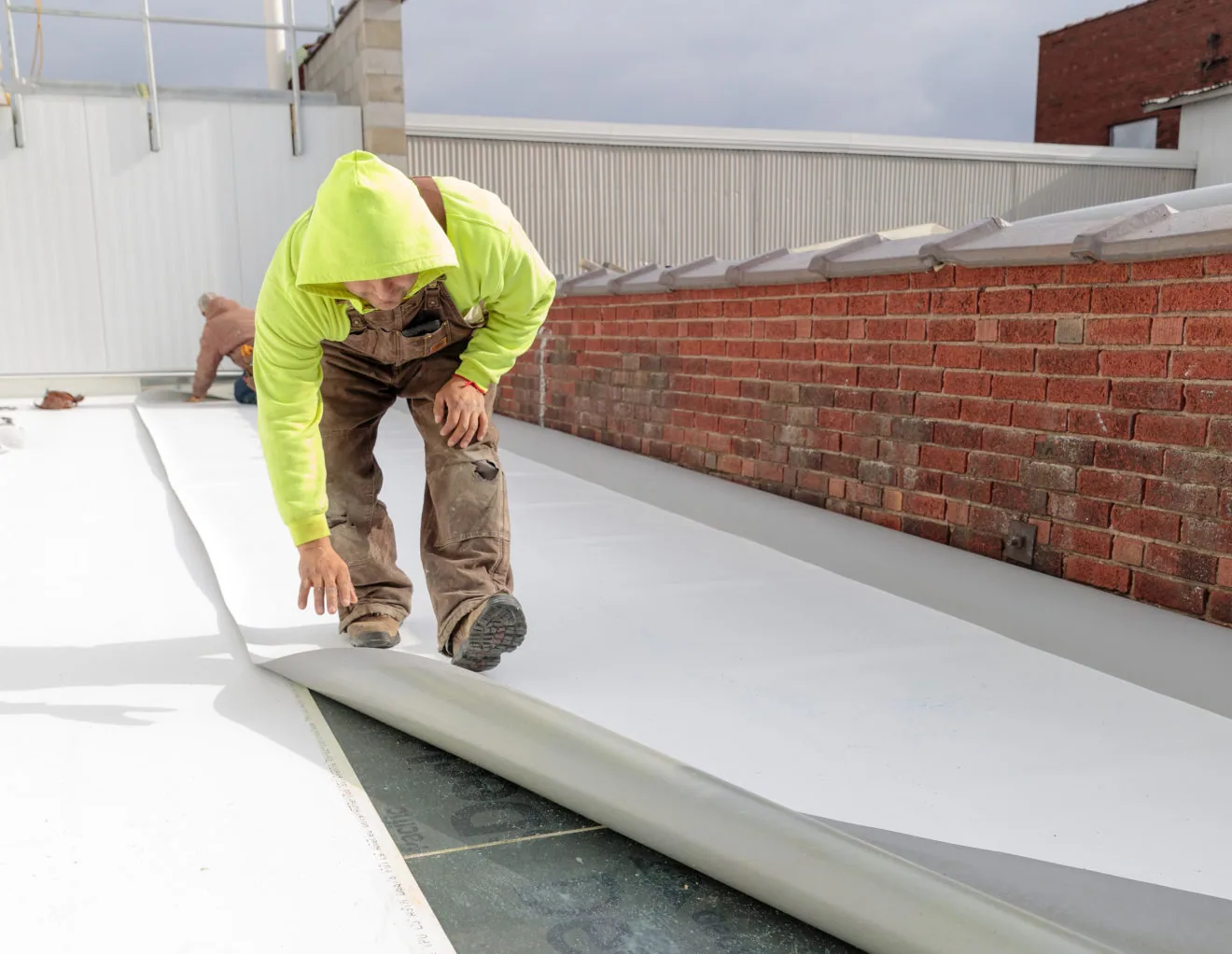
KEE seams weld with hot air, much like PVC. The two sheets fuse into one, and a good weld outlasts the sheet around it. We probe every seam the same day and re-weld any gap before it sees rain.
The sheet goes down mechanically attached or fully adhered. Fully adhered roofs use bonding adhesive over a cover board and give a flat finish with strong wind performance. The substrate must be clean and dry, which in this climate means watching the morning dew.
Old roofs complicate the picture. KEE can go over an existing membrane after a core sample confirms compatibility, or over a fresh cover board after tear-off. We never guess what the old roof is. A recover is possible only when the old assembly is dry.
Surface prep is the quiet cost. Oily residue blocks adhesive and welds, so an existing roof gets degreased before any repair. We test a sample patch, pull it and read the bond before committing to a long run. If the test fails, we change the cleaner or the method, and the schedule absorbs the extra day.
Heat, cold and the wet season
Bellingham is mild, so KEE is rarely tested by temperature extremes. It handles the cold snaps of December through February without stiffening much, and it tolerates the heat from rooftop ducts and exhaust fans.
The wet season is the greater test. November is the wettest month, with about 34.8 inches of rain a year, and the roof stays damp for long stretches. Welding needs a dry sheet, so we aim installs at the drier months and seam crews work fast on dry mornings. July is the driest month, and the schedule leans toward it.
Low sunshine keeps the surface damp and invites moss. A light-colored KEE sheet shows growth quickly, and cleaning belongs on the maintenance schedule.
Wind is the other test. An unsecured edge here has been tested by 67 mph gusts in March 2016 and by the easterlies of the November 2024 bomb cyclone. A fully adhered KEE sheet with a tested coping cap holds well. Perimeter fastening goes on every bid, and corners get the densest pattern.
Flashing and penetrations
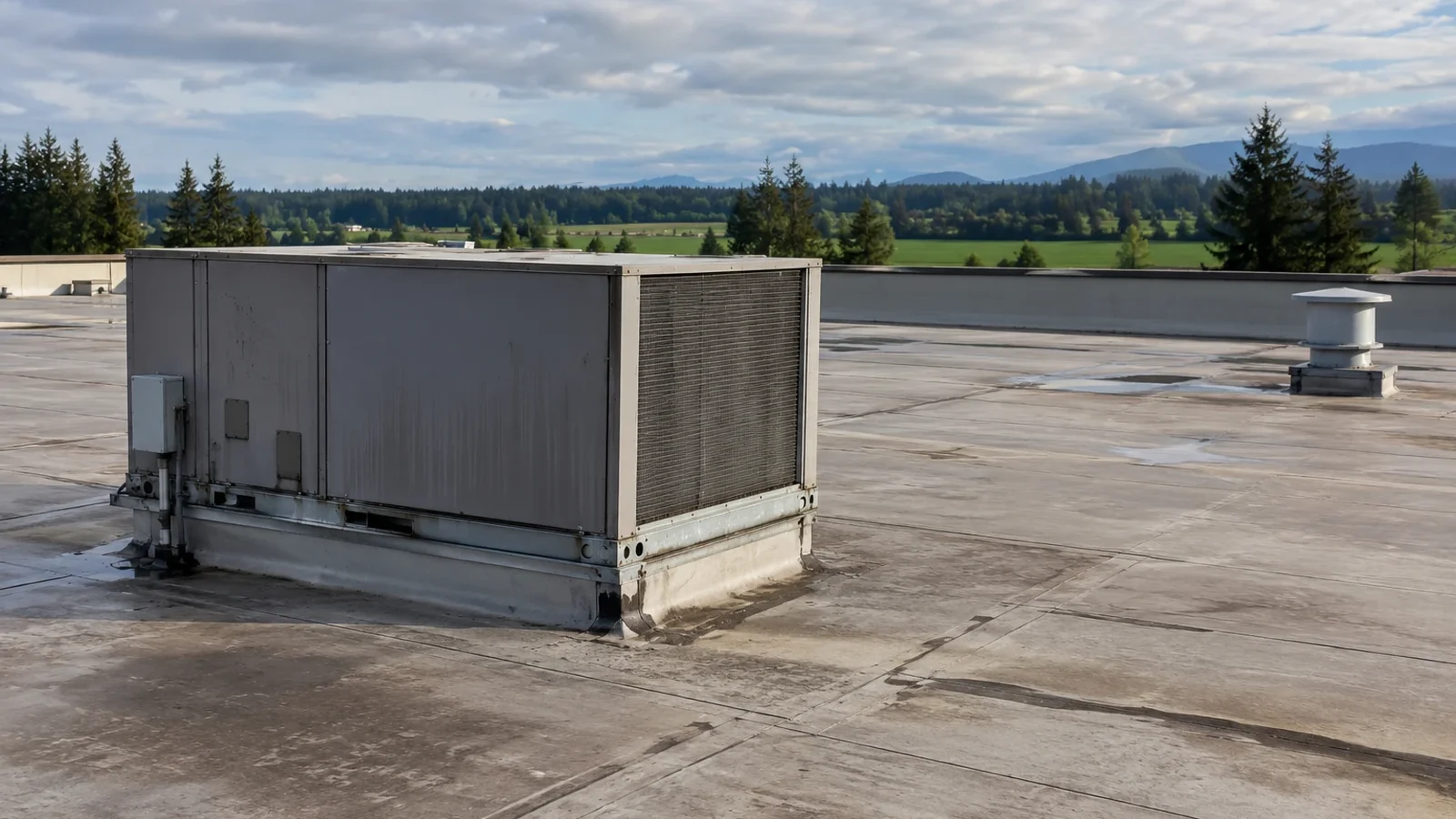
Exhausts, vents and stacks are the reason a roof gets KEE, and they are also its weak points. Each penetration needs a prefabricated boot or a flashing welded to the field sheet. A rushed flashing at an exhaust is where the system fails first.
Where a stack sits close to a curb, we leave room to weld and room for the mechanical trade to service the unit. Walk pads protect the sheet along service routes. Splash zones below exhaust fans get a thicker pad.
Edge metal and drains follow the same care. A cover board and insulation layer goes under the sheet, and the 2021 Washington State Energy Code, in force since March 15, 2024, sets the insulation levels on a replacement. Thicker insulation raises each flashing, which affects the bid.
Drains deserve a look as well. Oil in standing water coats the sump and slows flow. A clogged drain on a chemical roof leaves water in contact with the sheet longer, and any exposure is magnified by time. We clear the sumps, test the slope and add a cricket where water changes direction.
Cost and life
The sheet costs more up front. The case for it is the cost over time. A membrane that fails early on a grease-laden roof means another tear-off, more labor and a disrupted plant. A sheet that survives the exposure spreads the cost over many more years.
We compare KEE with PVC and TPO on the same roof, line by line. A plant in Ferndale that vents oils or chemicals usually favors KEE or PVC. A dry distribution roof usually favors TPO. The owner sees both prices and decides.
Commercial Roofing Questions
How is KEE different from regular PVC on a kitchen or plant roof?
The alloy holds its plasticizer in place, so the sheet stays flexible after years of heat and oils. Regular PVC can stiffen sooner in those conditions. We read the exhaust list to decide whether the premium makes sense.
Can KEE go over an old roof?
Only after a core sample confirms what is underneath and a moisture scan shows the insulation is dry. A wet assembly or an incompatible old layer calls for a tear-off or a separation layer.
Does the sheet fit a food processing plant in Whatcom County?
Fats and wash-down residue are what it is made to resist. We confirm the cleaning agents used in the plant, since a few strong solvents can still affect the sheet.
How are seams checked on a KEE roof?
Every weld is probed the same day it is made, and test welds are pulled at the start of each shift. Any gap is marked and re-welded before rain or dust reaches it.
Is KEE worth the cost on a dry warehouse?
Rarely. With no oil or chemical exposure, TPO or PVC does the job for less. We recommend KEE only where something on the roof would shorten a cheaper sheet's life.
Send the exhaust schedule and the roof spec
Send the drawings, the roof spec and a list of what vents onto the roof. We will price the sheet, the flashing and the weld testing as separate lines before the bid closes.