Roof Recover and Overlay in Bellingham, WA
A recover installs new membrane over a sound existing roof in Bellingham, WA, saving the tear-off when moisture readings and code allow it. Priced line by line.
Roof Recover and Overlay in Bellingham, WA
A recover installs new membrane over a sound existing roof in Bellingham, WA, saving the tear-off when moisture readings and code allow it. Priced line by line.
Commercial Roofing Services
Roof Recover and Overlay in Bellingham
A second layer hides the old fasteners. It also hides the old moisture. That is why a recover in Bellingham, WA starts with readings, not with a membrane order. Done on a dry assembly, an overlay saves the tear-off, the haul-off and several days of open deck. Done on a damp one, it seals the problem under a new warranty period and a new bill. We check first.
The saving is real, but it has a ceiling. The existing roof must carry another layer, hold its fasteners and shed water to the drains. When it does, the schedule shortens by the whole strip. When it does not, we say so before the bid, with the readings attached.
Overview
Roof Recover and Overlay
The test that decides
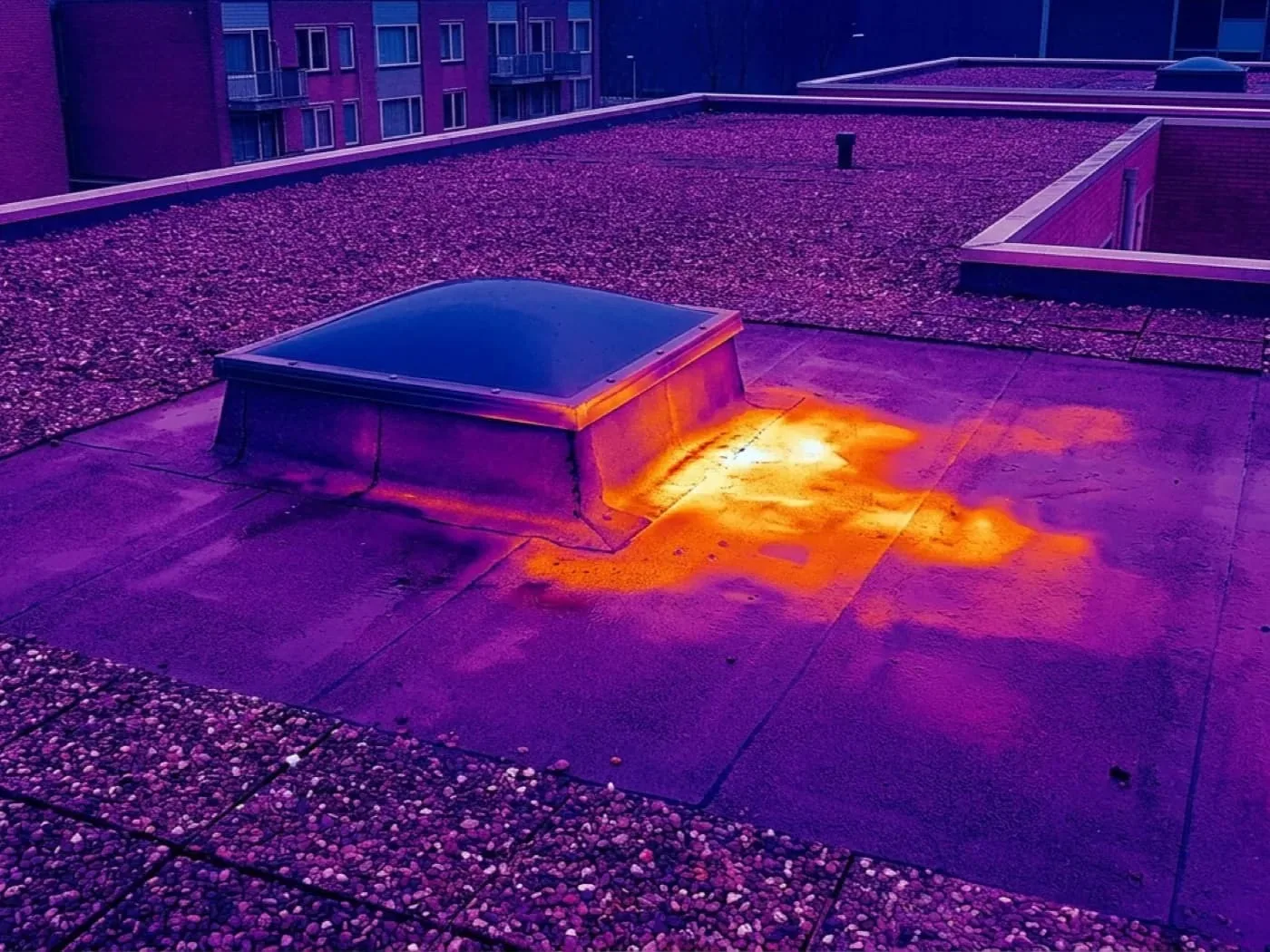
Two surveys settle it. An infrared scan shows where heat lingers in the assembly, which is where water usually sits. Core cuts then confirm what the scan suggests. We cut, weigh the sample, patch the hole and mark it on the plan. Our infrared and core-cut moisture survey gives the general contractor a map, not an opinion.
Bellingham makes this test matter more. Rain totals about 34.8 inches a year, and sunshine is low, about 1,866 hours. Insulation that took on water here does not dry out on its own. A roof that looks fine from the ladder can hold a wet corner under a perfectly flat membrane. The scan finds it before the new sheet covers it. We run it on a cool, dry day, since a recent rain can mask the pattern. In this climate that means scheduling the survey ahead of the bid, not after it.
Layers and weight
Every recover adds dead load. The 2021 International Existing Building Code, in force statewide since March 15, 2024, limits how many layers a roof may carry and what the existing deck must support. We confirm the layer count at the first walk, then check the deck type and the span against what the new system adds. A snow event adds more load on top. Bellingham averages roughly 10 inches of snow a year, mostly December through February.
Gravel-surfaced roofs are the usual problem. Loose gravel has to be swept or removed before anything goes down, and that labor is a bid line. A smooth-surfaced membrane takes a cover board directly. We price each starting surface separately, because the prep is rarely the same twice.
Cover board and fasteners
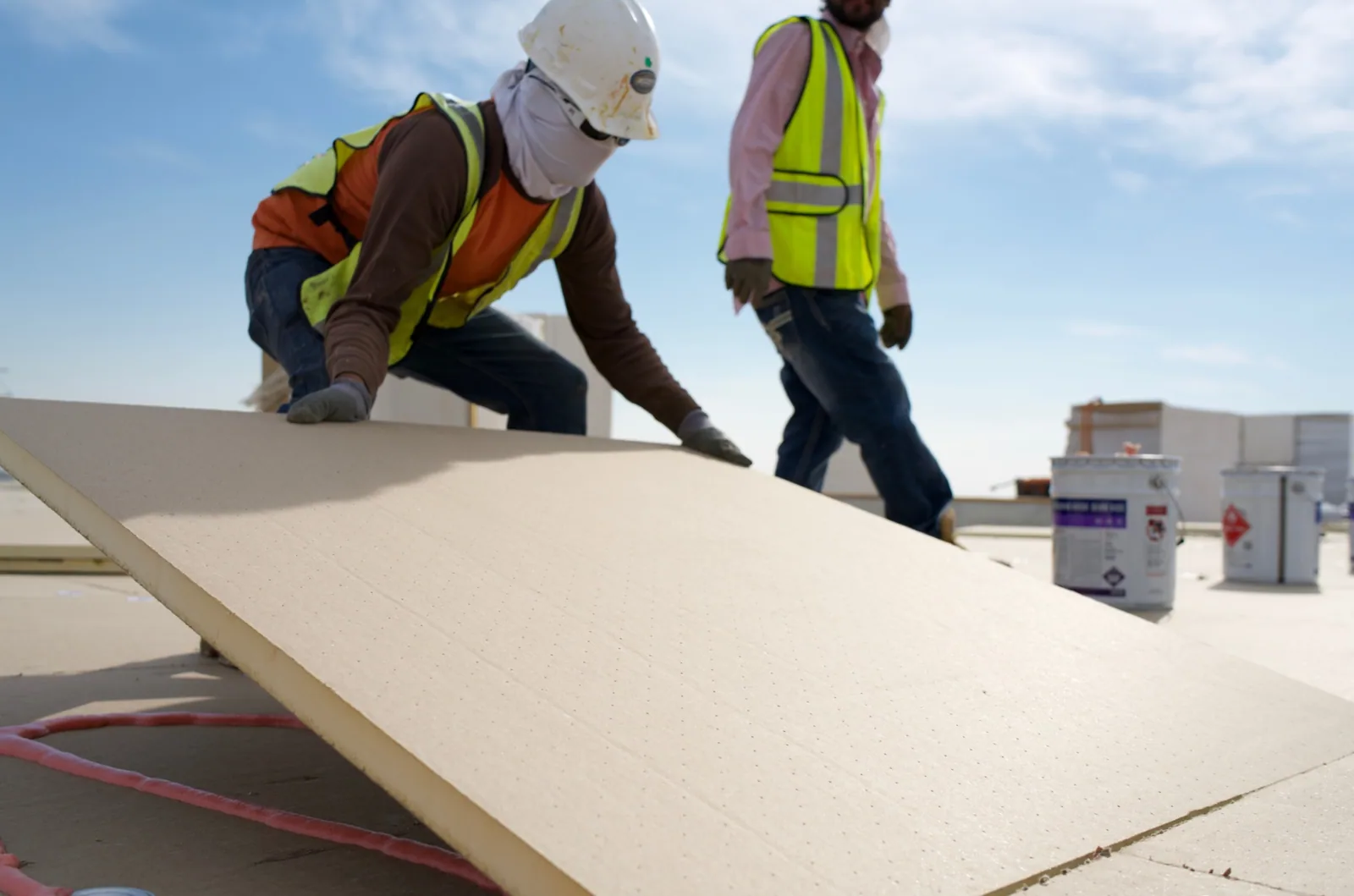
Between the old roof and the new membrane sits a cover board. It flattens the surface, bridges the old seams and gives the new sheet something firm to bond to. Fastener length changes on a recover, since screws must now pass through the extra layer and still bite the deck. A short fastener is a loose fastener. We confirm length at the mock-up, not on the roof. Pull tests on the existing deck tell us what each screw will hold, and the result sets the fastening pattern before any board is cut.
Where the old roof has gaps, ridges or dished areas, the cover board hides some of it and not all of it. Dished areas hold water after rain. We mark those during the probe check and fix the slope with tapered pieces. The insulation and cover board package carries its own line, so a thicker board never changes the membrane price.
Edges and terminations
A recover raises the roof surface. Every wall, curb and drain now sits lower than the new membrane. Base flashing height shrinks, and the codes and manufacturers want a minimum. When the extra layer cuts that height too far, the flashing has to be rebuilt or the wall metal extended. Those details cost more than the field membrane does.
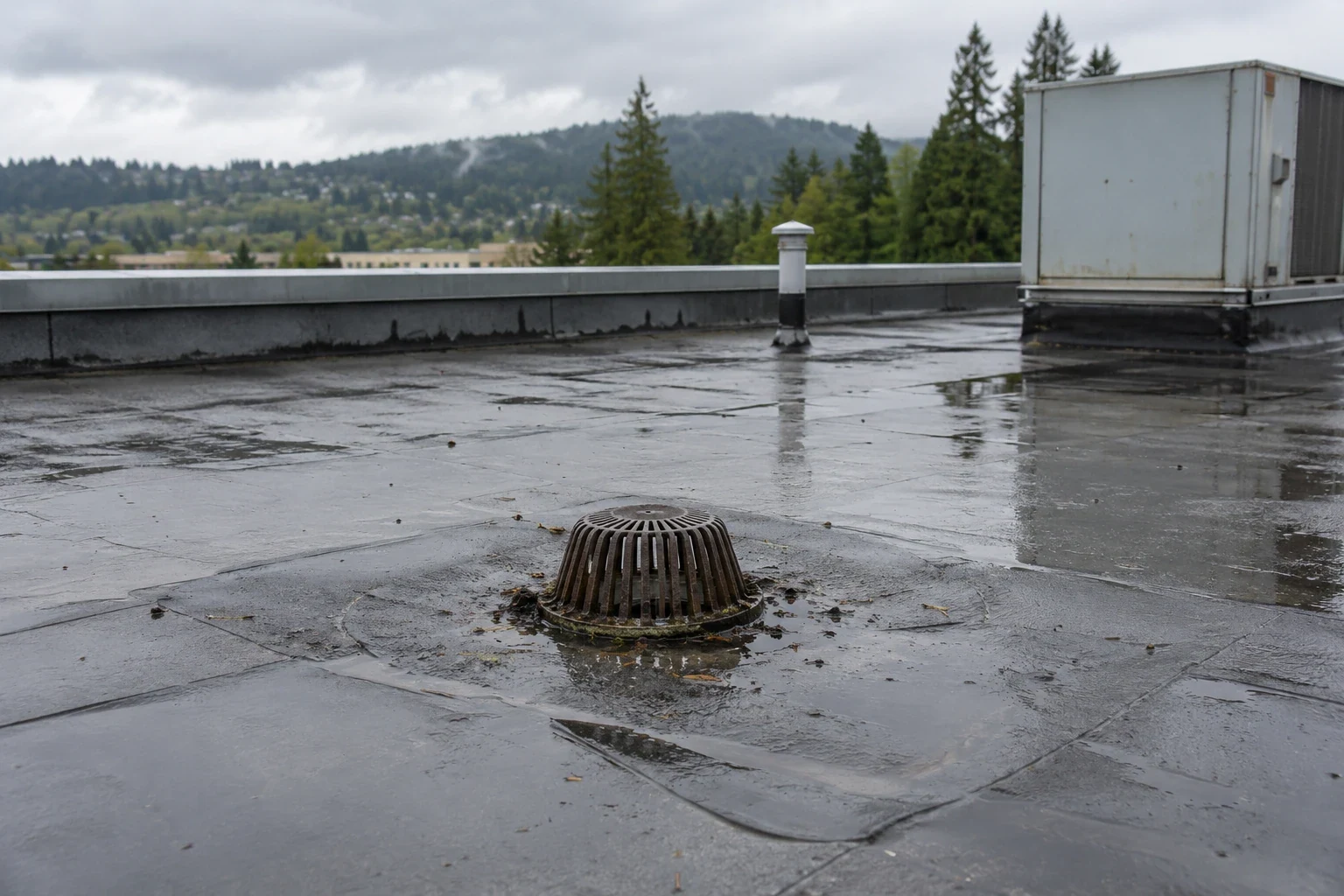
Drains also need attention. A new surface can leave the drain bowl above the roof plane unless the sump is lowered or the drain is raised. We check every drain and scupper before pricing the overlay. Coping caps and counterflashing get reset on the new height, and each reset is a labor line on the bid.
Where it fits here
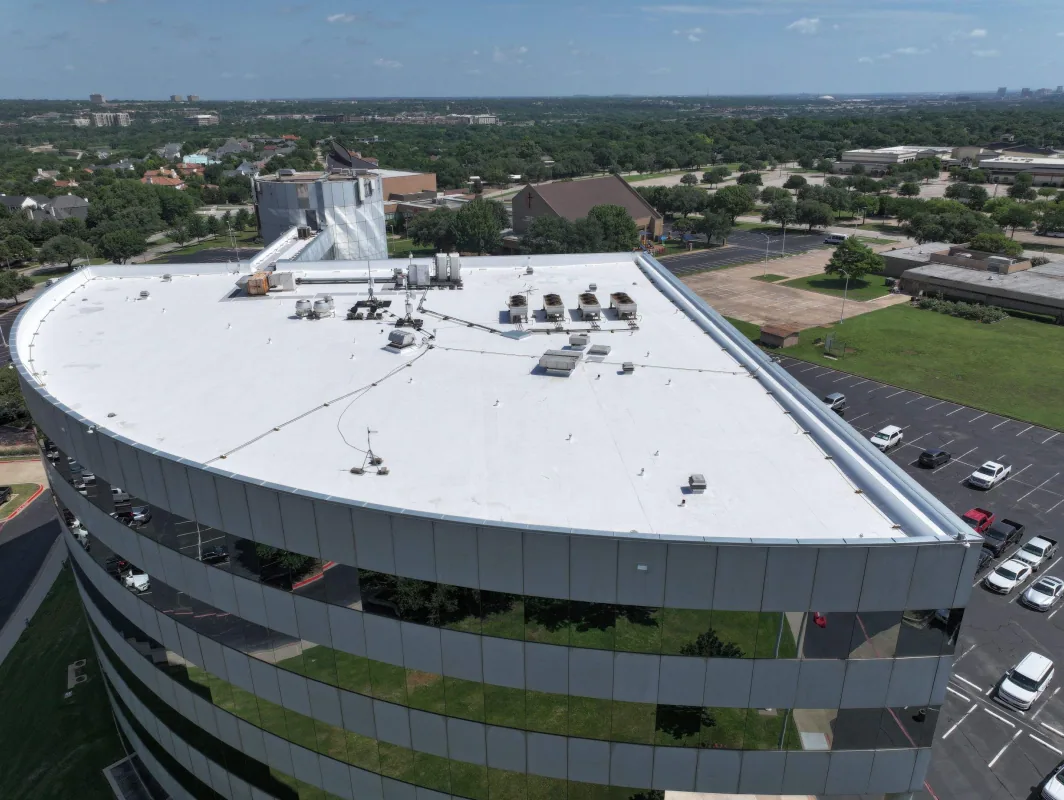
Retail is a natural candidate. Bellis Fair sits at the I-5 and SR 539 interchange, ringed by big-box tenants. On any occupied store, a recover keeps the sales floor quiet and the dock open, because no deck is exposed. A big-box roof still needs the readings first. Footprint tells us nothing about moisture, and a wide roof has more places for a wet corner to hide.
Light-industrial buildings are a second candidate. Craft breweries in Bellingham often work from older light-industrial buildings, and building age is a reason to count layers. On any lot along the Guide Meridian corridor, a recover plan counts layers before anything else. The cores tell us the layer count, the insulation type and the deck, and no assumption carries from one lot to the next.
When to stop
Some roofs fail the test. Saturated insulation, soft deck, a membrane that has split along the seams, or a stack of layers already at the limit. In those cases a full replacement is the cheaper roof over time, even if the first number is higher. We give both prices when the readings point that way.
A recover also changes the next job. The next owner will face two layers and a tear-off that costs more than one. We note that on the bid. It is not a reason to avoid an overlay on a good roof. It is a reason to keep the survey results in the building file.
Sequencing with other trades matters here too. Rooftop units, conduit and gas lines sit on the old surface, and each one needs a raised curb or a lifted line to meet the new height. Mechanical and electrical trades book their own days. We put those lifts on the calendar before the membrane crew arrives, so the recover does not stall on a unit that cannot move. A missed lift costs a crew day, and a crew day in the wet season is hard to buy back.
Commercial Roofing Questions
What moisture result rules out a recover?
Saturated insulation over a meaningful share of the field does. A few small damp spots can be cut out and patched before the overlay. We mark every wet core on the plan, and the general contractor sees where the line falls between patch and replace.
Does an overlay change the warranty options?
A new membrane carries its own manufacturer terms, set by the system and the installer. The layers beneath do not extend them. We state which terms apply to the new assembly in the proposal, so the bid and the paperwork agree.
How much quieter is a recover than a tear-off?
Much quieter, since no deck is exposed and far less debris leaves the building. That is why tenants in occupied retail buildings prefer it. Hauling drops to the old gravel or loose material, and the hoist runs a fraction of the trips.
Can a metal roof be recovered?
Often yes, with a different method. A retrofit framing system or new panels over the old ones can avoid a tear-off, subject to the same load check. The metal roof retrofit option follows the same logic: confirm the structure, then price the details.
Is a recover cheaper over the long run?
Only if the existing roof is sound. A recover on a good roof saves the strip and shortens the schedule. On a wet roof, it adds cost twice: the overlay now and the replacement soon after. Request the condition report before you decide.
Send the roof plan and the layer count
Send the drawings, the roof spec and any past moisture findings. We will price the recover and the full replacement side by side before the bid closes.