Commercial Roof Repair in Bellingham, WA
Planned repair of membrane, seams, flashing and roof details in Bellingham, WA, scoped as patch or fix with a price on each item before work starts.
Commercial Roof Repair in Bellingham, WA
Planned repair of membrane, seams, flashing and roof details in Bellingham, WA, scoped as patch or fix with a price on each item before work starts.
Commercial Roofing Services
Commercial Roof Repair in Bellingham
A split seam costs less than the ceiling under it. Repair is the cheap end of roofing, and Bellingham, WA gives it a short window. Rain runs long, sunshine is thin, and a damp substrate will not take adhesive or a hot-air weld. So the first question on any repair is not price. It is the next dry morning.
We list each defect on the roof and mark it patch or fix. A patch buys time. A fix removes the cause. Each item carries its own price, so the owner and the general contractor can choose what goes in this season and what waits for the next dry window.
Overview
Commercial Roof Repair
Patch or fix
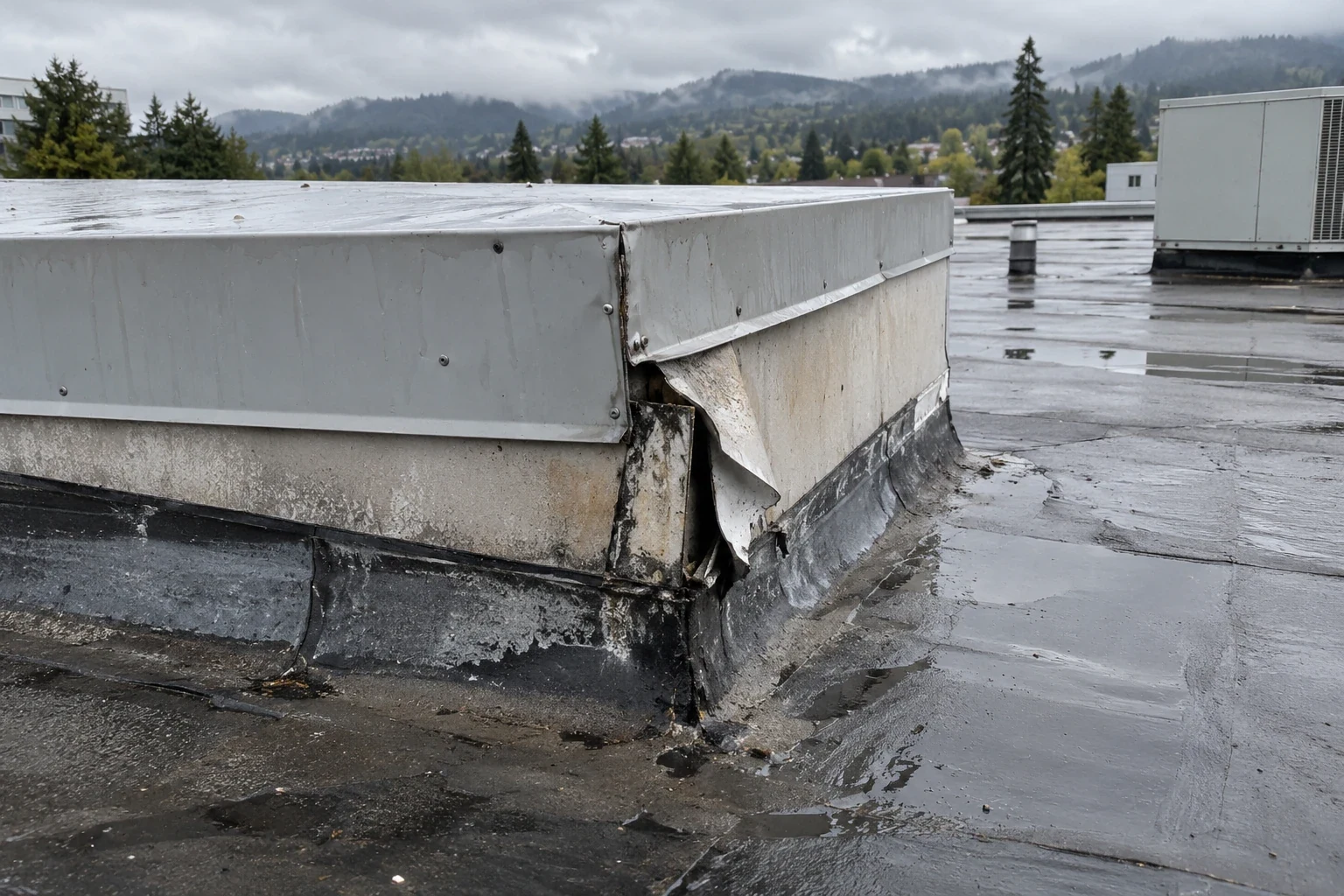
A patch covers a defect. A fix corrects why it formed. A cut in a membrane is a patch job. A seam that opens again every winter is a fix job, since the lap is under tension or the substrate moves. Flashing that peels off a curb needs a termination bar and a new sealant bed, not another coat of mastic. We tell you which item is which, in writing, with a price beside each.
This keeps the bid straight. A roof with eight defects may have two root causes. Fixing those two removes six of the eight. A repeat call for the same seam is a cost, and we price against it from the start.
The cut line between the two is simple. If the cause sits in the roof, such as a worn sealant bed, an unsupported lap or a clogged scupper, it goes on the fix list. If the cause sits in a one-time event, such as a dropped tool or a branch, a patch is enough. Cold snaps in Bellingham, which come with the December to February snow, stress laps that are already marginal, so a winter call often turns up a fix item that a summer visit missed.
The details we repair
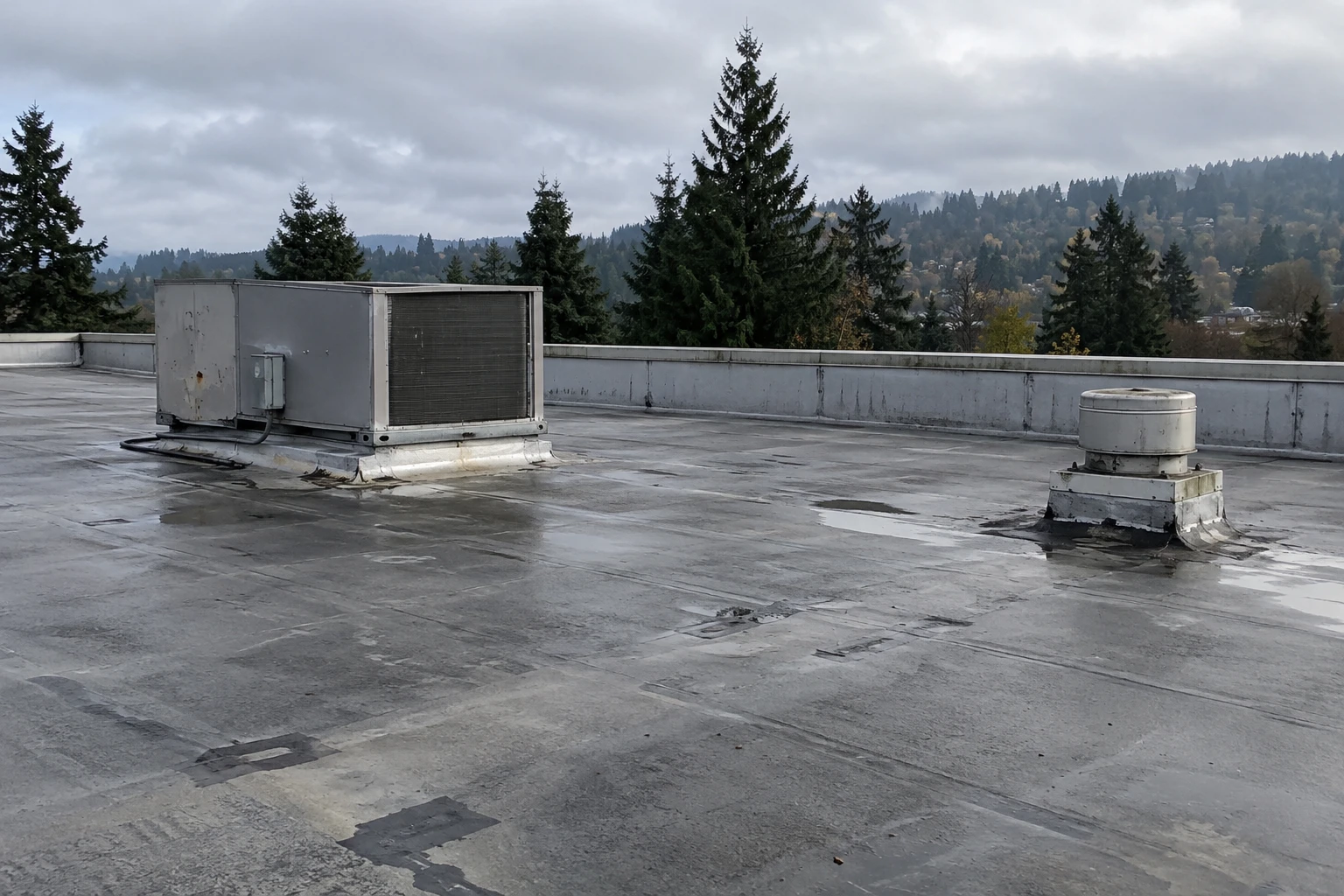
Most repairs sit at details, not in the field. Pipe boots, curb corners, pitch pockets, scupper throats, expansion joints and wall terminations take the movement and the ponding. The field membrane usually survives longer than the metal and sealant around it.
Each detail has its own method. A flashing failure gets new counterflashing set into the reglet, with the base flashing lifted and rebuilt to full height. A split seam gets cleaned, dried and re-welded or re-bonded according to the system. A pitch pocket gets refilled with the right sealer, then capped. Skylight curbs and rooftop equipment supports get flashed to the curb, not just caulked at the edge. We probe every repair edge before we call it closed. Where a repair touches the roof edge, we also check the coping cap and cleat, since a loose cap lets wind get under the membrane and undo the work. Wind of 67 mph in March 2016 peeled stucco off a Bellingham storefront. When wind is the question, the edge is the first place we look.
Seams and membranes
On a TPO roof, a failed seam is hot-air welded. The surface must be clean and dry first, and the weld gets a probe check along its full length. On a modified bitumen roof, a lap is torched or cold-applied, depending on the occupancy and the fire plan. On EPDM, seams are re-taped or re-glued, and the primer needs a clean, dry, warm surface.
Bellingham makes that difficult in the shoulder months. Low sunshine means a roof can stay damp long after the rain stops. We check the surface with a moisture meter and do not weld over a damp lap. A seam repair done on a wet surface fails again at the first cold snap, and the owner pays twice.
What drives the price
Access and drying set the repair price more than materials do. A rooftop with a ladder-only hatch costs more to work than one with a stair tower. Hauling kit and sealant up through a tenant space adds time. A repair near an air intake needs product that will not foul the intake. Each of those lands on the bid as labor.
Mobilization is the other driver. A crew that comes out for one detail charges nearly what it would for ten. We therefore group the list, and we recommend bundling the small items into one visit. The bid then shows one trip charge and a clean unit price on each defect. If a defect turns out larger than it looked, we stop, show the finding and re-price it before the work goes on.
Where the repairs show up
Institutional roofs have many small details. Bellingham's institutional roofs run from Western Washington University to Whatcom Community College and Bellingham Technical College, and every building brings its own vents and hatches. Any roof near Sehome and the university that carries vents, hatches or rooftop units has a flashing at each one to inspect, and each flashing is a small repair waiting to be found.
Waterfront buildings add wind. The Port of Bellingham runs the Fairhaven Marine and Industrial Park, and the marine area along Hilton Avenue has shipbuilders, marinas and terminals. Blaine, near the border, gets about 42 inches of precipitation a year, with salt-air exposure on its waterfront. Salt air is hard on metal edges and fasteners, so we check them during every repair there. In Fairhaven, the same check applies to any roof facing the bay.
Closeout record
Each repair ends with a photo set and a location mark on the roof plan. Before and after images show the defect, the cleaned surface and the finished detail. The facility manager gets a list of what was repaired, what was deferred and what to watch. That list feeds the next roof inspection. An active leak found during the same visit moves straight to leak tracing, which follows a different method.
The record matters for insurance and for the next owner. A repair history shows whether a defect repeats or stays closed. If the same seam shows up twice, the record points to the cause. It also supports a clean condition report, which lets the owner plan capital spending without guessing.
Commercial Roofing Questions
How do you decide a roof is past repairing?
The count of defects matters less than where they sit. Repairs in the field across wide areas, or a membrane that has gone brittle, point toward replacement. A handful of detail failures on an otherwise sound sheet point toward repair. We price both when the evidence is close.
Does a repair affect an existing warranty?
It can. A manufacturer warranty usually requires approved methods and materials for any repair. We match the system on the roof and record the work, so the file shows a compliant repair. Check the warranty terms before work begins, and send them to us with the drawings.
Can repairs wait until summer?
Some can. An open seam on a roof over finished space cannot. We separate urgent items from deferrable ones and mark each on the list. Temporary dry-in covers the urgent ones, and the deferrable ones go on the July calendar when the substrate dries best.
What does a repair crew need from the building staff?
A named contact, roof access and a clear route for materials. Tell us about air intakes, skylights and quiet hours in advance. With that, the crew can plan product choice and sequence so tenants notice nothing except a finished roof.
Why do the same seams reopen after a patch?
Movement or moisture in the substrate is the usual cause. A patch laid over a damp or flexing lap fails again. We find the cause, correct it, and then weld or bond. If ponding is the driver, the ponding repair comes first.
Send the defect list and the access plan
Send photos, any inspection findings and the roof access details. We will mark each item patch or fix, with a price, before the bid closes.