Cold Storage and Freezer Roofing in Bellingham, WA
Roof replacement and repair for cold storage and freezer buildings in Bellingham, WA, with vapor control and insulation priced as separate bid lines.
Cold Storage and Freezer Roofing in Bellingham, WA
Roof replacement and repair for cold storage and freezer buildings in Bellingham, WA, with vapor control and insulation priced as separate bid lines.
Property Types We Roof
Cold Storage and Freezer Roofing in Bellingham
A vapor retarder hole the size of a dime can ice a freezer ceiling by spring. The ice looks like a roof leak. It is not. It is moisture from warm air meeting a cold deck. In Bellingham, WA, that mistake costs a seasonal product run and a second roof bill.
Cold storage roofs are different from dry warehouse roofs. The temperature gradient runs the other way. Send us the drawings, the interior temperature zones and the target dry-in window. We will price the vapor control, the insulation and every termination before the bid closes.
Overview
Cold Storage and Freezer Roofing
Vapor control comes first
In a freezer, the warm side of the roof is outside. Moist air tries to move toward the cold deck. The vapor retarder stops it. A torn retarder, an open lap or an unsealed penetration lets moisture in. Moisture freezes in the insulation, adds weight and kills the R-value.
We treat every penetration as a vapor detail as well as a water detail. Pipes, conduit, refrigeration lines and fan curbs each get a sealed boot. The seal is checked from the roof and, where the plant allows, from below. A thermal scan from the interior shows cold spots that mark failures.
The vapor retarder is a bid line. It is not a throw-in. It decides how long the freezer holds temperature and how much the refrigeration bill climbs.
Failure shows slowly. A hole lets in a little moisture each day. Insulation soaks. Weight builds on the deck. Months later a ceiling drips, or a floor ices below a leak that never touched the membrane. By then the repair is a section replacement. Catching it early is a scan and a patch. We recommend a scan before any reroof and again after.
Insulation depth and the energy code
Cold storage uses thick insulation. Extra depth raises the flashing height and the cost of every edge. Washington's energy code, in force since March 15, 2024, sets requirements for new roof assemblies, and cold rooms feel it most. We confirm the current requirement with the building department before the order.
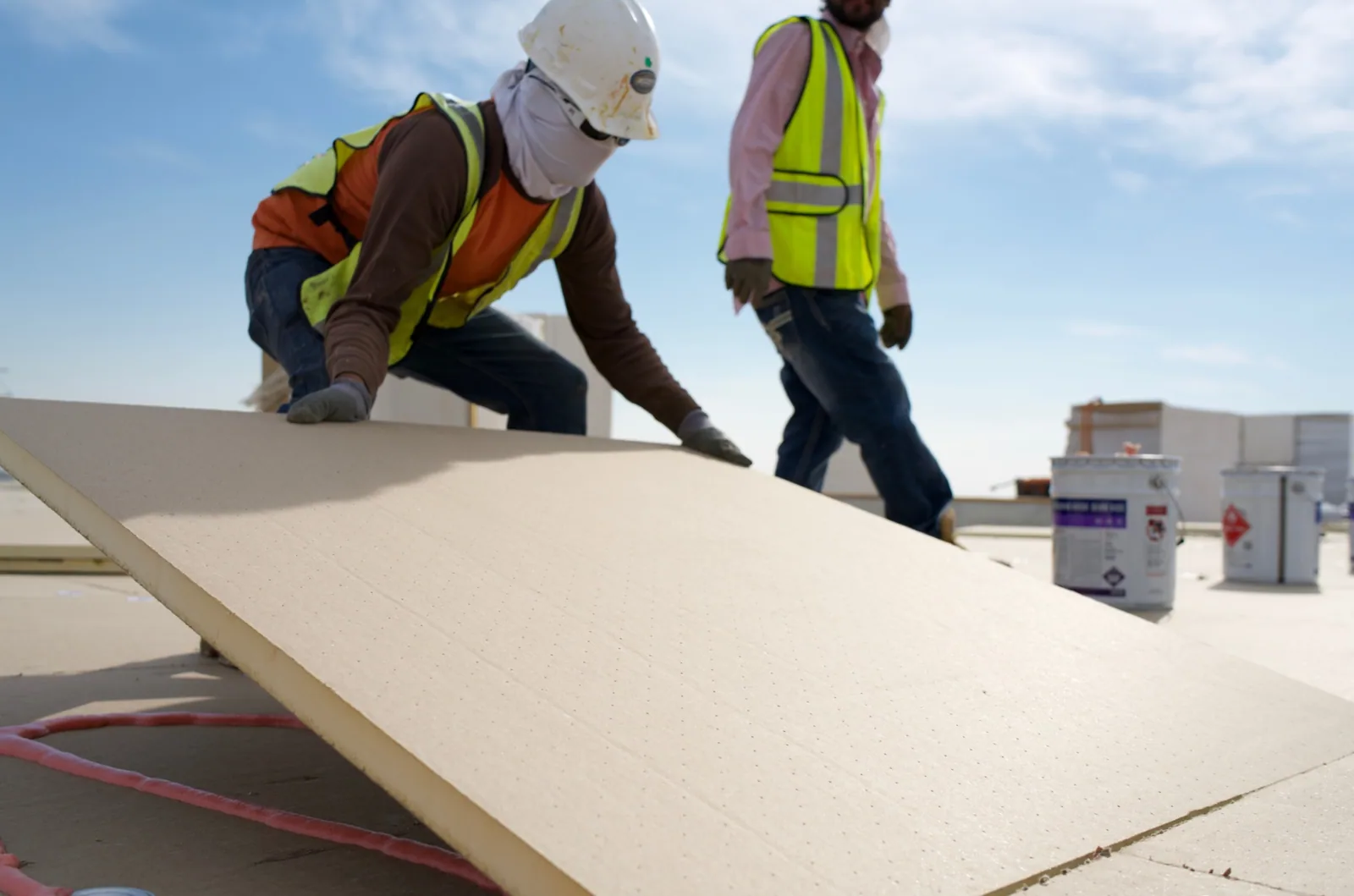
Thick boards need cover board and long fasteners. They also need a plan for staging. A cold storage reroof can stack many layers of board on a single day. Wind can lift a loose board stack. We stage and fasten as we go.
A cover board and insulation package is priced as its own line. Owners see what the extra inches cost and what they save in energy.
Board joints matter in a freezer. Staggered joints and taped seams cut thermal bridges. Two layers beat one thick layer for that reason. We price single and double layer systems side by side. The owner sees the extra labor and the saved energy. Fasteners that cross the vapor layer get sealed. Adhered systems avoid that crossing, and the bid shows the trade.
Why cold storage sits here
Whatcom County has a large agricultural base. It produces 60 to 80 million pounds of raspberries a year, plus dairy and eggs. Cross-border trade with British Columbia drives much of the local economy. Berries, dairy and eggs all move through cold chain space.
Cold chain buildings suit farm country and freight lines. Work near Lynden and in Ferndale follows the same planning method. Berry harvest sets the busy season. Roof work stays out of the way of it.
The first walk, not the address, tells us what a building holds. It records the system, the insulation depth and the interior temperature zones.
Build it in summer
Rain totals about 34.8 inches a year here, and moisture is the enemy of a freezer roof. November is the wettest month and July the driest, which points a freezer reroof at summer. Sun hours are low, about 1,866 a year. Low sun keeps a deck damp, and a damp deck cannot take insulation. A wet deck under new insulation is a future ice problem. We test the deck before we cover it. If it is damp, we wait. A lost morning can be a lost day, and the bid shows how many days the schedule can absorb.
Harvest and freezer loading also set the calendar. A cold room cannot warm up for roof work. Work is done from the outside, in phases, with the interior held at temperature. That is slower than a dry warehouse job. The schedule says so.
Spring is the other window. Harvest season has not started and the rain is easing. A spring start leaves room for a rain delay and still finishes before the summer rush. We hold material orders to match, because insulation lead times can stretch past a month.
Wind and rooftop equipment
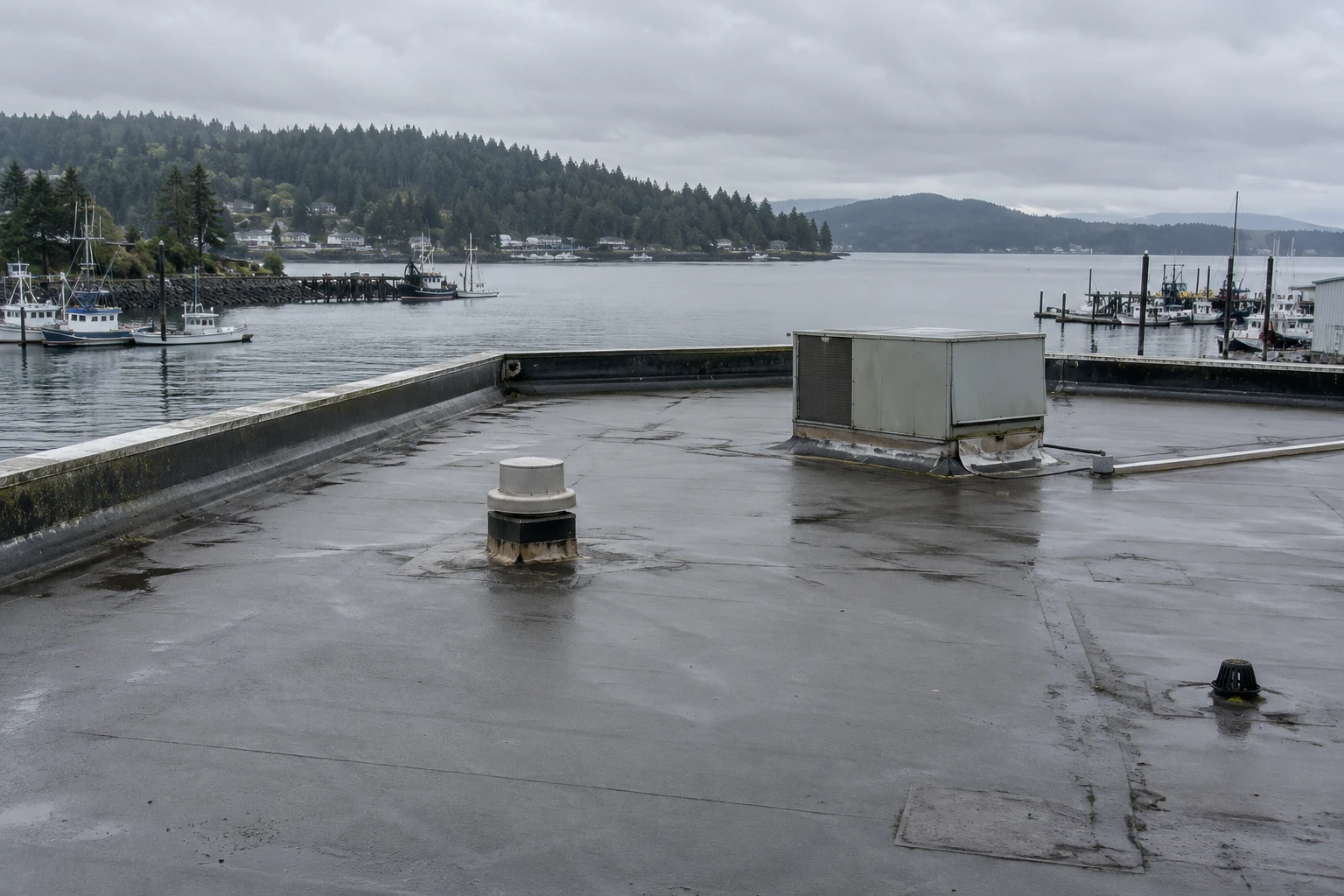
A March 2016 gust of 67 mph tore stucco off a Bellingham storefront, and condenser curbs on a roof take that wind full on. The November 2024 bomb cyclone pushed easterly wind through Sudden Valley and tested every loose cap in range. Cold storage roofs carry heavy condensers and fans. Those units have large curbs and long conduit runs.
Each curb needs solid fastening and tall flashing. Edge fastening gets a line of its own. Condenser curbs are checked for vibration, because vibration loosens sealant. We schedule the refrigeration contractor to inspect with us. The curb and support list is a bid line.
Condenser vibration is the quiet enemy. A shaking condenser works its curb fasteners loose over a season. Sealant cracks at the base. Rain finds the crack. Every visit includes a torque and sealant check at each curb. A curb that has moved gets isolation pads and a fresh flashing collar. The repair costs little now and protects the insulation later.
Test, scan and hand back
The punch walk starts with a test. We check seams with a probe, drains with water and flashing with a visual pass. A thermal scan from the interior comes next. It finds cold spots the roof test missed.
The owner receives a vapor map, photos and a penetration log. That file helps when refrigeration contractors cut new openings later. Each cut gets a seal and an entry in the log. A distribution center or a dry warehouse never needs this vapor file. Cold storage does. An infrared moisture survey on older roofs shows where moisture has already moved in.
A yearly spring check keeps the file current. We re-scan, re-probe and update the log. A cold storage roof with a clean log is easier to insure, finance and sell.
Commercial Roofing Questions
How do you tell frost from a roof leak?
We check the dew point and the vapor retarder. Frost on the underside of a deck points to vapor intrusion. A water stain after rain points to a membrane leak.
Can a freezer stay cold during a reroof?
Yes. We work from the outside and phase the job. The interior stays at temperature and a thermal scan confirms the seal afterward.
How thick is the insulation on a typical cold storage roof?
It varies with the temperature zone and the energy code. We read the existing assembly on the first walk and price the new thickness from there.
What if the deck is damp at tear-off?
We stop. Covering a damp deck traps moisture in a freezer roof. We dry the area or pick a different day.
Who inspects penetrations after the refrigeration contractor?
We do. Every new cut gets a seal, a photo and a line in the penetration log.
Why does a cold storage bid run longer than a dry warehouse bid?
It carries more lines. Vapor control, thicker insulation, sealed penetrations and interior scans each add a line. The membrane itself is the same.
Send the drawings and the temperature zones
Send the roof plan, the interior temperature zones and your target dry-in window. We will price vapor control, insulation and every termination before the bid closes.