Metal Roof Retrofit and Restoration in Bellingham, WA
Retrofit and restore exposed-fastener metal roofs in Bellingham, WA: backed-out screws, failed sealant, rust and the choice between a restore and a new panel.
Metal Roof Retrofit and Restoration in Bellingham, WA
Retrofit and restore exposed-fastener metal roofs in Bellingham, WA: backed-out screws, failed sealant, rust and the choice between a restore and a new panel.
Roof Systems
Metal Roof Retrofit and Restoration in Bellingham
A screw backs out a sixteenth of an inch, and the washer stops sealing. Multiply that by four thousand fasteners and the roof leaks at every one. That is how an exposed-fastener metal roof ages in Bellingham, WA, where wet winters and temperature swings work each screw loose a little more every year.
The decision is always the same. Re-fasten and restore the old panels, or cover them with a new system. The choice turns on how much of the metal is sound, how much of the deck below is wet and how long the owner needs the building to last. We read the roof first and price both paths.
Overview
Metal Roof Retrofit and Restoration
Screws, washers and movement
Exposed-fastener panels are fixed by screws that pass through the pan, each with a neoprene washer that seals the hole. Metal moves with heat, and the screw moves with it. Over the years the hole elongates, the washer cracks and the screw loosens.
A loose screw is easy to find. It stands proud of the panel, and the washer shows a gap or a rust ring. We walk the roof in dry weather and mark every one. A count of loose fasteners per panel row tells us whether to repair or retrofit.
Re-driving works when the hole is sound. When the hole is stripped, the fix is an oversized screw or a replacement fastener in a fresh spot with a new washer. Sealant on top of a failed washer is a short-term patch, and we say so on the bid.
Penetrations around the panels leak first. Pipe boots crack in the sun, curb flashing pulls from the rib and skylight curbs shed water onto laps. A restoration visit replaces every cracked boot and re-seals each curb. That work is cheap per item, and the count is what drives the line.
Closure strips at ridge and eave are another soft spot. These foam or rubber pieces fit the panel profile and seal the gap. Over time they compress, crumble and let wind-driven rain into the building. We replace the strips as a set.
Rust, laps and panel condition
Panels fail at laps, cut edges and low spots. Water sits at the overlap, and rust starts from the inside. Surface rust can be treated. Deep rust that has taken the metal through cannot, and those panels are replaced.
We check by tapping, scraping and pressing. Sound steel rings and holds. Thin steel flexes under a boot. Where a panel is rusted at the lap for more than a few inches, repair is a matter of cutting out and replacing the section.
Bellingham's low sunshine, about 1,866 hours a year, keeps metal damp and rust active longer than in a drier market. Moss grows on the north-facing slopes. Algae and moss hold water against the metal and speed corrosion at laps. Cleaning is part of any restore.
Gutters and valleys collect the runoff and the rust. A valley that holds leaves and moss ponds water along its length. We clear and test it, and where the metal is thin, we line the valley with a new pan before it fails. A failed valley takes the whole slope with it.
Restoring the existing roof
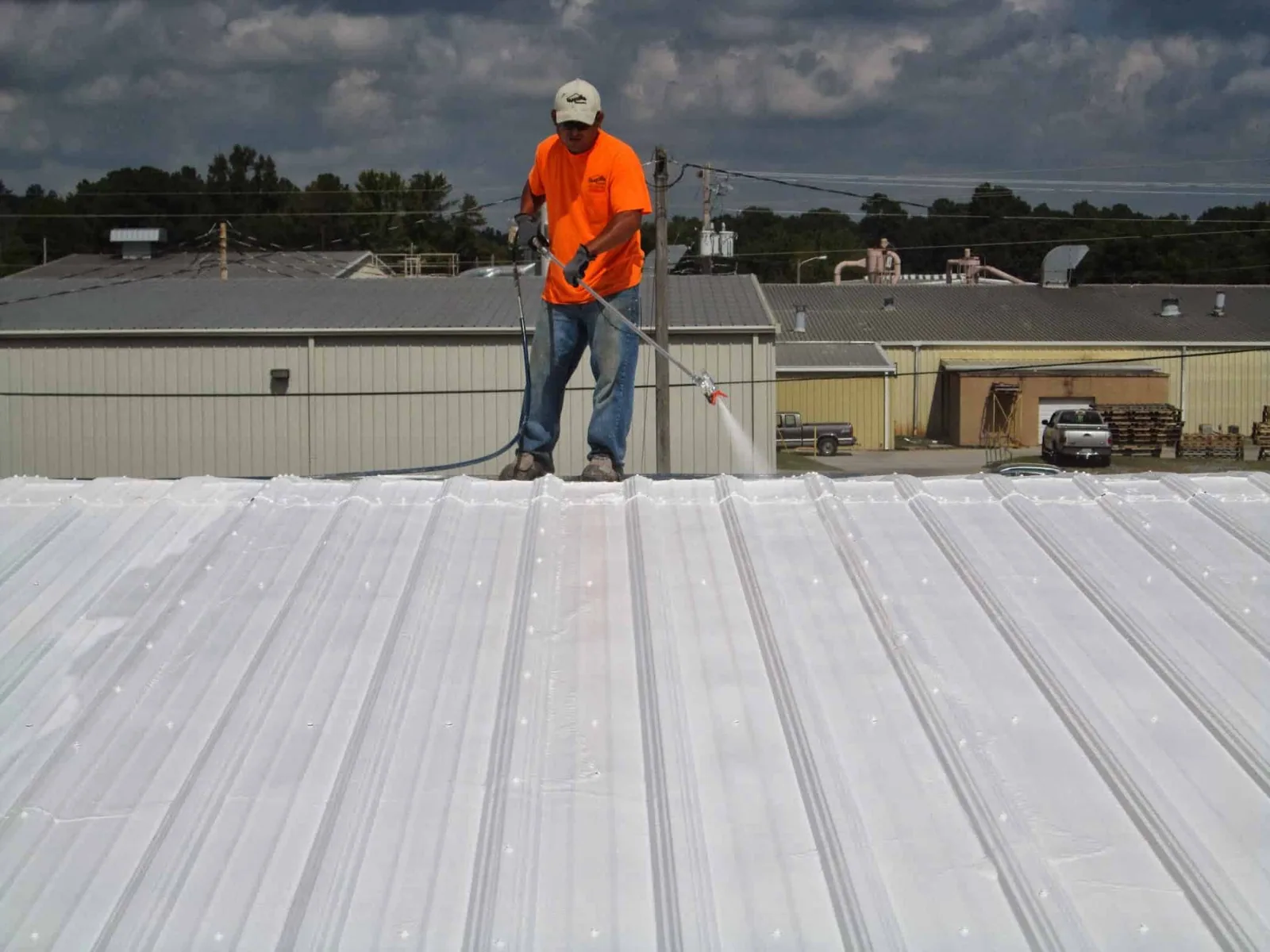
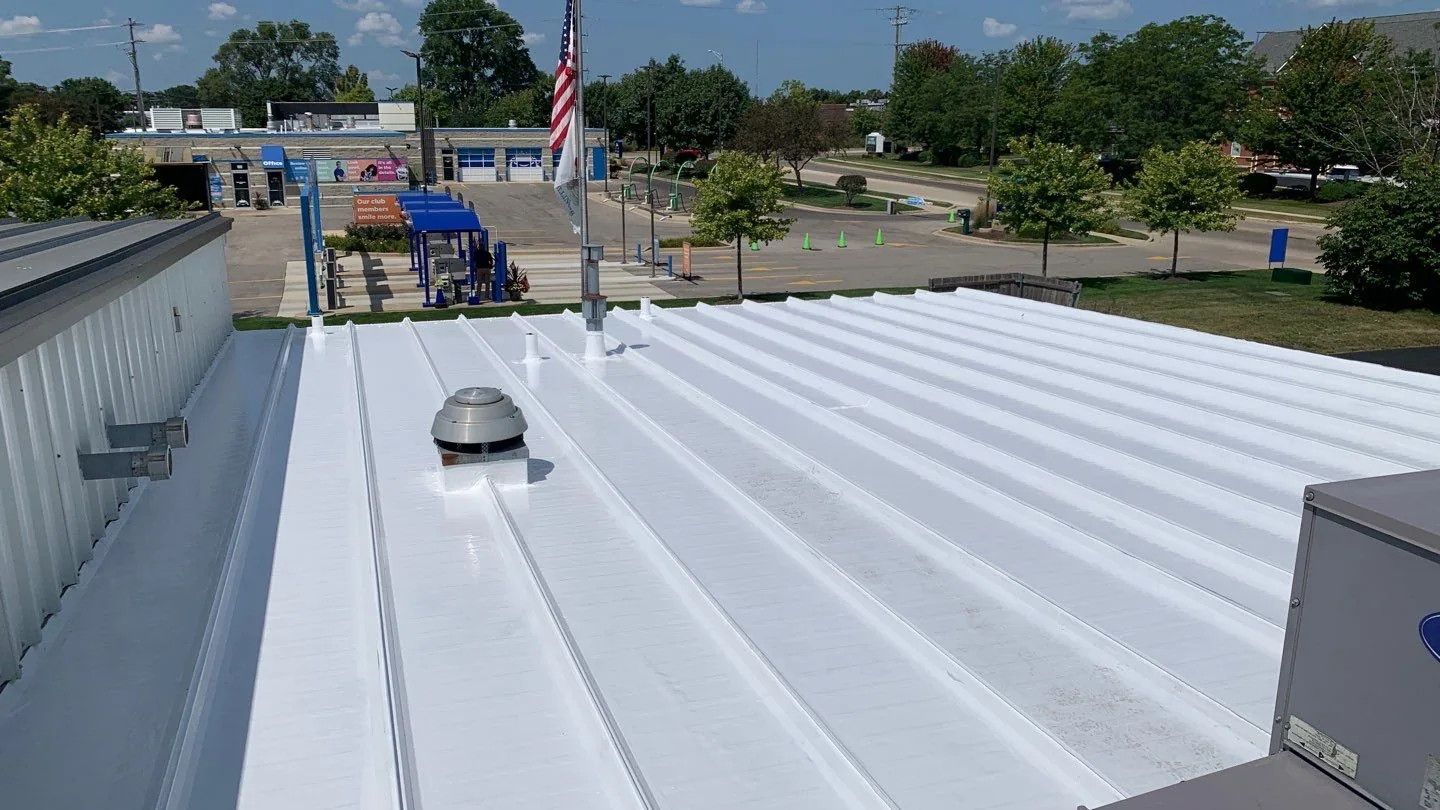
Restoration keeps the old panels. The crew replaces failed fasteners, seals laps and penetrations, cleans the surface and applies a coating. The coating, often a silicone or acrylic system, bonds to the metal and seals the roof as a membrane.
The condition of the substrate decides if it works. A coating needs clean, dry, sound metal. Chalky, rusted or oily panels need prep, and some require a primer. A coating over wet insulation or a leaking lap seals the water in, so repairs come first.
This route costs less than a full retrofit and avoids a tear-off. The coating adds service life, not a new roof. We write the expected interval for recoating into the closeout so the owner can plan for it. The same wash, repair and coat sequence works on other surfaces, as in roof coating restoration.
Covering it with new metal
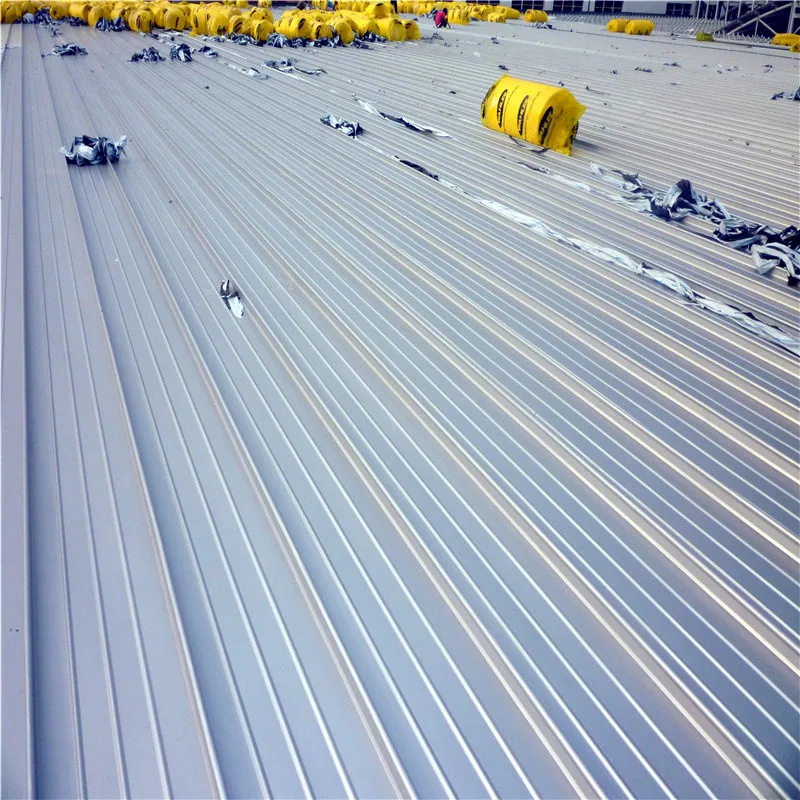
A retrofit covers the old roof with a new one. Sub-framing, often Z-purlins or sleepers, is fastened over the old panels. New standing seam panels, which hide the fasteners under raised ribs, go on top. Insulation can be added between the frames.
The benefits are large. No tear-off, no debris, no exposure of the building interior, and an added insulation layer. Old panels stay in place and act as a deck. The building stays in use throughout.
The limits are real. The structure must carry the added weight. Existing panels must be sound enough to hold frame fasteners. Roof heights rise, so curbs, skylights and wall flashings all climb. The final roof is a standing seam system and follows the same wind, snow and trim detailing.
Fire and code review follow the change. Washington adopted the 2021 International Building Code and the 2021 IEBC statewide on March 15, 2024, and the energy code's insulation levels apply to a roof that is altered in this way. The design team confirms what the retrofit must meet, and we carry the insulation thickness into the flashing heights.
Lead time is the usual trap. New panels are cut to length from coil, and the order should be placed months before a dry window. A retrofit started in November fights rain on every panel.
Wind, snow and the edge
Old roofs lose edge trim first. The March 2016 gusts reached 67 mph and tore stucco off a Bellingham storefront. In November 2024 the bomb cyclone put easterly winds through Sudden Valley. A loose rake or ridge on an old metal roof is the first thing a gust finds.
We re-fasten trim on close centers during any repair and replace damaged pieces. After a windstorm, a wind damage repair walk checks every edge and ridge before the next front.
Snow is light in the city and heavier in the foothills. A retrofit adds new panel profile that sheds snow faster than the old, and snow guards may be needed over doors and walkways.
Where retrofit decisions come up
Metal roofs are common on agricultural, light-industrial and storage buildings. Around Lynden, Everson and the Nooksack valley, berry, dairy and poultry operations use farm buildings and processing space that may carry exposed-fastener roofs.
Port industrial buildings along Marine Drive and in the Airport Industrial Park can include metal-clad shops and warehouses. Salt air near the water speeds fastener corrosion, so the repair schedule is shorter there.
For a quick leak fix before a bigger decision, a targeted repair holds the building while the owner weighs restore against retrofit.
Pricing differs by building. A small shop with a handful of rows may restore for a modest sum. A large storage building with a big roof surface and many penetrations may favor retrofit, since the per-square cost of re-fastening and sealing keeps adding up as the count rises.
Commercial Roofing Questions
How do you decide between restoring and covering the roof?
Panel condition, deck moisture and structural capacity lead. Sound panels with dry insulation suit a restore. Rusted panels, wet insulation or a long-term need suit a retrofit. We price both so the owner sees the gap.
Does a coating stop leaks at the fasteners?
It seals them only after the failed fasteners are replaced or re-driven. A coating over loose screws shows the leak again in the next freeze-thaw cycle. We fix the fasteners first, then coat.
Can the building stay open during a retrofit?
Yes. Retrofit panels go over the old roof, so the interior stays closed in, and no debris falls. Noise from fastening is the main impact, which we schedule around operations.
What does the structure have to carry?
The new frame, panels and any insulation, plus the snow load for the site. The structural engineer confirms capacity before we order. Older buildings sometimes need reinforcement at purlins.
How long does a restore last?
It depends on the coating and the panel condition, and the closeout sets a recoat interval. We record fastener counts and photos so the next inspection can compare.
Send the roof age and the building use
Send the drawings if you have them, photos of the roof and a note on what runs under it. We will price the restore and the retrofit side by side before the bid closes.