Commercial Roof Inspection in Bellingham, WA
Hands-on commercial roof inspections in Bellingham, WA with photo-backed findings, each item marked patch, fix or watch, and costs tied to the bid or budget.
Commercial Roof Inspection in Bellingham, WA
Hands-on commercial roof inspections in Bellingham, WA with photo-backed findings, each item marked patch, fix or watch, and costs tied to the bid or budget.
Commercial Roofing Services
Commercial Roof Inspection in Bellingham
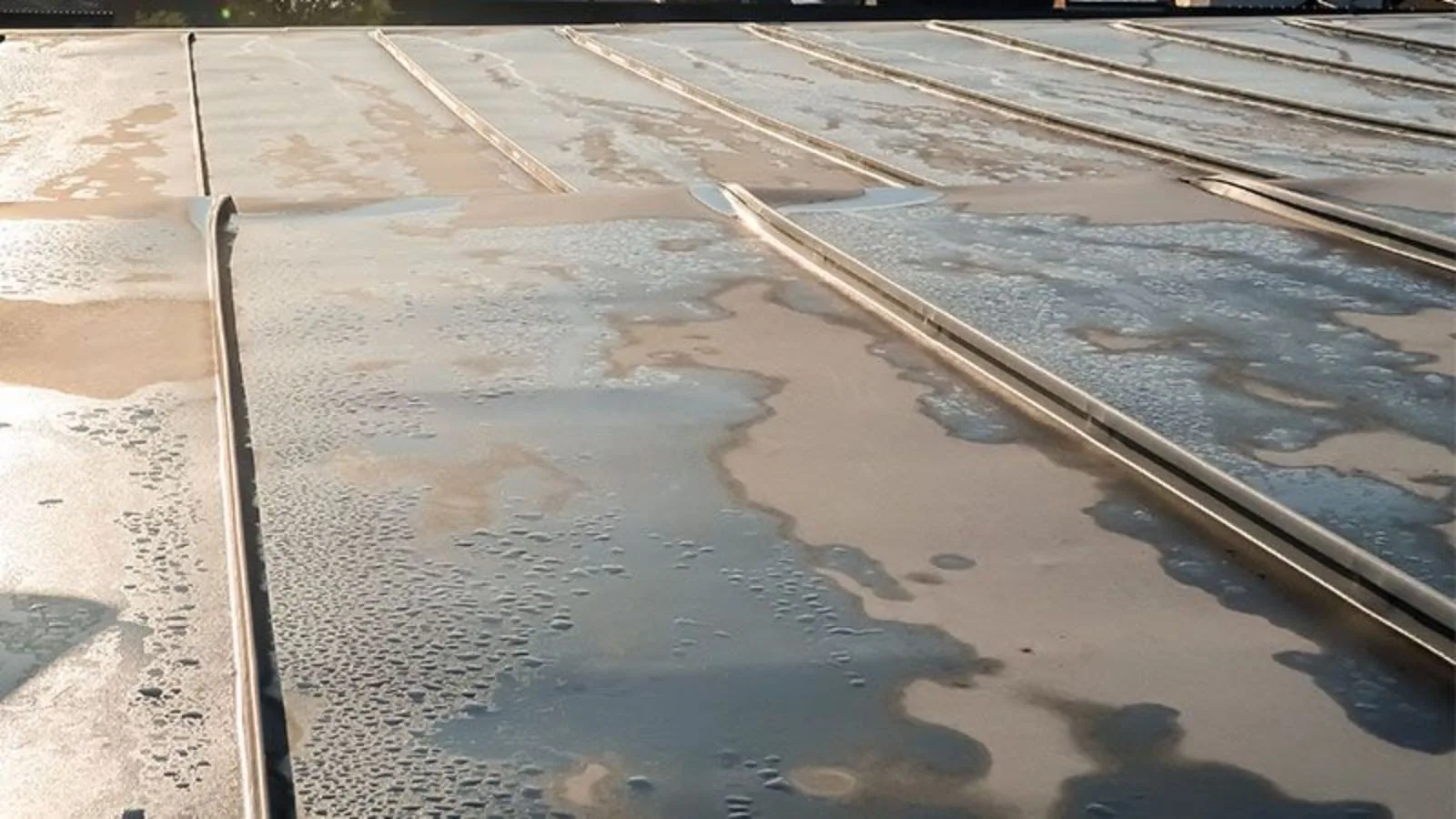
A moss line along a parapet marks where water sat last winter. We read it on the first pass. Bellingham, WA gets about 1,866 hours of sun a year, which is low, and a roof that stays damp grows moss and algae. So an inspection here begins with the damp spots and works outward to the details around them.
The result is a written list, with photos, of what is sound, what needs work and what to watch. Every item carries a cost range and a timing note. The owner then sees what a patch buys this season and what belongs in next year's budget.
Overview
Commercial Roof Inspection
What we walk
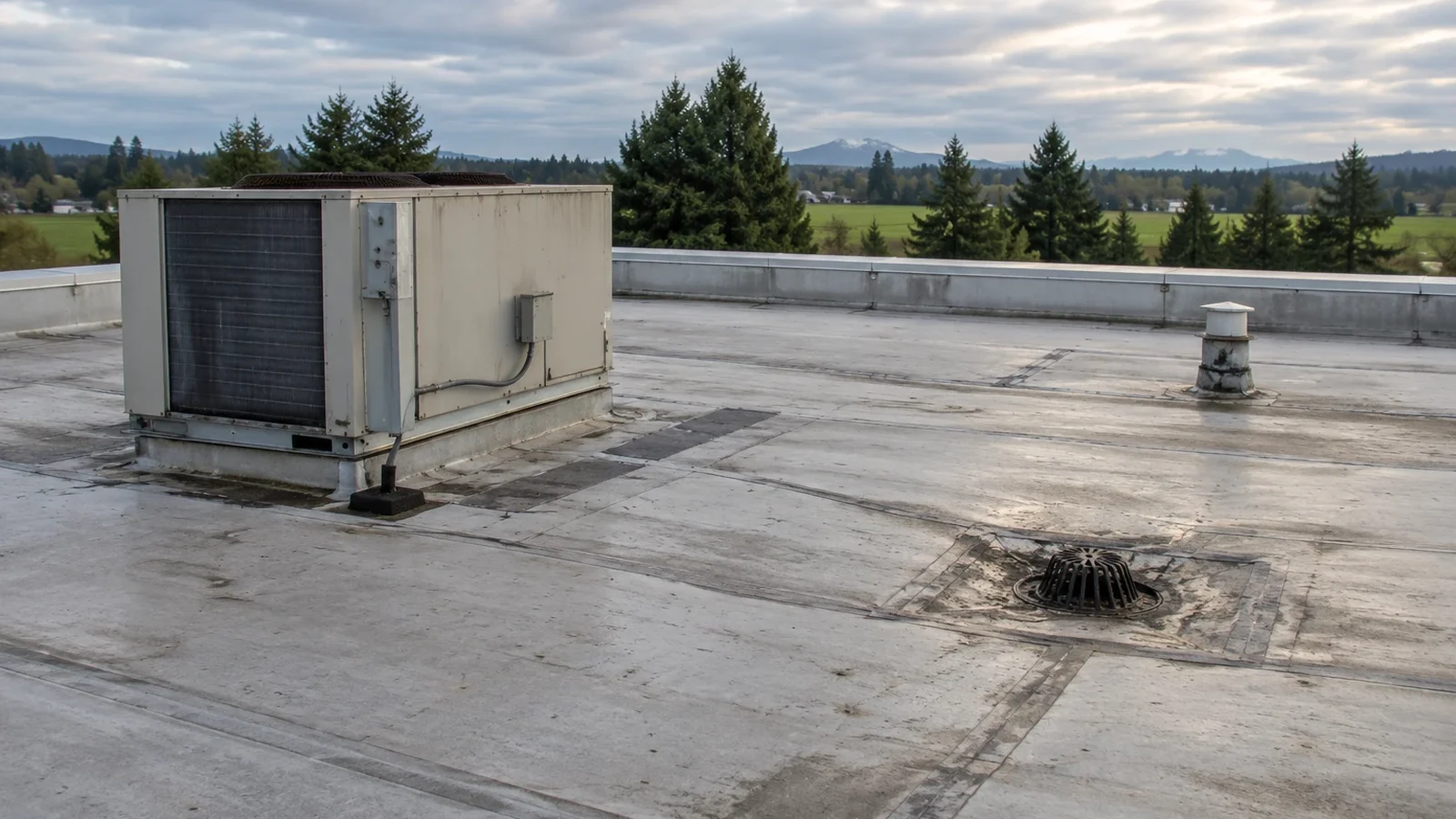
We walk the entire roof, not a sample. The field comes first: membrane condition, seams, fastener backout, blisters and punctures. Then the perimeter, with coping caps, edge metal, counterflashing and reglets. Then every penetration, curb and drain. A hands-on inspection means we touch the seam, press the flashing and probe the lap.
We also look at the roof edge condition from the ground, then from above. Sagging gutters, stained fascia and displaced metal show movement before a leak does. Wall-to-roof transitions get a closer look, since a failing termination there can let water travel into a wall cavity unseen.
Interior evidence gets read too. Stained tiles, efflorescence on a wall and a musty corner all point upslope. We bring those marks to the roof and test the likely entry. A roof can look intact from the hatch and still have a lap that lifts under a thumb. That lap is the finding.
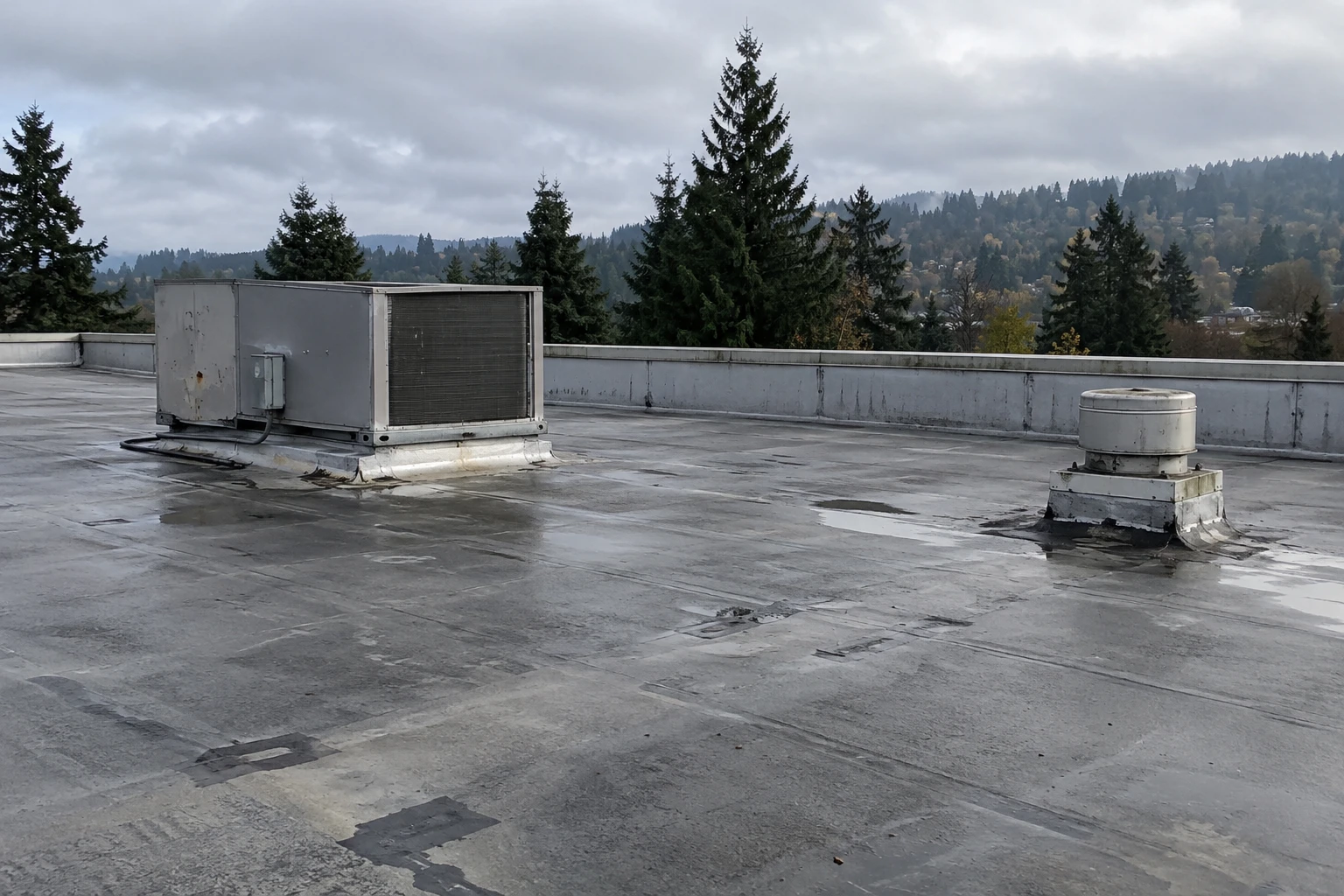
Equipment on the roof gets its own pass. Rooftop units, exhaust fans, antennas and conduit all pierce or sit on the membrane. Service crews walk the same paths again and again, and wear shows along those lines. We note walk-pad needs, loose curbs, missing caps and any sealant that has hardened or split.
Ponding and drainage
Bellingham averages about 34.8 inches of rain a year, so drainage is a daily test. After a rain, we look for water that remains on the surface more than a day after. Ponding water shortens membrane life and hints at deck deflection or a clogged drain.
We check each drain, scupper and overflow. Strainers, clamping rings, sump depth and outlet size all get a look. Debris and moss in a scupper throat cut its flow. Snow arrives mostly December through February, roughly 10 inches a year, and melt tests the same outlets. A blocked drain in January is a cheaper fix in October, which is why drains lead the report.
Findings and photos
Each finding gets a photo, a location on the roof plan and a rating. The rating is plain: patch now, fix this season or watch. A cost range follows. The facility manager can sort the list by urgency or by trade, and the general contractor can lift the items that belong in a bid.
A summary page sits on top of the list. It names the roof system, the visible age indicators, the drainage condition and the main risk. It does not guess at remaining life without evidence to support it. If a full condition report is needed for capital planning, the inspection data feeds it directly, with added moisture mapping where the owner wants it.
When to add instruments
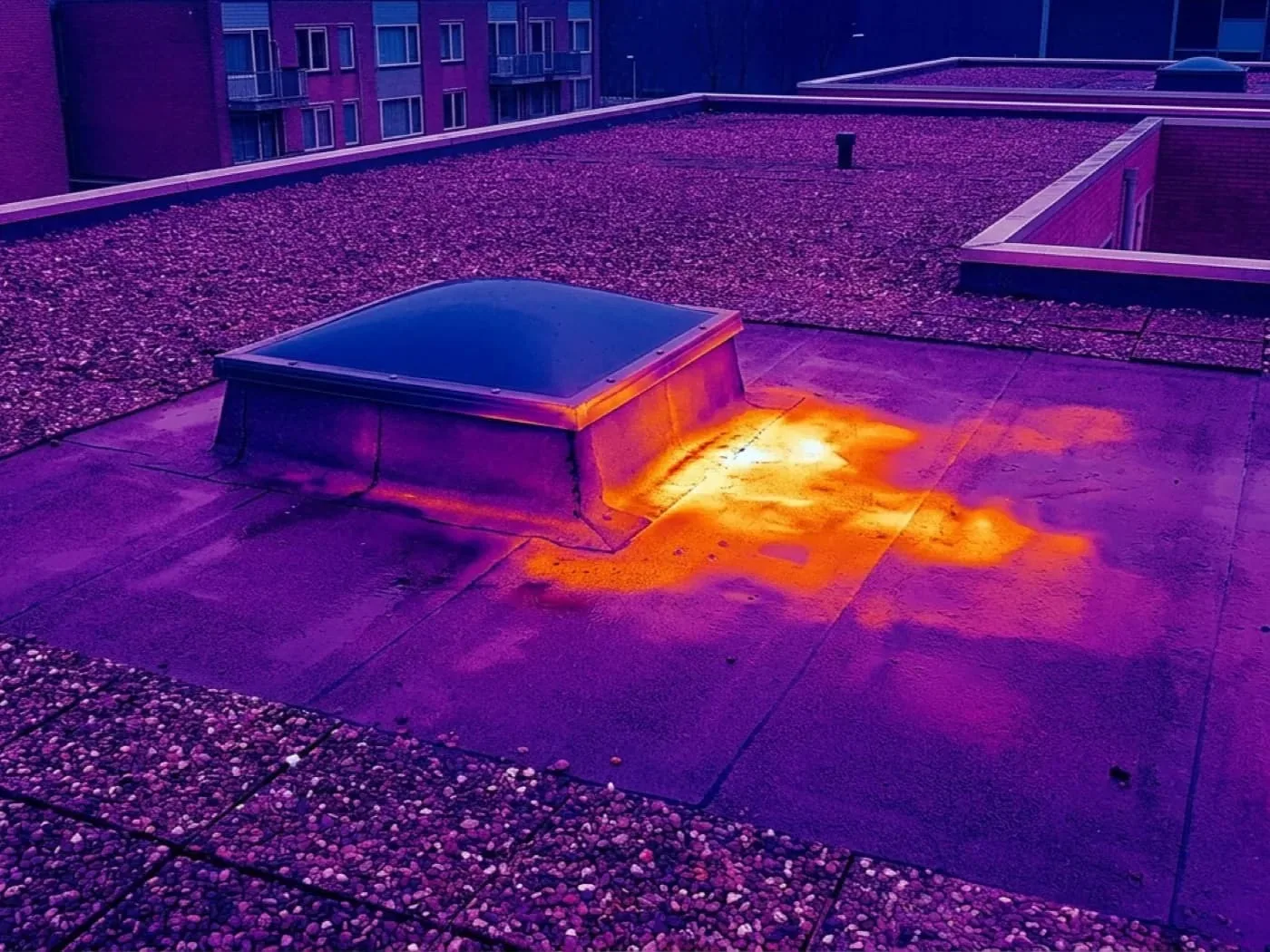
Eyes and hands find most defects. Instruments find what lies below. An infrared moisture survey maps trapped water under the membrane. A drone flight covers very large roofs or those with unsafe access, and it records the whole surface in one set of images.
We recommend each tool when the roof calls for it. A small, dry, recent roof rarely needs infrared. A large roof with a history of leaks often does. At a Port of Bellingham industrial park such as Marine Drive or Airport Industrial, a drone can shorten the first pass whenever roofs are wide or the access is awkward. The tool is a bid line of its own, so you choose it knowingly.
Institutional and retail roofs
Institutional owners need a plan across buildings. Western Washington University has more than 16,000 students, and Whatcom Community College and Bellingham Technical College add more buildings to the city. Around Sehome and the university, an inspection that rates each building separately lets a capital plan sort the roofs by need instead of by habit. A school roof program benefits from the same method.
Retail follows a different logic. Bellis Fair, a one-story enclosed center of roughly 773,000 square feet, sits at the I-5 and SR 539 interchange with big-box stores around it. Floor area says nothing about roof condition, so each building is walked on its own terms. Tenants and hours shape when the walk happens, and we schedule it around receiving, store hours and quiet periods.
Healthcare adds a third pattern. PeaceHealth St. Joseph Medical Center is the city's largest employer, and healthcare is a major roof user in Bellingham. On a medical building, the inspection plan names the rooms below each roof area so that a finding over a clinical space is flagged first and handled with extra care.
Before the wet season
The best time to inspect is late summer, with the roof dry and the findings fresh. July is the driest month, and a September report lets repairs close before November, the wettest. The deck is dry enough to take a patch, and the sealant cures properly.
After a major wind, an inspection is also warranted. Gusts of 67 mph in March 2016 tore stucco from a Bellingham storefront, and the November 2024 bomb cyclone damaged homes in Sudden Valley. Edges and caps are the first places we look after wind. Do the same check before a sale or refinance, since a buyer's inspection will find what the owner did not. A due diligence survey adds the cost and timing numbers a lender expects.
Commercial Roofing Questions
What does an inspection cost, and what drives the number?
Roof size, access and the instruments used set the price. A walk-through on an easy-access roof is the low end. Adding infrared mapping, a drone flight or core cuts raises it. We quote each element separately so you can choose the scope that matches the decision in front of you.
Will you tell me how much life the roof has left?
We give a condition rating and a range, based on what we see and measure. Remaining life depends on factors we can only estimate, such as future weather and maintenance. We say what the evidence supports and flag what it does not.
How do you handle a roof the tenants will not let you cross?
We coordinate with the property manager for access windows. Where a section is off limits, the report says which area was not walked and why. A drone can cover areas a crew cannot enter, though it does not replace a hands-on check of seams.
Can the inspection support a warranty claim?
It can document condition, and the photos help. Warranty claims follow the manufacturer's rules, and those rules vary with the system. We record the evidence and the roof layout, and the owner takes the file to the claim.
What does a clean report look like?
A short one. The findings list shows items to watch, no active defects and a drainage check that passes. It still goes into the building file, because a clean report today sets the baseline for the next one. Pair it with preventive maintenance to keep it that way.
Send the roof plan and the questions you need answered
Tell us the building, the decision and the date it is due. We will walk the roof and send findings with photos and cost ranges you can use in a budget or a bid.