Commercial Roofing on the Guide Meridian Corridor, Bellingham, WA
Commercial roof recover, repair and replacement along the Guide Meridian corridor in Bellingham, WA, for large retail roofs worked over live sales floors.
Commercial Roofing on the Guide Meridian Corridor, Bellingham, WA
Commercial roof recover, repair and replacement along the Guide Meridian corridor in Bellingham, WA, for large retail roofs worked over live sales floors.
Service Areas
Guide Meridian Corridor in Bellingham
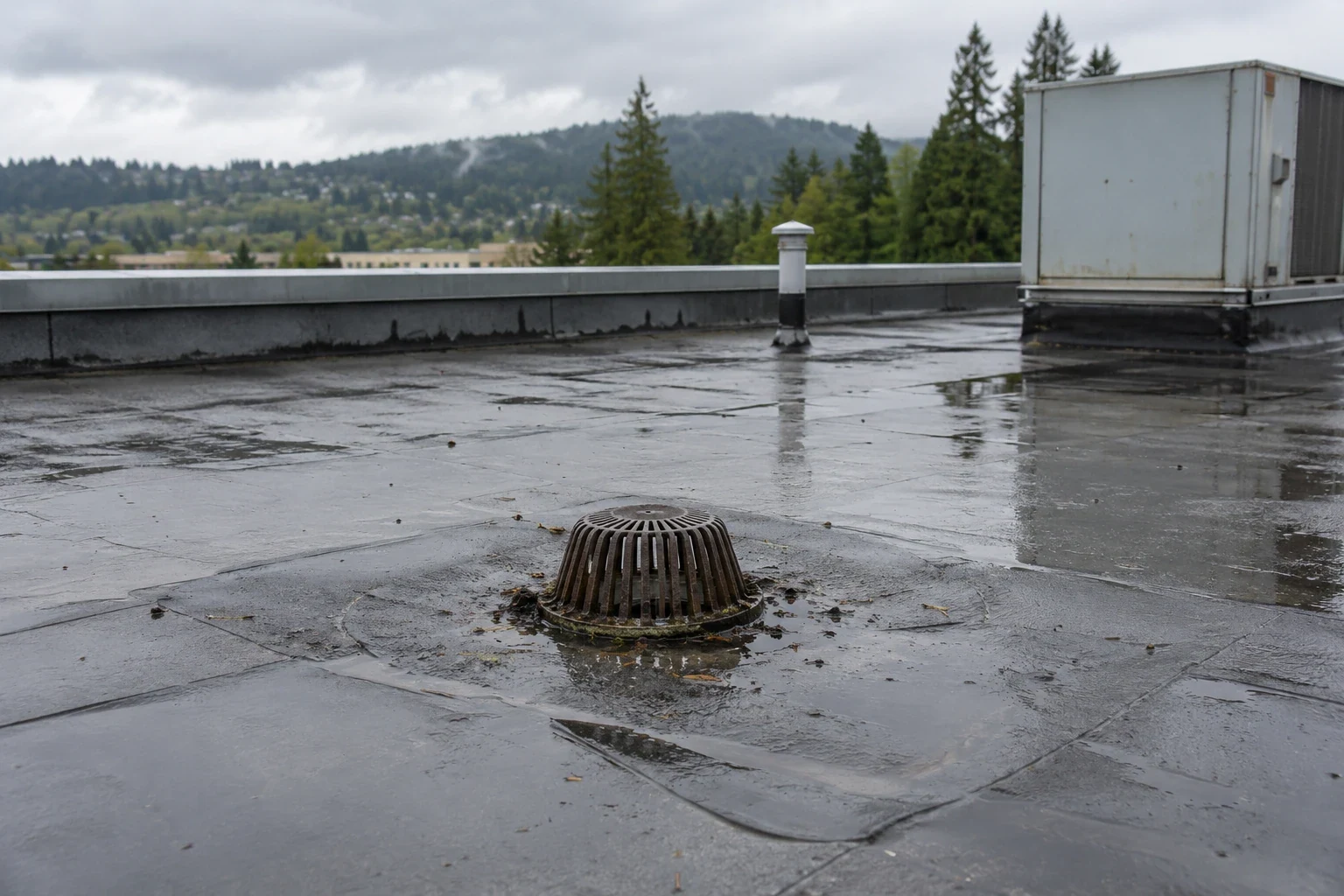
A drain set a foot from the low point turns a retail roof into a pond. On a long flat roof, that foot is where the water stops. The Guide Meridian corridor in Bellingham, WA follows SR 539, the road that links the city to Lynden and the border and meets I-5 at the Bellis Fair interchange. Large retail clusters sit there, and the roofs run wide.
We price corridor work by drain count and blackout date. Send us the drawings, the store's holiday freeze and the target dry-in window. We will mark each curb, drain and termination before the bid closes.
Overview
Guide Meridian Corridor
Retail around the interchange
Bellis Fair Mall is an enclosed retail center of roughly 773,000 square feet, and it sits at the I-5 and SR 539 interchange. Target, Kohl's, Dick's and Ashley Furniture are among the large tenants that surround it. The cluster puts several big roofs side by side, with shared drives and shared drainage.
Floor area tells us nothing certain about roof area, and a retail listing tells us nothing about roof type. The first walk measures the roof, identifies the system and maps the drains. Only then do we know whether the sheet is single-ply, built-up or a coated metal deck.
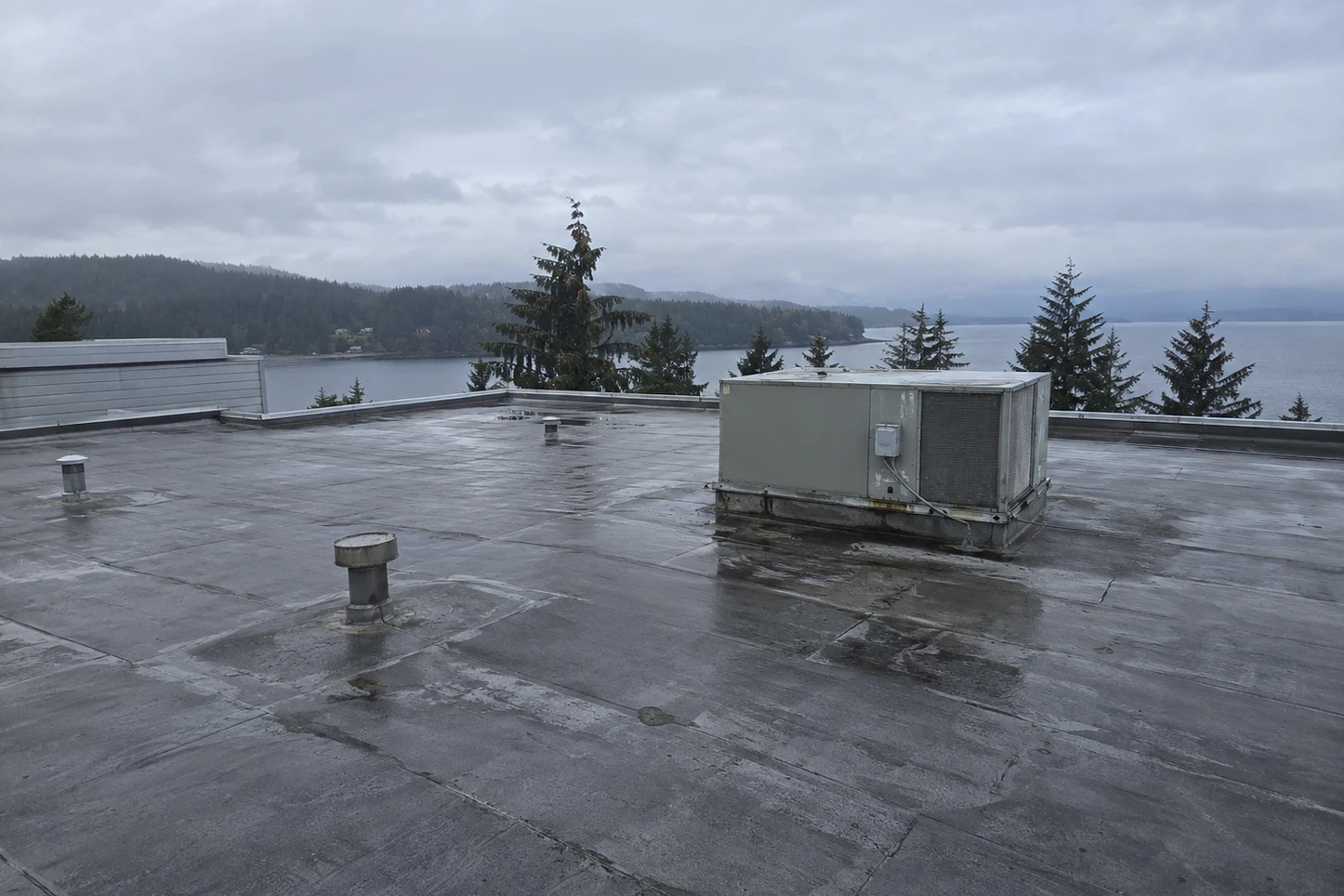
Big retail roofs have four traits in common. Drain runs are long. Rooftop units are many and heavy. Service crews wear paths into the surface. Stores must stay open under the work. The bid follows those four traits.
Rooftop units deserve their own count. A large store may carry dozens of them, plus refrigeration condensers, exhaust fans and make-up air. Each sits on a curb, each curb needs a flashing, and each flashing has an age. We list them all with a rating, so the owner sees which curbs are original and which were added in a later remodel. The list also shows where service techs walk, and that is where the membrane wears first.
Long runs to the drain
Water on a wide, flat roof has far to travel. A sump that sits an inch high leaves an inch of water behind it across the field. A strainer clogged with moss and needles does the same job. With only about 1,866 hours of sun a year, Bellingham gives moss plenty of shade to live in on a membrane.
We map every drain and scupper, then pour water and watch where it goes. We measure sump depth, strainer condition and overflow height. Ponds after rain mark the low spots, and each gets a measured depth and a named cause: sag, a high drain or a missing cricket. A drain and scupper repair rarely tops the bid in cost yet pays back the most, and it ends warranty arguments before they start.
Interior drains are the hidden half of the system. Pipes run down inside walls and columns, and a cracked fitting leaks inside the building long before the roof shows a stain. When a roof leak and a pipe leak look alike, we test both with water, because replacing a membrane to cure a plumbing fault is an expensive mistake.
What moves the price
Area, penetration count, insulation depth, drainage and phasing set the price of a corridor roof. The membrane itself is the smaller number.
Statewide energy rules in force since March 15, 2024 decide the insulation depth, and each added inch lifts the flashing at every curb. Unit counts on a large retail roof run high, and each unit is a detail. Phasing adds supervision and interior protection to the bid.
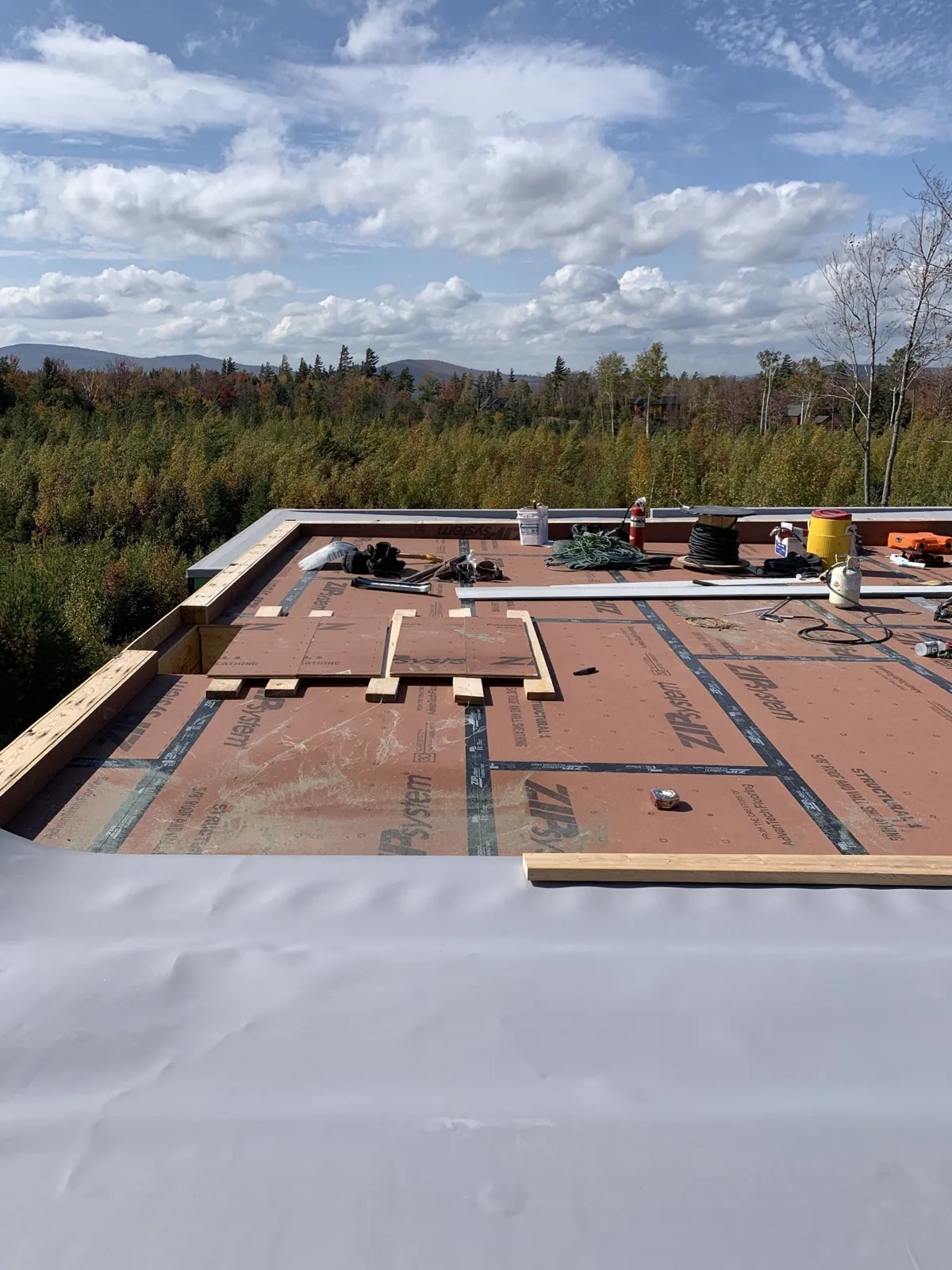
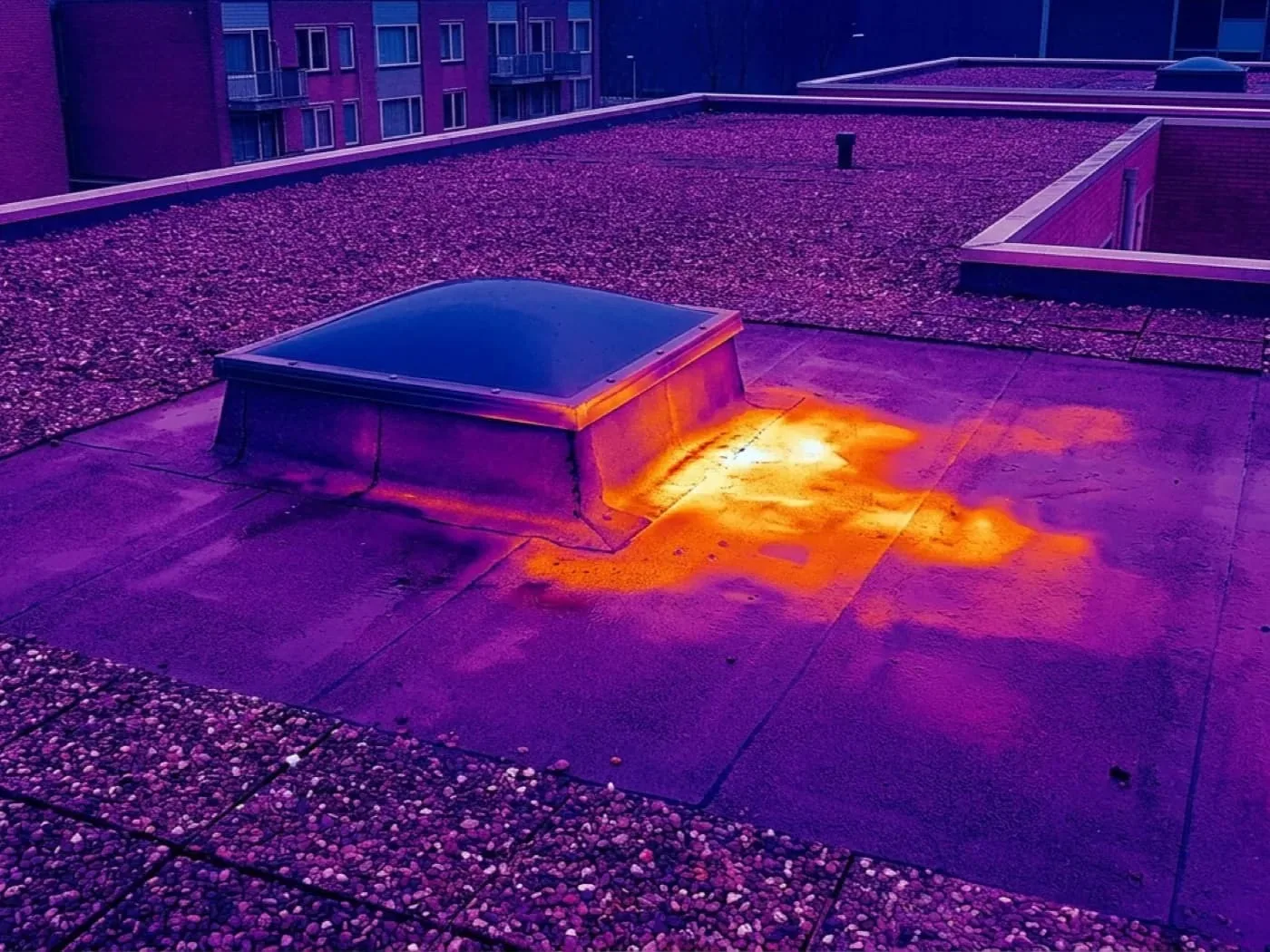
On a dry roof, a TPO recover is the usual alternative to a full tear-off. It keeps the sales floor quiet and saves days. An infrared moisture survey and core samples settle whether the roof qualifies. Both options go in front of the owner at once.
Remodel dates belong in the conversation. A store that plans a floor reset next year may want the roof done first, so new fixtures are not exposed to a leak. A store that expects to close wants a repair and not a new system. The capital plan decides the choice, because a roof held for fifteen years is a different purchase from one sold in three.
Dry-in over a live floor
Yearly rain here totals about 34.8 inches, and the calendar runs wettest in November and driest in July. Many retailers also close the roof to work from early November through the new year, because holiday sales come first.
That leaves spring through early fall. The roof is divided into sections, and each one is opened, dried in and closed within a single day. A tarp crew waits nearby. Staff inside keep a leak watch going until each section is sealed. Shoppers should see no wet floor.
When a leak cannot wait for summer, a wet-season method applies: small areas, same-day close and covered stock. The bid prices it, and the store weighs that cost against a closed aisle.
Contingency has a line of its own. Steel deck repair is priced as an allowance and a unit rate, because the deck stays unseen until tear-off. The owner sees both numbers before award and knows what a surprise will cost.
Wind off the open lots
A 67 mph gust in March 2016 tore stucco from the Bellingham Home Depot storefront. The November 2024 bomb cyclone pushed easterly wind through Sudden Valley. Retail buildings carry tall fronts, big signs and wide parapets, and every one of those meets wind first.
We write edge metal gauge and fastener spacing into the scope. Seams get probed and caps get pulled. Sign bases and rooftop screens get a fastener check of their own. When the punch walk ends, the store or its property team receives a roof map, a photo set and a log of penetrations.
After a storm, a quick walk finds what the wind moved: lifted caps, shifted screens, loose sign hardware. A fast fix keeps a small problem from turning into a leak on the next rain. Emergency crews respond at any hour for exactly that case.
Neighbors along the arterial
The corridor ties together several districts. Cordata lies to the north, Birchwood sits near Bellis Fair, and Irongate and Meridian run along SR 539. Each has its own drainage, access and tenant mix. A big box store and a strip shopping center can sit on the same arterial and still need very different plans, so we write them separately.
Commercial Roofing Questions
How does a large store stay open during a reroof?
Through phasing. Each section closes the same day it opens, staff watch the interior, and loud tasks move to the early hours before the doors open.
What happens to the roof schedule during holiday sales?
The roof stays closed to work. Jobs wrap up before early November, and only emergency response remains on call afterward.
Why count drains before pricing the field?
Standing water ages a membrane and loads the deck. Fixing drains costs far less than the damage ponding does, so the count comes first.
Can new membrane go over the old one?
On a dry assembly with a deck that carries the load, yes. Moisture readings and core samples make that call.
Who should sign for vendors who visit the roof?
The store or its property team. A simple access log records each visit, and we add it to the closeout file.
What does a quick post-storm walk look for?
Lifted caps, shifted screens and loose sign hardware. Catching them early keeps a small wind problem from turning into a leak.
Send the drawings and the blackout dates
Send the roof plan, the spec and your target dry-in window. We will price every drain, curb and termination before the bid closes.