Commercial Roofing on the Marine Drive and Squalicum Waterfront, Bellingham, WA
Roof repair and replacement on the Marine Drive and Squalicum waterfront in Bellingham, WA, with salt-air hardware, marina access and dry-in planning.
Commercial Roofing on the Marine Drive and Squalicum Waterfront, Bellingham, WA
Roof repair and replacement on the Marine Drive and Squalicum waterfront in Bellingham, WA, with salt-air hardware, marina access and dry-in planning.
Service Areas
Marine Drive and Squalicum Waterfront in Bellingham
Salt eats a fastener before it eats a membrane. A steel screw that looks fine in October can show a rust bloom by spring, and the cap it holds goes loose in the next gale. On the Marine Drive and Squalicum waterfront in Bellingham, WA, the hardware list is the first line we write. It costs a little more up front and saves a cap.
The district mixes industrial, marina and marine-trade buildings. Send the drawings, the berth or yard access plan and a target window, and each termination, metal line and lift gets marked ahead of the bid close.
Overview
Marine Drive and Squalicum Waterfront
What operates along the water
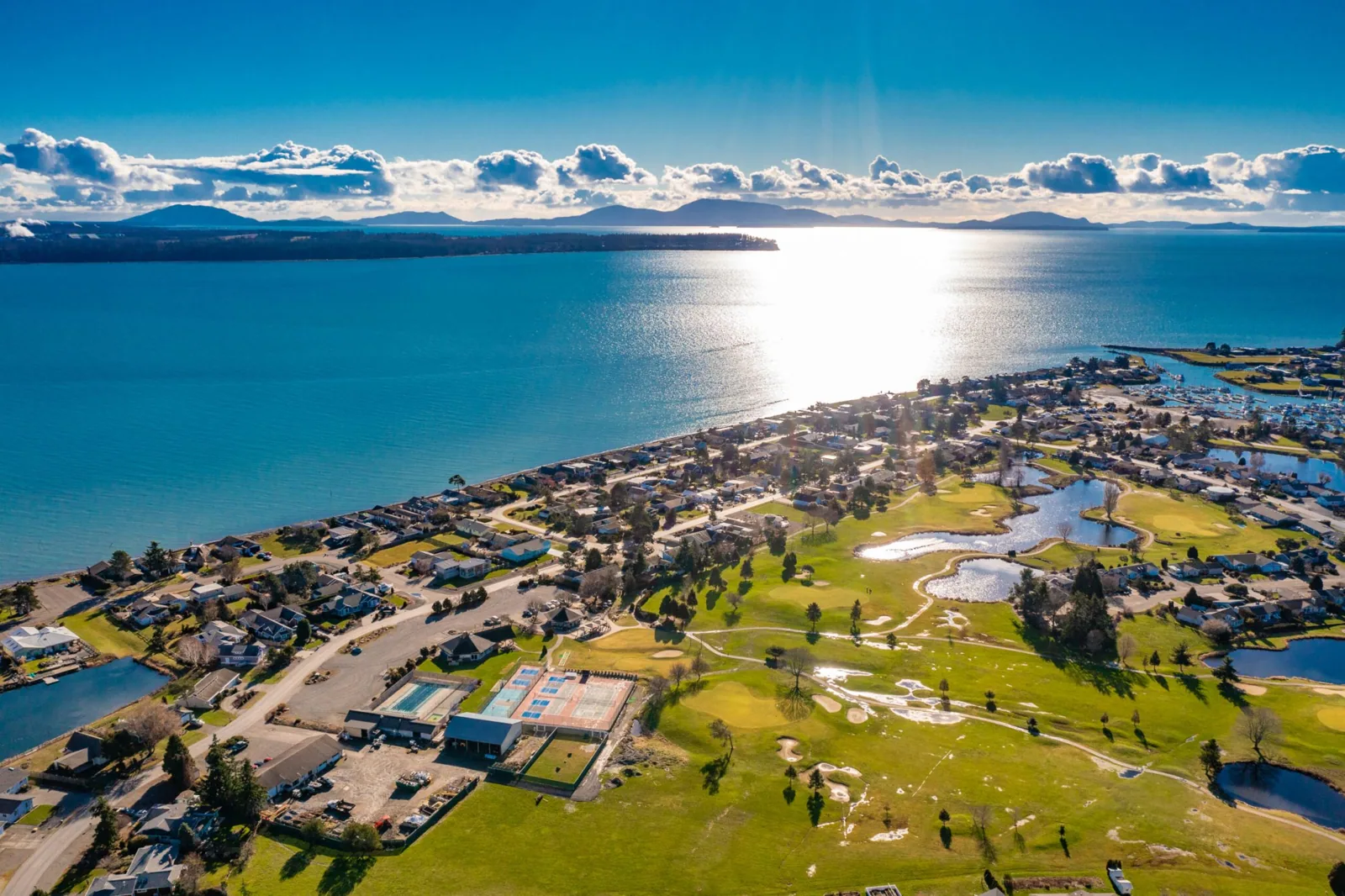
The Port's Marine Drive Industrial Park is part of its industrial portfolio. Squalicum Harbor is a full-service marina with over 1,400 boats, and Harbor Mall offers commercial suites aimed at marine trades. Along Hilton Avenue, the marine area holds shipbuilders, marinas and cruise and shipping terminals.
Those facts name uses, not roofs. A marina suite, a boatbuilding shop and a cargo shed each carry different loads and different drainage. We identify the roof system on the first walk and note what the building does beneath it. A shop that works with paint, resin or solvent adds exhaust. A yard building adds forklift traffic at its doors. An office adds rooftop units. Each use sets its own rule for the roof.
Marina suites matter for a different reason: they sit close together. Shared walls and shared drains mean a leak in one suite is a conversation among several tenants. We document the failed detail with photos and dates so the landlord and the tenants can settle responsibility without guessing. The roof file lists every suite's penetrations, because a tenant who adds a vent or a fan adds a leak path.
Salt, spray and the hardware list
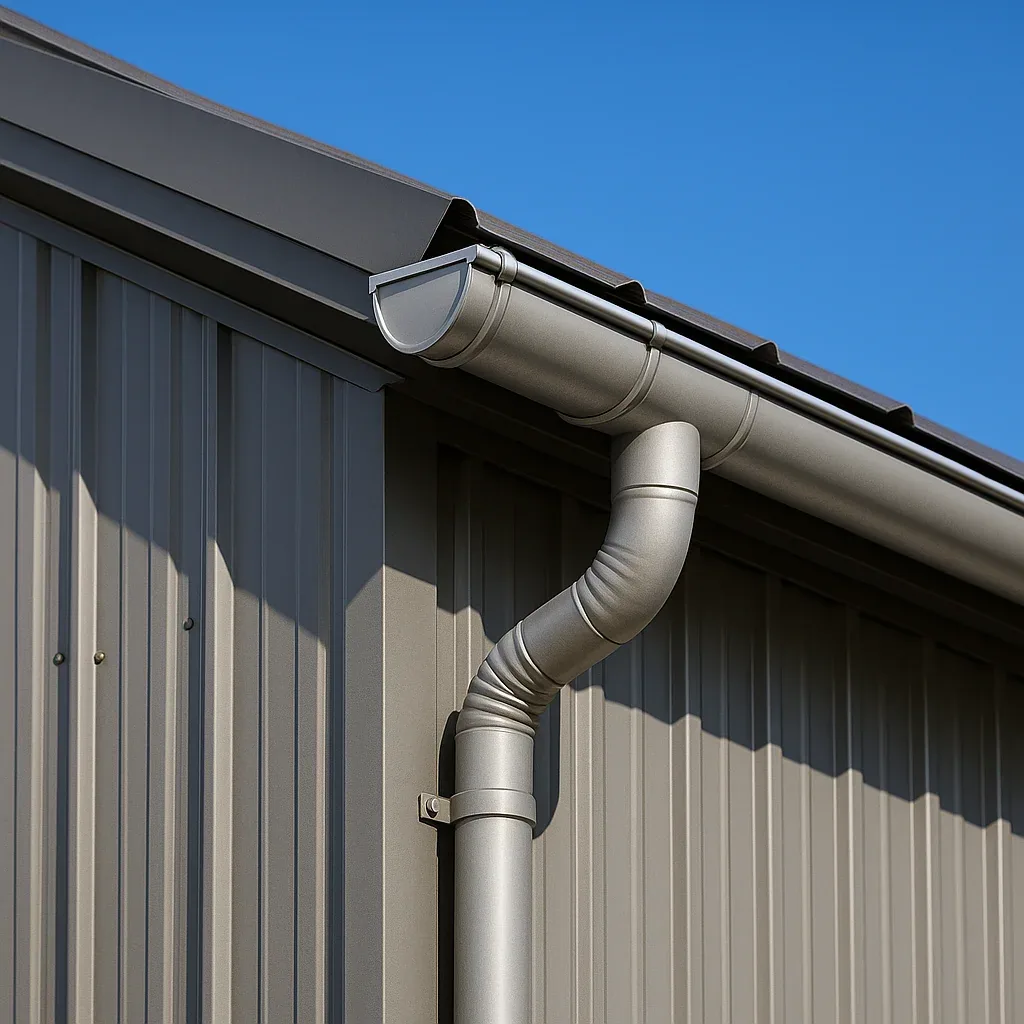
Waterfront air carries salt, and salt works on every exposed metal part. Fasteners, plates, edge metal, counterflashing and screen frames all take it. We specify corrosion-resistant fasteners and coated or stainless edge metal in the splash zone, and we say where the zone ends on the roof plan.
Inspection frequency follows the exposure. A roof inland may get a yearly look. A roof at the water earns a spring and a fall look. We photograph rust at caps, plates and seams, and we replace what has started to bloom. A coping and edge metal repair in April costs a fraction of the same repair after a winter gale.
Sealants age faster in salt air and strong sun reflected off water. We choose products rated for marine exposure and note the cure window, since a sealant applied in a damp morning may never bond. Where a cap seam shows hairline cracks, we reseal it the same visit and log the date. Gutters and downspouts near the water collect salt crust and bird debris, so they get cleaned at every visit.
Roof-mounted lights and antennas, common at a working harbor, add penetrations. Each one gets a boot or a pitch pan, checked for rust at its base.
Yards, docks and lift planning
Waterfront sites have tight yards, shared drives and moving boats. A lift or a crane needs a clear footprint, and a clear footprint may sit where a trailer or a hull usually does. We walk the yard with the tenant and pick the pad before we price the pick.
Deliveries follow the tenant's working day, and we match it. Material staged near open water gets tied down, because wind off the bay moves loose insulation and rolls. Debris chutes keep falling material off docks and out of the water. Each of these measures is its own bid line, and each reflects a real cost of working beside a marina.
Traffic on the waterfront varies with the season. Cruise and shipping terminals along Hilton Avenue bring truck and bus movement, and harbor events fill the lots. We plan crane days for quiet hours and book flaggers when a drive crosses a pedestrian way. Crew parking stays off the marina lots, which belong to boat owners.
What shapes the number
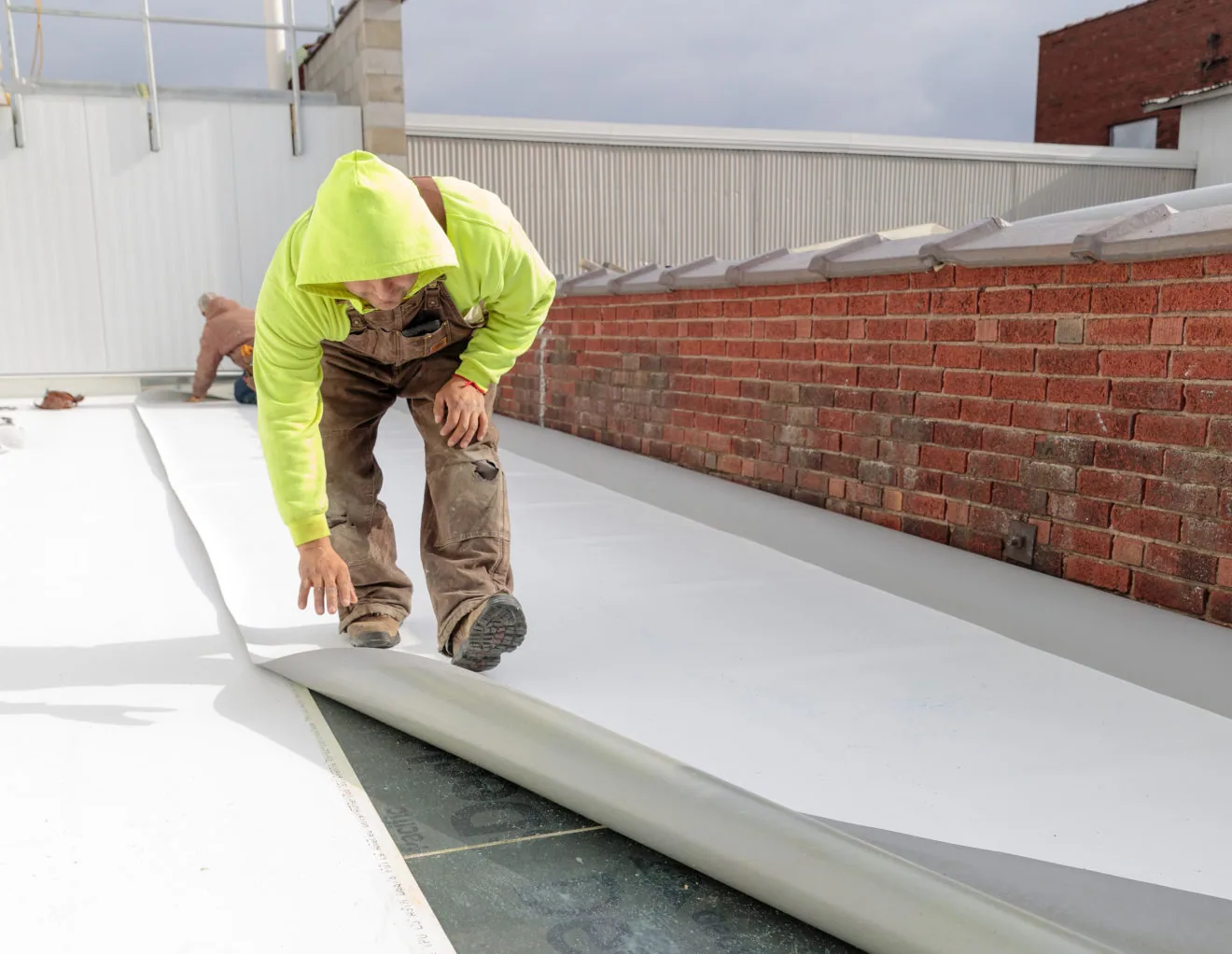
Hardware grade, access, deck condition, insulation depth and phasing set the price. The membrane is the lesser cost. Under Washington's energy rules from March 15, 2024, a replacement assembly carries more insulation, and every curb and wall flashing rises to match. We count layers on the first walk, since the existing building code caps the number a roof may carry. A PVC sheet resists many oils and chemicals, which suits a boat shop with resin and solvent exhaust. A moisture survey and core samples show whether a recover is possible, and the owner sees recover and replacement priced next to each other.
Staging is a cost item here that inland sites rarely see. Material that sits near open water needs tie-downs and covers, and a day of high wind can send a stack of insulation into the bay. We price staging separately and recommend delivering material to the roof the day it is used.
Wet season, low sun and wind off the bay
Bellingham receives roughly 34.8 inches of rain a year, with the heaviest month in November and the lightest in July. Sun reaches the ground only about 1,866 hours a year, so decks beside the water stay damp for long stretches. Moss thrives in the shade of a marina building.
We schedule large work for the dry months and keep openings small when the forecast is thin. Wind is the other constraint. Bellingham's 67 mph gust of March 2016 took stucco off the Home Depot storefront, and the easterlies of the November 2024 bomb cyclone crossed Sudden Valley. Wind off the bay arrives with spray. Perimeter fastening, probed seams and pulled caps close every waterfront job.
After the punch walk the owner receives a roof map, a photo set and a hardware log that lists every fastener grade used in the salt zone. When a later crew replaces a cap, the log tells them which screw to use, so a cheap substitute does not undo the work.
Nearby districts
Waterfront roofs share a shoreline with the Whatcom Waterway waterfront and with Fairhaven on the same bay. A boat shop and a manufacturing plant share many chemical-exposure rules, while a harbor-side restaurant brings grease fans into the mix. Each gets its own zone in the roof file.
Commercial Roofing Questions
Which fasteners hold up near the marina?
Corrosion-resistant types, matched to edge metal that is coated or stainless. We mark the salt zone on the roof plan and check the hardware twice a year.
Can a crane work in a tight boatyard?
Often, with a pad chosen on the walk. We pick a spot away from trailers and hulls, and we confirm it with the tenant before pricing.
What membrane suits a boat shop?
One that resists resin, solvent and oil exhaust. PVC is a common answer, and we zone it to the exposure area.
How often should a waterfront roof be checked?
Twice a year: spring, to catch winter damage, and fall, before the wet season. Rust at caps and plates is the main thing we look for.
How do you keep debris out of the water?
Chutes, covered bins and tied-down staging. Wind off the bay moves loose material, so we secure it daily.
What keeps sealant from failing in salt air?
Products rated for marine exposure, applied to a dry, clean surface inside the cure window. We log each reseal and recheck it at the next visit.
Send the drawings and the yard access plan
Send the roof plan, the berth or yard access plan and a target window. Every termination, metal line and lift gets a price before the bid closes.