EPDM Roofing in Bellingham, WA
EPDM rubber roofing in Bellingham, WA: seam tape and splice details, ballasted and adhered options, and cold-season install timing for flat roofs.
EPDM Roofing in Bellingham, WA
EPDM rubber roofing in Bellingham, WA: seam tape and splice details, ballasted and adhered options, and cold-season install timing for flat roofs.
Roof Systems
EPDM Roofing in Bellingham
Black rubber warms up on a gray day. That is the quiet advantage of EPDM in Bellingham, WA, where the sun gives about 1,866 hours a year and a white sheet barely earns its reflectance. A dark membrane holds a little heat, dries a little faster after rain and keeps moss from settling as easily. It does not fix a bad detail, but it helps with the weather.
EPDM is a synthetic rubber sheet sold in large rolls. It is flexible in cold, simple to cut and repair, and cheaper per square than most single-ply sheets. The tradeoff is the seam, which is glued or taped, not welded. We spend our bid time there.
Overview
EPDM Roofing
What the rubber does well
EPDM stays flexible in cold. A hard freeze that stiffens plastic sheets leaves rubber supple, which means installs can continue in conditions that slow other systems. Bellingham sees occasional cold snaps in December through February, so that range matters.
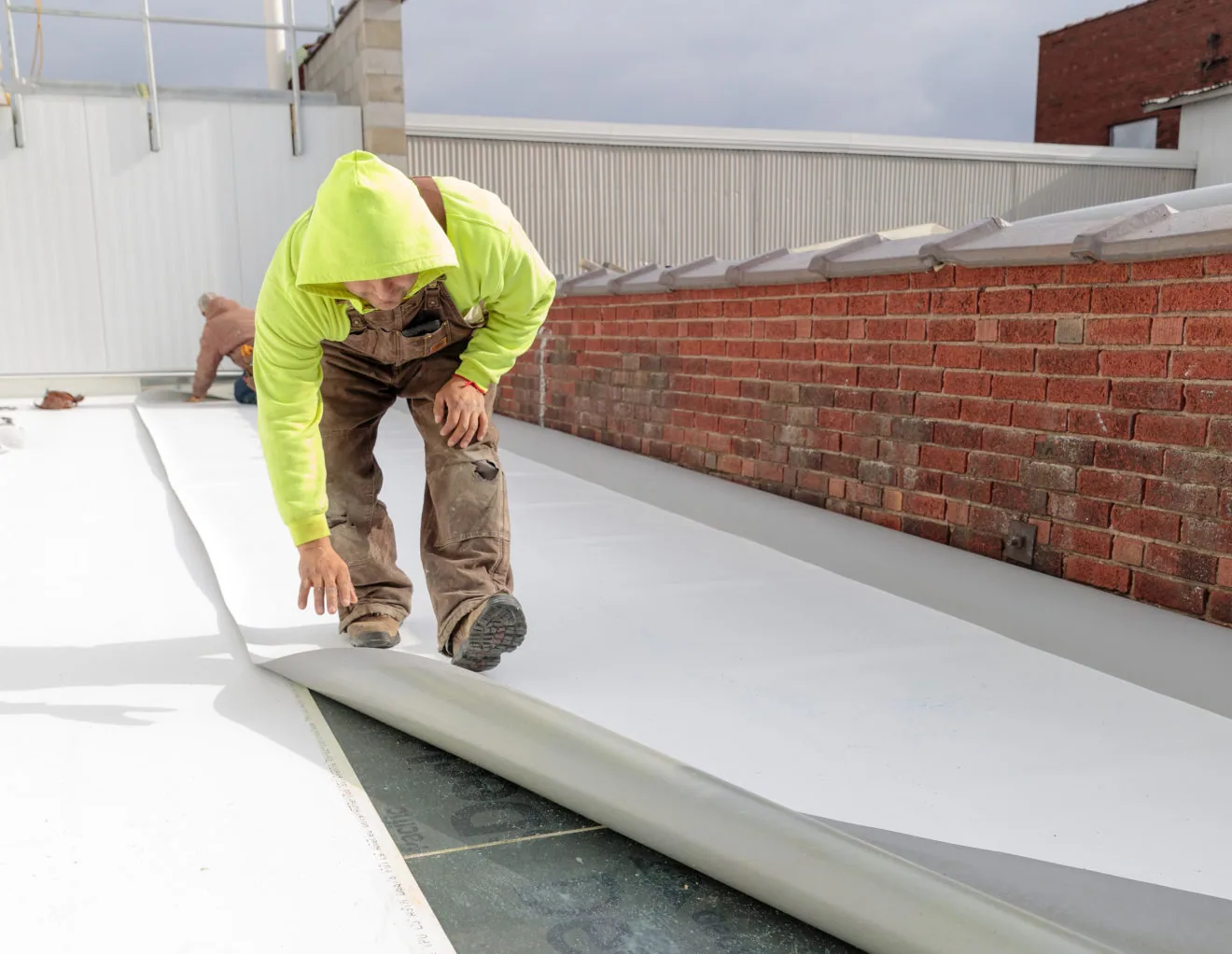
Rolls are wide. Sheets up to fifty feet across leave few seams in the field, and fewer seams mean fewer failure points. On a large flat roof, the saving in splices is real.
Hail and foot traffic are less of a worry than with thin plastic sheets. Rubber absorbs impact. A mechanical trade walking to a rooftop unit scuffs it without cutting through. Walk pads still go in at service routes, because repeated traffic wears any surface.
Weight is another gain. A fully adhered EPDM sheet adds little to the structure, which helps on older buildings that cannot take more load. Cost per square is low, and the material is easy to stock, so lead time rarely holds up a start date.
Edge and corner pieces come as molded accessories. Inside corners, outside corners and pipe boots are cured rubber shapes, not field-cut folds. We order them with the sheet so the flashing day does not wait for a delivery.
Seams, tape and splices
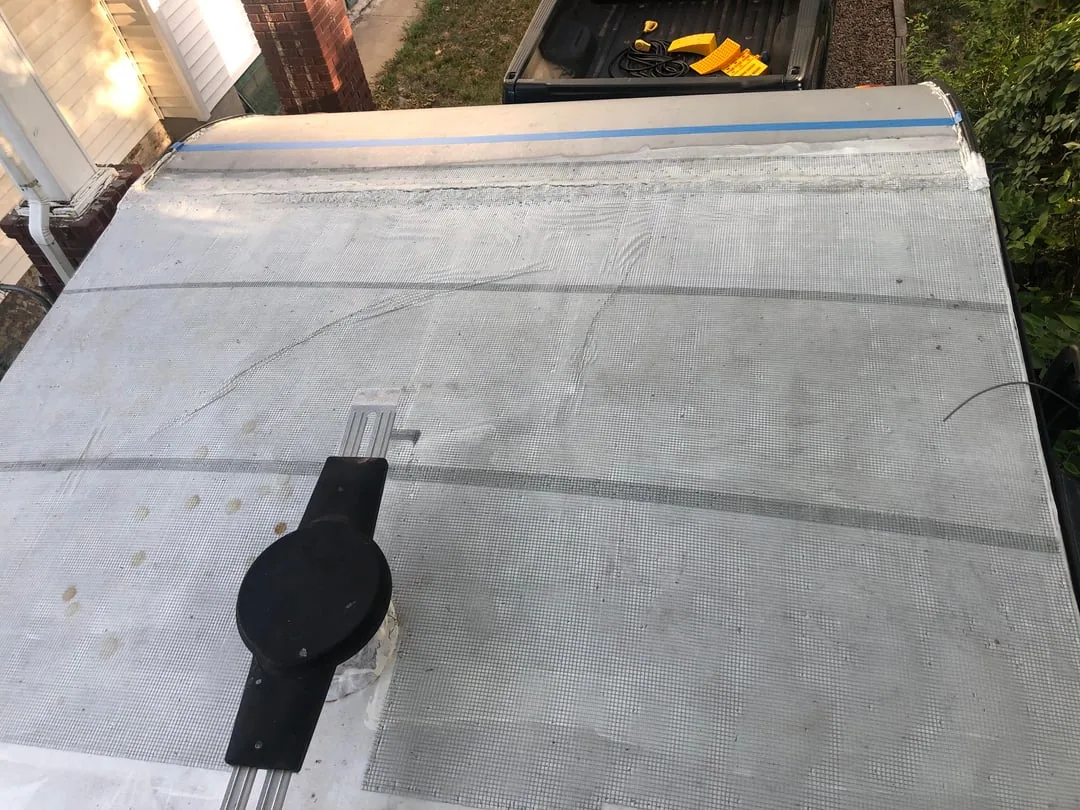
Where sheets join, the seam is the roof. Older EPDM seams were glued with contact adhesive. Newer ones use factory seam tape, a butyl-based strip that bonds under pressure. Tape is cleaner and more consistent, though it still needs a clean, dry surface and a primer.
Dew is the problem here. A sheet that looks dry may hold a film of moisture, and tape will not hold on it. We wait, wipe and test. The crew rolls every splice and checks the edge, and a probe check runs along each run before the crew leaves.
Corners and penetrations use prefabricated boots or cured flashing. Those pieces are glued and sealed with lap sealant. A curb or pipe with a rushed flashing is where an EPDM roof first leaks.
Ballast, adhesive or fasteners
EPDM goes on three ways. Ballasted roofs hold the sheet down with stone, which is the cheapest route when the structure can carry the weight. Fully adhered roofs bond to the substrate with bonding adhesive. Mechanically attached roofs use fasteners and bars at the seams.
Ballast adds a lot of load. Each square carries many pounds of stone, and an older building may not have the margin. We confirm the capacity with the structural engineer before any ballasted plan.
Wind makes ballast less certain. The 67 mph gusts of March 2016 and the easterly winds of the November 2024 bomb cyclone are the kind of event that lifts loose stone at corners. Pavers or heavier stone at the perimeter, plus adhesive at the edge, close that gap.
Adhesive needs weather. Bonding adhesive must flash off before the sheet is set, and cold, damp air stretches that time. A July day lets the crew move fast. A November day does not. We tell the general contractor which mornings are real adhesive days and plan strips around them.
How EPDM ages
EPDM tends to age by shrinking and cracking at details. Flashing pulls away from walls. Splices lift. The sheet itself can chalk on the surface, which is normal, but deep cracking is not.
Moss and algae grow on any flat surface in this climate. On ballasted roofs, the stone holds damp against the rubber, and growth takes hold between the stones. We clear the vegetation, check the sheet underneath and look for ponding, which is where the weak spots hide.
Repairs are straightforward. A cut is cleaned, primed and patched with cured splice tape. Because EPDM is vulcanized, an old sheet does not weld to new material. That makes repairs adhesive-based and sensitive to cleanliness. When an old roof has many failed splices, a seam failure repair program costs more than a recover.
Ponding speeds every one of these problems. Water that stays on rubber for days feeds algae and loads the splices. We shoot elevations on a suspect roof, mark the low spots and add tapered insulation or a drain where the numbers justify it. A roof that drains within a day or two lives longer, and the cost of a cricket is small beside a replacement.
Where EPDM is the wrong sheet
Grease and oils attack EPDM. A restaurant roof under kitchen exhaust softens the rubber and swells the seams. For that building, PVC is the better pick.
Black absorbs heat in summer sun, and buildings with heavy cooling loads may prefer a white sheet like TPO. In Bellingham, where sunshine is limited, the penalty is smaller than in hotter markets, though it remains a factor for cooled space.
Foot-traffic-heavy roofs and rooftop-equipment-heavy roofs may want a thicker or reinforced sheet. A thin unreinforced EPDM shows wear at pads faster than a reinforced one.
Fuel and petroleum products also soften rubber. A roof near fuel storage, a fueling area or a vehicle service bay is a poor match unless the area is protected. We check the building use before specifying.
Where it gets used here
School roofs are natural candidates. Where education buildings carry large flat roofs, from the Bellingham School District to Sehome and Western Washington University, EPDM suits well. The sheet is forgiving, repairs are simple and budgets for public buildings often favor it.
Port industrial buildings in the Airport Industrial Park and along Marine Drive can use it where the budget is tight and the exposure is moderate. Apartment buildings and offices follow the same budget logic.
A school with a summer window is a natural fit, because a dry July gives the adhesive time to cure. That is the rhythm of school roofing. A recover over sound EPDM is also possible with the right separation.
Commercial Roofing Questions
Why would an owner pick black rubber in a gray climate?
The dark surface holds a little warmth, dries faster after rain and resists moss slightly better than a white sheet. With limited sunshine, a reflective surface pays less than it does elsewhere, so the cost and flexibility of EPDM carry the decision.
Is seam tape as good as the old glued seams?
Properly applied, tape is more consistent than hand-brushed adhesive. Both need clean, dry surfaces and firm rolling. We probe every run and keep a record of weather on each day of seaming.
How heavy is a ballasted EPDM roof?
Heavy enough that the structural engineer must approve it first. Stone adds many pounds to every square foot. On older buildings we often switch to adhesive attachment to avoid the load.
Can EPDM be patched when it is old?
Yes, with a cleaned surface, primer and cured splice tape. Because old rubber does not weld, the patch depends on adhesion. We test a small area first, then proceed along the run.
What sends an EPDM roof to the replacement list?
Widespread splice failure, deep cracking at flashings and wet insulation across a meaningful part of the field. Scattered issues can be repaired. We scan the insulation and give a patch-or-replace line for the general contractor.
Send the structural notes and the roof spec
Send the drawings, the roof spec and the load capacity if ballast is on the table. We will price the sheet, the splices and each flashing as separate lines before the bid closes.