Manufacturing Plant Roofing in Bellingham, WA
Roof repair and replacement for manufacturing plants in Bellingham, WA, with exhaust, chemical and shutdown windows priced as separate bid lines.
Manufacturing Plant Roofing in Bellingham, WA
Roof repair and replacement for manufacturing plants in Bellingham, WA, with exhaust, chemical and shutdown windows priced as separate bid lines.
Property Types We Roof
Manufacturing Plant Roofing in Bellingham
An exhaust stack throws a stain line across a membrane within a year. The line shows where chemistry meets the roof. On a manufacturing plant in Bellingham, WA, that line decides the system, the sheet and the repair plan. Roofing here starts with what the building breathes out.
Plants run on tight shutdown windows. A roof that leaks over a line costs more than the roof. Send us the drawings, the process list and the planned outage dates. We will price every curb, stack and termination before the bid closes.
Overview
Manufacturing Plant Roofing
What the plant puts on the roof
Process exhaust, oil mist and cleaning vapors settle on the membrane. Some sheets tolerate that. Others soften, swell or stain. The first walk includes a look at every stack, vent and relief hood. We note where residue collects and how far it travels.
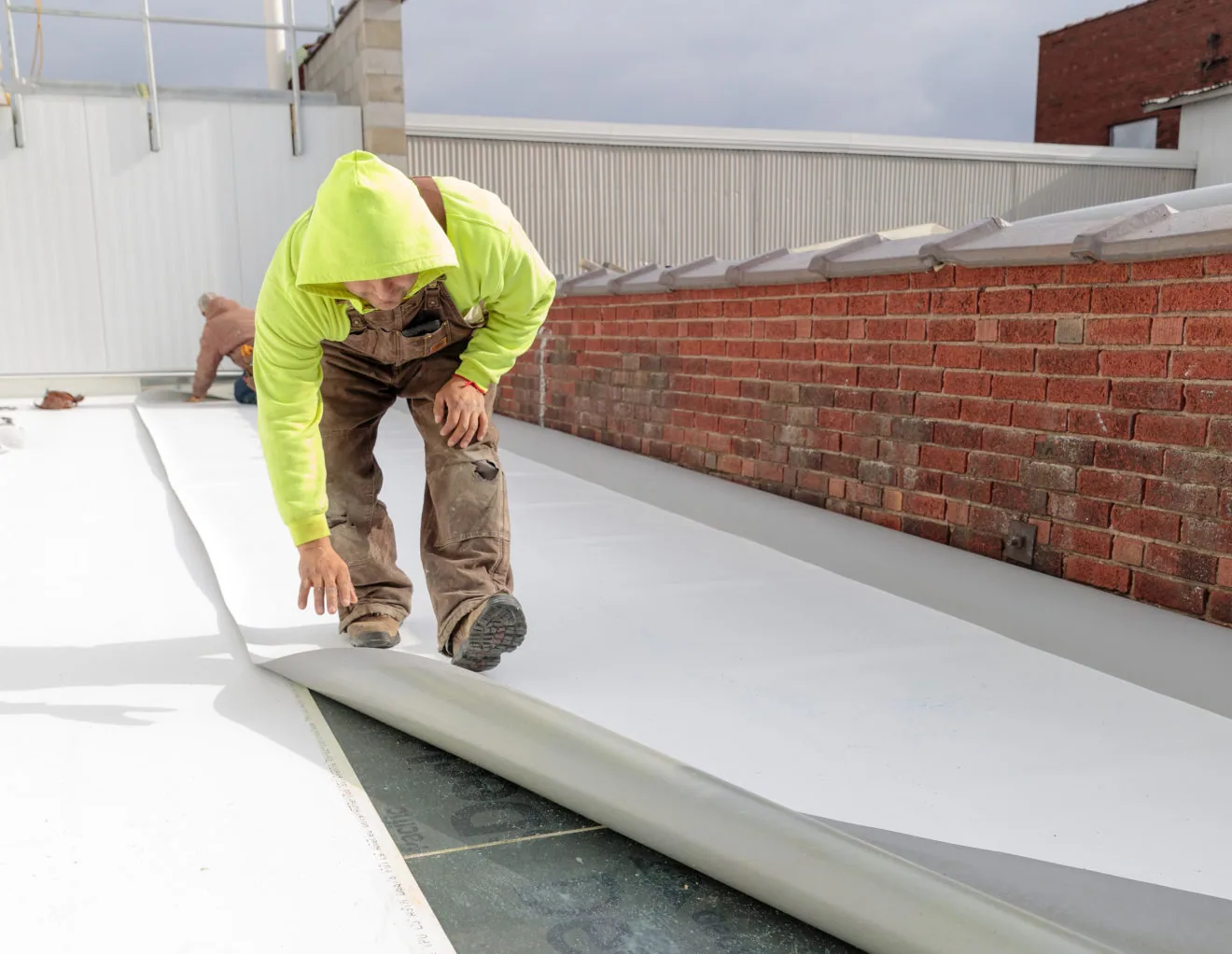
Chemical exposure changes the material choice. Grease and oil attack some single-ply sheets. Others resist them. We match the sheet to the exposure and put the reason on the bid. A PVC sheet is a common answer near fat, oil and solvent vapor. Plain TPO may be fine elsewhere on the same building. Zoning the roof by exposure is cheaper than using the toughest sheet everywhere.
What the process emits and what the cleaning crew sprays both change the scope.
Stain is not always damage. A dark band under an exhaust hood may be cosmetic. Soft, tacky or swollen membrane is damage. We press, scrape and photograph before we label either. Samples can go to the manufacturer for a compatibility check. That step takes days, so it belongs at the start of the schedule.
Where plants sit in Whatcom County
Industry here is varied. The BP Cherry Point Refinery employs about 975 people. Ferndale has refineries and a Brooks Sports shoe plant. Shipbuilders work along the Port's marine area on Hilton Avenue. At least 15 craft breweries operate in older light-industrial buildings.
Each type asks a different roof question. A refinery area asks about vapor and fire rules. A boatyard asks about salt and metal. A brewery in an older building asks about age, load and moisture. We do not assume the roof type from the business name. The first walk answers it.
Shutdown planning in Ferndale and around Cherry Point follows the same steps.
One more point on older stock. A brewery or light-industrial shop in an older building may carry patch layered on patch. We map them. Then the owner sees which sections are sound and which are repair on repair.
What moves the price
Five items move a plant roof price. They are exposure, insulation, penetrations, access and outage length. Membrane is the smallest.
Exposure sets the sheet. The statewide energy code that took hold on March 15, 2024 sets the insulation depth, and depth sets every flashing height. Penetrations are many on a plant roof. Each stack, curb and conduit is a flashing detail. Access is limited by process equipment and fire lanes. Outage length sets the crew size. A three-day window needs a bigger crew than a three-week one.
We price the outage as a line. If the plant can stretch the window, the bid shows the saving. If it cannot, the bid shows the premium. The owner chooses with the numbers in hand.
Access deserves its own line. Plant roofs often have no clear lift path. Process piping, silos or fire lanes block the route. A crane pick over an active yard needs a spotter and a traffic plan. Hoisting by hand through a stair tower costs labor hours. We walk the access path with the plant before we price it.
Shutdown and the dry season
Plant shutdowns rarely match the weather. A planned outage in November lands in the wettest month of the year. Rain comes to roughly 34.8 inches a year in Bellingham, and July is the driest month. Sunshine totals about 1,866 hours, so decks dry slowly.
When the outage is fixed in a wet month, we plan the dry-in first. We stage material under cover. We strip small areas and close them the same day. Temporary protection goes over open sections at night. Each of these has a cost, and the bid carries it.
When the outage is flexible, we steer the work into summer. Terminations and metal close before the rain returns. The savings in labor and delay are real.
Hot work and fire rules
Plants have fire rules. A torch on a roof is hot work. Many plants limit it or ban it. Some insurers require a permit and a fire watch for hours after the last flame. That cost can swing a system choice.
We price cold-applied and heat-welded options beside torch-applied ones. Heat welding uses hot air, not open flame, and it fits many plant rules. We confirm permit, watch duty and extinguisher placement before the first day. The 2021 International Fire Code took effect statewide on March 15, 2024, so the owner and the fire marshal should agree on the plan in writing. A replacement bid lists the permit as its own item.
Fire watch also steals daylight. A watch that runs two hours past the last weld moves the crew's day. We build that into the dry-in plan.
Wind, edges and tall walls
A 67 mph wind struck Bellingham in March 2016, and in November 2024 a bomb cyclone sent easterly gusts into Sudden Valley. Tall plant walls take wind like that first. Plants have tall walls and large roofs. Edge fastening is its own bid line on a plant roof. We specify metal gauge, fastener spacing and corner treatment. High parapets get counterflashing set into a reglet where the wall allows. Caps get a probe and pull check. Loose edges are the first place wind finds a plant roof.
Handing back the roof
Plants need the roof handed back clean. We clear debris from drains and curbs. We log every new penetration. We test drains with water. The punch walk happens with the plant engineer and the general contractor.
The owner receives a roof map, photos and a record of the exposure zones. That record guides future repairs, because each zone has its own material rule. The plant's warehouse wing and any cold storage addition get their own zone in that map. A scheduled preventive maintenance visit each spring catches residue buildup before it becomes damage.
Commercial Roofing Questions
How do I pick a membrane for a plant with oil mist?
Start with the exposure. Oil and grease rule out some sheets. We match the sheet to each zone and write the reason on the bid.
What is the shortest outage a reroof can fit?
It depends on roof size and crew count. We price the same scope at several window lengths so the plant sees the premium for speed.
Will rooftop exhaust void a warranty?
It can. Manufacturers list chemical limits. We check the exhaust list against the sheet data and flag any conflict before the order.
Who coordinates with the plant engineer?
We do, from the first walk to the punch walk. The engineer signs off on exposure zones, access and shutdown dates.
Does heat welding count as hot work?
Hot-air welding uses no open flame, so many plants treat it differently from a torch. Each plant sets its own rule, and we get the answer in writing before day one.
What if the shutdown lands in a wet month?
We shrink the open area, stage material under cover and protect each section overnight. The bid shows the added cost so the plant can compare it with waiting for summer.
Send the drawings and the outage dates
Send the roof plan, the process list and the planned shutdown window. We will price every stack, curb and termination before the bid closes.