Fitness Center Roofing in Bellingham, WA
Fitness center and rec facility roofing in Bellingham, WA: vapor retarders over pools, exhaust loads, skylights and class-hour phasing as separate bid lines.
Fitness Center Roofing in Bellingham, WA
Fitness center and rec facility roofing in Bellingham, WA: vapor retarders over pools, exhaust loads, skylights and class-hour phasing as separate bid lines.
Property Types We Roof
Fitness Center Roofing in Bellingham
A vapor retarder hole lets a pool breathe into the roof. A gym with a pool or a hot studio pushes humid air up through the deck all year. The air meets the cold side of the roof and turns to water. A fitness center roof in Bellingham, WA fails from below as often as from above, and the bid has to price both.
Members notice a ceiling stain before they notice a new membrane. Class schedules do not move for a tear-off. We plan around both, and we price the humidity control, the exhaust and the schedule as separate lines.
Overview
Fitness Center Roofing
Humidity comes from below
Pools, saunas, hot yoga rooms and locker rooms all load the air with moisture. That moisture rises. If the assembly lacks a continuous vapor retarder, or if the retarder has gaps at penetrations, vapor reaches the insulation and the deck. It condenses. Boards go damp. Steel rusts. Wood rots.
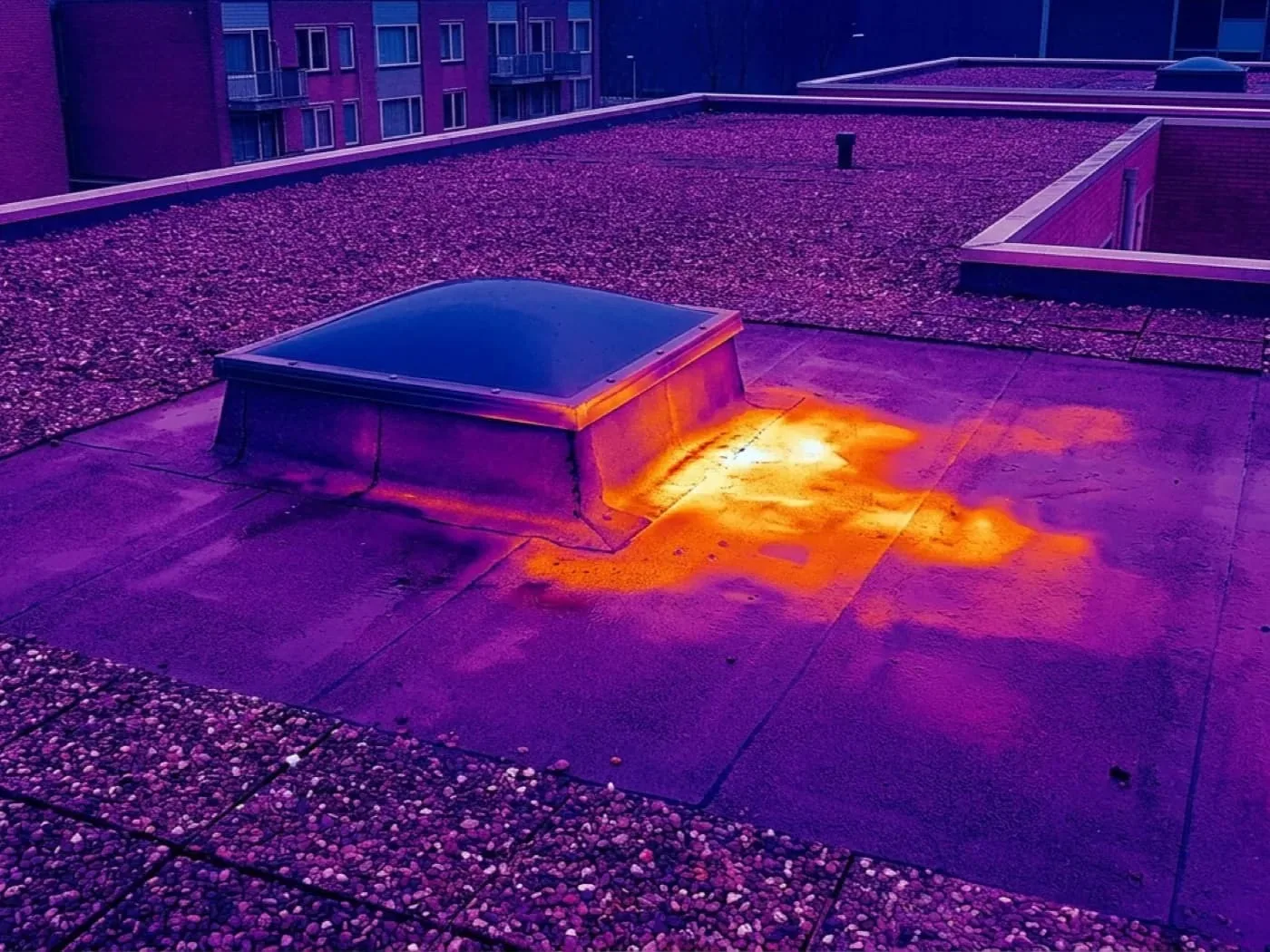
We start with an infrared moisture survey and probe checks. A pattern of damp insulation over the pool deck, with a dry roof field elsewhere, points to vapor drive and not to a membrane leak. The fix differs. A new membrane over damp board changes nothing. The retarder, the ventilation and the insulation need a design.
Bellingham's climate adds to it. Rain totals 34.8 inches in a year, spread under only about 1,866 sunlit hours. The roof never dries from outside for long, so any moisture trapped inside stays.
Ventilation is half the answer. A pool hall needs air changes and dehumidification sized for the load, and the roof can only do its part if the air system does its own. We tell the owner when the problem is a mechanical one, and we leave that design to the mechanical engineer. A roofer who ignores the air system sells a new membrane that fails in three winters.
The assembly decides the bid
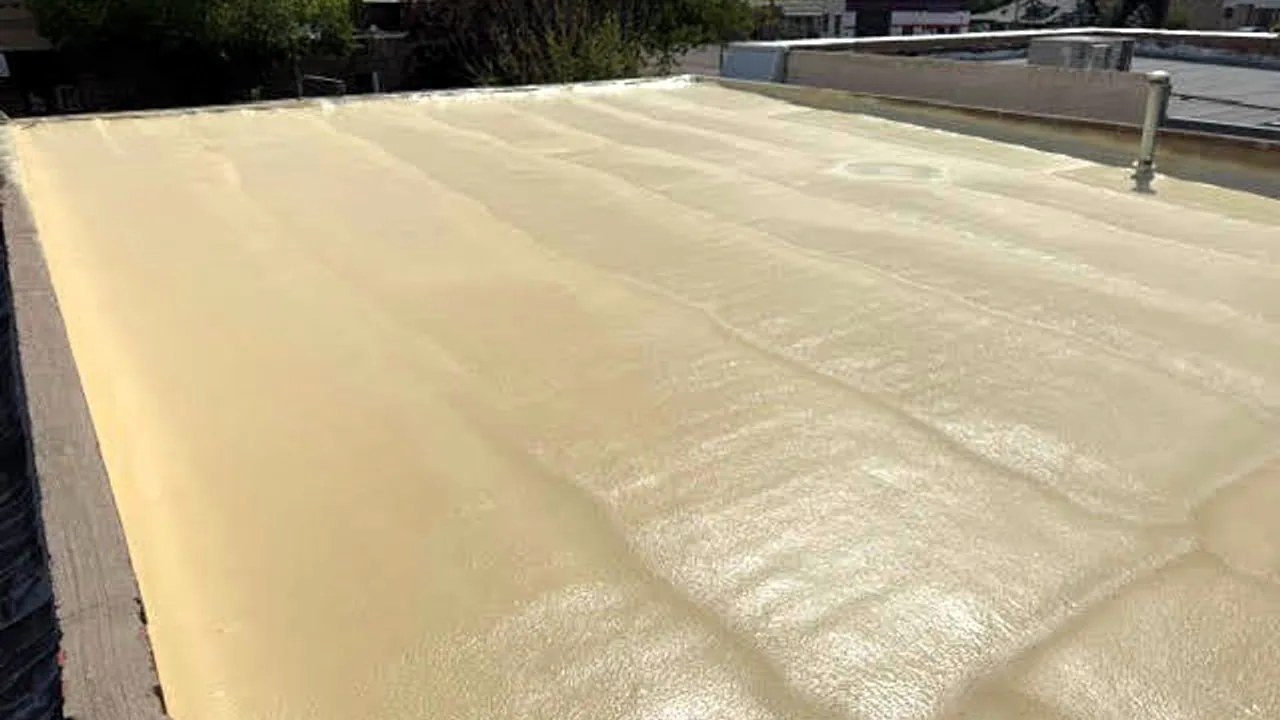
Over a humid space, the build-up matters. A vapor retarder on the warm side, insulation sized for the dew point and a membrane that seals the top. Some designs use closed-cell spray polyurethane foam because it insulates and stops vapor in one layer. Others use boards with a taped retarder.
We price the options side by side. The code matters too. Washington's 2021 building and energy codes took effect statewide on March 15, 2024, and a tear-off meets them. Insulation thickness may rise, and the parapet may need more height. Those items are bid lines with their reasons attached. The owner sees what the code adds and what the humidity adds.
Edge details around a humid room also need care. Vapor pushes toward any gap. Parapet tie-ins, deck edges and pipe boots each get a sealed transition. A missed boot lets humid air bypass the retarder and wet the board right beside it. We mark each one on the plan and check it at the punch walk.
Exhaust, air handlers and curbs
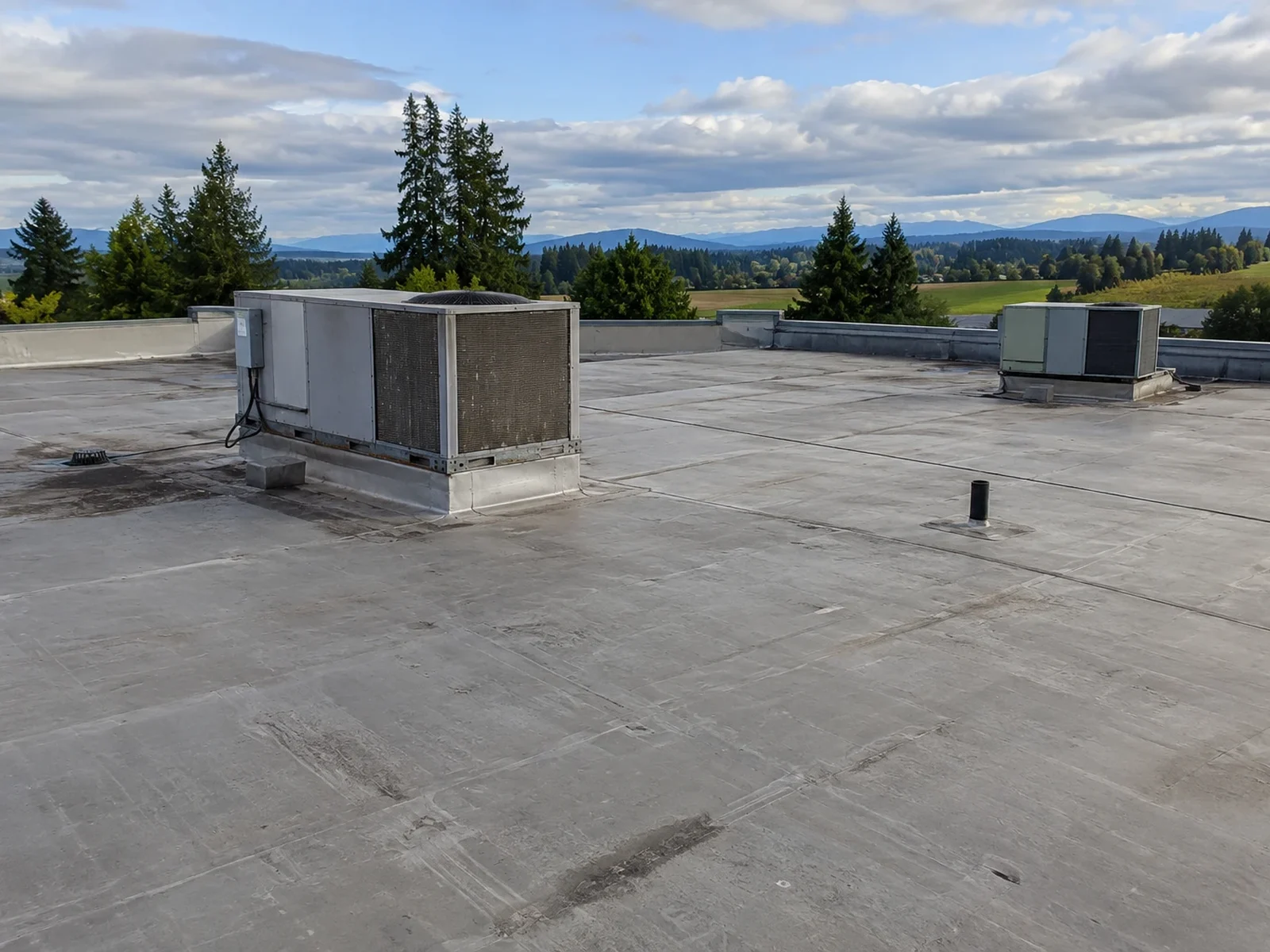
A fitness center runs big air handlers and exhaust fans. They sit on the roof on curbs. Every curb is a seam in the roof, and every fan is a vibration source. Curbs that were set before the membrane and flashed poorly leak at the base. Fans that vibrate loosen their fasteners.
We list each unit, its curb and its flashing. The curb detail follows the same rules as rooftop equipment curbs and supports. Pool dehumidification units are heavy, and the deck below has to carry them. If a unit has to be lifted for a curb change, the HVAC trade joins the sequence and the bid carries a crane day. Chemical exhaust from a pool room can attack some membranes, so we look at sheet compatibility near the stack.
High bays and daylight
A basketball court or a climbing gym needs height. High bays mean long spans, deep walls and a lot of roof edge. Skylights and clerestories bring daylight in. They also bring leaks. A skylight curb needs a counterflashing, a sealed corner and a drain path. Glazing seals age. Condensation on the inside of the glass can look like a roof leak.
We check each opening. Skylight and penetration flashing gets its own line. Where a skylight is past its life, we offer replacement or removal as an alternate. A roof with fewer openings leaks less, and that is a real cost lever for an owner who no longer needs the daylight.
Roof drainage over a gym matters because the span is long. Water shed from the whole slope reaches a few scuppers. We check each outlet, the overflow scupper height and the downspout. A scupper three inches too high holds a pond on the roof, and a pond on a long span is a load the structure was not drawn for.
Class hours set the calendar
Early morning classes. Lunch crowds. Evening rush. Weekend leagues. A gym is busy most of the day. A tear-off over the studio cuts a class. A crane in the parking lot cuts parking.
We ask the manager for the quiet windows. We stage work in sections that close each day. Noisy work moves to the slow part of the week. Where a pool must stay open, we plan around chemical delivery days and keep fumes away from air intakes. A college or school rec center follows a calendar too, much as college and university roofing and school roofing do. Summer break is the long window.
Wind and the long wet season
Wide, flat roofs catch wind. March 2016 brought 67 mph gusts to Bellingham. In November 2024 easterly winds from a bomb cyclone damaged at least 16 homes in Sudden Valley and drew 22 storm incidents for the South Whatcom Fire Authority. A fitness center near the north-side retail of Cordata, or near the campus at Sehome and Western Washington University, deals with the same weather as any other roof in town. Perimeter fastening goes on the bid.
July is the driest month and November the wettest. We aim to finish terminations before October. A tarp is a patch, not a plan. We carry standby crew and tarp material for the days the forecast turns.
Closeout and maintenance
At the end we walk the roof with the facility manager. Curbs are sealed. Drains flow. The vapor retarder is intact at every penetration. Photos go in the binder with the manufacturer paperwork.
A yearly visit keeps it that way. We check the curbs, clear the drains and probe suspect spots. Send the roof plan, the mechanical schedule and the class calendar. We will price every termination, curb and metal line before the bid closes. The owner decides what stays in.
Members never need to know the roof was done. That is the target. If they never see a lift, a tarp or a stained tile, the schedule worked.
Commercial Roofing Questions
Can a roof leak from the inside out?
Yes. Vapor from a pool or hot room condenses in the insulation. A moisture survey tells that from a membrane leak.
Is foam better over a pool deck?
Closed-cell foam can insulate and stop vapor in one layer, so it is a strong option. Boards with a taped retarder also work.
What does a skylight cost to keep?
Flashing, glazing seals and drain path. Removal is an alternate if the owner no longer wants the daylight.
How do you protect members during a crane lift?
A lift plan that fixes the crane position, closes the area and sets the hours. Parking moves before the lift.
When should a fitness center reroof?
Late spring through summer, when the dry window is longest and classes thin out.
Send the roof plan and the class calendar
Send the roof plan, the mechanical schedule and the class calendar. We will price every termination, curb and metal line before the bid closes, so the owner decides what stays in.