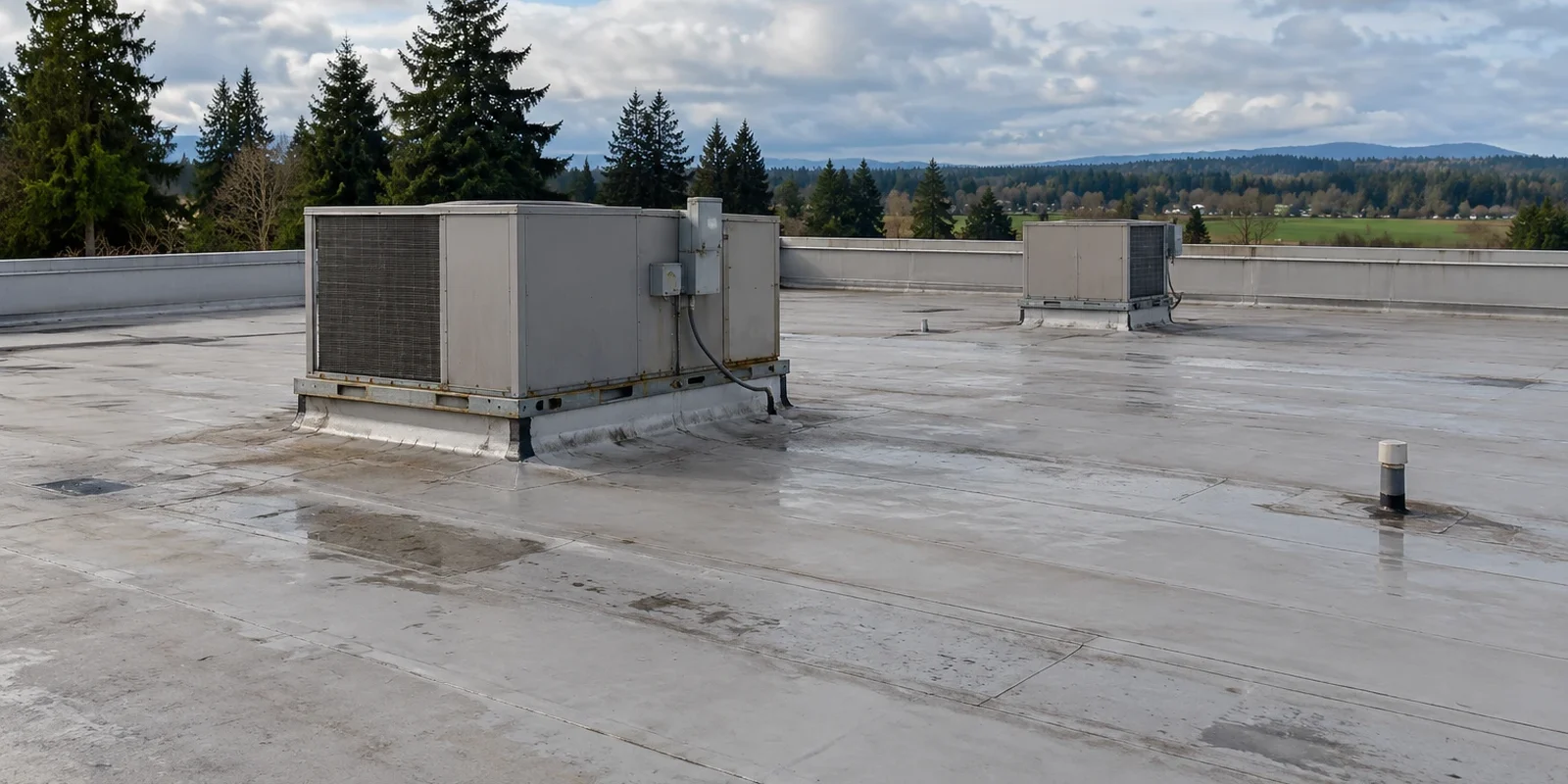
School Roofing in Bellingham, WA
K-12 school roof repair and replacement in Bellingham, WA, scheduled into the summer break with submittals, safety fencing and dry-in days priced up front.
School Roofing in Bellingham, WA
K-12 school roof repair and replacement in Bellingham, WA, scheduled into the summer break with submittals, safety fencing and dry-in days priced up front.
Property Types We Roof
School Roofing in Bellingham
The summer break is short. A school reroof in Bellingham, WA has to start, dry in and close inside it. That window is short, and the first rain day inside it is expensive. Every other decision on the bid follows from that arithmetic.
We price a school roof by the calendar first and the square foot second. Send us the drawings, the bell schedule and the district's target dry-in window. We will mark every termination, penetration and metal line before the bid closes.
Overview
School Roofing
Start to finish inside the break
School work follows a fixed sequence. Bids close in winter. Submittals clear in spring. Material is ordered in time to land in June. Crews mobilize the day after the last bell. Punch walks finish before staff return in late August.
Each step has slack, and the slack is small. A metal order that slips two weeks eats the whole float. A submittal that comes back with comments can push the start. We track the order dates on the schedule and flag them to the district early.
Bellingham's driest month is July. November is the wettest. A summer reroof sits in the dry months, which is the main reason schools build in that window. Even so, the city averages about 34.8 inches of rain a year. A June or August shower can still cost a day.
Public bidding adds its own steps. Addenda, pre-bid meetings and award timing are set by the district. A late award leaves less float. We price the work to the bid date and hold material pricing only as long as the supplier allows. If the award slips, we say what moves and what it costs. Public owners also tend to need clear documents: a schedule of values, a submittal log and a closeout packet. We build those from the first day. A government building bid follows similar paperwork.
Districts and campuses
The Bellingham School District employs about 1,423 people, and it is among the city's largest employers. A district that size usually runs many buildings: elementary, middle and high schools, gyms and shops. Each building has its own system, drainage and warranty, and the first walk identifies them.
A district roof plan ranks them. The worst roof goes first. The next goes in the following summer. The ranking uses moisture readings, leak history and age. We build that list for the district and price each building as its own bid line. The capital plan then follows the list. The school district budget cycle matters here, and a roof capital plan turns a stack of leaks into a five-year calendar.
Schools outside the city, in places like Ferndale, follow the same method. Each district runs its own bids and rules.
What moves the number
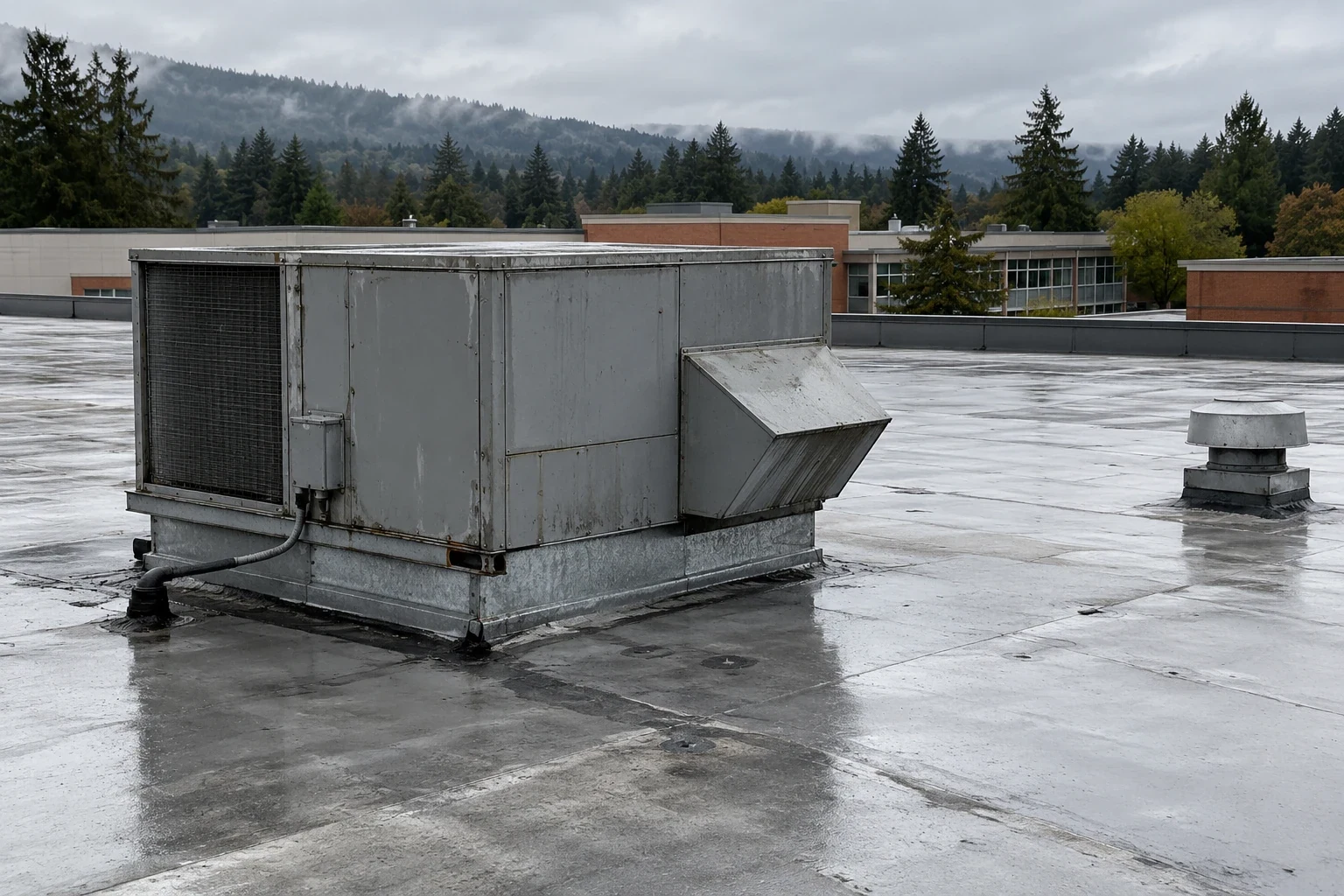
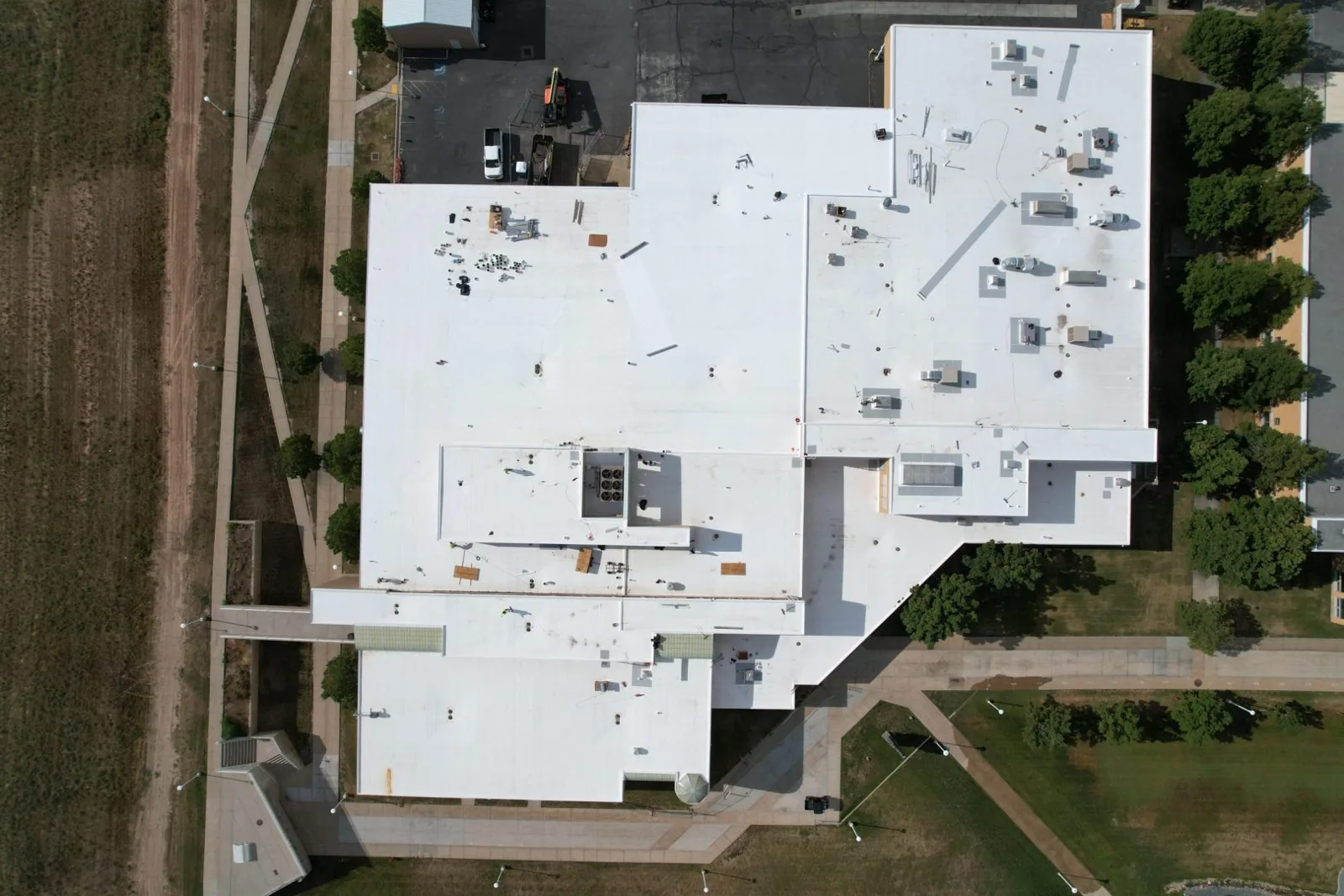
Six items move a school roof price. They are deck condition, insulation, penetrations, edge metal, access and safety. State energy rules that took hold on March 15, 2024 set how much insulation a replacement must carry, and district budgets feel that line. Thicker board lifts flashing heights and raises material cost. Penetrations are many on a school roof: kitchen exhaust, gym vents, boiler stacks and skylights. Each one is a flashing. Access depends on the site. Playgrounds, fields and fire lanes limit crane placement. A recover can spare a district the tear-off, the haul-off and the open deck. That saves haul-off and open-deck days. It also cuts the risk of a summer shower. Readings decide whether it qualifies.
Gym roofs and cafeteria roofs often sit higher than the classroom wings. Crane reach and wall height change the flashing. Low roofs next to tall walls collect snow drift and debris. Bellingham averages roughly 10 inches of snow a year, mostly December through February, so crickets and scuppers are detailed at those junctions. They show up as separate lines on the bid.
Safety, fencing and deliveries
Even in summer, schools have people on site. Camps, maintenance staff and summer classes use the building. The roof plan accounts for them.
Fencing goes up around the work area and the crane footprint. Deliveries come at set hours with a flagger. Debris chutes keep falling material inside the fence. Roof hatches are locked each evening. Noise is limited near any active classroom. Each of these measures appears on the bid, so the district sees what safety costs and why.
Background checks and badging may be required for crew members. We confirm the district's rules at the pre-bid meeting and supply the paperwork on time.
Occupied-building rules apply to summer programs too. Our occupied building reroofing plan marks which wings stay in use, which routes stay open and who has authority to stop work.
Skylights and roof hatches are fall hazards. Crew and staff both need protection. We install temporary guards around openings until the final flashing is set. Hatches are checked at the punch walk to confirm they close and seal. Student safety on the ground is the district's first concern, and the plan treats it that way.
Wind and the edge
March 2016 brought a 67 mph gust that stripped stucco off a Bellingham storefront, and long gym walls give wind the same big target. Easterly wind from the November 2024 bomb cyclone hit Sudden Valley. Gym walls, tall stacks and big overhangs on a school roof all catch wind of that kind.
Perimeter fastening goes on every school bid. Edge metal gauge and fastener spacing go into the scope in writing. Seams get probed, and every cap gets a pull test. Coping and counterflashing at tall walls get a closer look, since gym walls rise high above the roof field. A loose cap in October can drop metal onto a play yard.
Punch walk before the first bell
The punch walk happens before staff return. On the punch walk we probe seams, pull caps and run water through drains. Any open item on the punch list gets a name and a due date. The district signs off. Warranty paperwork waits for a closed list. The district receives a roof map, photos and a penetration log. That record helps when a mechanical contractor swaps a unit or a solar team asks for roof space. A school next to a campus, such as one near Sehome and the university, still follows its own district rules. A college building uses the same calendar logic with a different break.
One spring check each year keeps the record current. We re-probe the seams, clear the drains and update the log before summer ends.
Commercial Roofing Questions
How do you fit a school reroof into the summer break?
We plan backward from the first day of school. Material orders, mobilization, phases and punch walk each get a date. The bid shows the float.
What happens if rain hits during the break?
We stop, seal and resume. Each dry-in day is planned with a tarp crew on standby. The schedule carries float for a few lost days.
Can a recover save a summer?
Often. It skips the tear-off and cuts open-deck time. It requires a dry assembly and a deck that can carry the load, so we take readings first.
Who handles badging and background checks?
We submit the crew roster to the district on its timeline. We confirm the rules at the pre-bid meeting.
What does the district get at closeout?
The district receives the roof map, photos, penetration log and the signed punch list. The warranty packet follows.
Why are crickets on a school roof bid?
Tall gym and cafeteria walls create junctions where water and snow collect. A cricket sends the flow to a drain or scupper, and it costs far less than a pond.
Send the drawings and the summer window
Send the roof plan, the spec and your target dry-in window. We will price every termination, metal line and safety item before the bid closes.