Commercial Roofing in Sehome and the University District, Bellingham, WA
Roof repair and replacement in the Sehome and university district of Bellingham, WA, planned around quiet hours, move-in dates and the short dry season.

Commercial Roofing in Sehome and the University District, Bellingham, WA
Roof repair and replacement in the Sehome and university district of Bellingham, WA, planned around quiet hours, move-in dates and the short dry season.
Service Areas
Sehome and the University District in Bellingham
Quiet hours decide the roof schedule near a lecture hall. A fastener gun is loud, a compressor is louder, and a class in session is a hard stop. In the Sehome and university district of Bellingham, WA, we build the day around those rules before we build the crew list. The district sits beside the university and downtown, so streets, hills and shared walls all enter the plan.
Send the drawings, the term calendar and your target window, and each termination, noise window and lift gets marked ahead of the bid close.
Overview
Sehome and the University District
Institutions that set the calendar
Western Washington University enrolls more than 16,000 students and employs about 2,060 people. Bellingham Technical College and Whatcom Community College add institutional roofs elsewhere in the city. Every school keeps its own terms, breaks and summer programs, so no two share the same quiet window.
Sehome is a Bellingham district beside the university and downtown. A roof job in the district can touch campus rules, city rules and tenant rules at once. We list those rules at the pre-bid stage and resolve them in writing: where the lift stands, what hours the crew works, who signs for the roof hatch, and who receives the dust complaint.
Student housing and dining spaces follow still another calendar. Their roofs carry kitchen exhaust, laundry vents and rooftop heat plants, and the buildings fill in late summer. A job that runs past the first week of fall move-in collides with families and moving trucks. We build in a finish date a full week ahead of that so the punch list is closed before the lots fill.
Noise, dust and hatch control
Teaching spaces and labs care about three things. They want quiet, clean air and controlled access. Quiet means loud tasks happen outside class hours. Clean air means intakes are covered with the mechanical contractor's sign-off, dust stays in a chute, and solvent smells stay low. Access means the roof hatch is keyed, logged and locked each evening.
We plan the day in blocks. Early morning carries the loud work. Midday carries detailing and welds. Late afternoon carries cleanup. If an exam week closes a block, we shift the work and say how the calendar moves. Every one of these steps appears as a line on the bid, so the facilities office can see what quiet costs.
Move-in week and finals week each close a block of the calendar, and the schedule shows both dates beside the dry-in dates so the facilities office sees every constraint on one page. Lab buildings get a pre-job walk with the safety officer, who marks the intakes on the roof plan before the first fastener goes in. Complaint handling is part of the plan. One named lead carries a phone number on the daily sheet, and the facilities office can stop work at any hour. If a lab reports odor, the crew stops, checks the intake cover and adjusts the method. Adhesives with lower odor and heat-welded seams reduce the chance of a stop, and the bid names the product so the safety officer can review the data sheet ahead of time.
Getting material to the roof
Streets near a campus may be narrow, shared with buses and crowded with parked cars. A site on a slope may limit where a truck can stand. A crane needs a clear footprint and a permit, and a lift needs flat ground. We scout the street at class change and again at midday, because the traffic differs.
If a truck cannot reach the site, material goes up by hoist or by hand. Hand carry costs labor hours. A hoist costs setup time. A crane costs a permit and a flagger. The bid shows the method we chose and the alternatives, so the owner can swap one for another. Debris travels down a chute into a covered bin, never across a walk.
Pedestrians are the other constraint. Students cross streets between classes in groups, and a delivery truck blocking a crosswalk is a safety issue. We schedule deliveries for class hours, post flaggers where a drive crosses a walk and fence the work zone clear of paths. These measures appear on the bid, and they protect the public as much as the schedule.
What drives the price
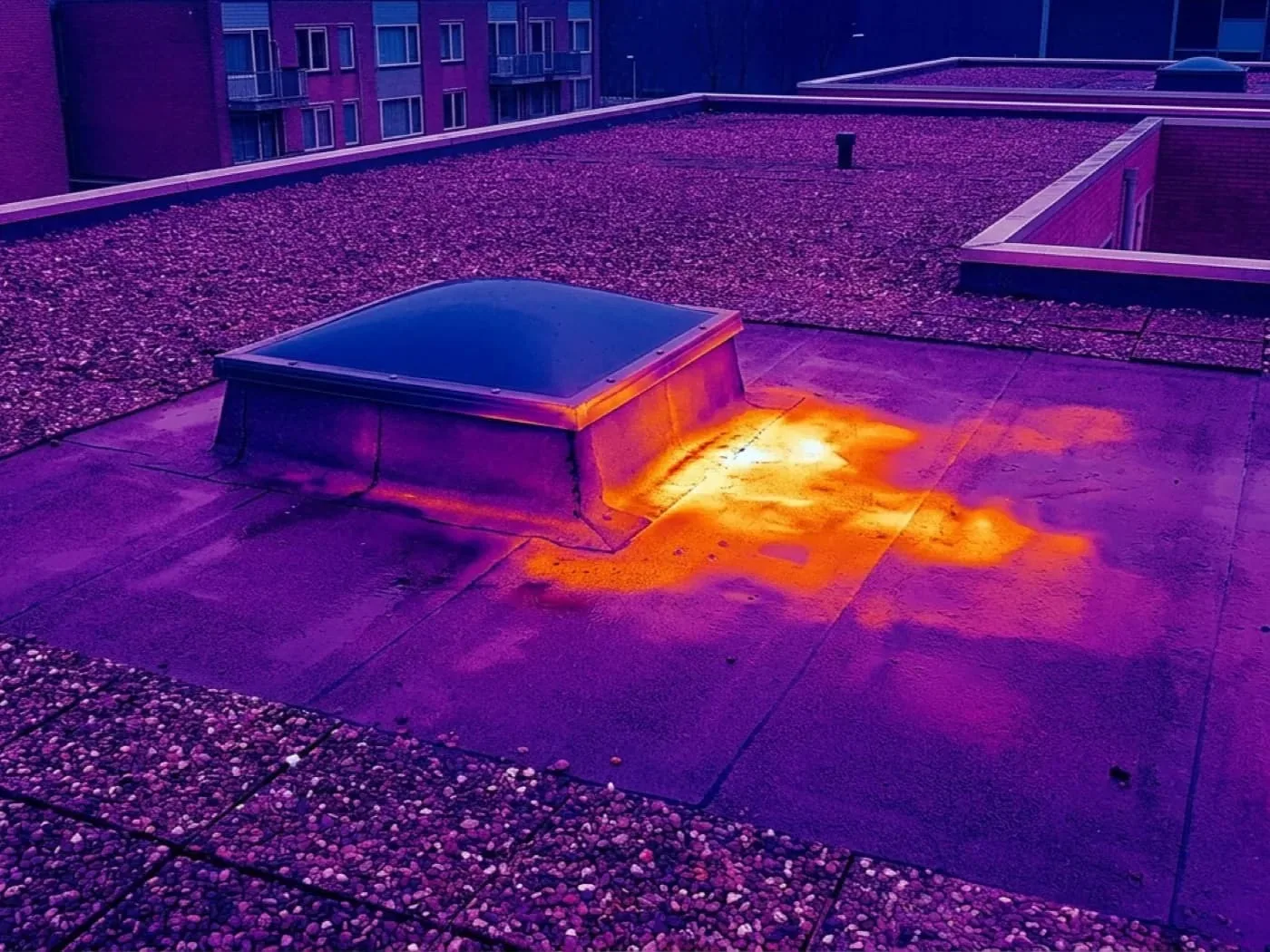
Noise limits, access, layer count, insulation depth and phasing set the price. Membrane is the smaller number. For a new roof the insulation depth is dictated by the energy code that took effect on March 15, 2024, and curbs and wall flashings climb with it. A recover over dry insulation cuts noise, dust and days. That matters near classrooms. An infrared moisture survey and core samples decide whether it is possible. Owners see the two paths priced side by side.
Contingency has its own line. Steel deck repair is carried as an allowance plus a unit rate, because nobody sees the deck until the old roof is gone. Both figures reach the facilities office before award.
Summer break and the dry weeks
Bellingham gets roughly 34.8 inches of rain in a year, and sunshine totals only about 1,866 hours. A damp deck dries slowly. The summer break lines up with the dry weeks, which is why institutions build then.
That alignment makes the window crowded. Several buildings want the same eight weeks, and crews are limited. We rank buildings by condition and consequence, book the crew early and put the worst roof first. If a roof cannot wait, a wet-season method applies: small openings, same-day close and covered stock. The bid shows the premium. Spring is the second window. Rain eases, the term is still running and the facilities office has a clear picture of what the winter did. A spring crew can fix what the wet season loosened, and the summer reroof list can be written with fresh evidence.
Wind and handover
The 67 mph gust of March 2016 that pulled stucco from a Bellingham storefront and the easterlies of the November 2024 bomb cyclone both show how little shelter a tall academic building gets, so caps and screens carry the load. The scope states the metal gauge and fastener spacing, and seams get probed and caps pulled before handover. Facilities receives a roof map, photos and a penetration log. The same method serves college and university buildings across the city, and it carries over to nearby downtown Bellingham and Barkley. A school building follows the same file format.
A yearly spring check keeps the file current: seams probed again, drains cleared, photos retaken.
Commercial Roofing Questions
How do you keep roofing noise away from classes?
Loud work moves to early morning, and quiet tasks fill the day. The facilities office signs off on the blocks before the job starts.
Who controls the roof hatch during the job?
The facilities office. We log each entry, lock the hatch every evening and return the key at day's end.
What happens if exam week closes a work block?
We shift the work and show how the calendar moves. The bid lists the float so the change is visible.
Can material reach a hillside building without a crane?
Often, by hoist or by hand. Each method has a price, and the bid shows the choice and the alternatives.
Why does a recover help near classrooms?
It cuts tear-off noise, dust and days. It requires dry insulation and a deck that can carry the load, so readings come first.
How early should a district roof job finish before fall move-in?
A full week ahead. That leaves time to close the punch list, clear the lot and remove fencing before families arrive.
Send the drawings and the term calendar
Send the roof plan, the term calendar and your target dry-in window. We will price every termination, noise window and lift before the bid closes.