Rooftop Equipment Curbs and Supports in Bellingham, WA
Curb flashing, equipment rails and pipe supports on Bellingham, WA commercial roofs, sequenced around the wet season and the mechanical trades.
Rooftop Equipment Curbs and Supports in Bellingham, WA
Curb flashing, equipment rails and pipe supports on Bellingham, WA commercial roofs, sequenced around the wet season and the mechanical trades.
Commercial Roofing Services
Rooftop Equipment Curbs and Supports in Bellingham
A rooftop unit weighs several hundred pounds and sits on a box of wood and flashing. The box is where the roof ends and the mechanical trade begins. In Bellingham, WA that line gets wet from November on, and a curb that was rushed in a dry week looks very different by February. We price the curb as its own piece of work, with its own days.
Curbs, rails and pipe supports are small by area and large by schedule impact. Each one needs a cant, a flashing height, a counterflashing and a sealed corner. Most of them also need the mechanical contractor to be out of the way when we arrive. The general contractor who sees those items listed on the bid can plan around them. The one who finds them mid-project pays for the wait.
Overview
Rooftop Equipment Curbs and Supports
The curb is the detail
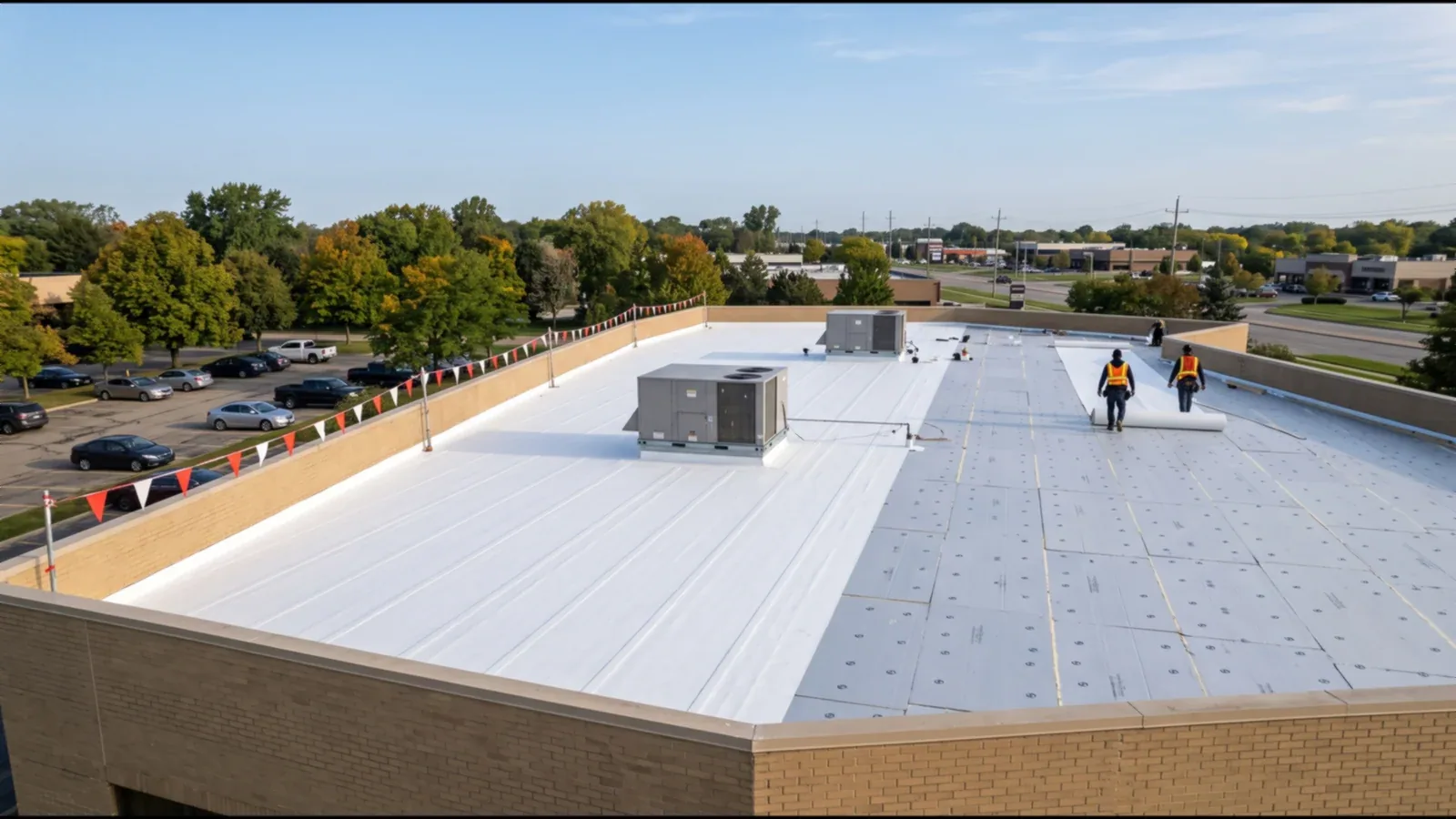
A curb is a framed box that lifts the unit above the membrane. Water runs around it, so the high side needs a cricket. Without one, water stops against the upslope face and sits there through every dry spell the roof gets.
The membrane turns up the curb face and ends under a counterflashing or a termination bar. Base flashing height matters. Too short, and splashing rain or a snow drift finds the top edge. We set the height to the spec and then check it against the actual deck slope on the day.
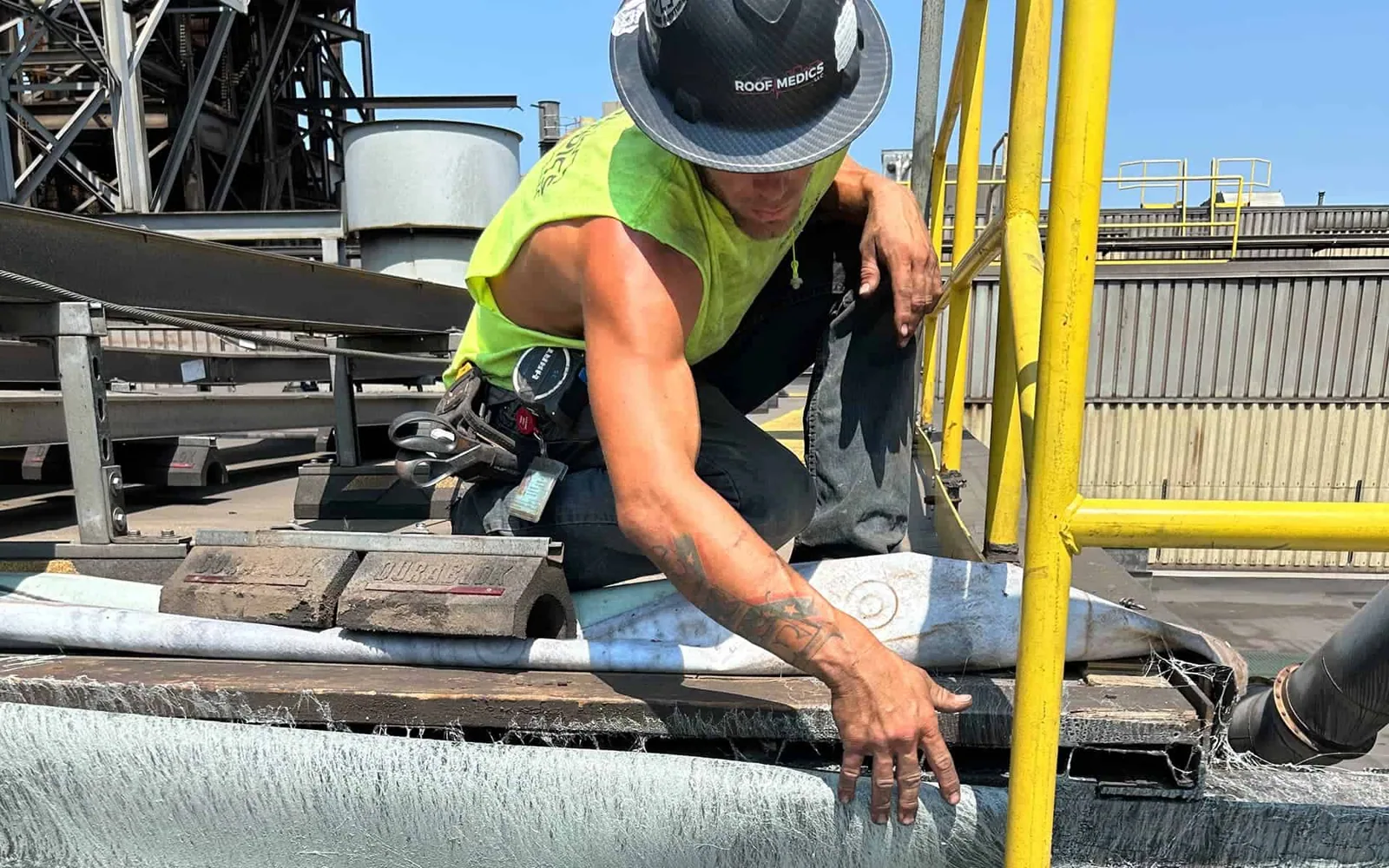
Corners are where curbs fail. A prefabricated corner or a hot-air welded patch gives a sealed turn. A field-cut fold with sealant does not hold. We weld the corners and probe check every seam before the unit goes back on.
A wood curb that has sat wet through a long season softens at the nailer. We press a probe into it. If it sinks, the curb gets rebuilt before any new flashing goes on it.
Rails and pipe supports
Not every unit sits on a curb. Smaller equipment, gas lines, conduit and refrigerant lines ride on rails or pipe supports. Each foot is a roof penetration or a pad that bears on the membrane.
Pads need protection. A walk pad under a support spreads the load and keeps the membrane from wearing through at the contact point. Without one, a pipe that shifts with temperature can saw into the surface over a few seasons.
Penetrating supports are different. The post goes through the membrane, so it needs a boot or a pitch pocket, and a pitch pocket needs refilling when it shrinks. We note every pocket on the roof and price the ones that are cracked.
A restaurant roof near the Bellis Fair interchange may carry dozens of small supports for kitchen exhaust and gas. A manufacturing roof at Marine Drive may carry a few heavy ones. The count changes the bid line far more than the roof area does.
What it costs
Three things drive the price. The first is the number of curbs and supports. The second is how much of each must be rebuilt rather than reflashed. The third is how much the mechanical contractor must disconnect and reset.
Disconnect work is where the schedule splits. We do not touch electrical or refrigerant connections. The mechanical trade lifts the unit, we flash the curb, and the mechanical trade sets it back. Two trades hand the same box back and forth, and each handoff is a day on the calendar.
A bid that lists each curb as a line lets the owner see where the money sits. A bid that rolls them into a lump hides the cost of the one rotted curb that drives everything else.
Materials matter less than labor. The flashing cost is modest next to the days a crew waits for a crane or a mechanical tech. We ask for a crane date early and tie our curb days to it.
Wind and snow on the edge
Equipment on a roof catches wind. The March 2016 gusts of 67 mph tore stucco off a Home Depot storefront in Bellingham, and a unit that is poorly secured is a worse risk than a storefront. We check hold-down hardware on every curb we flash and tell the mechanical trade what we find.
Snow is lighter here but real. About 10 inches fall in an average year, mostly December through February. Snow drifts against a tall unit and melts toward the curb face. That puts weight and water on the lower flashing at once.
Cold snaps matter for the work itself. Adhesives and sealants stall below their rated temperature. Hot-air welding still works in cold air, but a damp membrane will not weld clean. We plan curb work for dry spans and keep cold-day jobs to what can close before dark.
Closing out with the trades
The punch walk for curbs is short but strict. We check the counterflashing seat, the sealed corners, the cricket slope and the fastener covers on every curb. The mechanical contractor signs off that the unit sits true.
Where a rooftop unit near PeaceHealth St. Joseph serves air handling, it cannot go down for long. The shutdown window drives the sequence. We stage materials, pre-cut flashing and finish a curb in the span the facility allows.
A school roof at Western Washington University or Whatcom Community College follows the academic calendar. Summer is the window for curb rebuilds. Missing it pushes the work into the wet months.
Final documentation lists each curb, its height, the flashing type and any rebuilt nailers. The owner keeps a record of what was done, curb by curb. That record is what a future crew or an insurer needs.
Where curbs sit in a bigger job
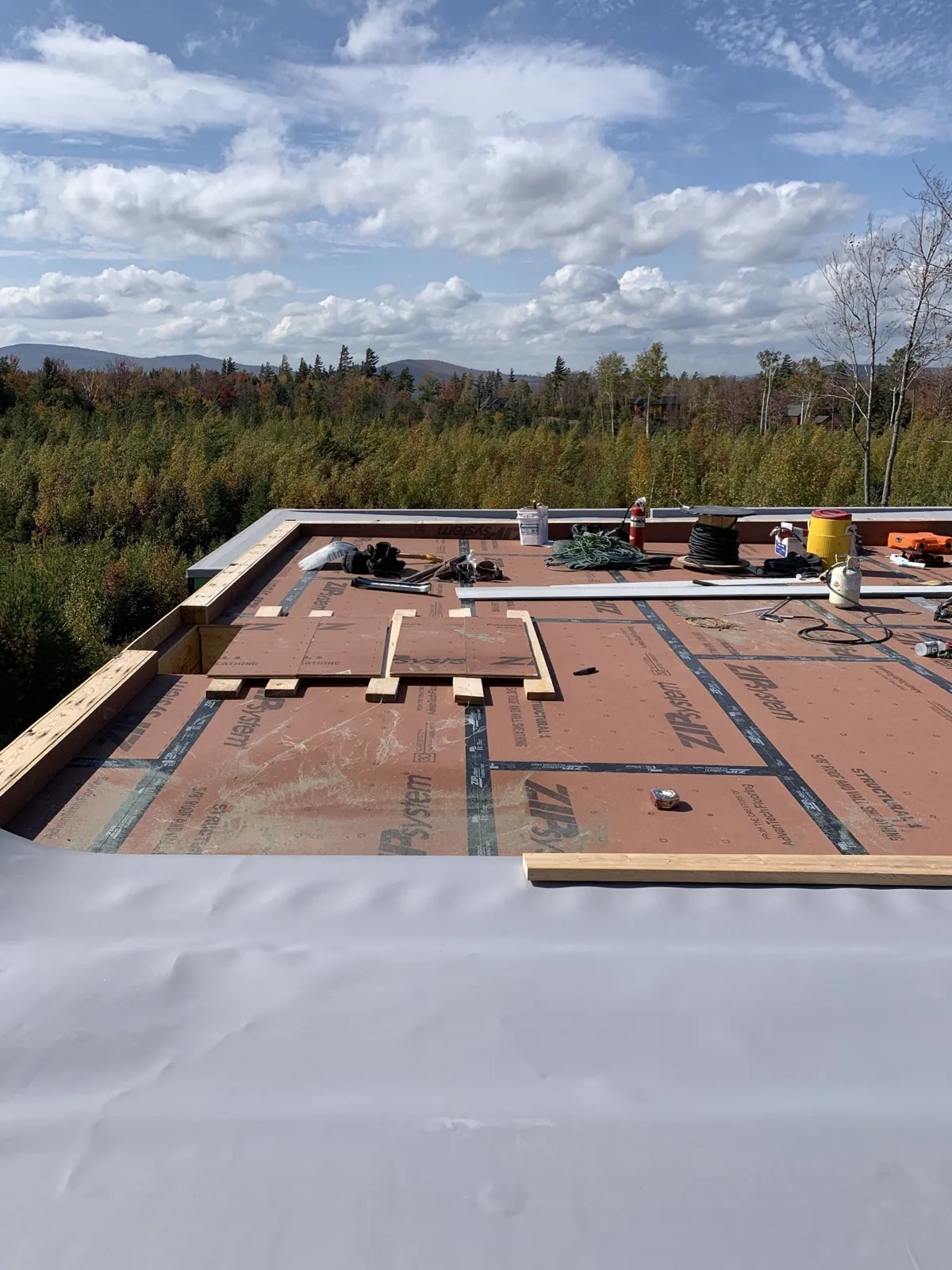
Curb work often rides along with a larger scope. A full replacement includes every curb on the roof. A recover raises the surface, so every curb flashing has to climb to match the new height.
On a TPO roof, curb flashing is welded and tested. On a modified bitumen roof, it is torched or adhered in layers. The method follows the field membrane, and so does the repair cost.
Penetration work near the edge ties into edge metal and coping, and into skylight and penetration flashing. Drains near equipment need attention too, since drains and scuppers carry the water the cricket sends their way.
For warehouse owners in the Airport Industrial Area, a dozen small curbs can matter more than the field. We count them first.
Commercial Roofing Questions
How tall should the flashing be on a curb?
The spec and the local code set the minimum, and Washington adopted the 2021 International Building Code statewide in March 2024. We measure from the finished membrane, not the old one. A recover adds thickness, so the curb face often needs a taller counterflashing to keep the same height.
Who disconnects and resets the unit?
The mechanical contractor handles the lift, the electrical and refrigerant connections, and the reset. We flash the curb in the gap between. Two trades share one box, so the handoff times go on the schedule as separate lines.
Can one rotted curb change the price of the whole roof?
Yes, when the nailer is soft through. A rebuilt curb adds carpentry, a new cricket and a fresh flashing run. If a roof has a dozen such curbs, the carpentry alone can outweigh the membrane work around them.
What happens if we leave a failed pipe support alone?
Water follows the post into the deck. In a long wet season, a cracked pitch pocket drips for months before anyone sees a stain below. We mark failed pockets during the probe check and price the repair as a small line item.
Do curbs need work when only the field is being recoated?
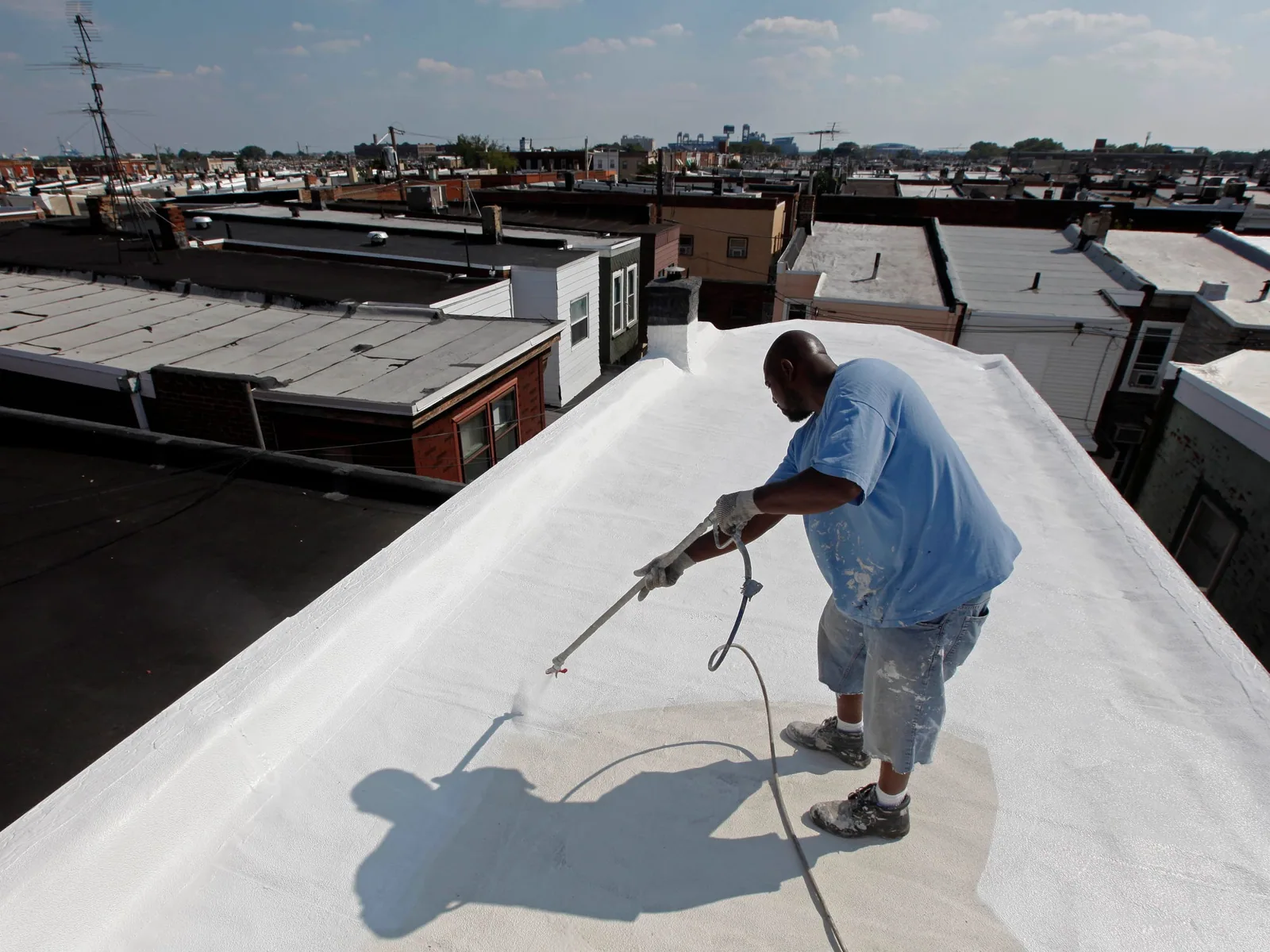
Coatings stop at the curb base unless the flashing is sound. We probe and weld-test the turn-ups first, then coat over them only when they pass. Coating a failed flashing seals the leak in and hides it from the next inspection.
Send the unit schedule and the roof plan
Send the drawings, the mechanical schedule and your target dry-in window. We will list every curb, rail and support as its own bid line before the bid closes.