Infrared Moisture Survey in Bellingham, WA
Infrared scans and core-cut sampling map trapped moisture under Bellingham, WA commercial roofs, so replacement scope and recover decisions rest on readings.
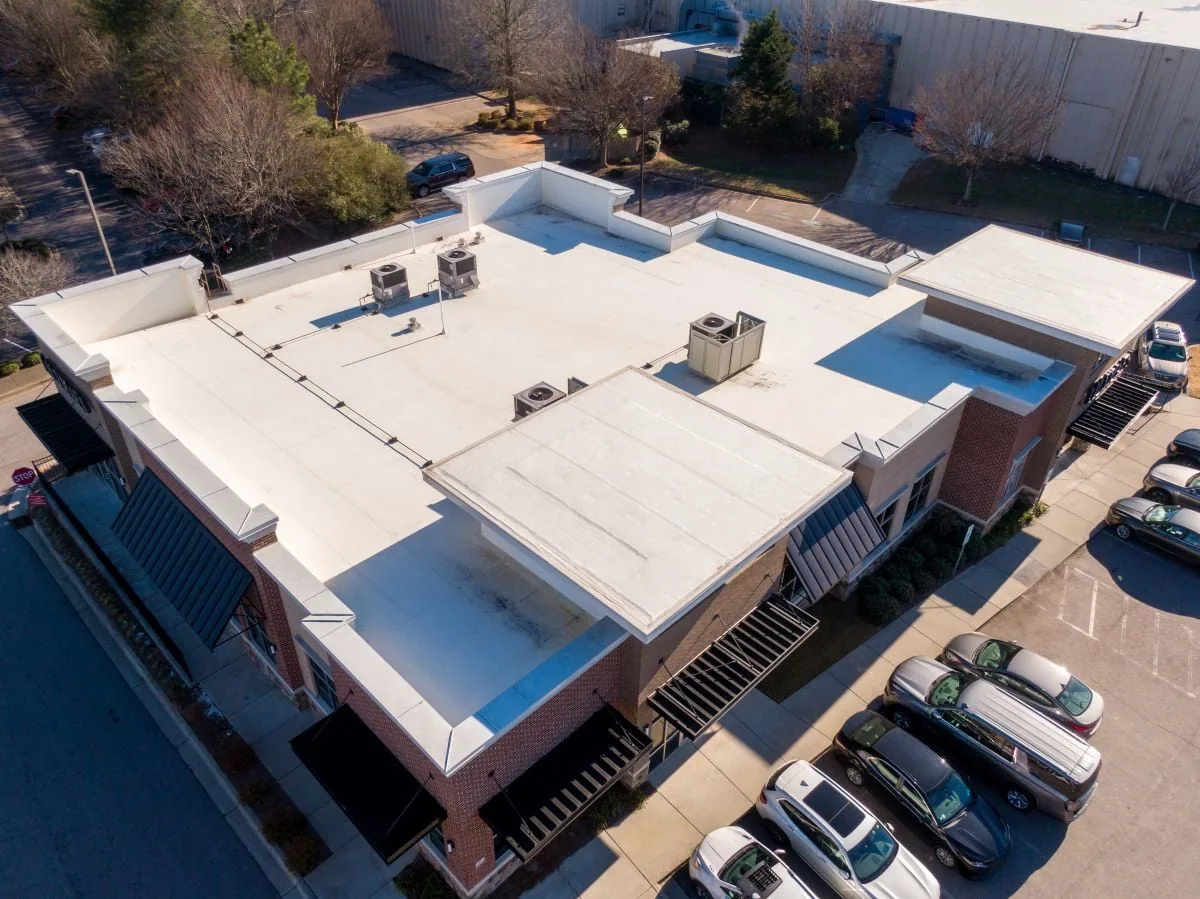
Infrared Moisture Survey in Bellingham, WA
Infrared scans and core-cut sampling map trapped moisture under Bellingham, WA commercial roofs, so replacement scope and recover decisions rest on readings.
Commercial Roofing Services
Infrared Moisture Survey in Bellingham
By dusk, a saturated board gives up its heat slower than a dry one. An infrared camera sees that difference as a bright patch against a cooling roof. That is the whole method, and in Bellingham, WA it has one hard limit. The roof must soak up sun all afternoon to have any heat to give up. With about 1,866 sunshine hours a year, usable scan evenings are scarce.
So we book the survey around the forecast, not the calendar. The output is a map of trapped moisture, confirmed by core cuts, with the area measured and priced. That map decides whether a roof gets patched, recovered or replaced.
Overview
Infrared Moisture Survey
How the scan works
We scan after a sunny day, once the surface starts to cool. Dry insulation cools quickly. Insulation that holds water stays warmer, and the camera shows it. We cover the roof in a grid at a steady pace and record every pass. Anything that glows against the surroundings gets flagged and marked on the roof with paint.
The scan reads temperature, not water, so it can mislead. A patch of old adhesive, a thick area of ballast or a skylight curb can glow for other reasons. That is why scan data is never the final word. Every flagged area is then checked with a handheld meter, and the questionable ones get a core.
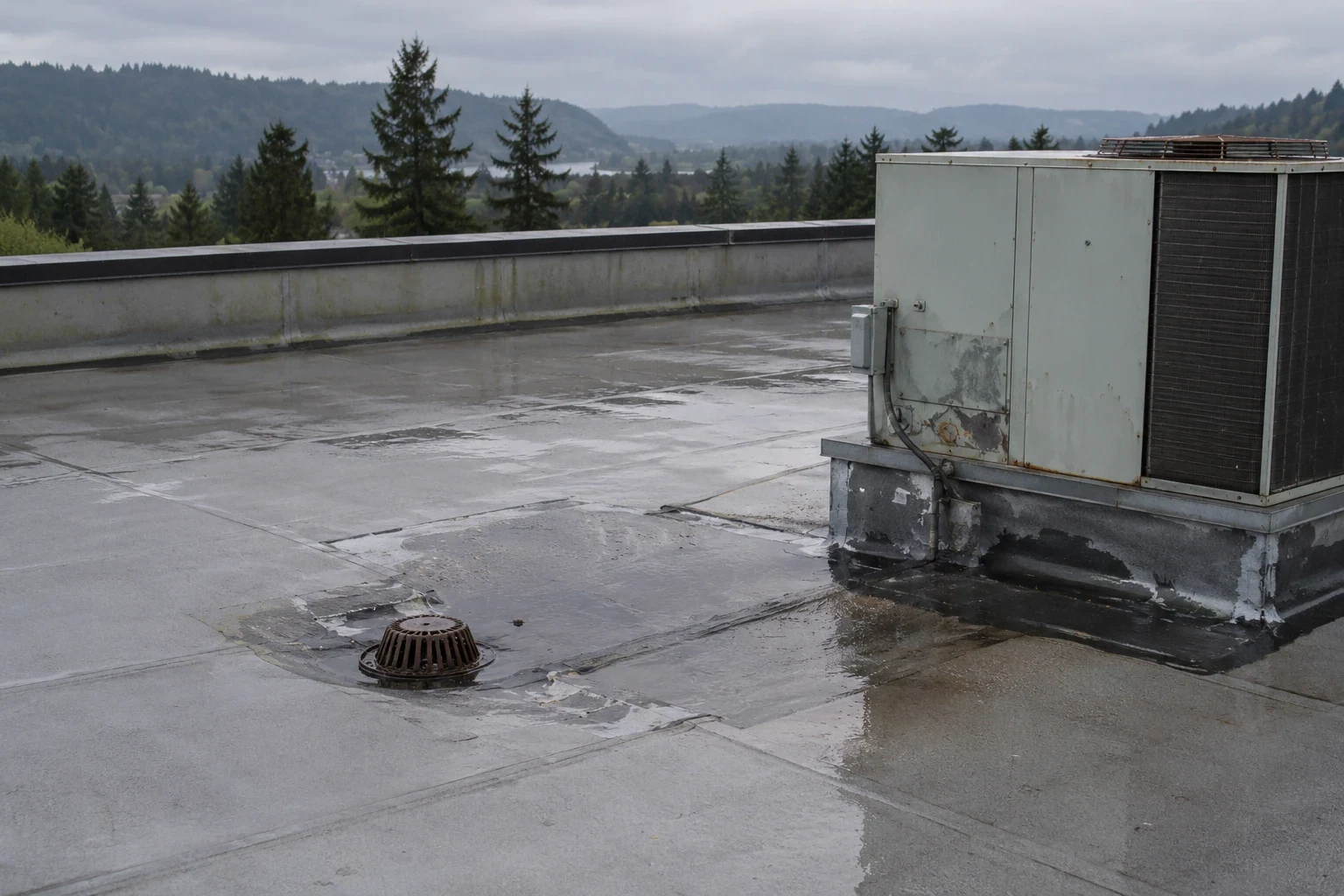
Moss lines help. Low sunshine in Bellingham keeps membranes damp and favors moss and algae, so a mossy stretch often marks a place where the surface stayed wet longest. It is a hint, not a reading. We note each moss patch on the plan before the scan and compare it with the thermal image afterward. Where the two agree, the case for a core cut is strong. Where they disagree, we look harder for another cause.
Core cuts and the final map
A core cut is a small circular sample taken through the membrane and insulation. We weigh it, read it with a meter and look at the layers. Then we patch the hole the same visit, with a sealed plug set in new adhesive and a cover patch over it. Core locations go on the map next to their readings.
We cut inside the bright area, at its edge and outside it. The three readings fix the boundary between wet and dry. The result is a map showing the damp zone, its square footage and the cost of cutting it out. A general contractor can price that zone against a recover or against a full replacement, using numbers from the roof itself.
When we can scan
Rain ruins a scan. Surface water cools the roof unevenly and masks the pattern underneath. So we wait for a dry roof and a warm afternoon. In a market that averages about 34.8 inches of rain a year, with November the wettest month and July the driest, summer carries most of the good evenings.
That calendar affects the bid. A survey ordered in late fall may wait weeks for a window. We state the likely window up front and tell the general contractor when to expect the map. If a decision cannot wait, we offer a meter grid and core cuts alone, which are slower on the roof but do not depend on sun.
Wind is the other schedule factor. A strong breeze cools the surface unevenly and blurs the image. Bellingham sees strong winds in cold snaps, and a scan in a breeze gets rescheduled, not forced. A usable evening is dry, warm after a clear afternoon and calm. When all three line up, we scan the whole roof in a single pass and finish the cores the next morning.
What the map decides
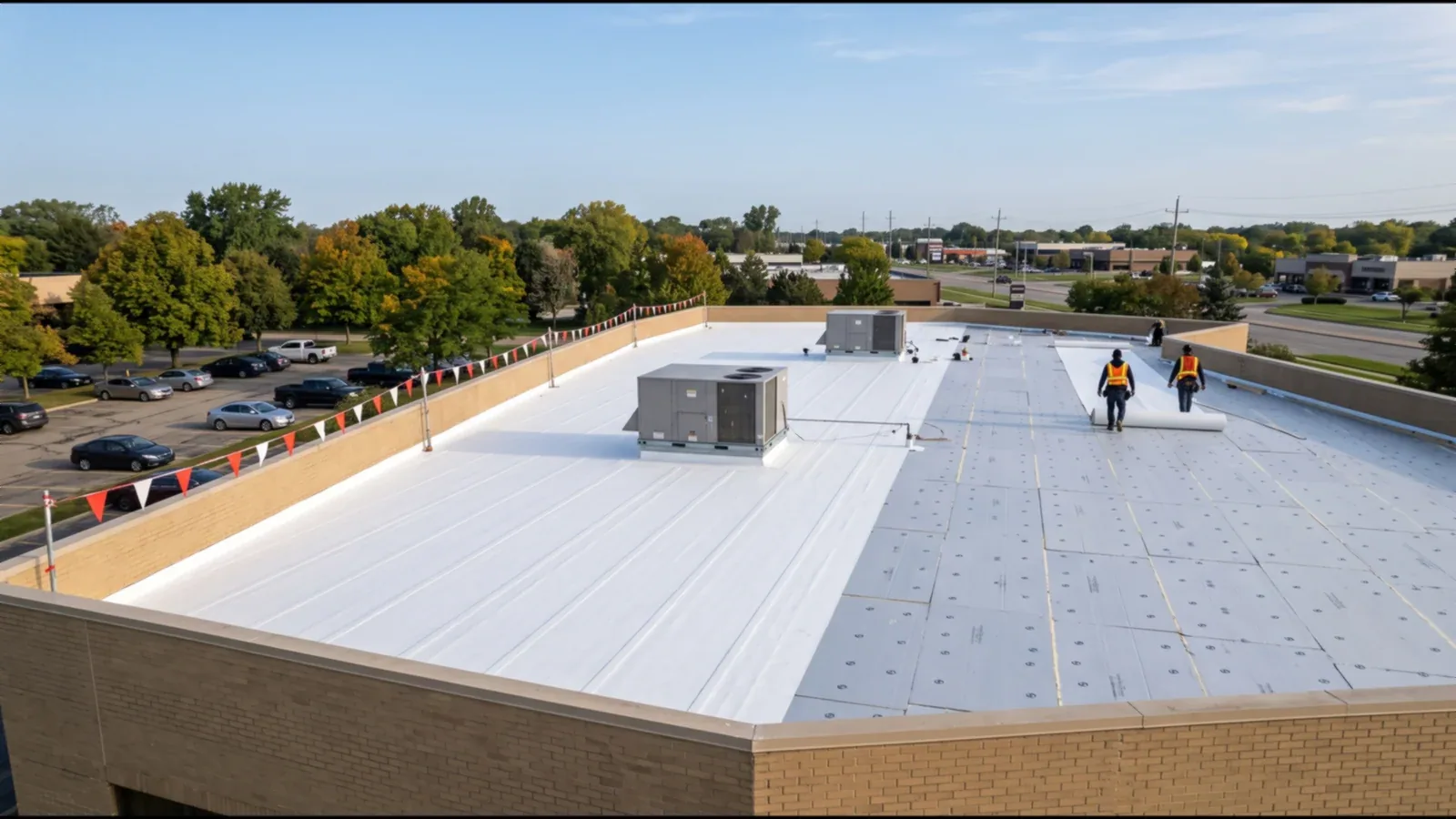
The first decision is recover or replace. A dry assembly can take a recover. A wide damp zone cannot, since a new membrane over wet board holds the problem in. The second decision is partial replacement. If the damp area is a small, defined patch, cutting it out and replacing it can extend the roof's service.
The third decision is the leak. Many roofs hold moisture long before a stain reaches a ceiling. The survey finds those areas ahead of the call, and it supports leak tracing where a leak is active. Owners use the map to rank buildings in a capital plan, too, because wet area is a number a budget can use.
Where the survey earns its fee
Institutional and healthcare owners benefit from surveys because roofs sit over occupied space. PeaceHealth St. Joseph Medical Center is the city's largest employer, and Western Washington University has more than 16,000 students. For roofs over classrooms and clinical rooms, finding a damp zone before a leak reaches the ceiling avoids disruption. A campus roof program can scan several buildings in one visit.
Downtown, the former Georgia-Pacific waterfront is being redeveloped into a mixed-use neighborhood, and a buyer or lender in downtown Bellingham may want roof data before closing. A survey gives them a measured wet area and a cost figure instead of an opinion. That is the base of a due diligence roof survey.
Retail and industrial roofs follow the same logic. Bellis Fair sits at the I-5 and SR 539 interchange, and the Port of Bellingham runs Marine Drive Industrial Park and Airport Industrial Park. Footprint says nothing about moisture, so a scan of any one of these roofs starts from the surface, not from the size of the building. Owners with several roofs can rank them by measured damp area, which gives the capital plan a single comparable number per building.
What the survey cannot tell you
Infrared does not work well on every roof. Ballasted systems hide the surface under stone. Thick cover boards and heavy reflective surfaces damp the signal. Metal roofs behave differently and need other methods. We tell you before the visit if the roof type limits the scan.
The survey also says nothing about membrane strength or seam quality. A dry roof with split seams will leak, and a wet roof with a sound membrane may be quiet for years. So the moisture map pairs with a hands-on roof inspection. Together they show both what the roof holds and how well it keeps water out.
Commercial Roofing Questions
How big a damp zone makes replacement the better buy?
Roof age and membrane condition carry as much weight as the damp area. A small zone on a young roof is a cut-and-patch job. A large zone on an old, brittle roof tips toward replacement. We price the partial repair and the full replacement side by side, using the measured area.
Will the survey damage the roof?
The scan touches nothing. Core cuts open the membrane in small circles, and we seal each one before we leave. Cores are placed where they answer a question, not spread around for coverage. The patched cores appear on the map so the next crew knows where they are.
Can a survey run in winter?
Sometimes. Cold clear days after a dry spell can work, though the temperature swing is smaller. Short winter days and frequent rain cut the windows sharply. When a scan cannot run, we use a meter grid and cores to deliver the same answer more slowly.
What do we do with the map after the decision?
File it. A survey dated today is the baseline for the next one. A second scan after a repair or a storm shows whether the damp zone grew. Insurers and buyers read that comparison easily, and it keeps the roof record specific.
Does the survey cover cold storage and food buildings?
It can, with care. A roof over a cold room can hold frost and condensation that read like water on the scan. We account for that when we read the images and lean harder on cores. A cold storage roof gets that extra step in the plan.
Send the roof plan and the decision date
Tell us the building, the roof age and when the recover or replace call is due. We will book the scan around the forecast and return a measured moisture map.