Roofing Support for Insurance Adjusters and Restoration Firms in Bellingham, WA
In Bellingham, WA, roof scopes, moisture maps and repair pricing help adjusters and restoration firms settle wind, rain and snow losses cleanly.
Roofing Support for Insurance Adjusters and Restoration Firms in Bellingham, WA
In Bellingham, WA, roof scopes, moisture maps and repair pricing help adjusters and restoration firms settle wind, rain and snow losses cleanly.
Industries We Serve
Roofing Support for Insurance Adjusters and Restoration Firms in Bellingham
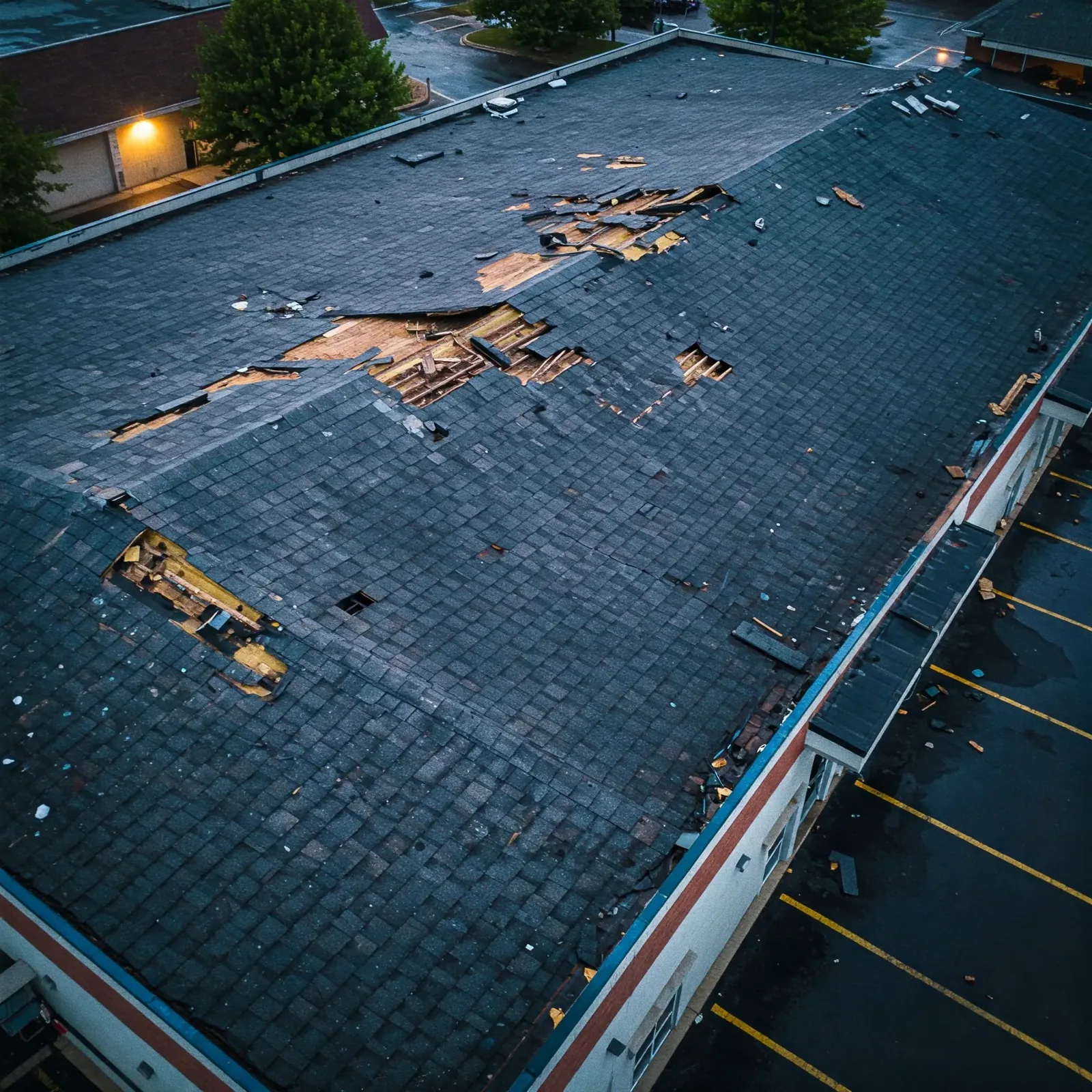
Easterly wind did the damage in November 2024. When the bomb cyclone of the 19th and 20th drove unusually damaging easterly winds through Sudden Valley, at least 16 homes took damage and South Whatcom Fire Authority logged 22 storm incidents. Lake Whatcom Boulevard closed for days. An adjuster working that loss needed the roof facts fast: which edges lifted, which way the damage ran, how far water got in.
We supply those facts. In Bellingham, WA the roof side of a claim is a photograph, a plan, a moisture map and a priced repair. We write them so an adjuster can apply them to a policy and a restoration contractor can price the interior behind them.
Fire losses reach roofs too. Smoke, heat and firefighting water each leave a mark. The fire damage roof repair record follows the same structure as a storm file, with ember pits, scorch and soaked board mapped separately.
Overview
Roofing Support for Insurance Adjusters and Restoration Firms
The field record
The first deliverable is a dated field record. Each roof area is photographed with a scale. Each image ties to a spot on the roof plan. Each defect gets a type: puncture, split seam, lifted edge, displaced coping, ponding stain, moss line, granule loss.
Findings are labeled storm related, wear related or unclear, with a reason. Gusts reached 67 mph in March 2016, and storms like that leave a pattern. Direction. Location. Extent. A pattern helps establish cause. We also note conditions the storm aggravated, because a clean split protects the policyholder and keeps the settlement defensible.
Chain of custody matters when samples are taken. Core cuts are labeled with date and location, photographed in place and in hand, and patched the same day with a note on the plan. If a lab needs a sample, it leaves with the log attached.
Photographs get the same discipline. Wide, medium, close. A tape or rod in frame. The same corner shot from the same spot on every visit. An adjuster should be able to read the damage without us standing beside the image.
Mapping the water
A lifted membrane in a wet city lets in a lot. Bellingham gets about 34.8 inches of rain a year, and about 1,866 hours of sun keep decks damp. Insulation under a torn sheet soaks fast. The ceiling stain shows up later and smaller than the real wet area.
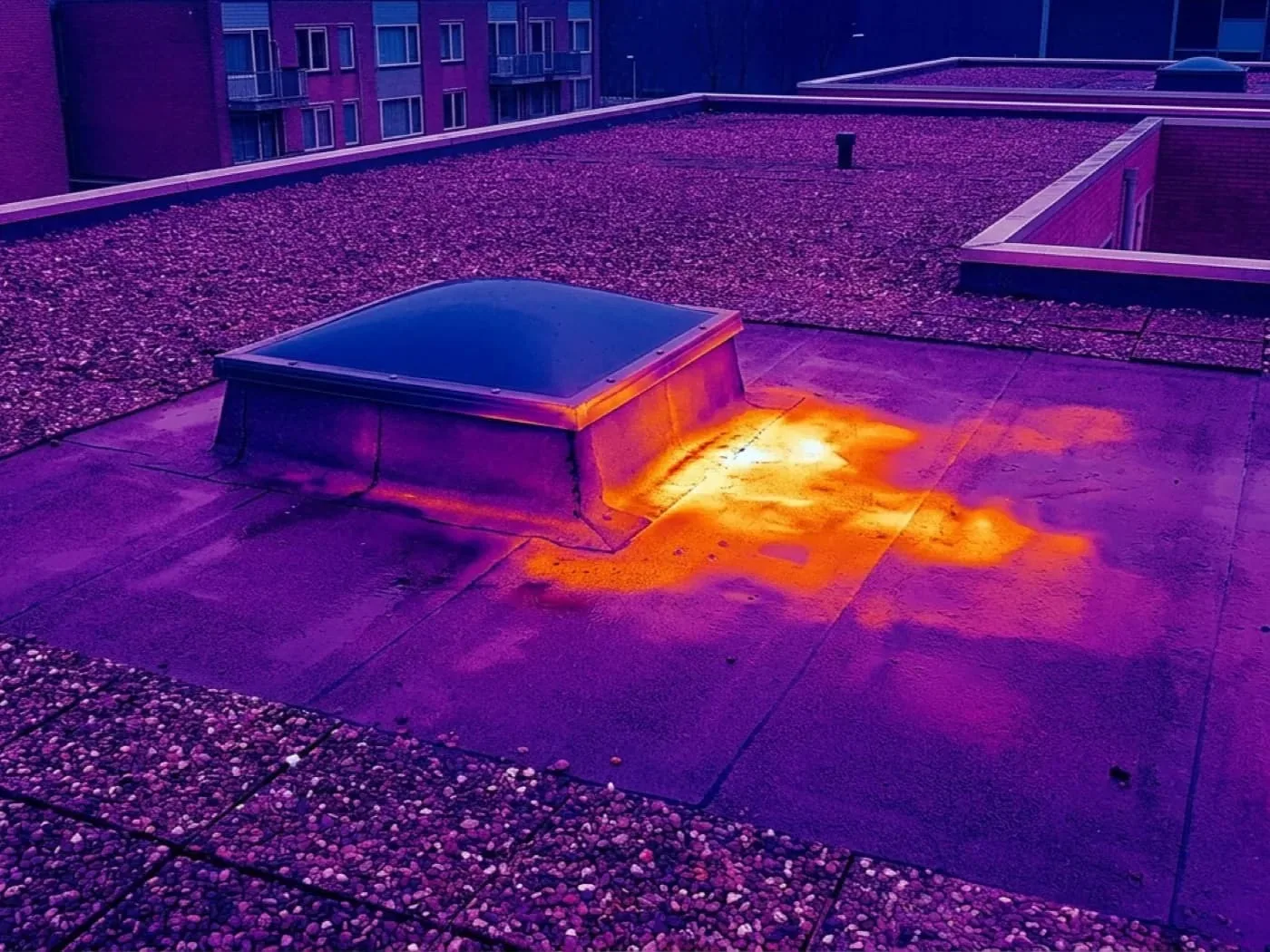
We run an infrared moisture survey on a clear evening and confirm with cores. The outlined area gives a measured quantity of board to replace. Adjuster and contractor price the same square feet. When weather blocks a scan, we use surface meters and say which method gave each reading.
Moss lines matter for cause. A line of moss shows long-term ponding. A fresh tear through it shows an event. We photograph both, because a tear that crosses an old moss line is a clean story: old condition, new damage.
Dry-in and the handoff
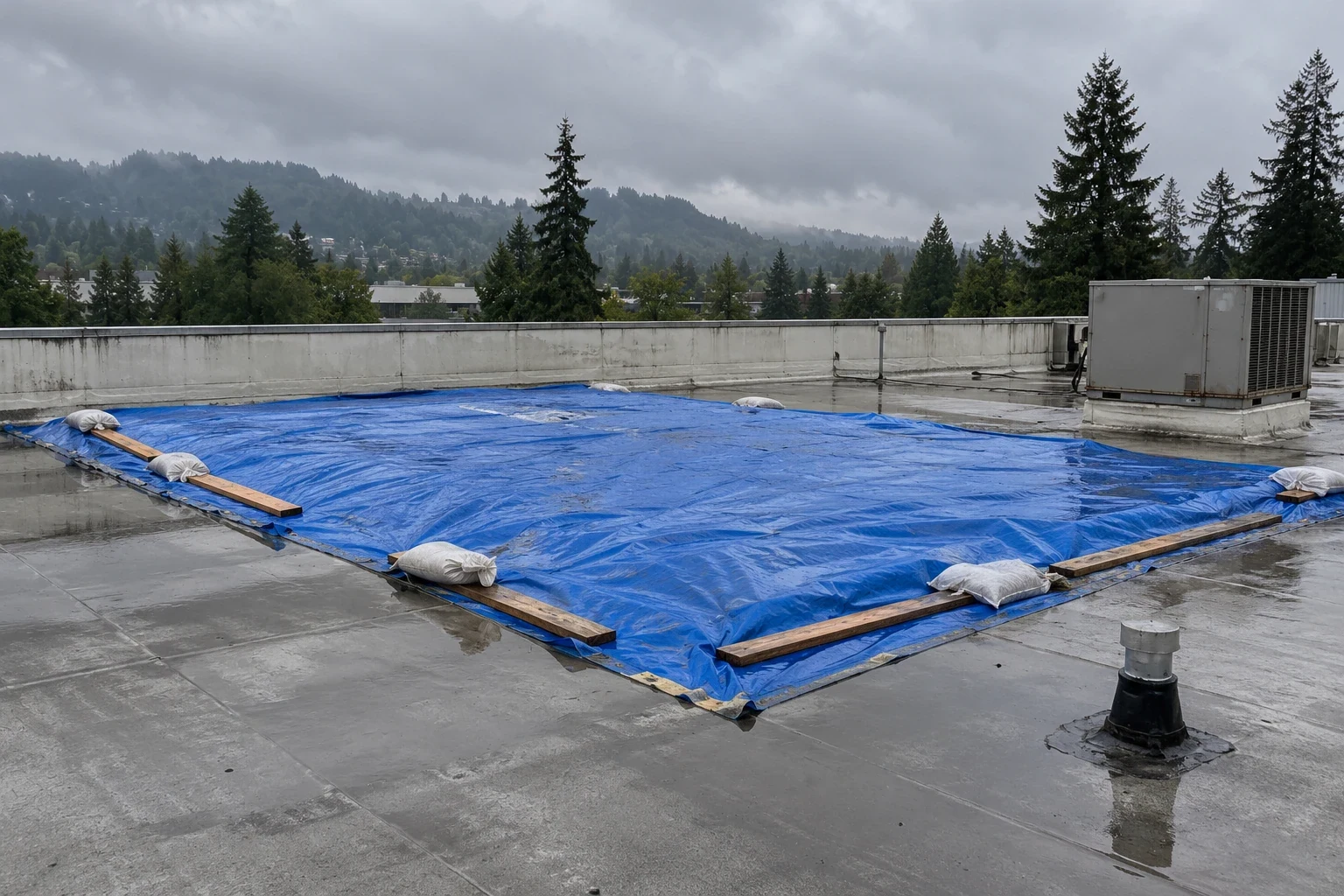
Speed limits loss. We tarp, batten, clear drains and photograph the temporary work the same day when access allows. The emergency roof repair line is answered at any hour. Temporary work is priced as its own line so it reads as mitigation.
Restoration contractors working interiors need one fact: is the roof secure? We tell them in writing. What was opened. What was closed. What remains temporary. When the permanent repair is scheduled. Drying equipment should not run under an open roof. The handoff note prevents that. The same note supports a roof insurance claim from the owner's side.
Weather windows govern the permanent work. Dry stretches in spring and summer suit most membranes. A wet week can pause outdoor tasks for days. We report those delays with the rain record, so the file explains why the schedule moved and the carrier is not left to guess.
Occupants are part of mitigation. Tenants move equipment. Managers close rooms. We note it in the file so the interior estimate follows the same timeline as the roof.
Wind, snow and the quiet losses
Wind is the headline loss. The edge lifts, the sheet flaps, the insulation soaks. Our wind damage roof repair scope follows the same record. Snow is smaller. Bellingham snow adds up to about 10 inches a year, nearly all of it from December through February. Light snow blocks scuppers, melt ponds behind parapets and a freeze finishes the damage. That is a snow and ice damage claim, and the evidence is a pond, an ice line and a split seam.
Blaine, with its salt-air waterfront and about 42 inches of precipitation, has its own pattern: corrosion that wind exposes. We record rust at fasteners and edge metal next to the lift marks, so the carrier sees which is.
Cold snaps with strong winds add a layer. A thaw soaks the deck. A freeze locks the water into seams and splits them. We time seam work for dry spells above freezing and re-inspect the dry-in after each one. The record shows the cycle.
Repair to a written scope
After approval, we repair to the scope. Photographs at each hidden layer. A supplement if concealed damage shows. We do not start work that destroys evidence before the adjuster has had the chance to see it. Materials match the existing system where practical, and we say when code calls for more.
Since mid-March 2024 the newest state building and energy codes apply, and a larger repair can trigger their rules on insulation or attachment. We mark those lines as code-driven so they are not confused with storm damage. Unit prices stay in the estimate, with one rate for sheet by the square foot, one for edge metal by the foot and one each for boots and drains. A supplement prices from the same rates.
Supplements go in with the evidence attached. If decking proves rotted or insulation saturated once the membrane lifts, photographs are taken before material comes out, quantities are measured and the price is stated per unit. The adjuster approves the change from the page.
Managers, contractors and larger losses
Larger losses bring a general contractor. The general contractor gets one contact, our schedule, scope and dry-in status. Interior work sequences correctly. A property management company that stands between carrier and owner gets documents in a form they can forward unchanged.
A roof condition record from before the loss helps most. Dated photographs from maintenance visits show the prior state. Owners in exposed spots, such as Sudden Valley, benefit from having that baseline on file.
Closeout is a short file: final photographs, a description of what was done, a note on warranty effect and the updated roof plan. Adjusters close files faster when the last page matches the first.
Commercial Roofing Questions
Can you meet an adjuster on the roof?
Yes. We schedule the walk, bring the photographs and moisture map and explain each item. Disagreements resolve faster with the roof underfoot.
Do you write estimates in the carrier's format?
We itemize labor, materials, equipment and access and can organize lines to match a carrier's platform. The line items remain ours. The layout adapts.
How do you tell wind damage from age?
By pattern. Event damage follows direction and has fresh fracture surfaces. Age shows as uniform wear. We photograph both and label each.
What if a roof looks fine after a storm?
It may not be. Lifted edges and soaked board can hide under a normal-looking sheet. We scan and probe before the file is closed.
Who coordinates with the interior restoration firm?
We do, through one point of contact. The firm receives our dry-in status in writing before drying equipment goes in.
Send the claim number and the loss location
Send the address, date of loss and access contact. We will inspect the roof, map the moisture and return a priced scope the file can use.