Roof Insurance Claim Assistance in Bellingham, WA
Roof claim support in Bellingham, WA: dated photographs, moisture maps, itemized scopes and repair pricing that separate storm damage from wear.
Roof Insurance Claim Assistance in Bellingham, WA
Roof claim support in Bellingham, WA: dated photographs, moisture maps, itemized scopes and repair pricing that separate storm damage from wear.
Commercial Roofing Services
Roof Insurance Claim Assistance in Bellingham
An adjuster reads a photograph before he reads a bid. If the photograph is dated, labeled and shot from a fixed point, the claim moves. If it is a phone snap of a ceiling stain, the claim stalls. That is the whole gap between a clean file and a fight. In Bellingham, WA, the November 2024 bomb cyclone drove easterly winds through Sudden Valley and damaged at least 16 homes. After a storm like that, a file with a clean roof record is easier to read.
We are the roofer, not the carrier. We do not decide coverage. We build the roof side of the file: what happened, what it cost, what it takes to fix.
Timing drives the first week. Photographs taken in the first days show fresh fracture surfaces and clean tears. A week of rain blurs them. So we move fast on the assessment, even when the repair has to wait for the adjuster. The first visit is about evidence. The second is about work.
Overview
Roof Insurance Claim Assistance
What goes in the file
Four things carry a roof claim. The date of loss. The cause. The extent of the damage. The estimate. Each needs proof.
Date and cause come from the storm record and from marks on the roof. The storm record fixes the date of loss: 67 mph gusts in March 2016 stripped stucco off a storefront in town. Extent comes from photographs and a plan. Every image is tied to a spot on the roof and shot with a scale. The estimate follows the scope, line by line. No lump sums. A lump sum gets cut. Itemized lines get discussed.
Scale matters in the photograph. A tape, a marked rod or a known object sits in the frame. The adjuster can then read a tear as eight inches or eight feet. We also shoot wide, medium and close at each spot, so the image tells the story without us standing beside it.
Buildings with institutional owners add a layer. A hospital owner, such as PeaceHealth St. Joseph Medical Center, the city's largest employer, may keep its own risk office and reporting rules. Other institutional owners, Western Washington University among them, keep formats of their own. We learn the owner's format first and write to it.
Mapping the water
Visible damage is half the claim. Water that entered is the other half. A torn edge over damp decking soaks insulation across a wide area, and the ceiling stain shows up weeks later.
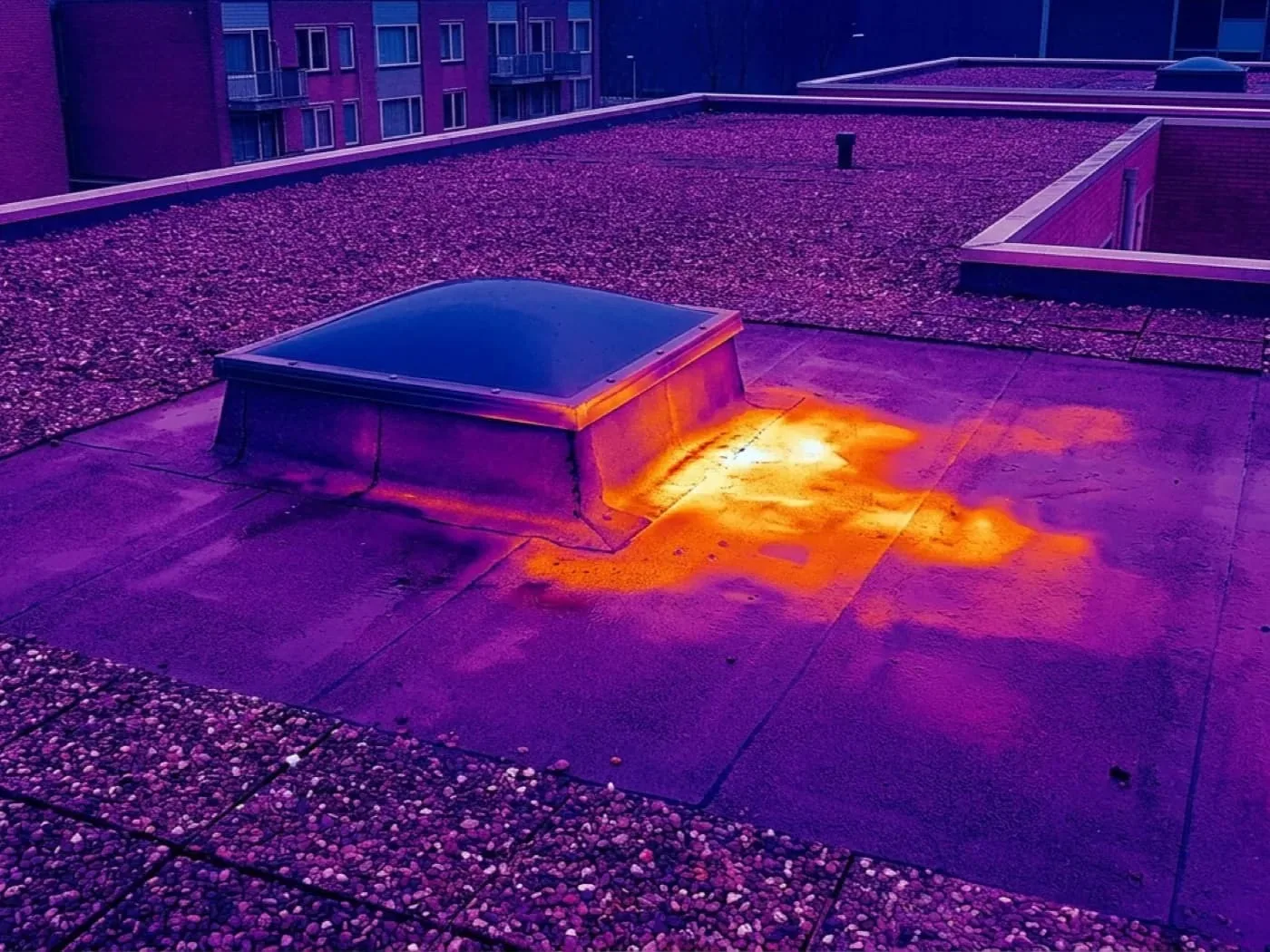
We run an infrared moisture survey at dusk, when saturated board holds heat longer than dry board. Core cuts confirm the map. The result is an outlined area with measurements. It shows the carrier exactly how much insulation to replace. It also stops the dispute over whether the whole roof is wet or only a corner.
Timing helps the map. Scan on a clear evening after a warm day. In Bellingham the window can close for weeks in the wet months. When it does, we use core cuts and surface moisture meters, and we say which method produced each reading. A method note makes a number defensible.
Storm damage and wear
Every carrier separates them. We separate them first. Each item in the report is labeled: storm related, wear related, or unclear. Each label has a reason.
This helps the owner. A report that blames everything on one event gets questioned. A report that admits some wear is easier to trust. The storm items then stand on firmer ground. Bellingham's damp climate leaves moss and algae on many roofs, and those are wear. A torn seam after a gale is storm. We write both down.
Some wear is plain. Granule loss. Chalking. Moss lines. Rusted fasteners. Some damage is plain too. A fresh tear in the direction of the wind. A coping cap lying on the ground. The unclear items are where we slow down. We photograph them, describe what we see and leave the call to the carrier, with our reasoning attached.
Stop the loss while the claim moves
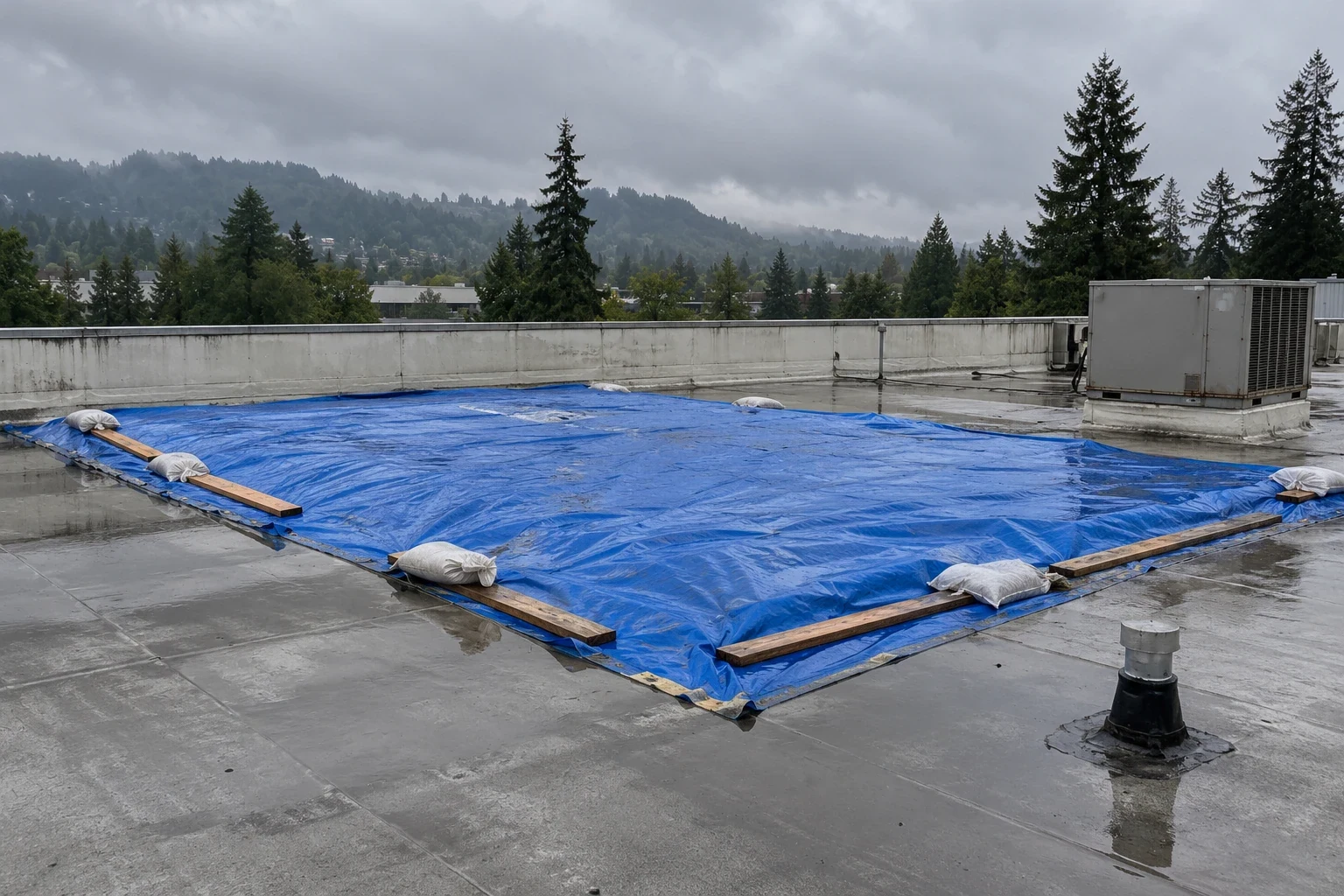
Policies expect the owner to prevent more damage. So the roof gets protected the same day. Tarps. Battens. Cleared drains. Photographs of each step. The cost goes in as its own line.
After-hours work runs through emergency roof repair. The temporary work stays reversible. It does not erase evidence the adjuster needs to see. Permanent repair waits for the inspection, but not for long. We ask the carrier for a date early, so the building is not left on a tarp through November.
Tenants come into it. A leak over a retail floor near Bellis Fair, where the enclosed center sits at the I-5 and SR 539 interchange, ruins stock before it ruins a ceiling. We tell the property manager at once and write down what was exposed. That note supports a business-property claim as well as the roof claim.
Scope, supplements and the repair
The scope names each item. Material. Quantity. Labor. Access. Disposal. When the old sheet comes off and hidden damage shows, we write a supplement. Photographs are taken at the moment of discovery, before anything is removed. The adjuster sees what we saw.
Code can add scope. Both the 2021 International Building Code and the 2021 Washington State Energy Code have applied statewide since March 15, 2024. A larger repair may trigger current insulation or attachment rules. We flag it in the estimate and mark it as code-driven, so it is not confused with the storm damage itself. The work itself follows storm damage roof repair practice.
Unit pricing helps both sides. We state a price per square foot for sheet, per foot for edge metal and per unit for boots and drains. When the scope changes, the math is already on the page. No one has to start over.
For managers and contractors
Property managers handle claims across several buildings. They need one format. We give them the same report, the same photographs and the same cost lines for each. A general contractor on a larger loss gets the schedule and the dry-in status. Restoration teams working with insurance and restoration clients get a clear handoff date for interior work.
A running roof condition report ahead of any loss makes this simple. The before picture already exists. Owners in wind-exposed spots, such as Sudden Valley, benefit most.
Contractors who bid the repair after a large event want one thing: a scope they can price without guessing. We hand over the photographs, the plan, the moisture map and the item list, and the contractor bids from the same file the adjuster has. That keeps the number on the invoice close to the number in the estimate.
Commercial Roofing Questions
Do you negotiate with the insurer for me?
No. We supply the roof facts and meet the adjuster on the roof. Coverage and settlement stay with you and the carrier, or a public adjuster you hire.
What if the carrier disputes the scope?
We walk the roof with the adjuster and explain each line. Photographs and the moisture map do most of the talking. A supplement covers anything found later.
How long should I wait before starting repairs?
Mitigation starts at once. Permanent work waits only for the adjuster's inspection. We ask for a date early to keep the gap short.
Can a claim be filed on a roof with moss and wear?
Yes. The carrier will separate wear from event damage. Our labels make that split fair for you.
Will the report help if I sell the building?
A dated file of the loss, the scope and the finished repair gives a buyer a clear history. Lenders ask for the same thing.
Send the loss date and the building address
Send the address, the date and what you saw. We will document the roof, map the moisture and price each line for the carrier.