Wind Damage Roof Repair in Bellingham, WA
Repair of wind-lifted membranes, loose coping and torn edges on Bellingham, WA commercial roofs, with perimeter fastening priced by the foot.
Wind Damage Roof Repair in Bellingham, WA
Repair of wind-lifted membranes, loose coping and torn edges on Bellingham, WA commercial roofs, with perimeter fastening priced by the foot.
Roof Damage Repair
Wind Damage Roof Repair in Bellingham
One loose cleat can unzip a coping run. Wind needs only a gap. Bellingham, WA saw 67 mph gusts in March 2016 that stripped stucco off a Home Depot storefront and holed a house roof. In November 2024 a bomb cyclone pushed unusually damaging easterly winds through Sudden Valley, damaged at least 16 homes and prompted 22 storm incidents. Neither storm had to be exceptional. Each found the weakest edge.
Wind repair is two jobs. First, close the openings before the next rain. Second, add the attachment that was missing, so the same gust cannot repeat the damage. The second job is the one that shows on the bid. Unusual wind directions complicate it. A building drawn for the prevailing quarter can lose a corner on the opposite side, so we log which edges actually lifted and fasten those. The drawings give a design wind. The roof shows the one that arrived.
Overview
Wind Damage Roof Repair
How wind takes a roof apart
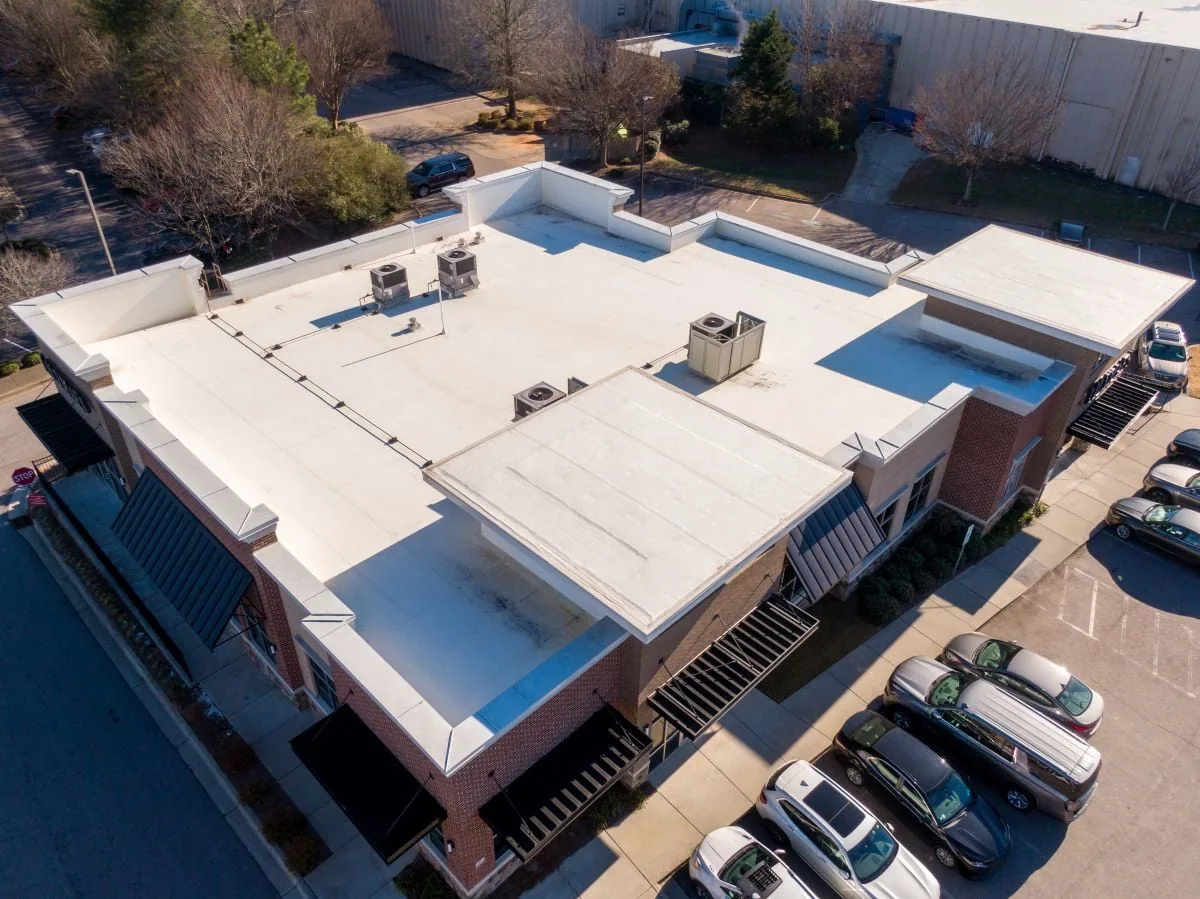
Wind pulls. It does not push. Air speeding over a roof edge makes suction, strongest at corners and along the perimeter. The suction lifts the membrane, then the insulation, then the deck connection.
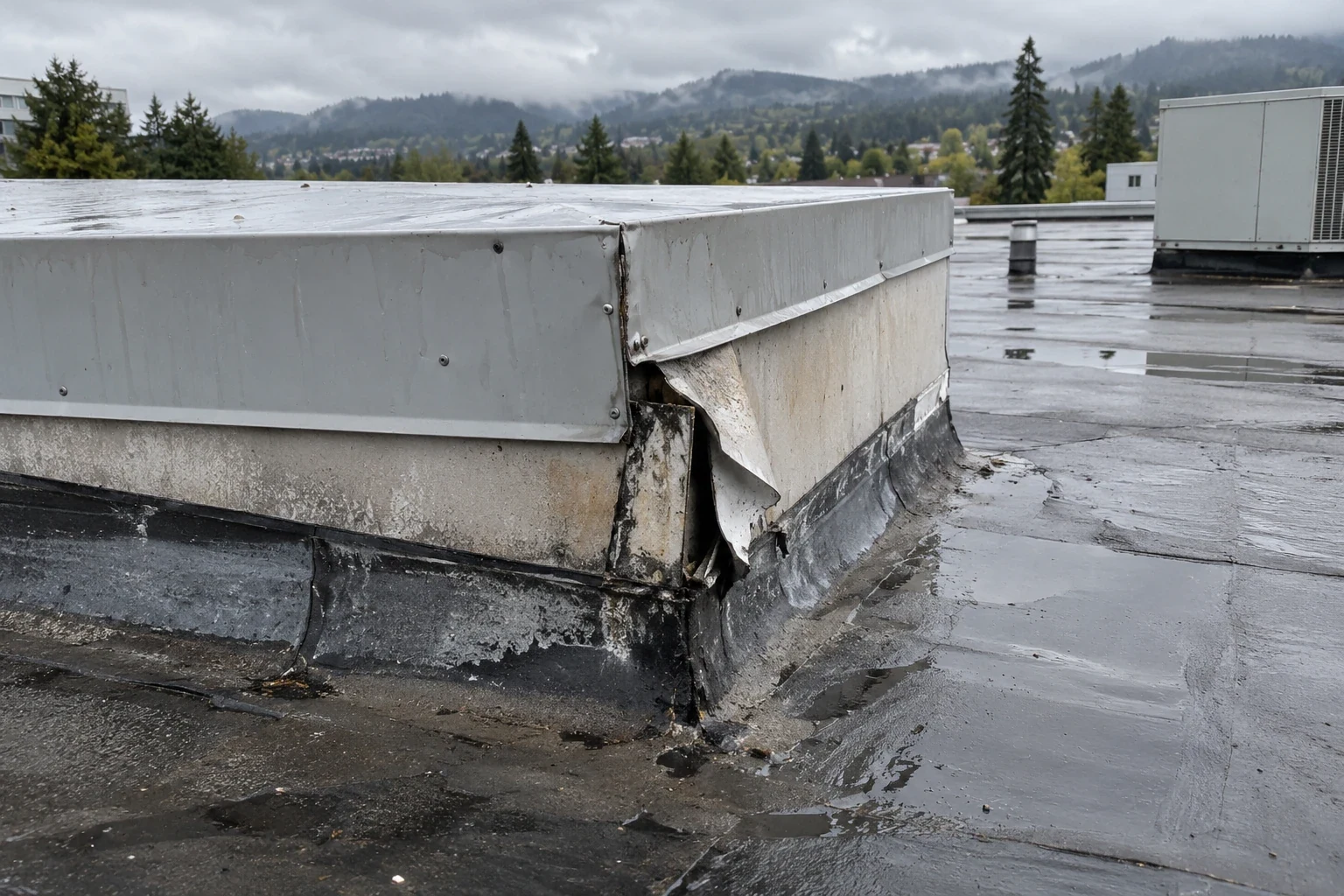
Failure starts at an edge detail. Loose metal. A gapped termination. An open lap. Once air gets under the sheet, pressure builds and the damage runs inward in a wave. Wet decks make it worse. Low sunshine, about 1,866 hours a year, keeps a Bellingham deck damp and the adhesive weak. A sheet that lost its bond in a wet October peels in the first gale.
Debris is evidence of direction. A branch, a displaced rooftop item or a scatter of gravel marks the path of the gust. We photograph all of it before cleanup, because clearing first erases the best record of cause.
Walking the damage
Start at the perimeter and work inward. Edge metal first, for displacement. Coping next, for lifted joints. Then flashing terminations, for tears. Then the field: billows, creases, pulled fasteners. Mechanically attached sheet shows plates standing proud or sheared. Adhered sheet shows delamination. Ballasted roofs show bare patches and scattered stone. Where water may have entered, an infrared scan marks the soaked board.
The output is a written scope with photographs, a location for each item and a line between dry-in and permanent repair. A mixed event gets the same order of work, as in storm damage roof repair. Access shapes the schedule. Hatch size, ladder reach, tie-off points and the spot where a lift can stand all get noted on the walk. A lift staged on a closed street needs a permit, and permits take days to come back. On roofs a crew cannot safely cross, drone images come first and a hands-on pass follows.
Dry-in day
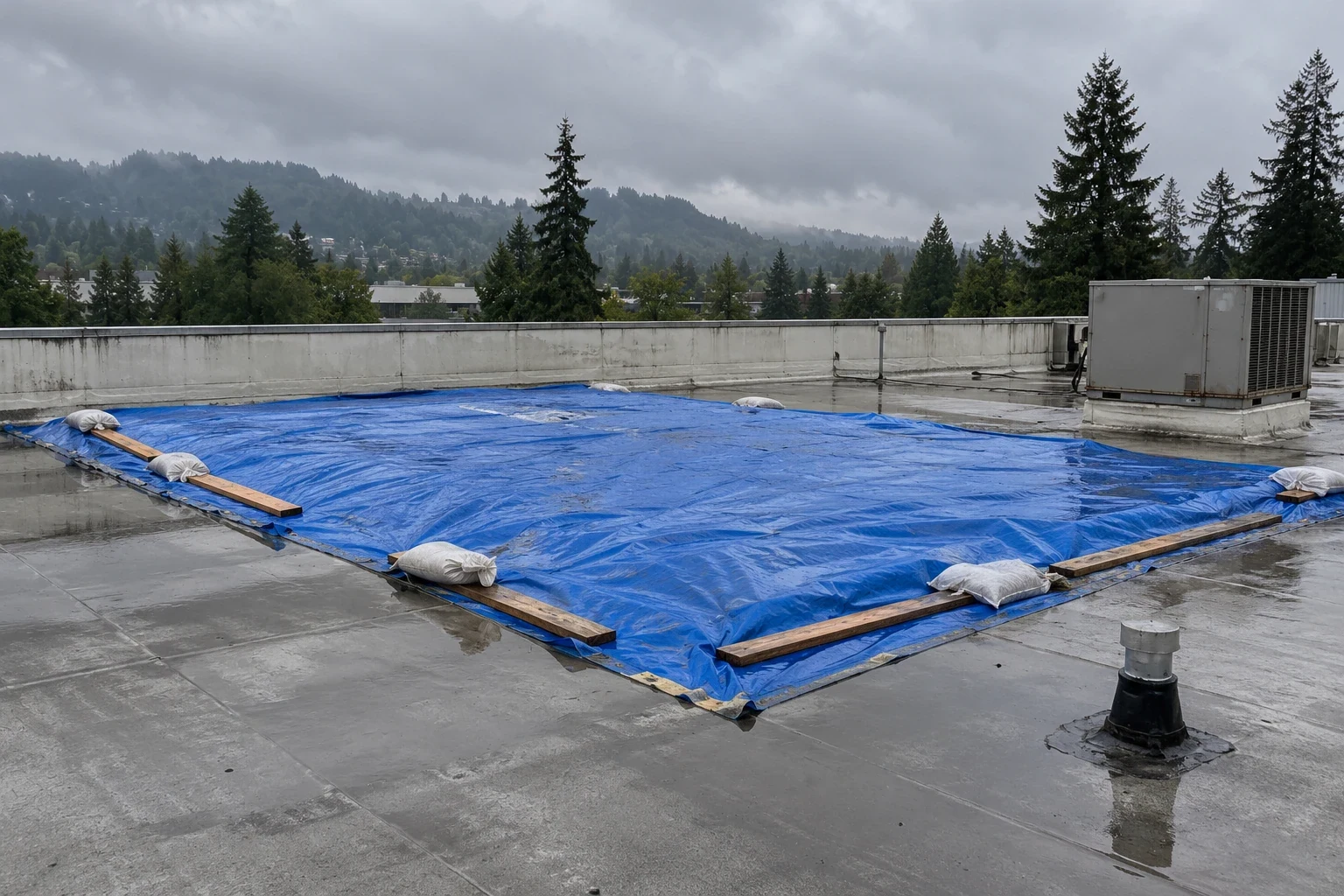
Before any permanent work, stop the water. Loose sheet gets battens. Exposed insulation gets a tarp fastened to the deck or the parapet framing, never to the membrane. Drains get cleared and debris barriers go up. While the wind is still blowing, we stay off the roof, since a crew on a deck in a gale invites a second claim. After hours, the same steps run through emergency roof repair.
We photograph the temporary work and price it as a separate line. A tarp lasts weeks, not months, so each one carries a date for its replacement. Temporary ballast is a balance. Too little and the sheet flaps free. Too much and a stressed deck carries the load. We pick weights and battens that hold without adding risk, and we mark where each went so nothing is left behind when permanent work starts. A loose tarp edge repeats the damage the wind began.
Repair and re-attachment
A torn single-ply sheet takes a welded patch that overlaps sound membrane on every side. Adhered sheet that has lifted is trimmed back to a sound bond and bonded again. Displaced coping and edge metal are reset on fresh cleats, fasteners and sealant, the same edge metal and coping details a reroof carries. Soaked board comes out, because it does not dry in place. Where fastening fell short, we add attachment in the perimeter and corner zones, priced by the foot. It costs little beside a second storm. The fastener pattern goes on the roof plan so the next inspector can read what was done.
An open lap nearby gets a seam failure repair, and a torn wall flashing gets a flashing failure repair, on the same visit. Sometimes the better answer is a new roof. If the membrane has lost its bond across more than a small share of the field, or soaked board runs across a wide area, a recover or replacement beats a patchwork. We price both paths and show the years each returns. Closeout is a punch walk: weld probes, a tug on each cap, each cleat checked against the plan and a photograph of the finished edge. The register then takes the new fastener pattern and the date.
Code and the permit line
Wind-uplift and edge-securement rules come with the 2021 International Building Code, which has applied statewide since March 15, 2024. A small patch rarely triggers review. A large repair or reroof may. We tell the owner which side of the line a job falls on before work starts.
That matters for cost. A repair that touches enough of the roof can pull the whole edge into compliance. We price both: the patch and the code-driven upgrade. The owner picks with the numbers visible, and the carrier sees the code line marked apart from the storm damage.
Insurance follows the same record. The carrier wants the date, the direction, the extent and a price. Our report marks wind items apart from wear items, and marks code-driven items apart from both.
Exposure by building type
Big, open buildings lose edge first. Retail around Bellis Fair, on the I-5 and SR 539 corridor, carries tall parapets and signs that catch wind. Port of Bellingham industrial buildings sit on open ground near the water. A warehouse roof has long perimeters and few interior walls to slow uplift.
Roofs in Sudden Valley felt the 2024 storm, with at least 16 homes damaged. Blaine's waterfront adds salt air, which weakens fasteners that wind then tests. We note the exposure in each grade.
Cold snaps with strong winds, which Bellingham sees in winter alongside roughly 10 inches of snow a year, load the same edges a second time. The fastening that survives a gale has to survive a freeze after it. That is why we test, not just look.
Commercial Roofing Questions
How can I tell wind lifted my roof when nothing leaks?
Look for wrinkles near corners, billows, lifted coping and fasteners standing proud. A roof visit confirms what the eye only suggests.
Does the carrier treat wind and age differently?
Yes. Wind damage is an event. Loosened fasteners from long wear are not. We photograph both and label each.
Is a lifted membrane safe to leave until the weekend?
No. A lifted sheet tears further in the next gust and takes rain with it. We secure it within the day and set a date for the permanent fix.
Why did the same corner fail twice?
The first repair restored the sheet but not the attachment. We add fasteners or adhesive in corner and perimeter zones and record the new pattern.
Can wet weather delay a wind repair?
It can. Wet decks do not bond. We dry in first and make the permanent repair on the next dry window, with the date on the bid.
Send the address and photographs of what moved
Send the address, which edge lifted and whether water came in. We will secure the roof and price the permanent repair by line.