Fire and Smoke Damage Roof Repair in Bellingham, WA
Repair of fire, heat, smoke and firefighting-water damage on Bellingham, WA commercial roofs: char mapping, soaked board removal and carrier-ready records.
Fire and Smoke Damage Roof Repair in Bellingham, WA
Repair of fire, heat, smoke and firefighting-water damage on Bellingham, WA commercial roofs: char mapping, soaked board removal and carrier-ready records.
Roof Damage Repair
Fire and Smoke Damage Roof Repair in Bellingham
A fire in a building reaches the roof two ways. Heat comes up through the deck. Water comes down from the hoses. Both leave a roof that looks intact from the lot and is not. In Bellingham, WA the water part matters most. Bellingham takes 34.8 inches of rain in a typical year under about 1,866 sunlit hours, so a roof that took fire water on top of a wet season starts its repair already soaked.
Fire repair here is a mapping job first and a roofing job second. Find what burned. Find what soaked. Find what is only dirty. Then price each by line, with photographs for the carrier.
Water from a fire also travels along the deck and into walls. The wet area can be many times the burned area. Fixing only the char leaves the roof wet. That is why mapping comes before pricing, and why the first report has two lists: burned and soaked. Heat-weakened edges are a wind damage risk until they are reset, so they get secured first.
Overview
Fire and Smoke Damage Roof Repair
How fire reaches a roof
Four routes. Direct flame through the deck burns membrane and board from below. Radiant heat from a neighboring fire blisters coatings and softens single-ply sheets. Smoke leaves soot and corrosive film. Fire-fighting water soaks insulation and loads the deck.
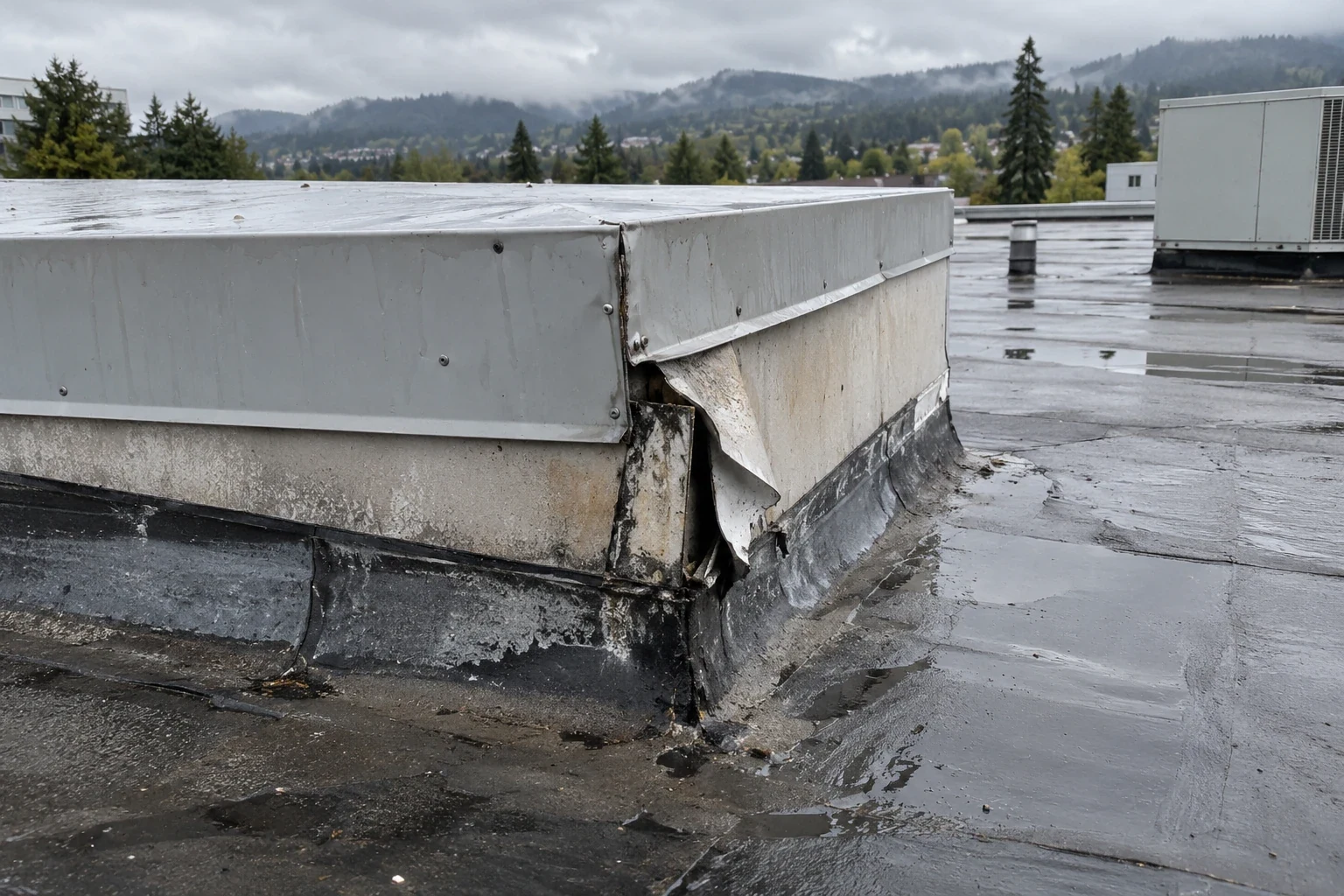
Each leaves a different mark. Char shows as black, brittle layers and burn-through. Heat shows as waviness in metal and shrinkage in the sheet. Soot shows as dark film. Water shows as soaked board and ponding. Some of it is cosmetic. Burn-through and heat distortion are not, because they open the waterproofing. Those get repaired. Roofs near process equipment or kitchens carry more of the risk, and the grade says so.
Rooftop equipment needs its own check. Intake louvers and filters load with soot. Wiring and insulation on exposed units can be scorched. Condensate lines can be melted or plugged. We report what we find to the mechanical contractor and note it in the roof file, so the units are checked before the heating or cooling season.
Inspecting a fire-exposed roof
We walk the whole roof, with the structural engineer's clearance where the deck is in doubt. We probe suspect areas for burn-through and soft board. We check coatings for blisters and edge metal for warp. We compare the surface to an unexposed area for color change.
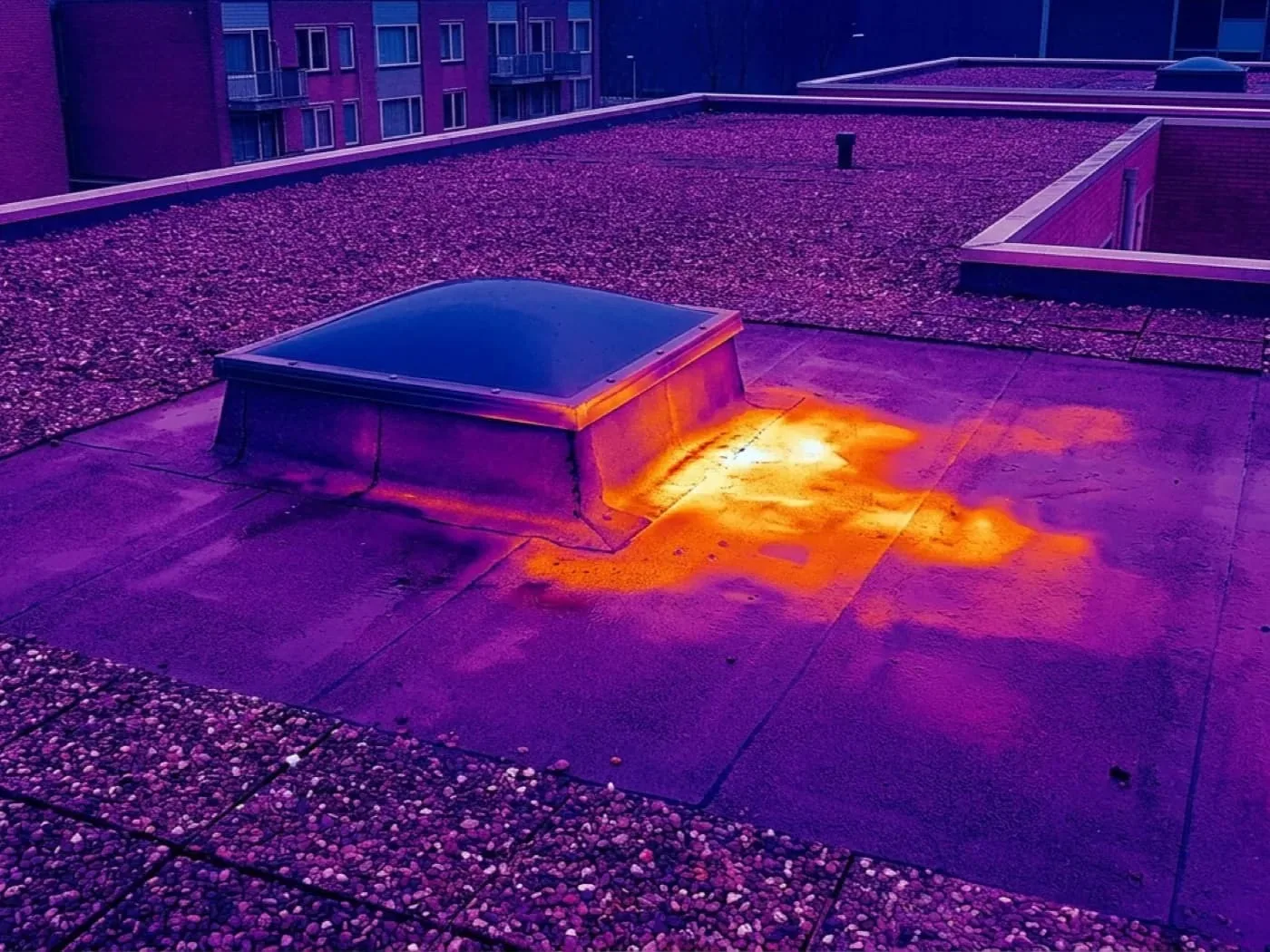
An infrared moisture survey follows. Water from firefighting soaks board across a wide area, and a pinhole through a burned spot can feed it. Core cuts confirm the map. Photographs are taken with scale and tied to the plan. Findings are labeled burn, heat, smoke, water or unrelated. That last label protects the owner, because wear that predates the fire stays out of the fire claim.
Structure comes first. Fire weakens decks. Before crews walk a burned roof, an engineer or a competent person clears access, marks unsafe zones and sets walk paths. Roof work waits for that clearance. A drone flight from outside the hot zone speeds the first look and keeps people off the deck. Details at flashing failure repair apply where walls and curbs scorched.
Repair and re-protection
Burn-through is cut out. Soaked and charred board comes out. New board goes in, then new membrane, tied into sound sheet. Heat-distorted edge metal is replaced, not straightened, because heat changes metal and the joint will not seal. Blistered coating is stripped and recoated, or the section is replaced if the substrate is harmed.
Soot is cleaned where the surface allows, after a test patch shows what washing does. If the roof must be dry-in quickly, the emergency roof repair line handles it at any hour. Permanent work follows the dry weather. July is the driest month, so a fire repair that opens in winter gets a temporary cover and a date. After the work, the roof is graded again and the register records the date and the nature of the exposure.
Sequence matters on larger repairs. Interior cleanup, ceiling restoration and roof section replacement all interact, and drying equipment should not run under an open roof. We give the property manager a written status after each stage so restoration contractors plan around it. Seam work near repaired sections, the kind handled in seam failure repair, gets probed before the roof is accepted.
Records the carrier reads
Fire claims turn on documentation. We record the date, the extent, the types of damage found and the methods of repair. Dated photographs taken before the loss, such as those from maintenance visits, are the strongest evidence of the prior state.
The same file helps owners using roof insurance claim assistance and adjusters or restoration firms handling many files through insurance and restoration channels. The 2021 International Fire Code arrived statewide with the 2021 building and energy codes on March 15, 2024. A larger repair can trigger current rules, and we mark code-driven lines apart from fire damage.
Timing counts. Many policies set a window to report damage. A roof inspected late loses clarity as soot weathers and rain washes the evidence. An early record, even before repairs are priced, preserves it. We photograph first and price second.
Process buildings and hot work
Bellingham's industrial base raises fire risk in specific ways. The Ferndale and Cherry Point refineries and a Brooks Sports shoe plant drive Ferndale's industrial base, and BP Cherry Point Refinery employs about 975 people. The Port of Bellingham runs industrial parks and a shipping terminal. Craft breweries sit in older light-industrial buildings. Process heat, grease, solvents and hot work all put fire near a roof.
Hot work on a roof is its own source. A torch, a welding spark or a heat gun near insulation can start a smolder that surfaces hours later. We run permits, fire watch and a post-work check. Plants that run manufacturer operations get the same rule set for any roof work.
Where the work lands
Ferndale and Cherry Point hold the heavy industrial roofs. The Port's Marine Drive and Airport Industrial Park hold industrial space. Downtown buildings are in the central business district. Each fire repair is scoped to the building, not to the area.
Ember-resistant detailing is worth a line in any reroof afterward. A noncombustible cover board. Tight edge metal. Clean parapet corners. Debris cleared from valleys. These go on the bid as alternates, and the owner decides with both numbers visible. Moss is not fuel, but dry needles and leaves in a gutter are, and the fall pass clears them.
Commercial Roofing Questions
How do I know if my roof was affected if the fire was inside?
A close inspection is the only dependable way. Burn-through, heat distortion and soaked board do not show from the ground. An infrared scan finds water that entered.
Is soot on a roof a repair item?
A cleaning item first. If washing restores the surface, no repair is needed. If it does not, a coating is an option to compare.
Should I wait for the carrier before cleaning the roof?
Photograph first. Clear debris that blocks drains. Leave burned and damaged sections in place until the adjuster has had the chance to see them, unless water is entering.
Does fire damage affect the roof warranty?
It can. Manufacturers often limit coverage after a fire. We read the terms and tell you what changes before repairs start.
How can a roof be made more fire resistant?
Use a noncombustible cover board, keep parapet corners and gutters clear, tighten edge metal and choose membranes with suitable fire ratings. Upkeep matters as much as material.
Send the address and the date of the fire
Send the address, the date and what burned. We will inspect the roof, scan for moisture and document what we find.