Snow and Ice Roof Damage Repair in Bellingham, WA
Repair of snow load, ice dam and freeze-thaw damage on Bellingham, WA commercial roofs, from blocked scuppers to split seams and foothill snow country.
Snow and Ice Roof Damage Repair in Bellingham, WA
Repair of snow load, ice dam and freeze-thaw damage on Bellingham, WA commercial roofs, from blocked scuppers to split seams and foothill snow country.
Roof Damage Repair
Snow and Ice Roof Damage Repair in Bellingham
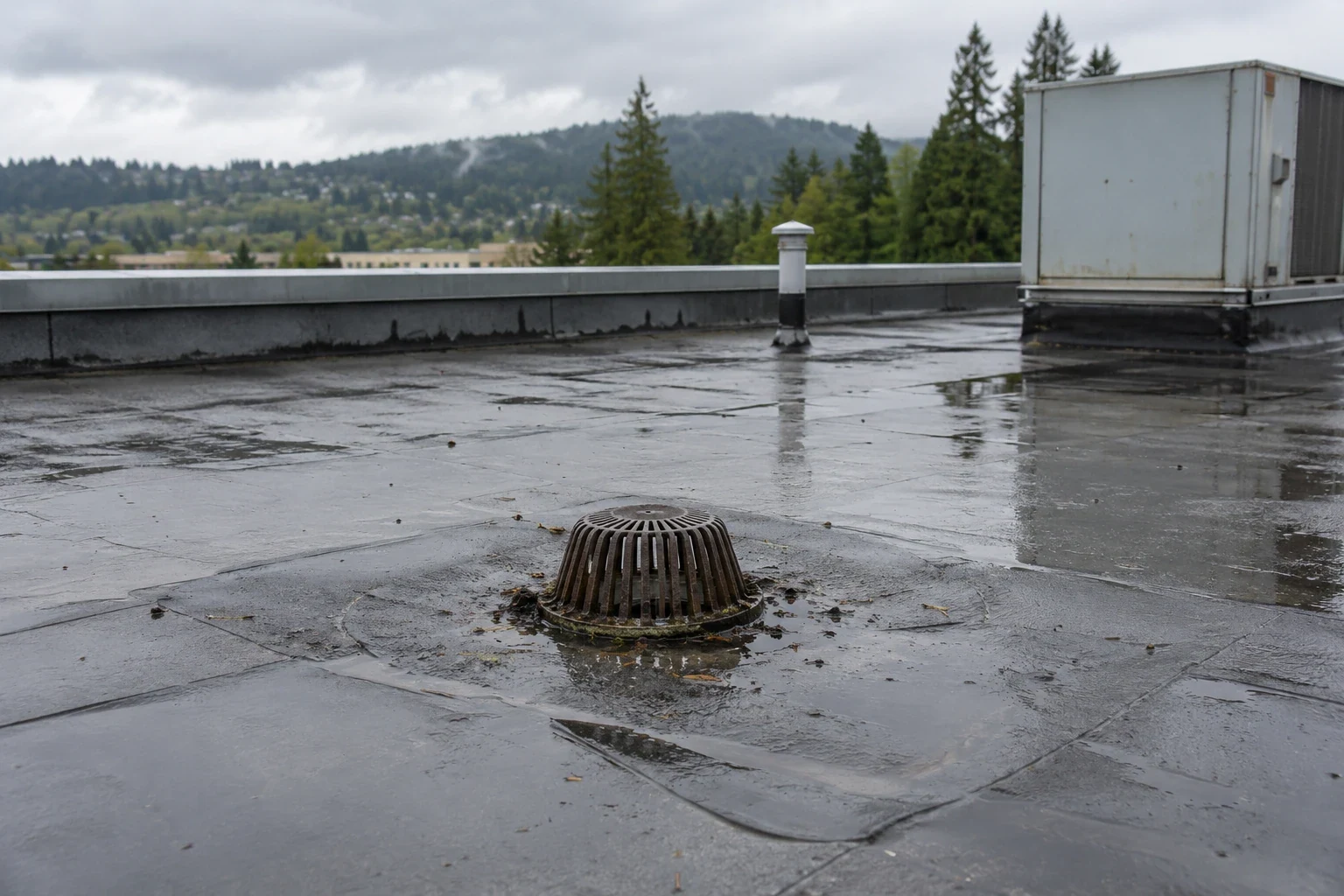
Ten inches of snow a year is not much. It is enough to block one scupper. In Bellingham, WA the yearly total is roughly 10 inches, nearly all of it from December through February, with an occasional cold snap and strong wind. The roof does not fail under the snow. It fails behind it. A scupper packed with slush backs water onto the deck, the parapet holds it, and a night freeze turns the pond into a sheet of ice pressing on seams.
Snow damage here is a drainage problem with a thermometer attached. The repair starts at the outlet and works inward. The bid lists each step so the owner knows which part was the clog and which was the damage.
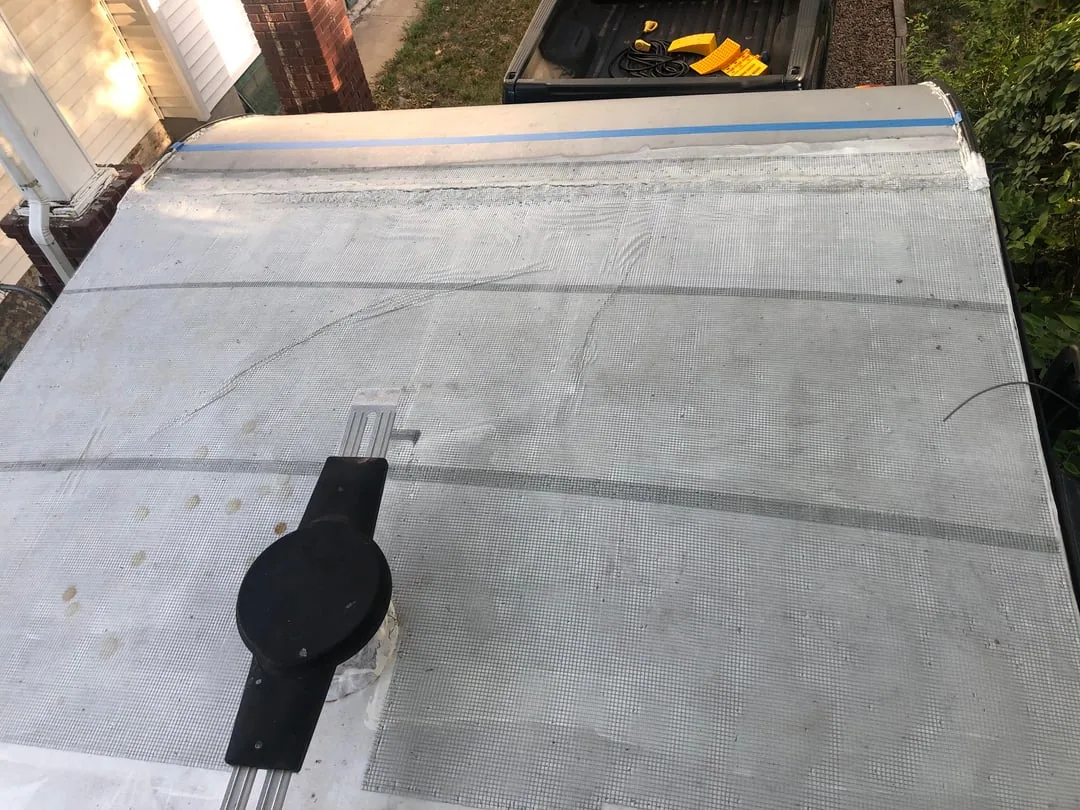
Open laps in a pond are the usual casualty. Freeze and thaw pry them apart, and the repair belongs to seam failure repair. We probe the seams at every pond edge after winter, before the next rain tests them.
Overview
Snow and Ice Roof Damage Repair
What snow and ice actually do
Four things. Snow loads the deck, lightly at this depth, heavily in the foothills. Melt ponds when outlets freeze. Freeze and thaw cycles work water into seams, laps and cracks and pry them open. Ice at a scupper or gutter pulls hardware loose and pushes edge metal out of line.
Wind makes snow drift. It piles against parapets and rooftop units and loads those spots more than the field. Cold snaps arrive with strong wind, so a drift forms in hours. The weak points are the same ones the rest of the year finds: edges, curbs, drains. Winter only tests them harder. Because the sun is scarce, about 1,866 hours a year, melted water refreezes before it leaves the roof.
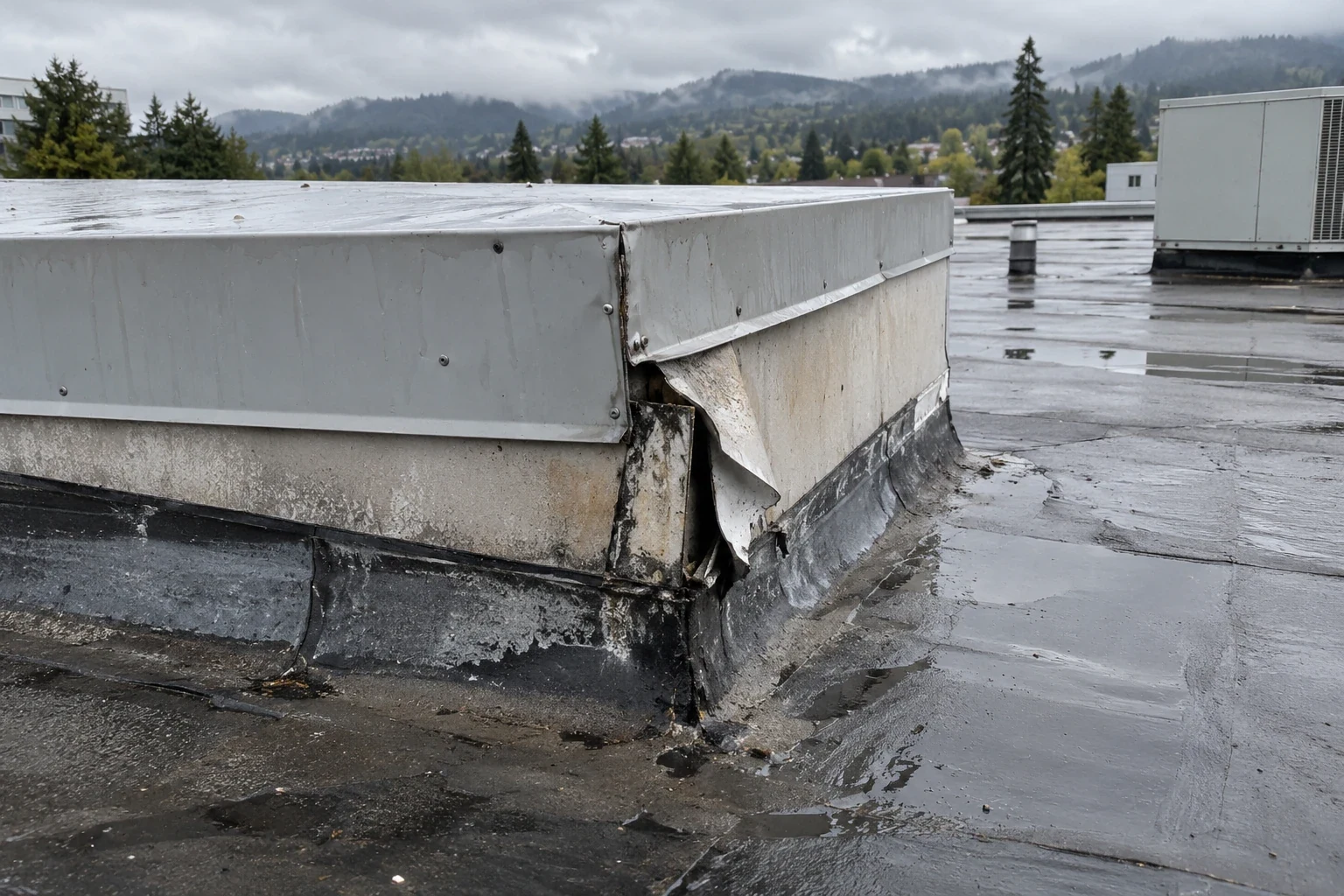
Rooftop units collect drifts on their lee side. Snow melts against the curb and freezes in the crack at its base. Ice then pries at the flashing. We clear around curbs after an event and inspect the flashing in spring. A cracked curb corner found in March is a small repair. Found in August, it is a ceiling.
Scuppers, gutters and cold
Outlets are the first fix. We clear every scupper, drain and downspout after a snow event and before the next freeze. We check discharge points. A downspout that dumps onto a walkway makes an ice hazard. A scupper with a narrow throat freezes shut. We cut openings generously and point discharge away from walkways and drive lanes. Outlet heights and overflows are set through drain and scupper work.
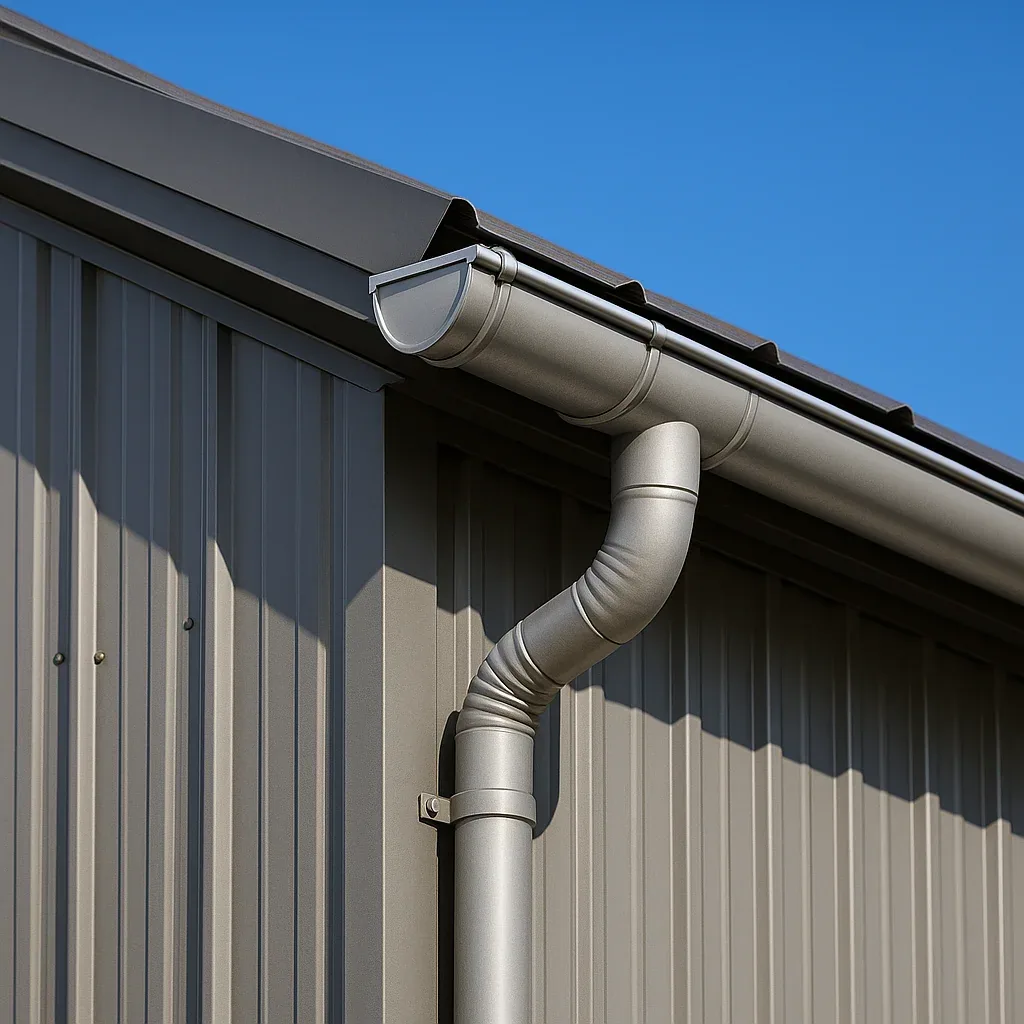
Heat tape and heated conductor heads are bid lines where a site calls for them. They are not for every roof. They suit sites where a frozen outlet would flood an interior and where staff cannot clear it by hand. Gutters on eaves get slope, hanger and end-cap checks. A gutter that holds water splits in a freeze.
Planning is cheaper than response. A fall visit clears the outlets, tightens edges and records the condition. When the first snow forecast comes, the roof is already ready. The visit costs a fraction of one emergency call, and the record shows the carrier a roof under control.
Reading the damage
After a snow or ice event we walk the roof for four signs. Ponding stains behind parapets. Split or lifted seams along former ponds. Dented or displaced edge metal near scuppers. Cracks in sheet where ice pressed on a ridge or curb.
A freeze after a thaw leaves distinctive marks: stress cracks that radiate from a pinned spot, delamination blisters and shiny ice scars on the surface. We photograph them, locate them on the plan and probe every seam in the pond. Infrared shows where water got in. The result is a list of repairs and a list of conditions that predate the winter. The carrier sees both.
Gutters need their own look. Ice loads hangers and pulls them. A sagging gutter holds water and splits in a freeze. We check slope, hangers and seams, and replace what has failed. A downspout that discharges at a wall base freezes the ground and sends melt against the foundation.
Repair in cold weather
Cold limits repair. Adhesives need a surface above their minimum. Welds on a cold, damp sheet fail. A temporary seal goes on in winter, with a date for the permanent fix. The permanent fix waits for a dry stretch above freezing. In Bellingham that usually means spring through early fall, with July the driest month.
Permanent work follows the failure. Split seams get probed, cleaned and rewelded or capped. Cracked sheet gets a patch extending past the damage. Displaced coping gets reset, as in edge metal and coping work. Soaked board comes out. The fix for the cause, a cricket or a raised drain, goes on the bid beside the damage repair. The slope side of the cure is ponding water roof repair.
Schedule is tied to the weather window. Plan temporary seals in winter, permanent work in July, and warn the owner when the gap between them is long. A temporary patch can carry a roof through one winter. It rarely carries it through two.
Foothill and snow-country roofs
Not every roof sits at the bay. Maple Falls, on the Mount Baker Highway at 633 feet, east of Bellingham, is in the Cascade foothills where snow is heavier. Glacier sits roughly 20 miles by road from the Mt. Baker Ski Area, in snow country at about 900 to 1,000 feet. Mount Baker, at 10,778 feet, is the county's highest point, and snow load increases toward the foothills. Blaine, on the border, gets about 9 inches of snow and about 42 inches of precipitation a year.
For those places the roof design is a snow-load question first. We check the pitch, the structure's rating and the way snow sheds. A roof in Maple Falls or Glacier is not graded like one at the bay. Snow guards, heavier structure and steeper pitch enter the bid. We say what the building was designed for, or that we cannot tell without drawings.
Pricing a foothill job includes travel and winter access. A road closed by snow stops a crew. We build float in and quote the mobilization as its own line. Those jobs also run on a shorter working season, so ordering and scheduling happen earlier.
Paper for owners and carriers
Snow claims turn on the line between event and neglect. A carrier asks whether the outlet was clear and the roof maintained. Our fall visit records answer. Dated photographs of cleared scuppers and tight edges show a roof under care, and the damage that follows reads as event damage. Without them, a pond looks like a design flaw.
A larger repair may trigger the snow and drainage provisions of the 2021 International Building Code, applied statewide since March 15, 2024. We mark those lines as code-driven. A maintenance visit each fall keeps the paper trail ahead of the winter.
Commercial Roofing Questions
How much snow is a problem for a commercial roof?
At Bellingham depths the snow itself is rarely the issue. Blocked outlets and freeze cycles are. In the foothills, load becomes the question and structure rating decides.
Should snow be shoveled off the roof?
Only by trained crews with fall protection and care for the membrane. Clearing outlets is the safer, more useful step. We do that after each event.
What is an ice dam on a flat roof?
Ice at an outlet or along an eave that holds back melt. Water ponds behind it and can enter laps and flashing. Clearing the outlet before the freeze prevents it.
Can a snow-damaged seam be repaired in winter?
Temporarily. A cap strip or sealed patch holds until a dry stretch above freezing allows a proper weld. The record shows which fixes are temporary.
Do foothill buildings need a different roof?
They need a snow-load check first. Pitch, structure and snow guards matter more there than at the bay. We grade by location.
Send the address and photographs of the pond or ice
Send the address and where ice or melt stood. We will clear the outlets, probe the seams and price the permanent repair.