Storm Damage Roof Repair in Bellingham, WA
Storm damage assessment and repair for Bellingham, WA commercial roofs: wind-lifted edges, torn membrane, blocked scuppers and the records a carrier needs.
Storm Damage Roof Repair in Bellingham, WA
Storm damage assessment and repair for Bellingham, WA commercial roofs: wind-lifted edges, torn membrane, blocked scuppers and the records a carrier needs.
Commercial Roofing Services
Storm Damage Roof Repair in Bellingham
The bomb cyclone of November 19 and 20, 2024 sent easterly winds through Sudden Valley. At least 16 homes took damage. South Whatcom Fire Authority logged 22 storm incidents. The easterly direction made it unusually damaging. That is the pattern in Bellingham, WA. A storm does not need to be the biggest on record. It needs to hit the one detail that was never fastened right.
Storm repair here is a four-step job. Assess. Dry in. Repair. Document. The steps are short. Skipping one costs more than doing it.
Who calls first matters. The general contractor, the property manager and the owner each need different things. The contractor wants a start date and a scope. The manager wants tenants kept dry. The owner wants a number. We give each one the same short report with the same photographs, so the call tree stays short and nobody works from a different version of events.
Overview
Storm Damage Roof Repair
What the wind does here
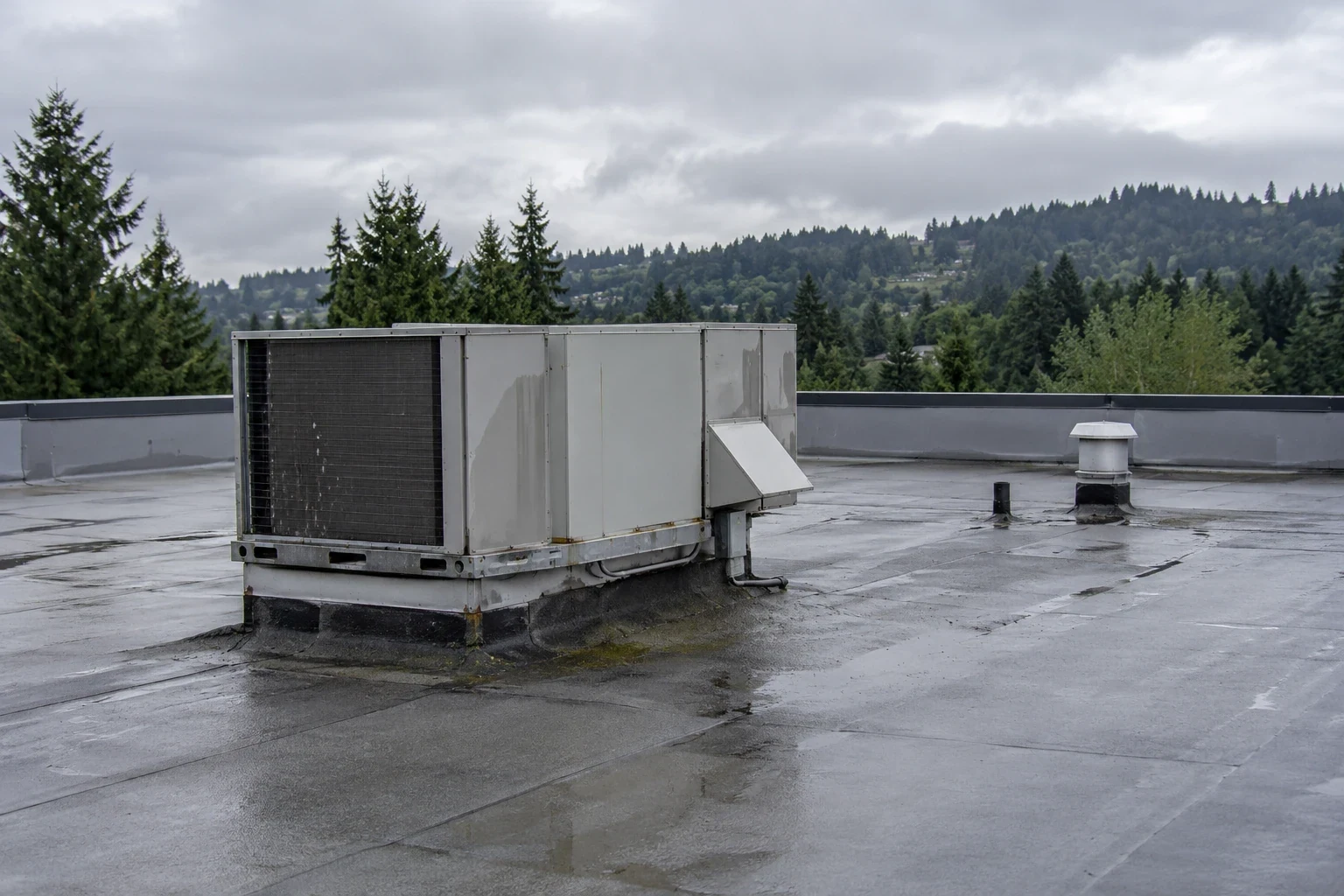
Gusts hit 67 mph in March 2016. They tore stucco off the Home Depot storefront and put a hole in a house roof. Two storms, years apart, and the same lesson. Wind pulls up at corners and perimeters. It lifts the edge, gets under the sheet and peels it back.
Rain makes the damage worse. Low sunshine keeps the deck damp. A lifted membrane over damp decking takes on water fast. By the time the wind drops, the insulation may already be soaked. So the assessment includes moisture, not only the visible tear.
Debris is evidence. Branches, loose rooftop items and flying material leave marks. They show which way the wind came from. We photograph them before cleanup. An owner who clears the debris first loses the best record of cause. Leave it, shoot it, then remove it.
Direction matters for the repair. When wind comes from an unusual quarter, as the easterlies did in Sudden Valley, the weak corner is not always the one the building was designed around. We map which edges lifted and add attachment there.
Assessment first
We walk the perimeter first. Coping caps. Edge metal. Termination bars. Then the field: billows, creases, torn sheet, fasteners pulled through. Then the drains, which wind-driven debris often blocks.
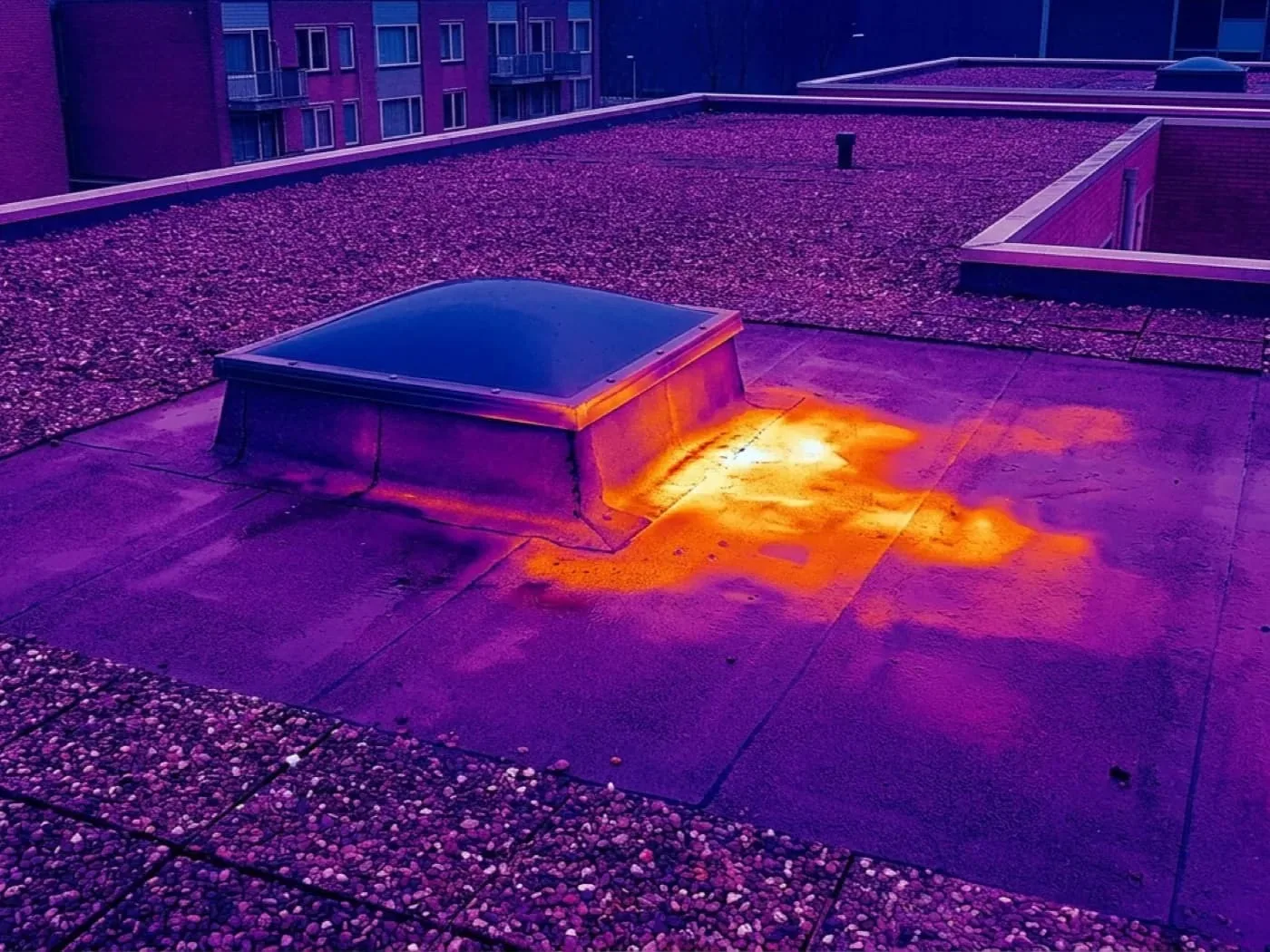
On big or unsafe roofs, a drone roof inspection comes first. It keeps people off a deck that may be weak. After that, an infrared moisture survey maps where water got in. The scope then has three lists: dry-in now, repair this month, and defer. Each item has a photograph, a location and a price.
Access is part of the assessment. A parapet roof with one hatch and a wet ladder is a slow site. We note ladder reach, hatch size and fall-protection tie-off points. We also note where a crane or lift can set up. Those facts feed the schedule. A repair that needs a lift on a closed street needs a permit, and a permit needs days.
Dry-in day
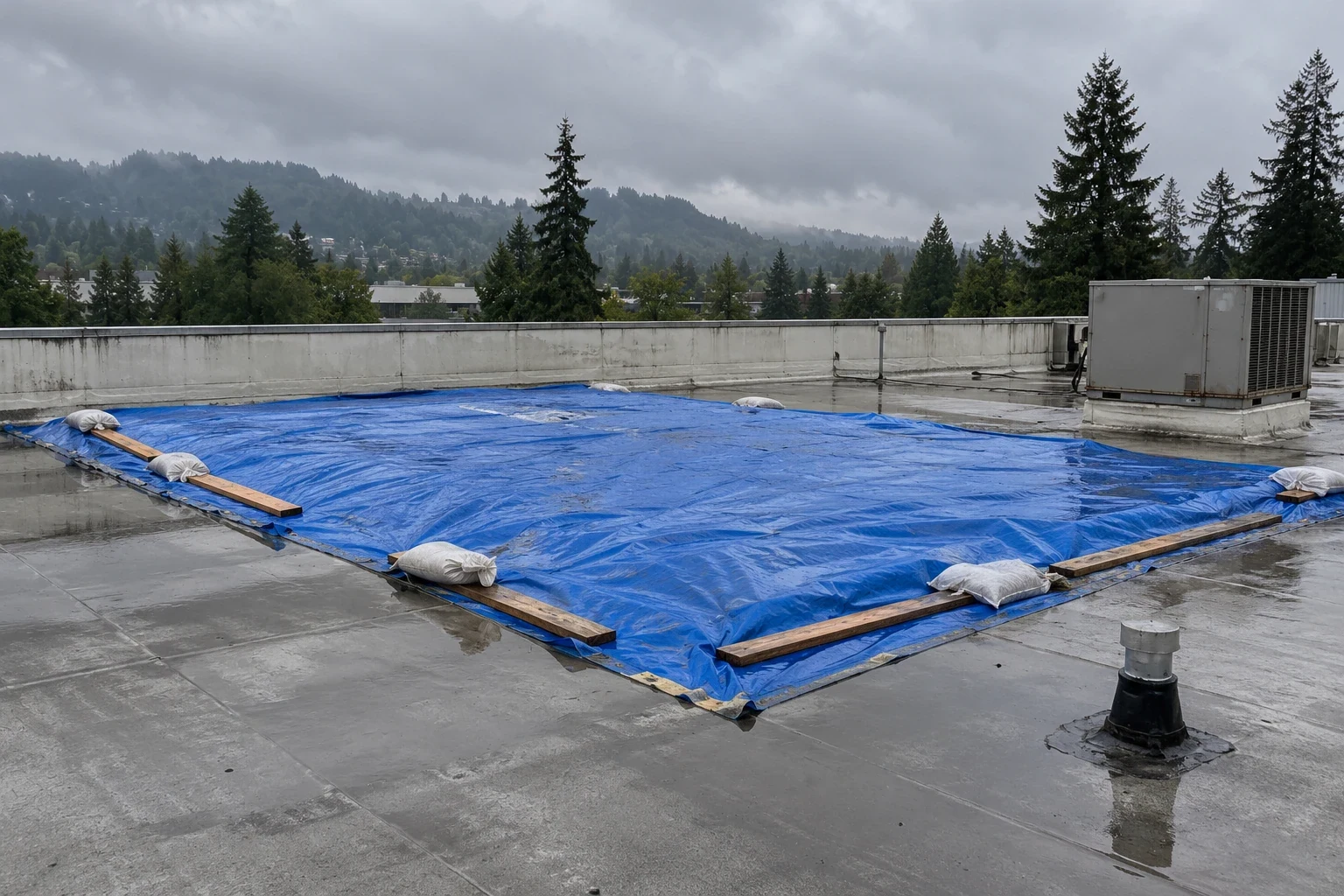
Dry-in is the first priority. We tarp exposed insulation, batten loose sheet and clear drains. Edges get secured so the next gust does not finish the job. In active wind we wait. A crew on a roof in a gale is a second claim.
Loose tarp edges fail first, so we fasten them to the deck, not to the membrane. The call after hours goes through emergency roof repair. The temporary work is photographed and priced as its own line. Tarps last weeks, not months. Every dry-in gets a date for the permanent fix.
Interior protection runs alongside. Where water has reached ceilings, we tell the property manager at once. Tenants move equipment. Plastic goes up. A drying contractor needs to know where the roof opening was. We write one timeline from the first call to the permanent fix, so interior and roof work do not collide.
Permanent repair
The repair follows the failure. Torn single-ply gets a welded patch that extends past the damage. Lifted adhered sheet is cut back to sound bond and reattached. Displaced coping is reset with new cleats and sealant. Soaked insulation comes out. It does not dry in place.
We add attachment where the original fell short. Perimeter and corner zones get more fasteners. That adds a line to the bid. It is the cheapest line on the invoice compared with a second storm. The details sit with edge metal and coping work, and we record the new fastener pattern on the roof plan.
Cost drivers are plain. Extent of damage. Access. Moisture removal. Material. Weather days lost. We price each as its own line. Weather matters in this city more than most. A repair that needs two clear days can wait a week in November, and the bid carries that risk in the schedule, not hidden in the price.
Permits are a smaller line. Large replacements trigger code review under the 2021 building and energy codes, which took hold statewide in March 2024. A patch usually does not. We tell the owner which side of that line the repair falls on before we start.
Snow, cold snaps and the quiet storms
Not every storm is wind. Snow in Bellingham is light, about 10 inches in a typical year, and nearly all of it falls between December and February. Cold snaps arrive with strong winds. Light snow blocks scuppers. Melt then ponds behind a parapet. Freeze overnight and the ice dam finishes what the clog started.
We clear scuppers and crickets after any snow event. We check for cracked sheet at ponds. A snow and ice damage repair follows the same four steps: assess, dry-in, repair, document.
Freeze matters at the edges of a storm. A thaw soaks the deck, then a freeze locks the water into seams and cracks it open. We time seam work for a dry spell above freezing, and we hold adhesives until the surface reads dry. Cold snaps with strong winds are the worst combination, so the dry-in gets inspected again after each one.
Paper for the carrier
A carrier wants dates, causes and photographs. We record the storm date, the damage found and the temporary work done. We note old conditions as old. That split helps the owner. It keeps wear from being folded into the claim, and it keeps storm damage from being written off as wear.
Owners who want a hand assembling the file can lean on our roof insurance claim assistance work. Repairs start without waiting. The record travels with the work. For buildings in Sudden Valley and other wind-exposed spots, a set of pre-storm photographs on file gives the claim its before picture.
Closeout is a punch walk. We go over every repair with the owner or the contractor. We check welds with a probe, test sealant joints and photograph the finished edge. Then we update the roof plan and the register. A storm leaves a record. We make sure the record is accurate.
Commercial Roofing Questions
How soon after a storm should the roof be checked?
Within a day or two, and before the next rain. A lifted edge looks small and takes water fast. We schedule the assessment ahead of the permanent repair.
What decides whether a torn membrane can be patched or needs replacing?
Extent and bond. A localized tear on a sound sheet takes a patch. Widespread loss of bond or soaked insulation points toward replacement. We price both.
Can you repair during a storm?
Only dry-in, and only when it is safe. Permanent work waits for clear weather. Wet decks do not bond, so rushing it fails.
Will an insurer cover an older roof?
Carriers separate wear from storm damage. Photographs and dated records make that split fair. We document both sides in the report.
Do waterfront roofs need extra attention after a storm?
Yes. Salt air speeds corrosion on metal, and Blaine gets about 42 inches of precipitation a year. We check fasteners and edge metal for rust that a storm exposed.
Send the address and photographs of what moved
Send the building address, what lifted and where water came in. We will secure the roof, scope the damage and price each repair line.