Roof Condition Reports in Bellingham, WA
Written roof condition reports for Bellingham, WA buildings: component grades, photos, moisture findings and a ranked action list a bid can be built from.
Roof Condition Reports in Bellingham, WA
Written roof condition reports for Bellingham, WA buildings: component grades, photos, moisture findings and a ranked action list a bid can be built from.
Roofing Capabilities
Roof Condition Reports in Bellingham
A condition report that says "fair" costs the reader a second site visit. One that says "east parapet counterflashing open at four laps, base flashing eight inches, bid line one" lets a general contractor price the fix from a desk. That second kind is what we write. In Bellingham, WA, where a small open lap becomes a wet ceiling by December, the detail in the report decides how fast the repair happens.
A condition report is a dated, photographed record of a roof as it stands. It grades each component, names what is failing and what is not, and ranks the actions by urgency and cost. The owner can hand it to a lender, a contractor or an insurer and be understood.
Overview
Roof Condition Reports
What happens on the roof
We start with the plan and the roof history, then walk every square. Seams are probed, flashings are lifted at the edge, drains are cleared and tested, and penetrations are counted. Soft spots underfoot are marked.
Photographs are tied to locations. Each image carries a grid reference on the roof plan, so the reader finds the exact spot. Close-ups show the defect, and wide shots show where it sits.
Weather limits the walk. A wet roof hides cracks, and a windy roof is unsafe. We book dry days, and in the wet season we hold the walk until the deck dries. July is the driest month, which makes late summer the best time for a first report.
Access gets logged. The report records where the hatch or ladder sits, whether a lift is needed, which tenant holds the key and how long a crew needs to reach the roof. For a future leak call, that line saves an hour.
We also note what sits on the roof but is not ours to judge. Rooftop units, antennas, solar racking and conduit runs each have owners, and the report flags any that bear on the roof's condition, such as a unit whose condensate drains onto the membrane.
Component grades
A single score hides the repair. We grade by component: field membrane, seams, flashings, edge metal and coping, drains and scuppers, curbs and penetrations, and insulation where we can read it. Each gets a grade and a note.
A roof with a good field and failing flashings reads differently from one with the opposite. The first needs a flashing repair. The second needs a new roof. The grades make that visible in a glance.
The report also names what we could not see. Insulation under a sound membrane is invisible without a scan or a core. We state that limit and recommend the test, such as an infrared moisture survey, where the decision depends on it.
Edges deserve their own line. Coping caps, drip edge and fascia face the wind first. The report records fastener spacing, lifted laps and gaps in sealant. After windy seasons these are the parts that move, so they get a re-read each cycle.
Drains get a flow test. We pour water at the sump and watch it clear. A slow drain, a missing strainer or a clogged scupper ranks high on the action list, because the cost to fix is low and the damage from ponding is high.
Moisture findings
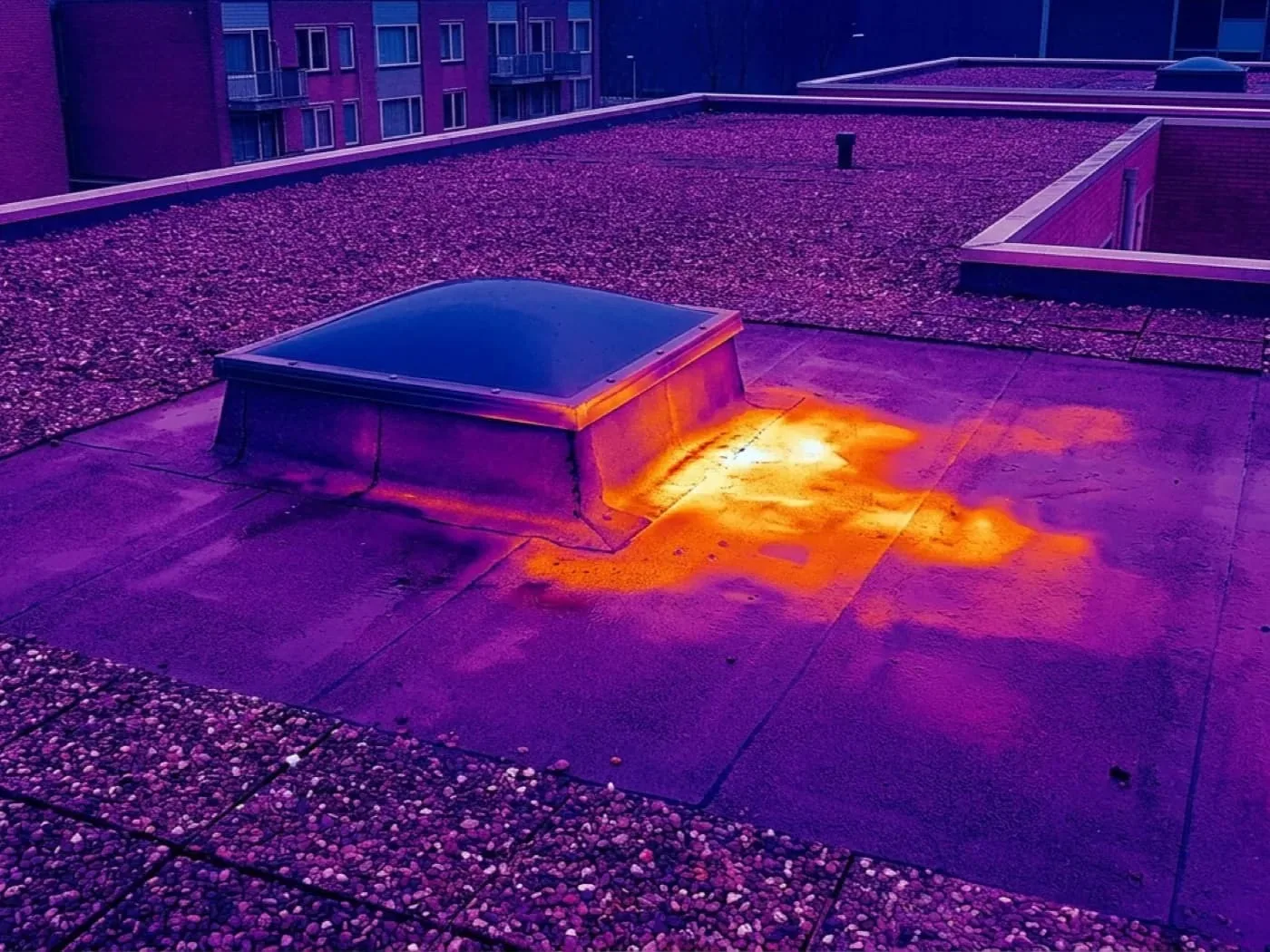
Wet insulation changes every recommendation. The report includes scan results where we ran one, with wet zones outlined on the plan. Core samples add a direct reading at selected points.
Low sunshine, about 1,866 hours a year, keeps roofs here damp, and moisture can linger in an assembly long after the leak is closed. A report that records moisture dates the reading, since a result from last year says little about this winter.
The findings feed the repair-versus-replace question. A small wet area can be cut out and patched. A large one points toward replacement. The report puts the boundary on the plan so the contractor can bid it.
Method matters. Infrared scans work best on a clear evening after a sunny day, when wet insulation holds heat longer than dry. Bellingham gives fewer of those evenings than most markets, so scans are scheduled around forecasts. Where the weather will not cooperate, cores and a moisture meter fill in.
The ranked action list
Every report ends with a list. Items are sorted by urgency: leaks and safety first, then items that will fail within a season, then items that can wait. Each item has a location, a scope and a cost range.
Cost ranges avoid false precision. A repair with known scope gets a tight range. An item with unknowns, such as deck condition under a failed seam, gets a wider one and a note about what will narrow it.
The list is written so a repair can be priced straight from it. Items that need a bigger answer link to capital planning, where replacement timing is set against the budget.
Timing shows on the list too. Items that need dry weather are marked for the dry season, and items that can be done in wet weather are marked as such. A repair that needs a July window and gets scheduled for November will not hold. The report keeps the pairing straight.
Who reads it and why
Owners use the report to set the budget. Property managers use it to plan repairs and tenant notices. Lenders and buyers use it to size reserves, and our due diligence surveys follow the same format with a deal timeline.
Insurers read it after a storm. A dated report from before the March 2016 gusts or the November 2024 bomb cyclone shows what the roof looked like beforehand. It will not decide a claim, but it gives the adjuster and the owner a shared starting point.
General contractors use it to bid. They see the layout, the penetration count, the moisture map and the defects, and they price without guessing at the unknowns.
Buyers and lenders read the report for the number of years left. A roof that needs replacing in the first two years is a reserve item, and the report gives the range to size it. Our insulation and cover board findings feed that sizing.
Across building types
A report on a retail roof near Bellis Fair emphasizes drainage and rooftop unit curbs. A report on a Marine Drive industrial building looks at salt, fasteners and edge metal. A report on a school roof at Whatcom Community College or Bellingham Technical College looks at traffic, ponding and the summer repair window.
Healthcare roofs near PeaceHealth St. Joseph add access and shutdown constraints. The report notes where a lift is needed, where a hatch sits and which areas are over sensitive space.
For owners with several buildings, the reports roll into one asset record, and the same format applies to every building. Downtown, Fairhaven and the north side all fit the same template.
Commercial Roofing Questions
How long does a report take to deliver?
Most roofs take a day on site and a few days to write up. Large buildings or a portfolio take longer. Weather can delay the walk, and moisture scans add a day when conditions are right.
Does a report replace a bid?
No, it feeds one. The report gives scope and cost ranges, and a bid turns a range into a firm price once drawings and access are settled. Contractors price faster from a good report.
What does a report include for a lender?
Roof type, age estimate, component grades, remaining-life range, immediate repairs and a five-year view. Photos and plans are attached. Cost ranges are given in dollars for the items, not as a single figure.
Will the report say if a roof can be recovered?
It will give a recommendation based on moisture, layer count and deck condition. A recover needs a dry assembly and a deck that can carry the weight. The report lists what is known and what needs a core.
Can the report be updated after repairs?
Yes. We revisit the roof, update the grades and photos, and note completed items. The dated history shows the owner what changed and when.
Send the address list and the reason for the report
Send the buildings, any prior reports and the purpose, such as budgeting, sale or insurance. We will price the walks and schedule them for the next dry days.