Roof Insulation, Tapered Systems and Cover Board in Bellingham, WA
Insulation thickness, tapered slope and cover board for Bellingham, WA commercial roofs under the 2021 energy code, with bid lines for each layer.
Roof Insulation, Tapered Systems and Cover Board in Bellingham, WA
Insulation thickness, tapered slope and cover board for Bellingham, WA commercial roofs under the 2021 energy code, with bid lines for each layer.
Commercial Roofing Services
Roof Insulation, Tapered Systems and Cover Board in Bellingham
Insulation is the biggest hidden line in a Bellingham, WA reroof. It is also the line the energy code can change after the drawings are done. Chapter 51-11C WAC, the commercial provisions of the state energy code adopted for 2021, has applied in every county and city since March 15, 2024, and it sets the minimum for a replaced roof. An owner who budgets for a membrane alone can face a thicker board, a taller parapet detail and a higher number.
So the first question is thickness. The second is type. The third is whether a cover board belongs on top. The fourth, tapering, decides how the roof sheds water. Each is a bid line. Each can be priced before the bid closes.
Overview
Roof Insulation, Tapered Systems and Cover Board
What goes under the membrane
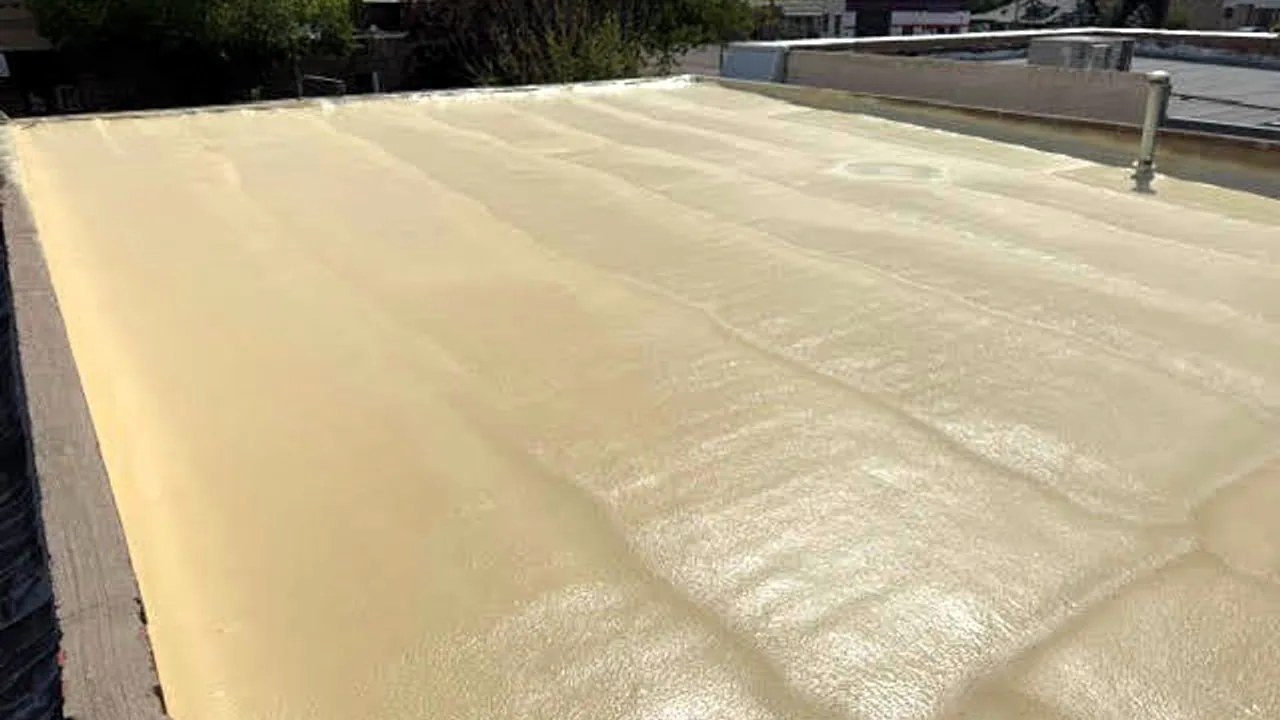
Polyisocyanurate is the common choice. High resistance per inch. Available in tapered pieces. Faced boards take adhesive or fasteners. Extruded and expanded polystyrene appear in protected-membrane assemblies and some retrofits. Mineral wool resists fire and holds shape under hot work. Spray polyurethane foam combines insulation and membrane, as in spray polyurethane foam roofing.
Each reacts to moisture differently. Bellingham averages about 34.8 inches of rain a year and only about 1,866 hours of sun. Board stays damp longer here than in a sunnier town. Any insulation that takes on water loses value fast. So keeping it dry during install matters as much as the product choice.
Aging matters. Polyiso gives up some of its rated value as it ages and as temperatures fall. We use rated values in the energy calculation and note the assumption. For a roof that must meet a stated performance level, the thickness goes up to cover the loss. That adds a line to the bid, and it avoids a failed energy review at final inspection.
Dry-in day for the board
Insulation goes down only as fast as it can be covered. We open no more than we can close the same day. Board sits under a membrane or a temporary cover by evening. A forecast with a shower in it changes the plan.
Cold and damp stretch the schedule. A damp deck slows adhesive set. A cold morning slows cure. We hold board off the roof until the surface reads dry. A lost morning can become a lost dry-in day, and the schedule carries float for that. Summer is the cheap time to install. July is the driest month. Fall is the expensive time. We say so on the bid.
Weight matters too. Each added layer loads the deck and raises the roof surface. We check the structure's capacity where drawings exist, and we flag a roof where a recover plus new board would exceed it. Cutting back to the deck is sometimes the only clean answer.
Cover board
A cover board is a thin dense layer between the insulation and the membrane. It protects soft board from foot traffic and impact. It gives adhered sheets a stable bonding face. It slows fire spread from below.
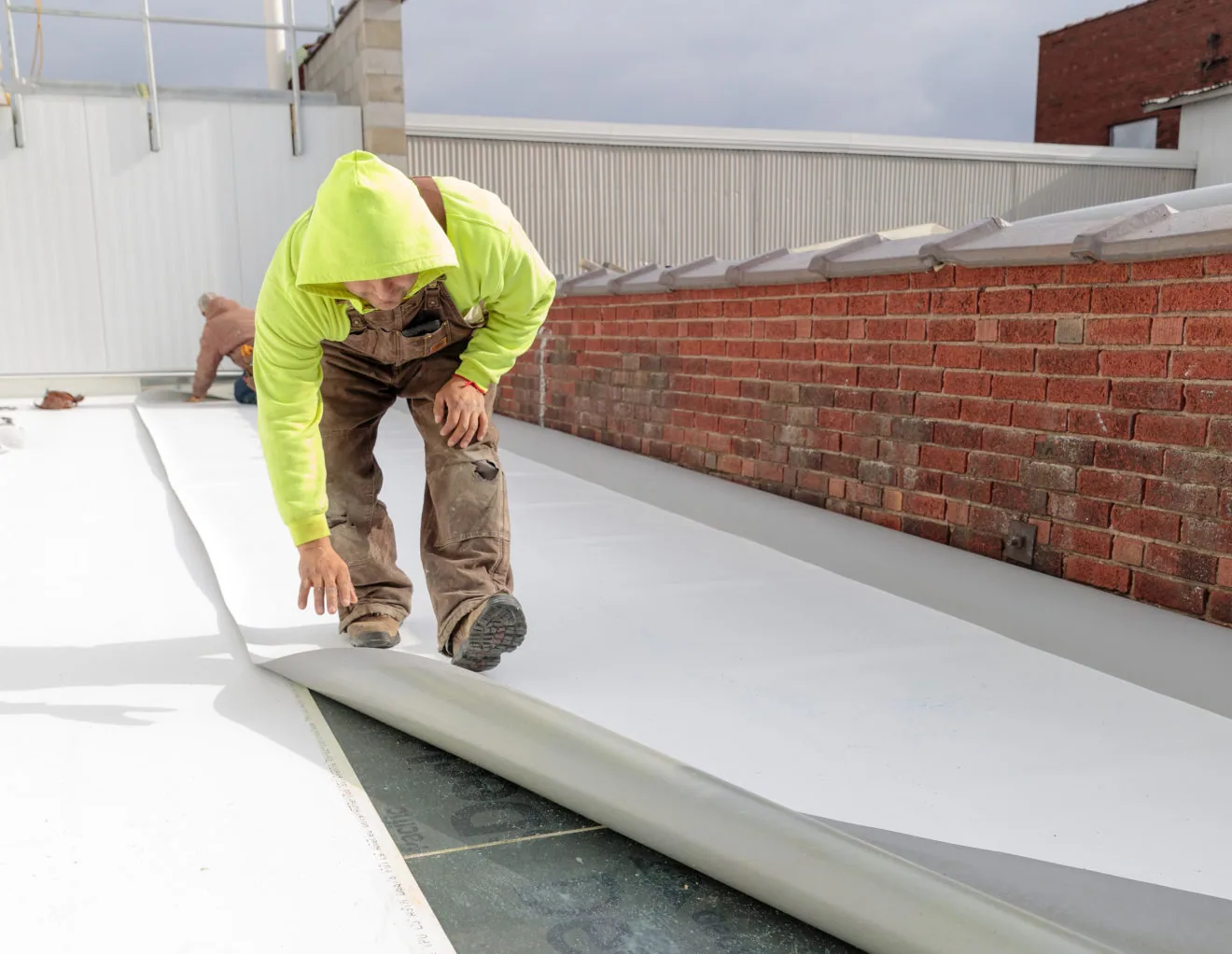
Gypsum-based, fiber-reinforced and high-density polyiso boards all work. Each has different moisture and crush behavior. On roofs with heavy rooftop traffic, a cover board earns its cost. Technicians' boots crush foam under a bare sheet and leave dents that hold water. On a lightly trafficked mechanically attached roof, it may not pay. We price the roof with and without it. The owner chooses with both numbers visible. It pairs with a PVC or similar sheet where traffic or fire exposure is high.
Fasteners are a separate bid line. Count, length and plate type follow the board thickness and the wind zone. Perimeter and corner zones carry more. We record the pattern on the roof plan, since a later inspector or an insurer will ask for it after a gale.
Tapered slope and crickets
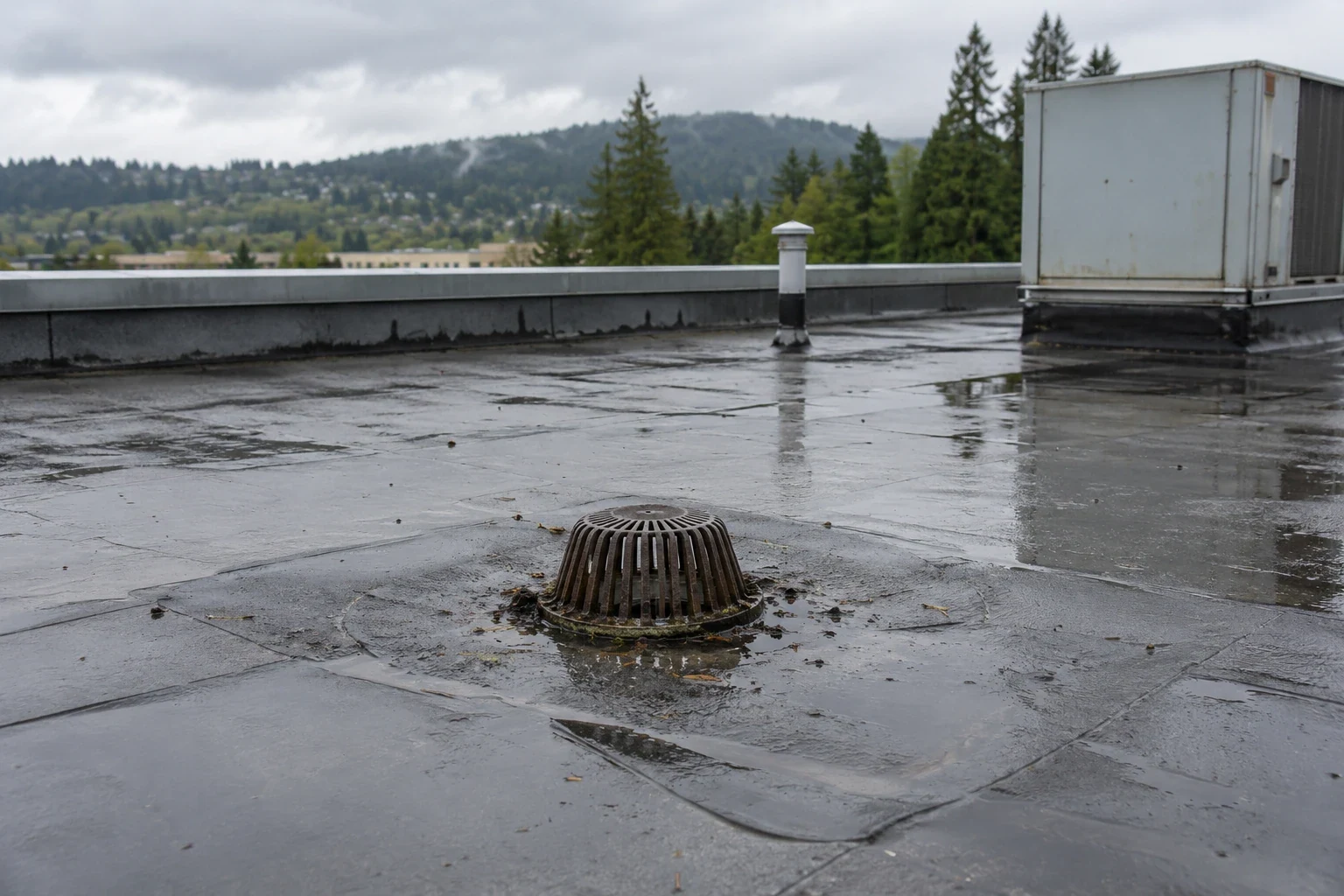
Flat roofs are not flat. Tapered insulation gives the roof slope toward the drains. Crickets turn dead ends at curbs and walls into paths. Done right, a taper removes ponding without touching the structure. Done wrong, it leaves hollows at each panel seam.
We lay it out from a drainage plan. Drain locations. Water travel distance. Height gained at the parapet. Added thickness changes flashing height and door thresholds, so we measure those first. The taper works with drain and scupper work. A sloped roof pointing at a blocked drain only moves the pond. Moss lines show where the old roof held water, and we use them to place the crickets.
Pricing a taper is by area and by slope. A half-inch per foot costs more than a quarter-inch. The cost also depends on how many different board thicknesses the layout needs. A simpler layout with fewer unique pieces ships faster and installs faster. We show the cost of each layout option beside its drainage result.
When old board stays and when it goes
Old insulation is not always worth keeping. An infrared moisture survey and a few core cuts tell us. Dry, firm board can stay. A roof recover then goes over it with a new cover board. Saturated or crushed board comes out.
Disposal is a cost driver. Wet board is heavy. It takes more labor to remove and more fees to haul. The moisture map sizes that line before the tear-off starts. No one should discover soaked board on day two. We price a unit rate for removal and replacement, so the change order is already priced if the scan understates it.
The new membrane then goes down over a clean, dry face. Seam welds, adhesives and flashing details are only as good as the layer beneath. A damp board under a good sheet fails slowly and shows up as blisters. The scan and the core cuts are cheap insurance against that outcome.
Where the board choice matters
Cold storage and food buildings need insulation planned around vapor drive, and a cold storage roof is the strictest case. A large industrial roof, as in the Marine Drive waterfront area or the Port of Bellingham parks, rewards extra thermal gain. Hospital and university buildings, around PeaceHealth St. Joseph and Western Washington University, often weigh fire and acoustic performance as well as thermal.
Wind adds one more check. Insulation is fastened or adhered to the deck, and the pattern has to meet uplift needs. After the November 2024 easterly winds through Sudden Valley, a recorded fastener pattern on every board layer is worth the few minutes it takes.
Closeout covers the board too. Before the membrane covers it, we photograph the layer and record thickness, type and attachment. After the membrane, the record is all that remains. A punch walk confirms that drains, curbs and edges sit at the heights the plan promised.
Commercial Roofing Questions
How thick does the insulation have to be on a reroof?
Thickness follows the energy code and what the parapets and doors can accept. We confirm with the building department and measure heights before the quote is final.
Can I keep the old insulation under a new membrane?
If a moisture scan and core cuts show it dry and firm, yes. Crushed or saturated board comes out. The scan sets the unit price for removal.
Is a cover board worth the added cost?
On roofs with heavy rooftop traffic or adhered sheets, usually. On a lightly walked mechanically attached roof, maybe not. We price both.
Can tapered insulation fix a ponding roof?
Often, when the structure allows the added height. We check the drains and the deck first, since a taper aimed at a blocked drain does not help.
What happens to open insulation if the weather turns?
We cover it at the end of each shift and do not open more than we can close. A shower in the forecast moves the start, not the standard.
Send drawings, the roof spec and the target window
Send the roof section, the energy compliance path and the parapet heights. We will price board, taper and cover as separate lines before the bid closes.