Roof Drains, Scuppers and Ponding Correction in Bellingham, WA
Drain, scupper, cricket and ponding correction for Bellingham, WA flat roofs: sizing, overflow, tapered slope and bid lines that survive a wet November.
Roof Drains, Scuppers and Ponding Correction in Bellingham, WA
Drain, scupper, cricket and ponding correction for Bellingham, WA flat roofs: sizing, overflow, tapered slope and bid lines that survive a wet November.
Commercial Roofing Services
Roof Drains, Scuppers and Ponding Correction in Bellingham
A scupper three inches too high holds three inches of water on the deck. Every rain. Bellingham, WA collects about 34.8 inches of rain a year, with November the heaviest month. Three inches times a roof the size of a warehouse is a lot of weight and a lot of aging. That is the cost of one bad elevation. It goes on no bid because no one measured it.
Drainage work is cheap compared with the damage it prevents. It is also easy to price: count the outlets, measure the heights, list the fixes. We do that count on the first visit.
Overview
Roof Drains, Scuppers and Ponding Correction
Count, measure, mark
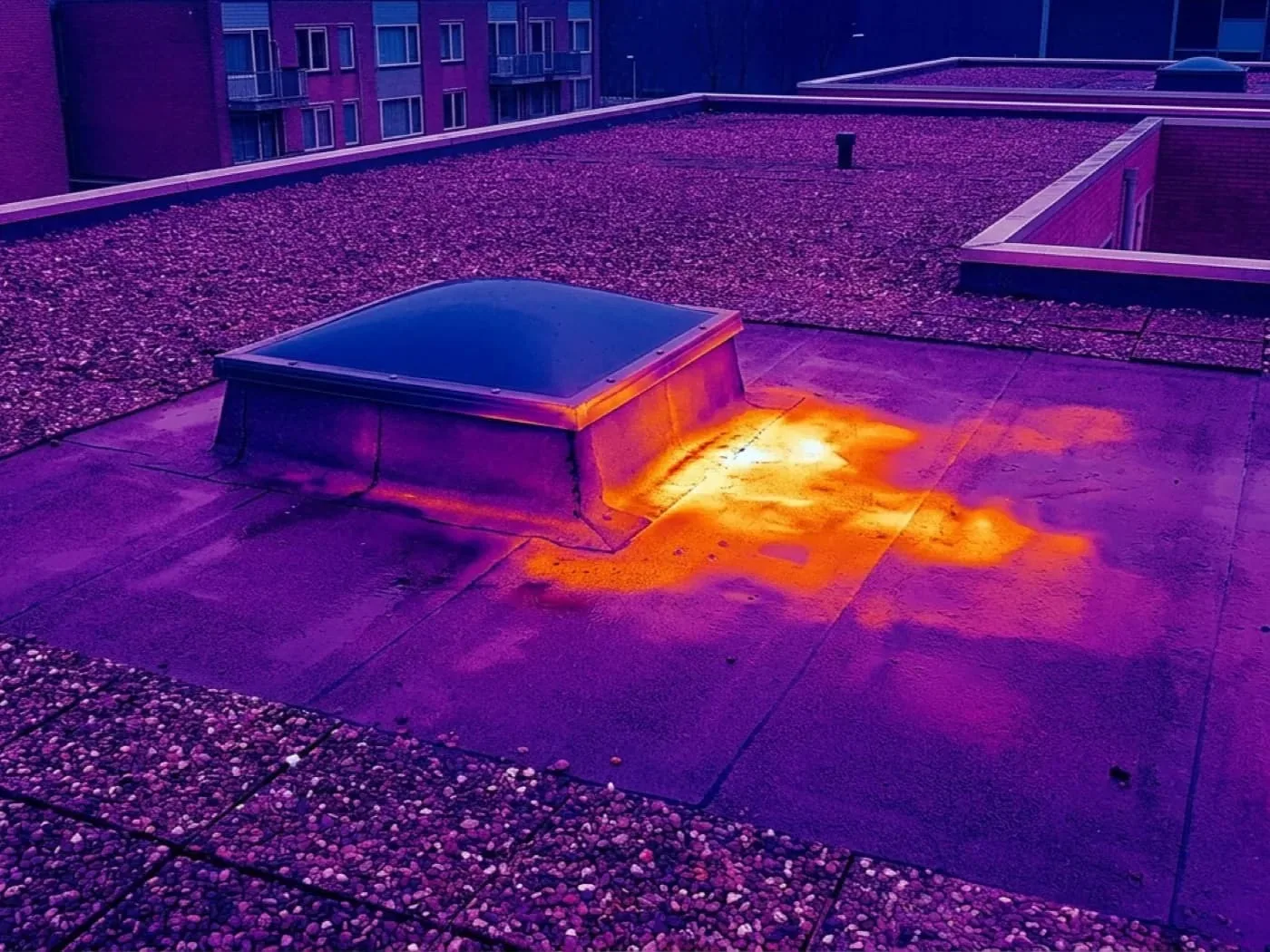
The survey starts with a count. Interior drains. Perimeter scuppers. Overflow openings. Downspouts. Then we measure. Height of each outlet above the membrane. Distance from each low spot to the nearest drain. Depth of any pond two days after rain.
Each number goes on a roof plan. We mark the outlets that sit high, the ones that are clogged and the ones that have no overflow. The plan becomes the bid. A general contractor can see which items are a ten-minute fix and which need a tapered section. Nothing is buried in a lump sum.
Moss tells the same story. Wherever it grows in a line, water sat. We photograph the moss lines and mark them on the plan. They show the ponds that a dry-day survey would miss. Bellingham averages only about 1,866 hours of sun a year, so a damp low spot stays damp. The moss is the record.
Drain bodies and strainers
Interior drains fail at the clamp ring, the strainer and the sump flashing. A cracked ring leaks right under the drain. A missing dome lets debris in. A membrane not flashed into the bowl lets water track under the sheet.
We reseal the body, replace strainers and extend the flashing into the sump. Moss and needles get cleared every time. Then we flush the line. A drain clear at the strainer can still be blocked in the leader. When a roof drains slowly after a hard rain, the restriction is often below the roof. We report it to the plumber, because that repair belongs to another trade.
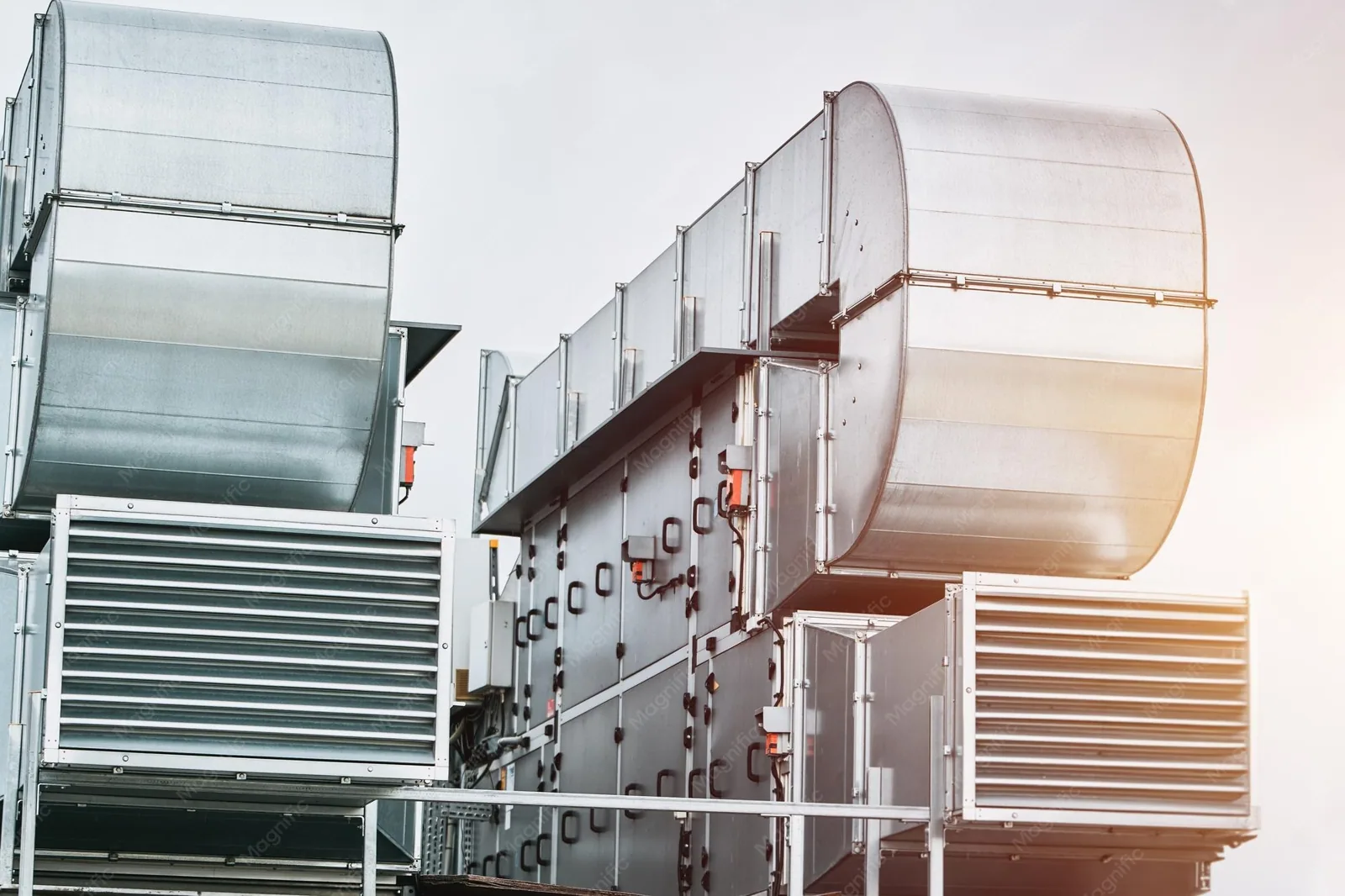
Rooftop equipment makes its own drainage trouble. A unit curb blocks the path of water like a dam. We note every curb that sits uphill of a drain and list a cricket on the bid. Details at equipment curbs and supports get checked in the same pass.
Scuppers and the parapet
Scuppers move water through the parapet wall. They plug fast. A scupper is a hole in a wall, and every hole needs flashing. The throat gets a sleeve. The sill sits at membrane level, not above it. The discharge needs a conductor head or a downspout, so water does not run down the wall and stain it.
We check the height first. A scupper set high ponds the roof. A scupper set low drains it too fast into a system that cannot carry the flow. Overflow scuppers belong a few inches above the primaries. They stay dry until the primary clogs. Then they save the deck. Washington's 2021 International Building Code, in force statewide since March 15, 2024, expects a secondary path for water wherever parapets could trap it.
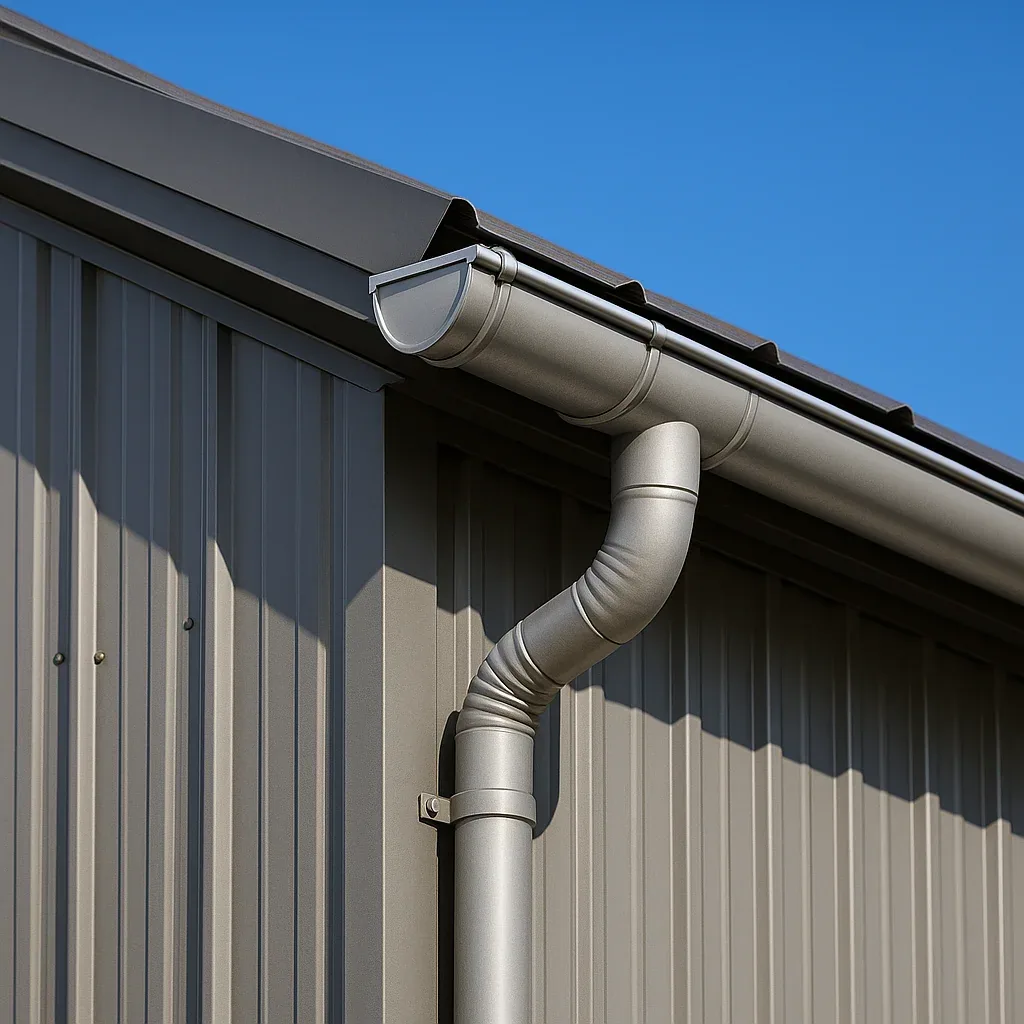
Edges carry water too. Gutters and downspouts at eaves need slope, hangers and clean seams. Where they feed a scupper, we check the whole route, and the edge metal, coping and gutters work gets priced alongside. A gutter packed with needles overflows at the eave and soaks the wall below.
Crickets and tapered slope
A cricket is a small sloped saddle. It sits behind a rooftop unit or at a wall and turns a dead end into a path. It is built from tapered insulation or framing. Done right, it adds a few hours of labor and removes a pond for good. Done wrong, it leaves a hollow at each seam between boards.
For wider problems, a tapered system gives the whole roof slope toward the drains. That is a bigger bid line. It is built from tapered insulation and cover board, and it is best installed with a recover or replacement. The deck sets the limit. Added height raises flashing needs and can affect door thresholds, so we measure those before ordering. When the budget will not stretch to a full taper, we price localized fixes: a raised drain body, a new sump, a re-adhered sag.
Sequence the work with the membrane. Drain bodies and sumps are reset before the new sheet goes down. Crickets are framed before the cover board. A drain changed after the membrane is on is a patch, not a detail. We list drain work as its own bid line early so the trades do not discover it late. For Washington projects under the 2021 Washington State Energy Code, which took effect statewide on March 15, 2024, added insulation thickness also changes drain bowl height, so we measure before ordering.
Snow, ice and cold mornings
Bellingham gets roughly 10 inches of snow a year, mostly December through February. Cold snaps come with strong wind. Light snow does not load a roof. It blocks a scupper. Then it melts and ponds behind the parapet. The next freeze turns the pond to ice, and the ice pushes at seams.
So the scuppers get cleared before December. We check the discharge for icing risk too. A downspout that dumps onto a walkway freezes into a hazard. Heat tape and conductor heads are bid lines when the site calls for them. When the fix goes beyond hardware, it becomes ponding water roof repair.
Ice dams are rare, but ice at a scupper is not. A scupper that freezes shut sends melt across the deck. We size the opening with room to spare and we avoid narrow throats. At the Port of Bellingham's industrial parks and at Western Washington University's buildings, discharge points near walkways get extra attention for the same reason.
Where drainage decides the cost
Big roofs with few outlets suffer most. The Port of Bellingham's Airport Industrial Park is industrial space where a low-slope roof may lean on a handful of drains. A single clog can pond an entire bay. Retail roofs around Bellis Fair, a roughly 773,000 square foot enclosed center, can share leaders and overflow paths across several tenants.
The wet season sets the calendar. We want drains cleared and corrected before October. Visits in the maintenance program do the clearing. Corrections go into the bid for the next dry window.
Costs run in three tiers. Cleaning and minor reseal. Hardware replacement and local build-up. Full tapered slope. We price all three where the roof allows, with years returned beside each. A clear low-spot map makes the choice quick.
Shoulder districts get the same count. Buildings in Fairhaven and in Cordata will not share one drain layout, so we measure each roof instead of assuming the pattern repeats.
Commercial Roofing Questions
How long can water stand on a flat roof before it counts as ponding?
Two days after rain is the usual mark. Past that, the sheet ages faster and moss takes hold. We measure depth and duration and report both.
Can a pond be fixed without a new roof?
Often. A raised drain, a sump or a cricket handles most trouble spots. A roof with deck sag across the field needs a broader answer.
Do overflow scuppers need to match the primary size?
They need to carry the design flow when the primary is blocked. Height and size both matter. We measure and compare against the drainage plan.
Why did the roof leak at a drain after the first fall storm?
Summer shrinkage opens gaps at clamp rings and sump flashing. The first heavy volume finds them. A reseal and a new strainer usually closes it.
Will new scuppers show on the building face?
They appear in the parapet wall. We match the color and profile of the existing wall finish. Historic buildings get a placement review first.
Send drawings, the roof spec and the target window
Send the roof plan and any ponding photographs. We will count and measure every outlet and price each correction before the wet season.