Due Diligence Roof Surveys in Bellingham, WA
Roof surveys for acquisitions and refinancing in Bellingham, WA: fast site reads, moisture findings and replacement ranges sized to a closing calendar.
Due Diligence Roof Surveys in Bellingham, WA
Roof surveys for acquisitions and refinancing in Bellingham, WA: fast site reads, moisture findings and replacement ranges sized to a closing calendar.
Roofing Capabilities
Due Diligence Roof Surveys in Bellingham
The contingency period ends on a date, and the roof does not care. A buyer has days to learn whether the roof needs a patch, a coating or a full replacement before the money moves. In Bellingham, WA, where a roof that looks fine in August can hide wet insulation the winter will expose, a quick read that stops at the surface is a risk on the purchase price.
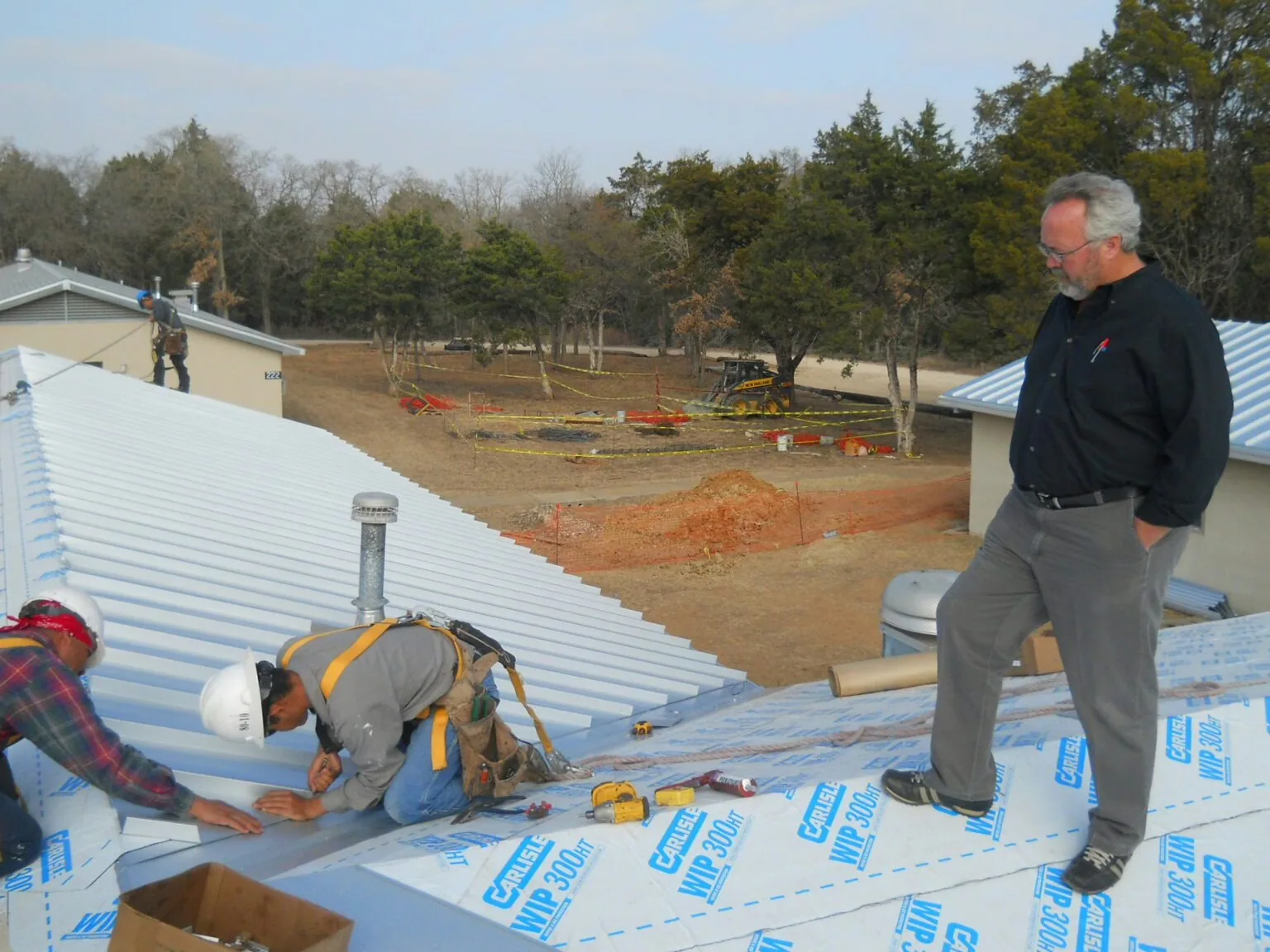
A due diligence roof survey is built for that calendar. We schedule the walk inside the inspection window, collect the readings that change the price and deliver a written finding with replacement ranges. The buyer, the lender and the broker work from the same findings, and the deal team can negotiate from them.
Overview
Due Diligence Roof Surveys
What the survey covers
We start with the paper. Seller records, past repair invoices, warranty documents and drawings tell us the roof type, the install date and any known problems. Missing records are a finding too.
On the roof, we read every component: field membrane, seams, flashings, edge metal, drains, curbs and penetrations. We count penetrations, note ponding and log signs of past repairs. Patches in a cluster point to a detail that has been failing for a while.
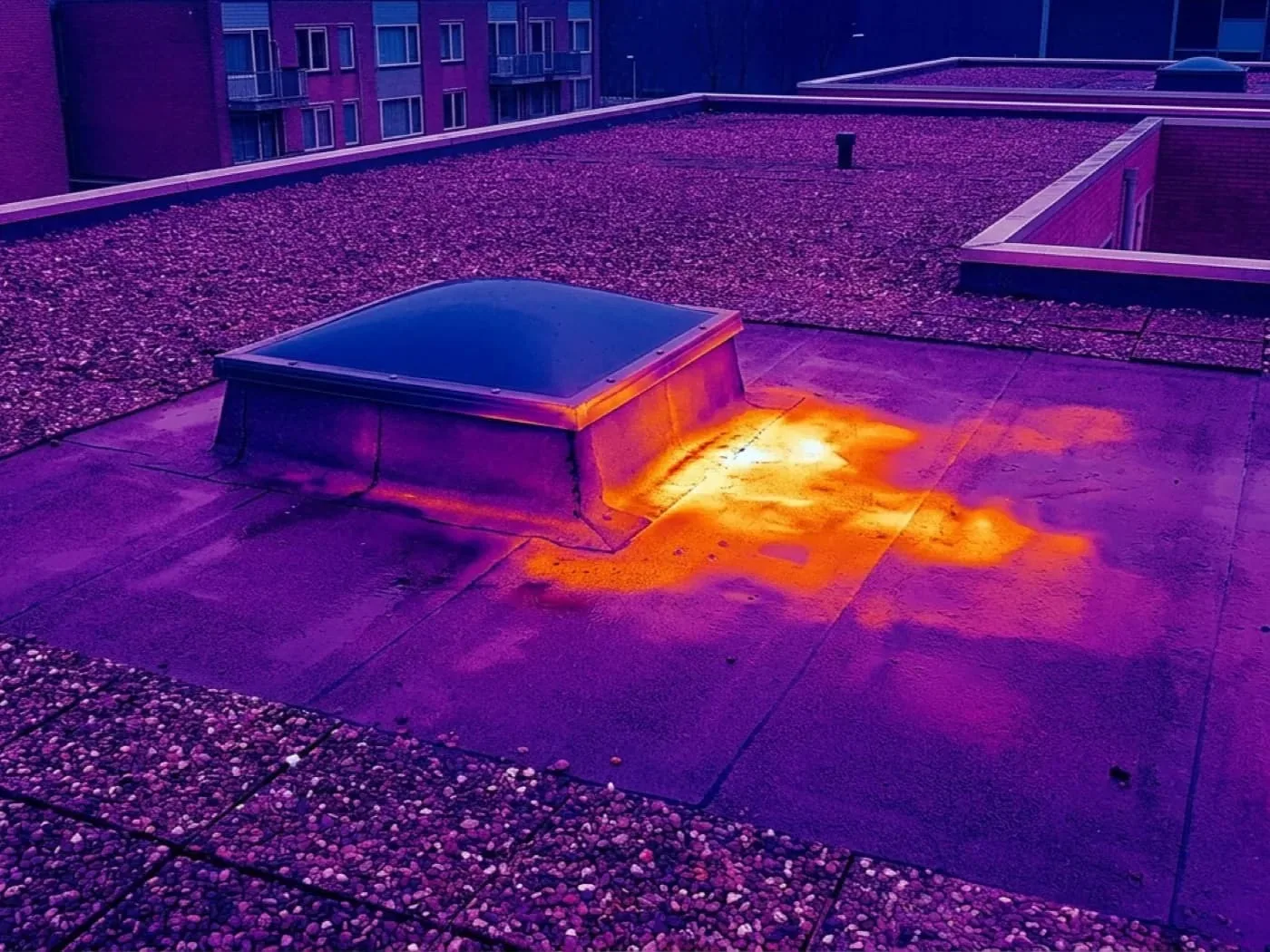
The survey ends with moisture data where the deal justifies it. An infrared scan or a set of core samples shows whether insulation is wet. Wet insulation turns a repair into a replacement, and the buyer needs to know before closing.
Interior signs count. Stained ceiling tiles, fresh paint patches and buckets in a storeroom tell us where water has entered. We ask the property manager for the leak log and walk the interior in the same visit, so roof findings line up with what tenants have seen.
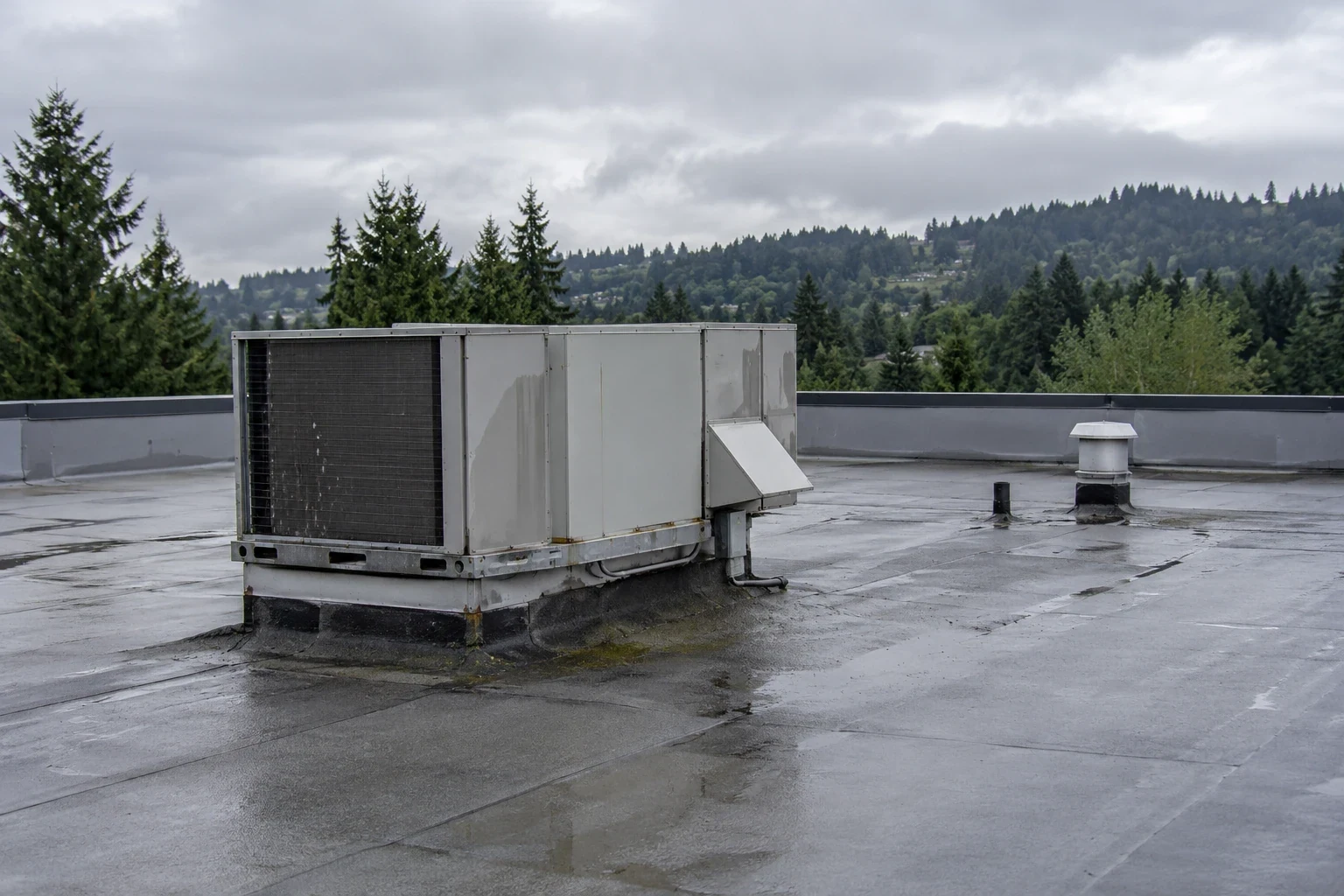
Rooftop equipment is part of the scope. Condensate lines, unit curbs and roof-mounted conduit all affect the membrane. If a unit sits on a rotting curb, the buyer inherits a flashing job along with the building.
Fast tools for short windows
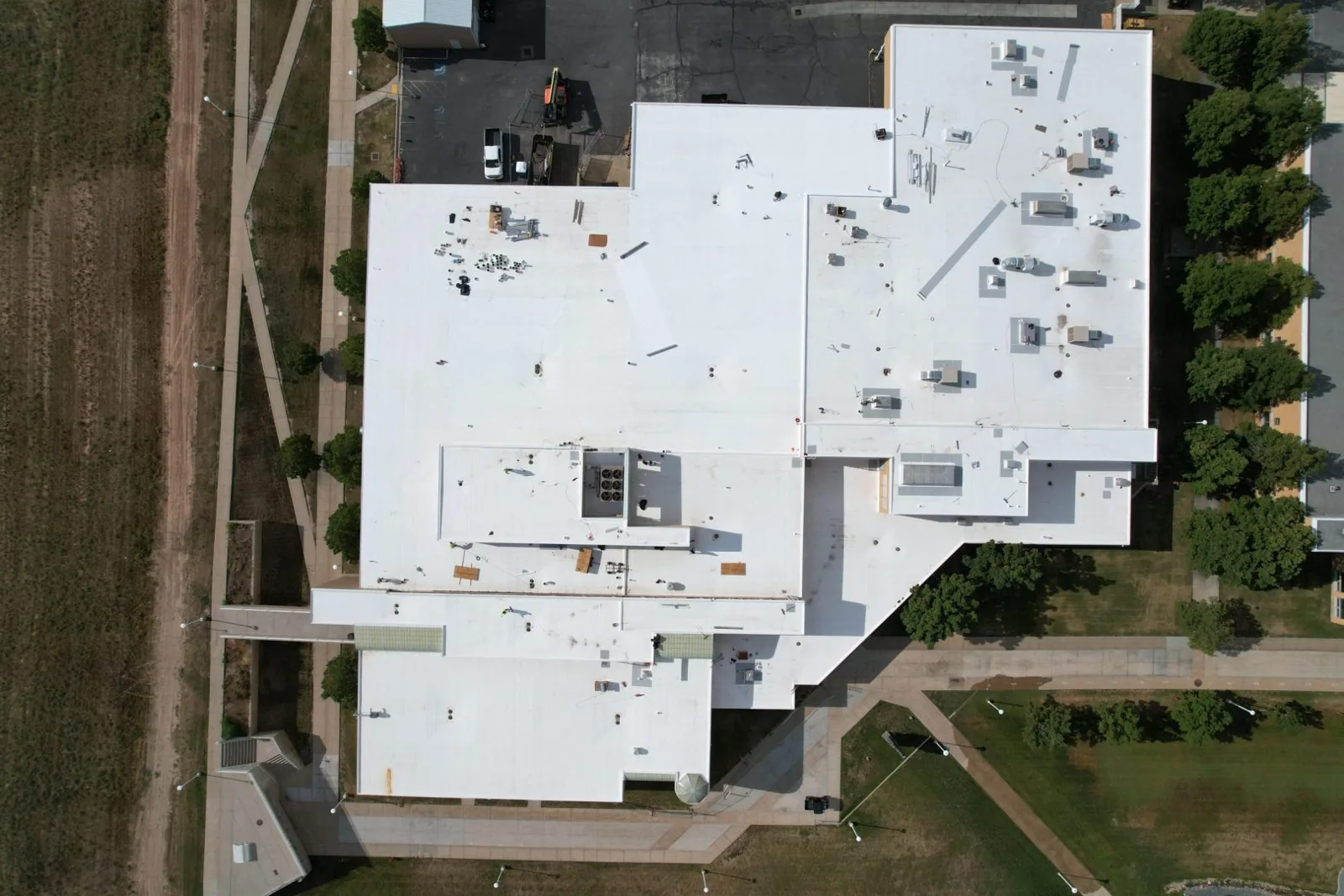
A drone flight can cover a large roof in a fraction of the time and returns images the whole deal team can review. It is useful for tall or fragile roofs, and it spares a person from a wet surface in the rainy months.
Drone images do not replace a probe. Seams, fasteners and soft decking need hands on them. We pair the flight with a targeted walk, focused on the areas the images flag. That combination keeps the survey inside a short window without losing the detail.
Weather can slow it. A roof in Bellingham may be wet for weeks in the fall and winter, and scans need the right conditions. We book the first available dry day and tell the buyer what can be read now and what needs a second visit.
Access rules affect speed. A roof with a locked hatch, a tenant escort or a fall-protection requirement takes longer to reach. We ask for the access details when the survey is booked, so the first hour on site is spent reading the roof and not looking for a key.
Replacement ranges and reserves
The survey ends in numbers. For each roof, we give a remaining-life range, a list of immediate repairs and a replacement cost range. The ranges show what to reserve and when.
Immediate repairs go in one column. These are items to fix soon after closing, such as open flashings or clogged drains, and they feed the first-year budget. Longer-term items go in a second column, tied to the year the roof is expected to need work.
The same figures feed capital planning after the purchase. A buyer who closes with a ten-year view of the roof starts with a plan instead of a surprise.
We use ranges and name the assumptions. A narrow range on an unknown deck would be false precision. Where the uncertainty is large, we say what test would narrow it.
Code changes matter to the numbers. Replacements have followed the 2021 building code and the 2021 state energy code since mid-March 2024, and insulation levels often rise with them. The cost range includes the code-driven items as a separate line, so the buyer sees what the building must have beyond the roof itself.
Local buildings, local risks
Bellingham's building stock varies. Older commercial roofs sit downtown and in Fairhaven, big-box roofs line the Guide Meridian near Bellis Fair, and industrial roofs cover the Port's Marine Drive and Airport parks. Each type carries its own risks.
Older roofs may carry layers of past work. Several recovers can hide wet insulation and add weight. Waterfront roofs fight salt on fasteners. Industrial roofs may carry exhaust and chemical exposure. The survey adjusts what it checks to the building.
Craft breweries and distilleries occupy older light-industrial buildings around the city, and their roofs often carry vents and wet process exhaust. A buyer eyeing one should know what the roof has taken. Our condition report format records it.
For lenders and refinancing
A lender wants a clear answer on roof condition and a number for reserves. The survey provides both in a format a credit team can read. Photos, grades and ranges sit in one document.
Refinancing has a different clock than acquisition. There is more time, and the owner already has records. We use that time for a fuller scan and a closer look at warranty status. Our warranty review checks that coverage is valid and transferable.
For portfolios, we survey the largest and oldest roofs first and sample the rest. The summary ranks the buildings and highlights the ones to price before closing.
Reserve sizing is the lender's usual question. We give a first-year number for urgent items and a five-year number for expected work, with the replacement year marked where the roof is near its end. A roof with a long remaining life lowers the reserve, and one at the end raises it.
After closing
The survey does not end at the table. Findings turn into a first-year repair list and a maintenance schedule. We can start the repairs the day after closing, or hand the list to the buyer's own team.
Roofs in downtown Bellingham and other tight sites need early planning for staging and cranes. We note those needs in the survey, so the buyer prices them into the work.
Waterfront redevelopment adds a different case. The former Georgia-Pacific mill site is being redeveloped as a mixed-use neighborhood, and new buildings there will bring new roofs with warranties to track. A buyer of a building near the waterfront should ask for the roof submittals from construction, and we review them with the survey.
Commercial Roofing Questions
How fast can a survey be done?
A single roof can often be walked in a day, with the written findings a few days later. Portfolio work takes longer. Wet weather and scan conditions can add a visit, and we tell the buyer at booking.
Do you need to coordinate with the seller?
Yes, for access and records. The buyer's broker usually arranges it. We ask for roof documents first and schedule the walk around tenant needs.
What if the survey finds wet insulation?
The finding moves the price. We map the wet areas and give a cost range to cut out and replace them, or to replace the roof. The buyer can use that in negotiation.
Can the survey support a price reduction?
It supplies the evidence. Dated photos, readings and ranges give the buyer a factual basis for a credit. The negotiation itself belongs to the parties.
Do you survey roofs on buildings with tenants?
Yes. We coordinate with the property manager, keep disruption low and use drone or exterior access where interior entry is hard to arrange.
Send the contract date and the roof addresses
Send the closing timeline, the building addresses and any seller documents. We will book the survey inside your inspection window and return findings in time to negotiate.