Commercial Roofing in Acme and Kendall, WA
Commercial roofing in Acme and Kendall, WA, where the Nooksack valley meets the Mount Baker foothills: rising snow load, metal roof care and drainage by line.
Commercial Roofing in Acme and Kendall, WA
Commercial roofing in Acme and Kendall, WA, where the Nooksack valley meets the Mount Baker foothills: rising snow load, metal roof care and drainage by line.
Service Areas
Acme and Kendall in Bellingham
Snow load climbs as the valley floor turns to foothill. Acme and Kendall are Whatcom County communities in the Nooksack valley and the Mount Baker foothills, and SR 542 meets SR 547 near Kendall. Mount Baker, at 10,778 feet, is the highest point in Whatcom County, and snow loads rise toward the foothills. A roof here has to carry a heavier winter than a roof in Bellingham.
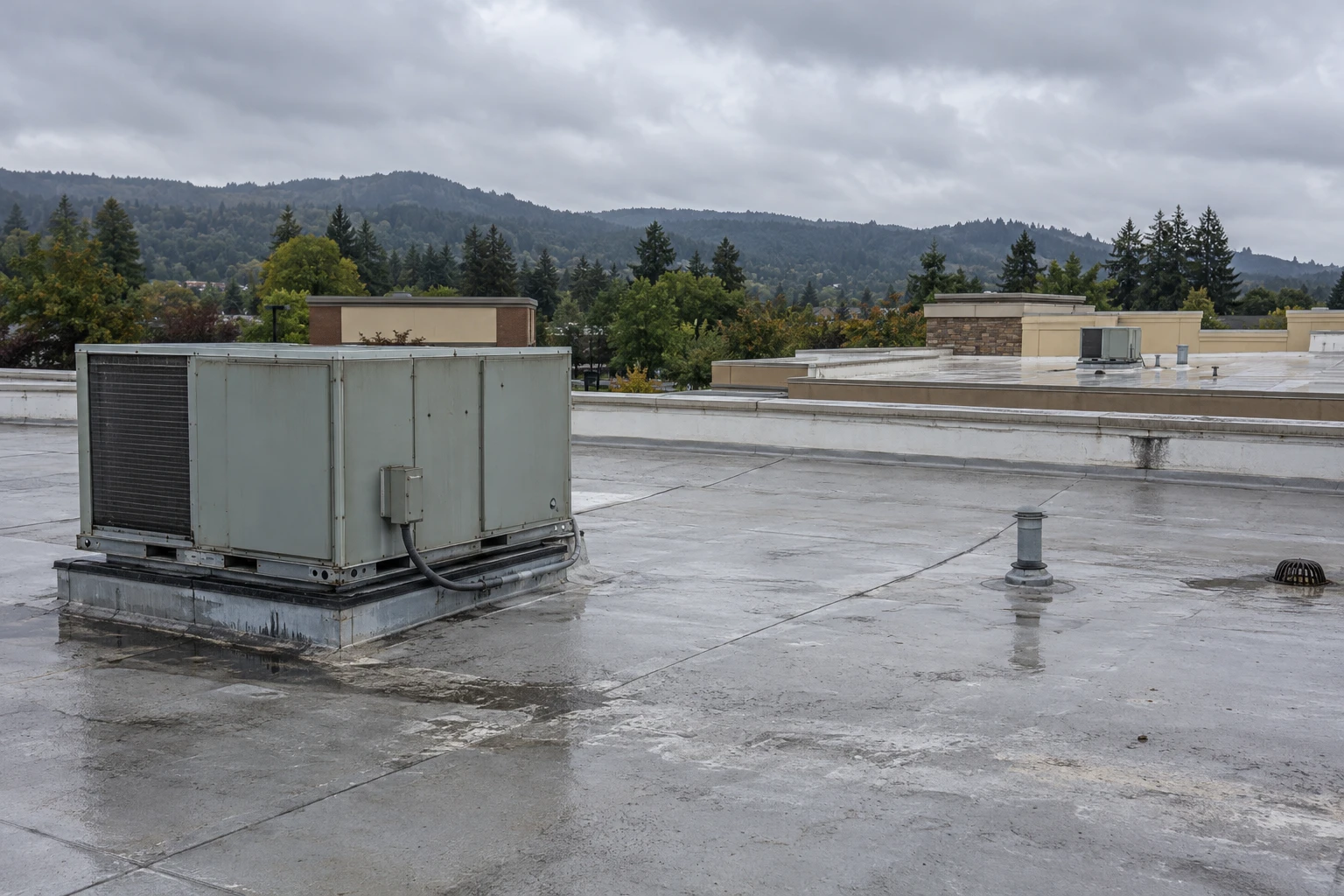
A commercial roof in this setting has a clear job: carry the snow, move the melt and hold its edges in wind. We price the snow details, the drainage and the calendar as lines the owner can see.
Overview
Acme and Kendall
A load that rises with the ground
Bellingham averages roughly 10 inches of snow a year, mostly December through February. The foothills see more. Snow load on a roof is a design number, set by the engineer of record for the site. Our job is to read the roof against it.
On a first walk we look at deflection, sag between supports, cracked finishes below and doors that stick in winter. Those signs point to a roof working hard. We probe the deck at suspect spots and check the fasteners for backout.
Drift zones matter as much as the flat load. Wind piles snow against walls, taller units and the high side of stepped roofs. A drift can carry far more weight than the open field. We mark those zones on the plan and look at framing under them.
Interior signs tell the story. Cracked drywall near a wall, a door that binds in January or a ceiling that dips under a drift all point to a roof under stress. We look from below as well as above, and we compare the two views. A roof that looks flat from above can show a belly from below.
The framing gets a look when we can reach it. Cracked, split or notched members, loose connections and rust on steel are all marks of overstress. If we see any, the engineer is called before the roof is loaded again. We do not clear snow from a roof that may be damaged without a plan.
Metal roofs and snow behavior
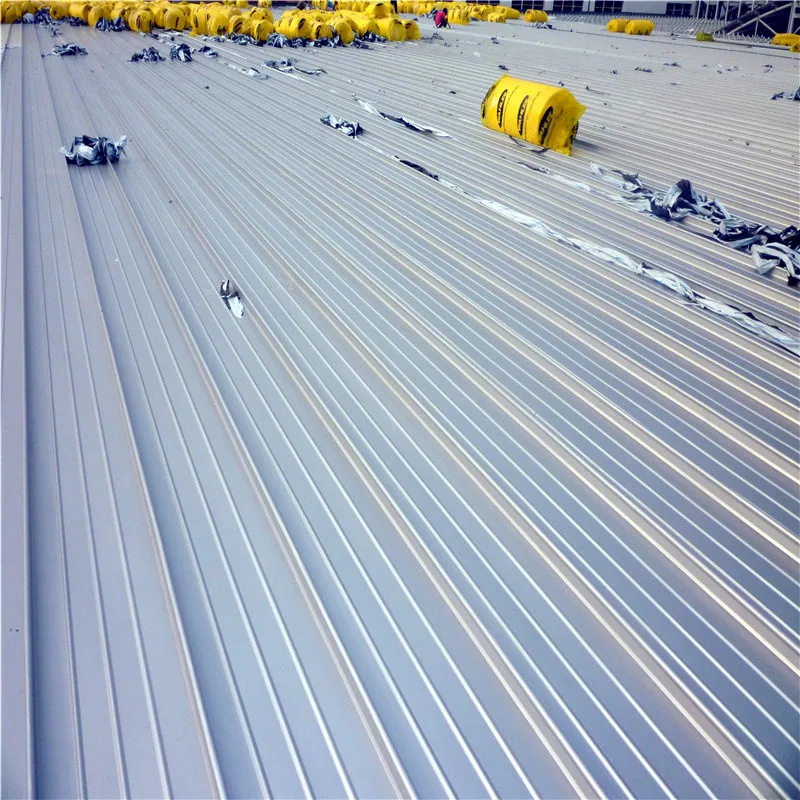
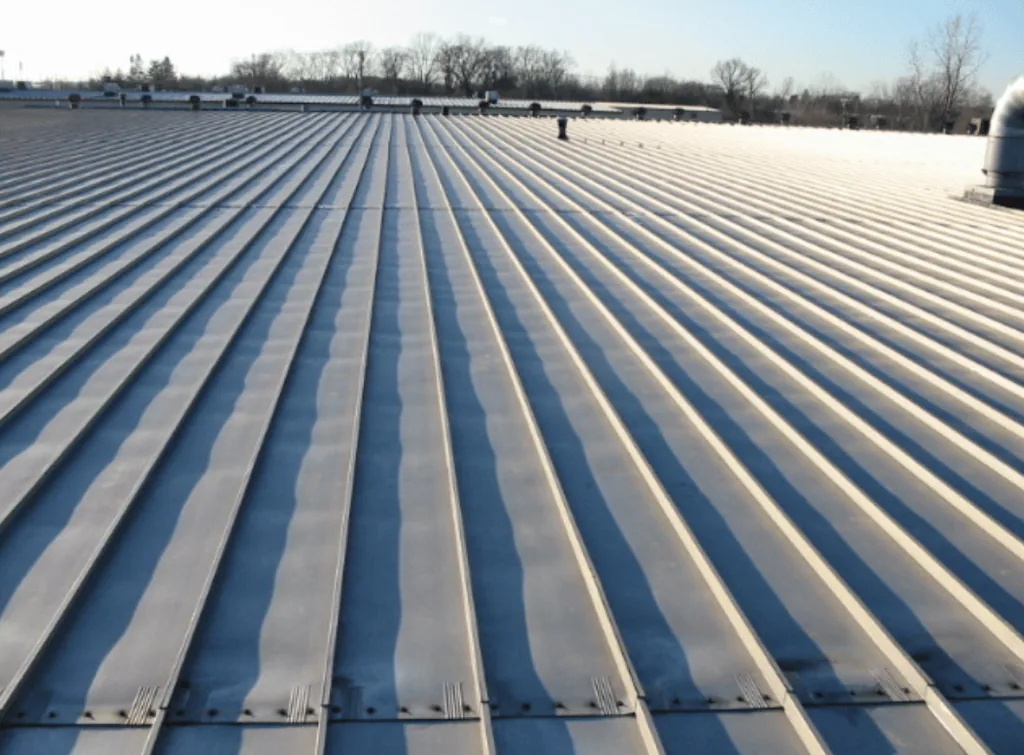
Where roofs are metal, snow behaves differently. Smooth panels shed snow in sudden slides. A slide off a long run can hit a walkway, a vehicle or a lower roof. Retention rails or guards fasten to the seams and hold snow until it melts.
On a standing seam roof, clamp-on guards avoid penetrating the panel. On an exposed-fastener roof, guards screw through with sealed washers, and each one is a place to check. Rails go over entries, parking and lower roofs, and the count follows the load and the pitch.
Older exposed-fastener metal shows its age at backed-out screws, rusted laps and failed washers. A metal roof retrofit or a restoration with fastener replacement and coating handles most of it, depending on panel condition.
Fasteners in cold, wet substrate loosen over seasons. Freeze-thaw cycles work screws out of decking and trim. We pull-test a sample on a first walk and replace any that back out. A roof that held in July can leak in a January thaw.
Melt, ice and drainage
Melt arrives in bursts. A warm rain on snow sends a lot of water at once to gutters and drains that were sized for ordinary rain. Frozen drains back water up behind snow, and ice at an eave lifts metal and shingles.
We check gutter hangers, joints and downspouts. We strap gutters on close centers where sliding snow can tear them off. Heat trace at a sump or an eave can keep a path open. It costs more than a bare gutter and saves damage on a roof that sees real winters.
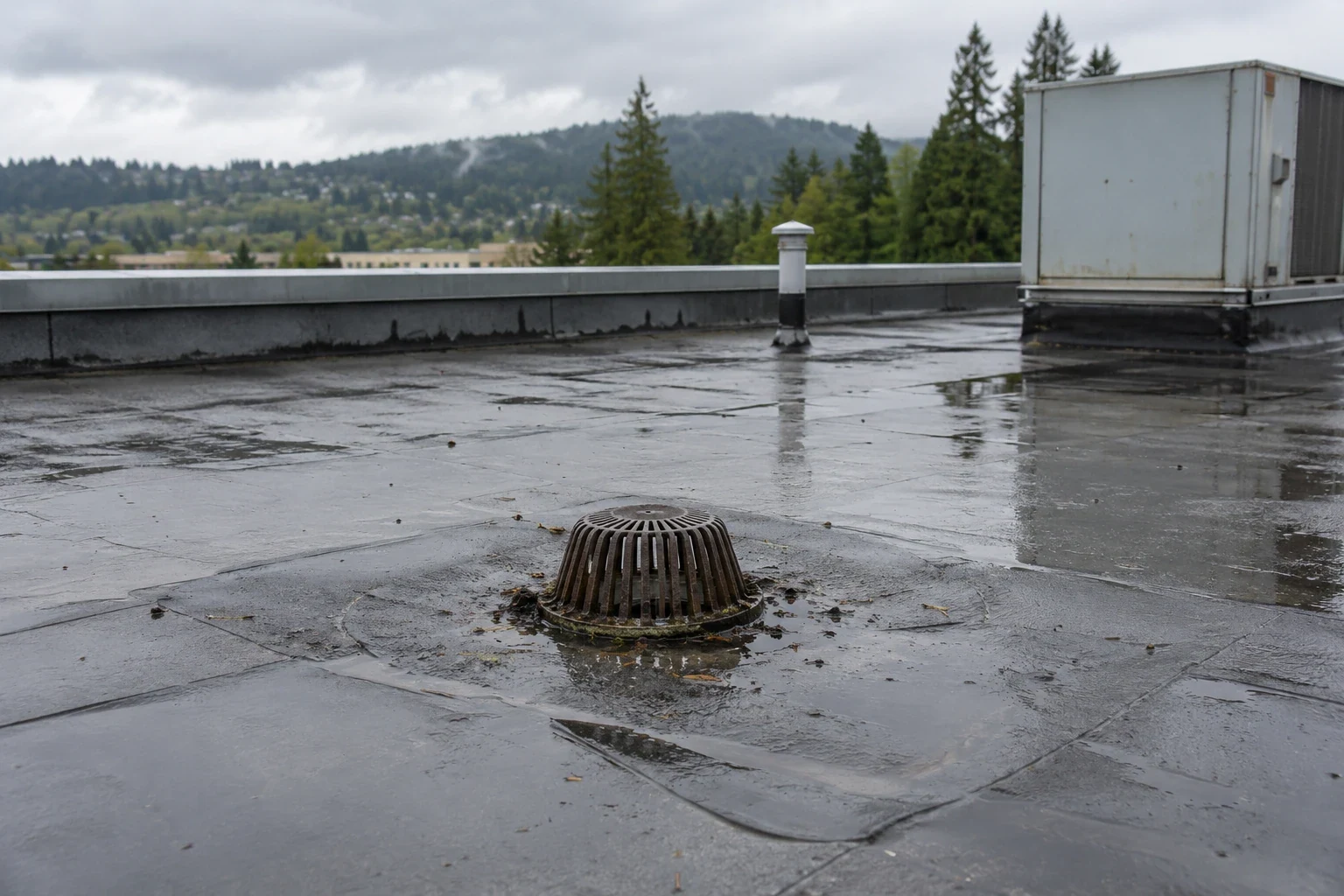
A drain or scupper that works in July can fail in January if it is undersized or sits at the wrong elevation. We read the plan against the likely melt path and mark the weak spots.
Ice dams form where heat escapes into the roof assembly and melts snow from below. The meltwater refreezes at the cold eave and backs up behind. Better air sealing, insulation and ventilation reduce the cause. On a replacement, we raise it with the design team, since the 2021 energy code, in force statewide since March 15, 2024, sets the insulation levels.
Highways and crew access
SR 542 and SR 547 meet near Kendall. Both carry traffic into the foothills, and winter driving conditions shape every trip. A crane or a delivery truck needs a clear road, and a snow day cancels the lift.
We book trucks and lifts early and confirm staging before the crew leaves. Material drops follow a plan that matches the dry-in. In winter, our visits are repairs and emergency seals. Permanent work waits for the dry months.
When more than one site is in play, we run a route. Towns such as Maple Falls and Everson raise the same snow and drainage questions, and grouping cuts travel and mobilization costs. A multi-site program makes that standing practice.
The window and the wind
Bellingham's rain runs about 34.8 inches a year, with July the dry month and November the wet one. Foothill sites have their own weather, and we plan with float. Installs belong in summer. Welded seams, adhesives and coatings need dry surfaces.
Wind adds the edge question. For reference, Bellingham logged gusts of 67 mph in March 2016, and a bomb cyclone sent easterly winds through Sudden Valley in November 2024. Foothill sites are open to the air, and roof edges catch gusts first. We check coping, drip edge and fascia on every walk, and we fasten at close spacing.
Cold nights shorten the useful day. Adhesives and coatings stall below their rated temperature. Welded membranes work on dry sheet in cool air, but frozen mornings slow everything. We schedule the crew to start when the deck is dry and the temperature climbs.
Access to the roof itself changes in winter. A hatch buried under snow, a ladder iced to the wall or a roof with no safe tie-off point alters the visit. We note the access path on the report, so the next crew arrives prepared. In snow country that note saves a day.
What drives the number
Roof system and condition set the base. Snow details, such as retention rails and heat trace, add lines. Travel and staging add more. The calendar changes the rest, since a roof finished in July costs less than one fought through in October.
Code enters a replacement. Washington adopted the 2021 Washington State Energy Code statewide on March 15, 2024, and insulation levels on a new roof follow it. The design team confirms the requirement, and we carry the added height into the estimate.
Commercial Roofing Questions
Who sets the snow load for a foothill roof?
The engineer of record for the building and site. We read the roof against that number and flag deflection, drift zones and drain problems on the first walk.
Do metal roofs need snow guards here?
Over entries, parking and lower roofs, yes. Slick panels shed snow in slides. We place rails by what sits below, not by habit.
What can be done in winter?
Emergency seals and temporary repairs. Permanent work needs dry weather and warmer mornings. We stabilize the roof and finish in summer.
How do you handle a drift problem?
We map drift zones, check framing under them and add support or reduce the drift with guards or crickets. The engineer confirms any structural change.
Can sites on SR 542 and SR 547 share a trip?
Yes, when they sit within one run. We group work to cut travel and mobilization costs, and owners with more than one building save the most.
Send the roof plan and the winter history
Send the roof plan, any photos of past snow damage and your target window. We will price the repairs, the snow details and the travel as separate lines before the bid closes.