Commercial Roofing in Lummi Nation, WA
Commercial roofing on the Lummi Reservation and Marietta-Alderwood, WA: government, resort and aquaculture roofs, contracting terms, round-the-clock phasing.
Commercial Roofing in Lummi Nation, WA
Commercial roofing on the Lummi Reservation and Marietta-Alderwood, WA: government, resort and aquaculture roofs, contracting terms, round-the-clock phasing.
Service Areas
Lummi Nation in Bellingham
The contract terms arrive before the first fastener. The Lummi Reservation near the Nooksack River mouth covers about 13,600 acres, and Lummi Nation employs about 2,083 people, which makes it one of the largest employers in the county. A roof on Lummi Nation land belongs to a sovereign government, a resort operator, an aquaculture business or a community program. Each has its own approvals, and the bid has to meet them.
We write the scope in plain lines. Base work. Alternates. Allowances. Unit prices. A tribal council member, a facilities director and a general contractor can each find their part. We ask for the contracting terms early and fold them into the schedule before we price.
Overview
Lummi Nation
Government and community buildings
A nation that employs about 2,083 people runs administration, health, education and public works buildings. A first visit builds the list and tags each roof by use.
Government buildings stay open. Offices, clinics and community rooms keep their hours. So the work runs in sections that close each day, with noise outside meeting times and crane staging away from public entrances. The same logic runs through government building roofing, where the bid date, the submittals and the open counter set the plan.
Submittals follow the owner's rules. We assemble product data, shop drawings and test reports early and check them against the spec. A missing wind rating stalls the metal order, and the order stalls the crew.
Health and education buildings add their own sensitivities. A clinic roof needs air-intake protection and infection control, and a school roof follows the school calendar. We ask each building's lead for the quiet hours and the dates that cannot move. Buildings farther up the Nooksack River, in Everson and Nooksack, can share a trip schedule with work here.
Hospitality roofs keep running
Hospitality roofs on the reservation may run around the clock. The Silver Reef Casino Resort opened in 2002 near Interstate 5, and a building of that kind keeps guests asleep, floors busy and kitchens firing at once. A tear-off over an active floor is not a daytime option. We plan hospitality roofs by section and by hour. Noisy work moves to the slowest part of the day and the week, and each section opens, dries in and closes before the next peak. Materials stage behind service areas, and crane lifts stay clear of guest entrances.
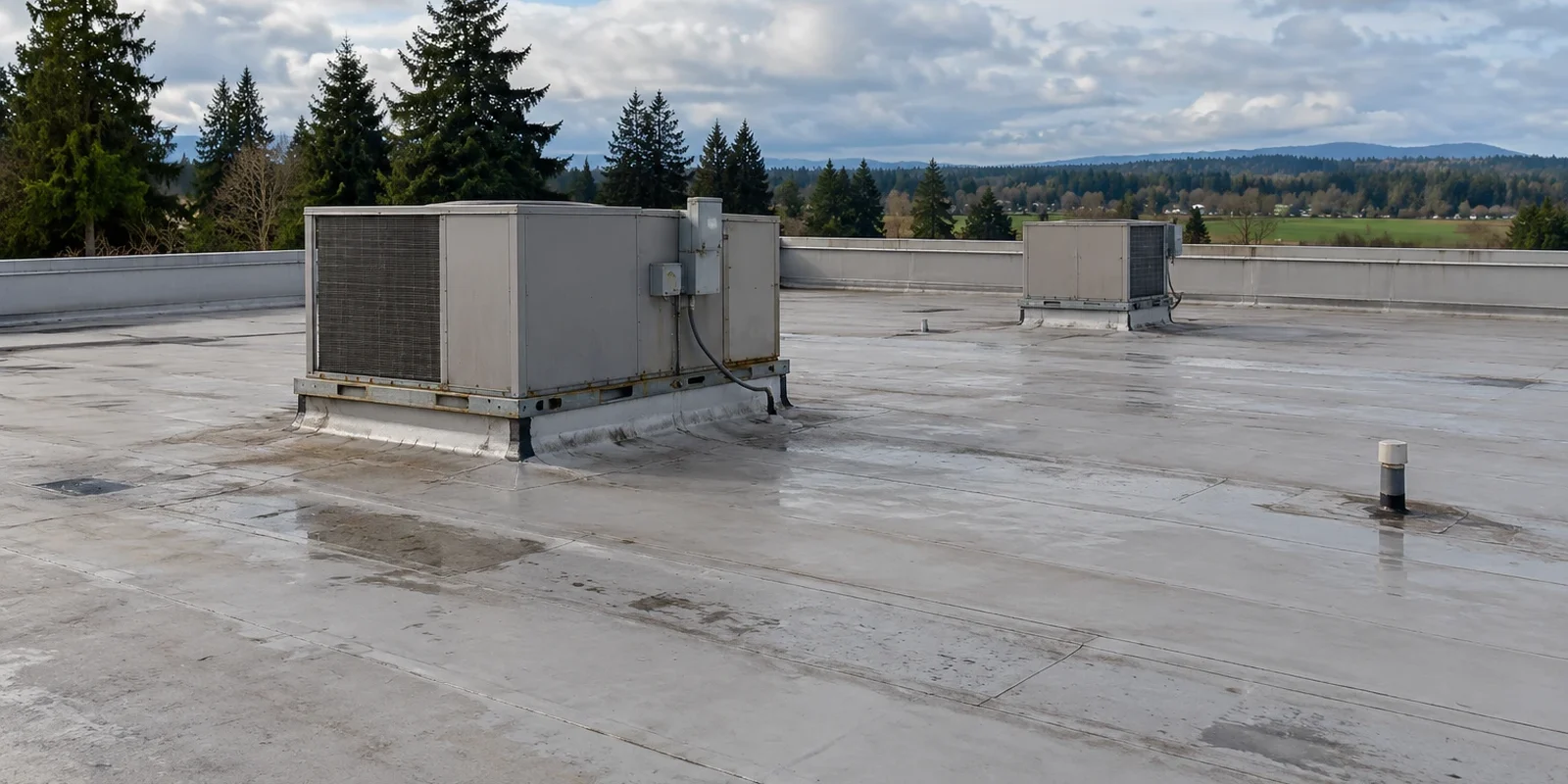
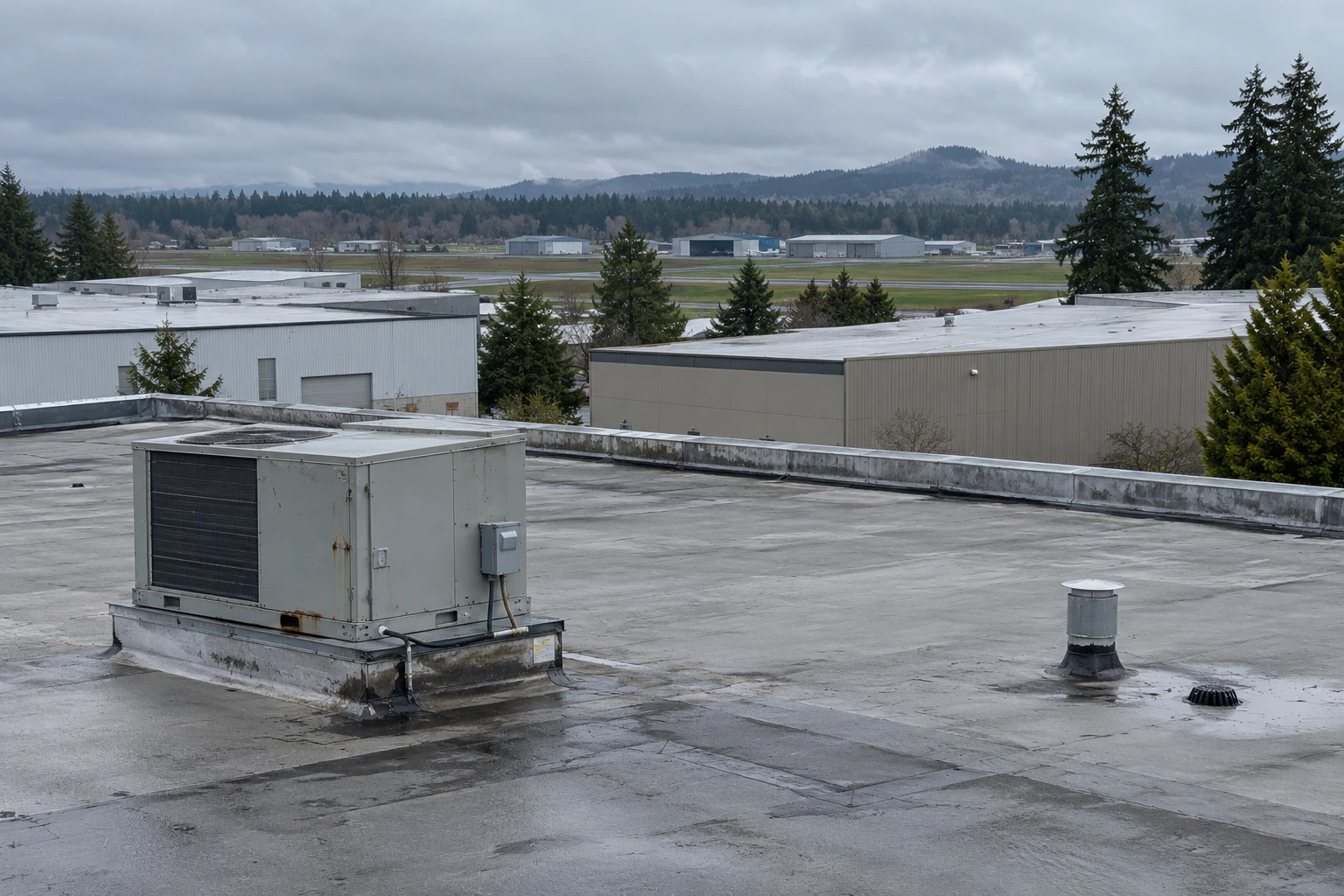
The wet season matters here. Bellingham's rain peaks in November, in a year that totals about 34.8 inches. We aim to close terminations in summer and carry standby crew and tarps for every open bay. A hotel roof carries the same worries, with exhaust, rooftop units and many penetrations calling for a curb-by-curb list and a flashing price for each.
Aquaculture is wet, cold and salty
Lummi aquaculture includes one of the largest oyster farms on the West Coast. Shellfish and fish operations run washdown, cold storage and processing. Humidity inside is high all year, and salt reaches the roof from the water.
We look at the assembly from below as well as above. A vapor retarder with gaps lets humid air reach the insulation, where it condenses. Panel fasteners near the water corrode. We check for rust bleed, damp board and failed laps. A greasy or acidic exhaust can attack some membranes, so we look at sheet compatibility near stacks. A PVC roof resists grease and chemicals, and a coated metal roof with stainless hardware handles salt. The right choice depends on what comes off the building.
Cold rooms need their own care. In cold storage roofing, the vapor retarder and the insulation work as one system, and one gap spoils both.
Near the water, drains and gutters fill with shell grit, salt crust and bird debris, and a packed scupper on a metal roof spills down the wall. Each visit clears them and logs the date, and a yearly rinse of salt-exposed metal helps the coating last.
Terms, approvals and schedule
A tribal government sets its own contracting terms. Bonding, insurance, local hiring preferences and approval steps may differ from a county or city job. We ask for the terms before the bid and put the calendar on the first page. A council meeting that approves the contract on a given date can set the start. We list the dates that matter and the cost of a slip.
That clarity also helps the public agencies and the general contractors who work with the nation. Everyone sees the same plan.
Warranty terms follow the owner's priority. Some manufacturers limit coverage near salt or in high-humidity buildings unless specific materials go in. We read the terms before we specify, and the closeout sheet lists the exact products used.
Wind, rain and the long season
Wind records nearby include 67 mph gusts in Bellingham in March 2016 and a November 2024 bomb cyclone that left at least 16 Sudden Valley homes damaged. Edge metal takes the first hit on any building, so perimeter fastening goes on every bid. Bellingham's sunshine totals only about 1,866 hours a year, moss and algae grow on shaded slopes, and a damp deck dries slowly. One slow morning can cost a dry-in day. Summer gets the terminations, and a standby crew covers any open section.
What drives the number
The base price comes from area, access and details. Round-the-clock operations add phasing and standby. Salt and humidity add hardware and vapor control. Approvals add calendar days. We show each driver as a line, so the nation or the operator can compare options and choose.
A recover over a dry, sound roof avoids a tear-off and keeps the building working. A replacement costs more and fixes the deck. A coating extends a good roof but needs a clean, dry surface and a cure window, which Bellingham's low sun makes short. We price in that order and tell the owner which one the roof supports.
Standby and weather days deserve a clear line. On a site that cannot leave a bay open overnight, we carry a crew and tarp material for every section that is open, and we show the cost. The owner can see what protection against a surprise front costs and decide whether to buy the whole amount or a share of it.
Punch and records
At closeout we walk the roof with the facilities lead. Curbs are sealed. Drains flow. Sealant is tooled. The binder holds photos, warranty papers and the approval letters. A leak at any hour gets a dry-in call under emergency roof repair, and the record shows what was done. Owners with buildings in Ferndale can fold a visit into the same trip. Send the roof plan, the contract terms and a target window, and every termination gets priced before the bid closes.
Commercial Roofing Questions
How do tribal contracting terms affect the bid?
They set approvals, insurance and hiring steps. We ask for them first and put the dates on the first page.
Can a resort roof be replaced while guests stay?
Yes, in sections that close each day, with noisy work in the slowest hours.
Why check an aquaculture roof from below?
Humid air condenses in the insulation. Damp board and rust halos show it before the sheet fails.
Which membrane suits grease or chemical exhaust?
PVC resists grease and many chemicals. We check the exhaust before choosing.
What happens on an after-hours leak?
After-hours calls get answered, and the first step is a dry-in with photographs.
Send the roof plan and the contract terms
Send the roof plan, the contract terms and your target dry-in window. We will price every termination, phasing day and metal line before the bid closes, so the owner decides what stays in.