Commercial Roofing in Nooksack, WA
Commercial roofing in Nooksack, WA along SR 9: leak tracing, flashing and seam repair, repair-or-replace calls and a yearly maintenance plan for small owners.
Commercial Roofing in Nooksack, WA
Commercial roofing in Nooksack, WA along SR 9: leak tracing, flashing and seam repair, repair-or-replace calls and a yearly maintenance plan for small owners.
Service Areas
Nooksack in Bellingham
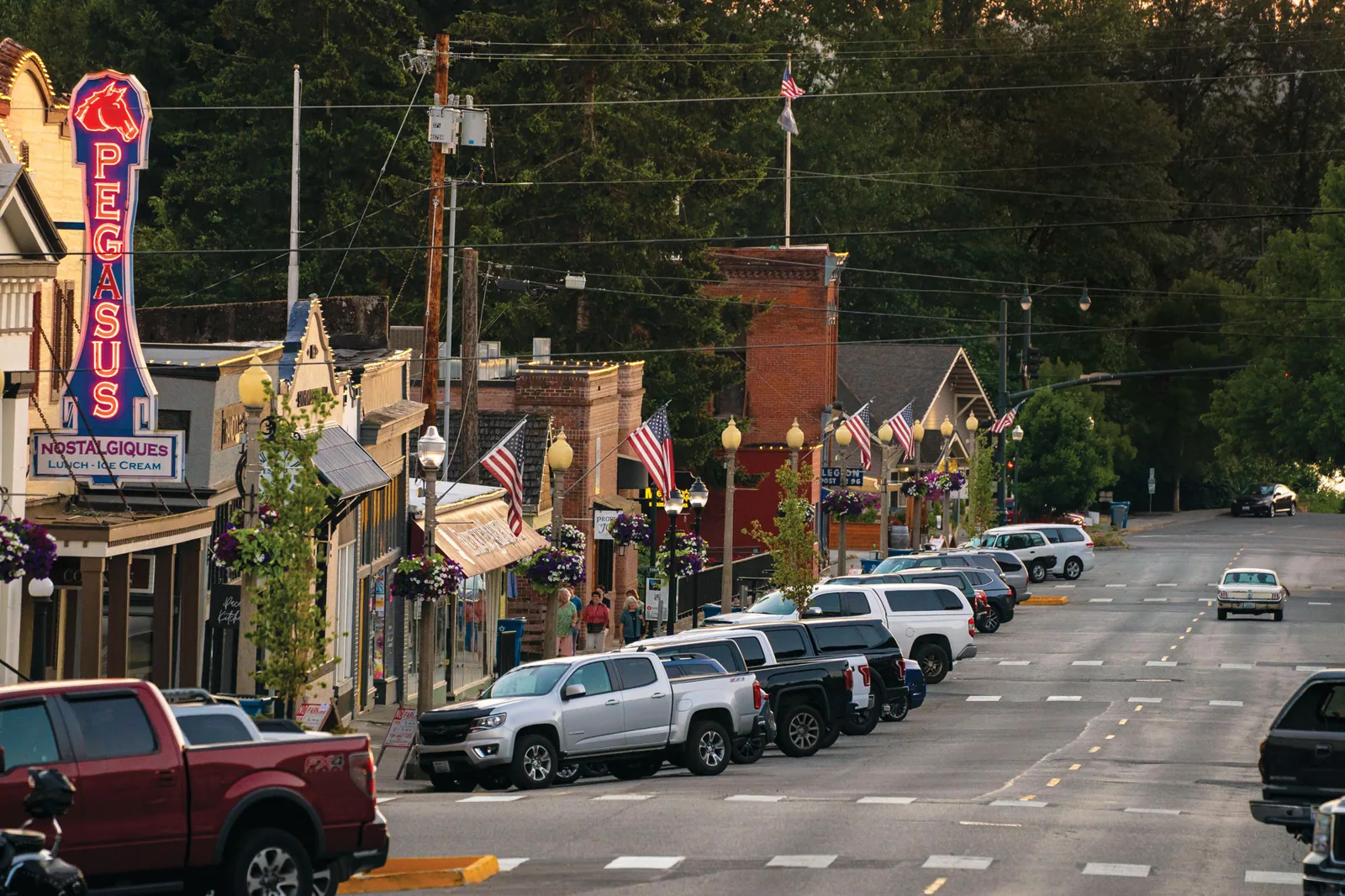
A stain on a ceiling tile is where the water ended up, not where it came in. Nooksack, WA had 1,471 residents in 2020, and SR 9 runs through it. The town sits beside the upper Sumas River, about 1.2 miles from the Nooksack River, and it once had a rail station on the national network. A small town on a state route can hold small commercial buildings, and small buildings have a way of leaking in one spot and showing it in another.
So the first job is to trace. Where does the water enter? What does it cross on the way? What does the owner fix first? We write the answers as a short list with a price per item, so a small owner can act on the first page and plan the rest.
Overview
Nooksack
Trace the leak first
Water travels. It enters at a flashing, runs along a deck flute or a rafter and drops where it finds a gap. A stain over a counter may start ten feet away.
We work uphill from the stain. We check the ceiling and the attic or plenum for a trail: rust on fasteners, a dark line on a rafter, compressed insulation. Then we go on the roof and check every detail along that line. A commercial roof leak repair starts with this trace, because a patch in the wrong place costs the same as a patch in the right one and fixes nothing.
Where the trail is cold, a hose test sections the roof. We wet one area at a time while someone watches inside. It takes time. It also ends the guessing.
Interior clues help. Brown rings on ceiling tile mean old water. White crust on masonry means water has run through it for a long time. A musty smell near an exterior wall points to a wall flashing. We write down each clue and match it to a spot on the roof plan, so the trace has a record and the owner can follow it.
Flashing before field
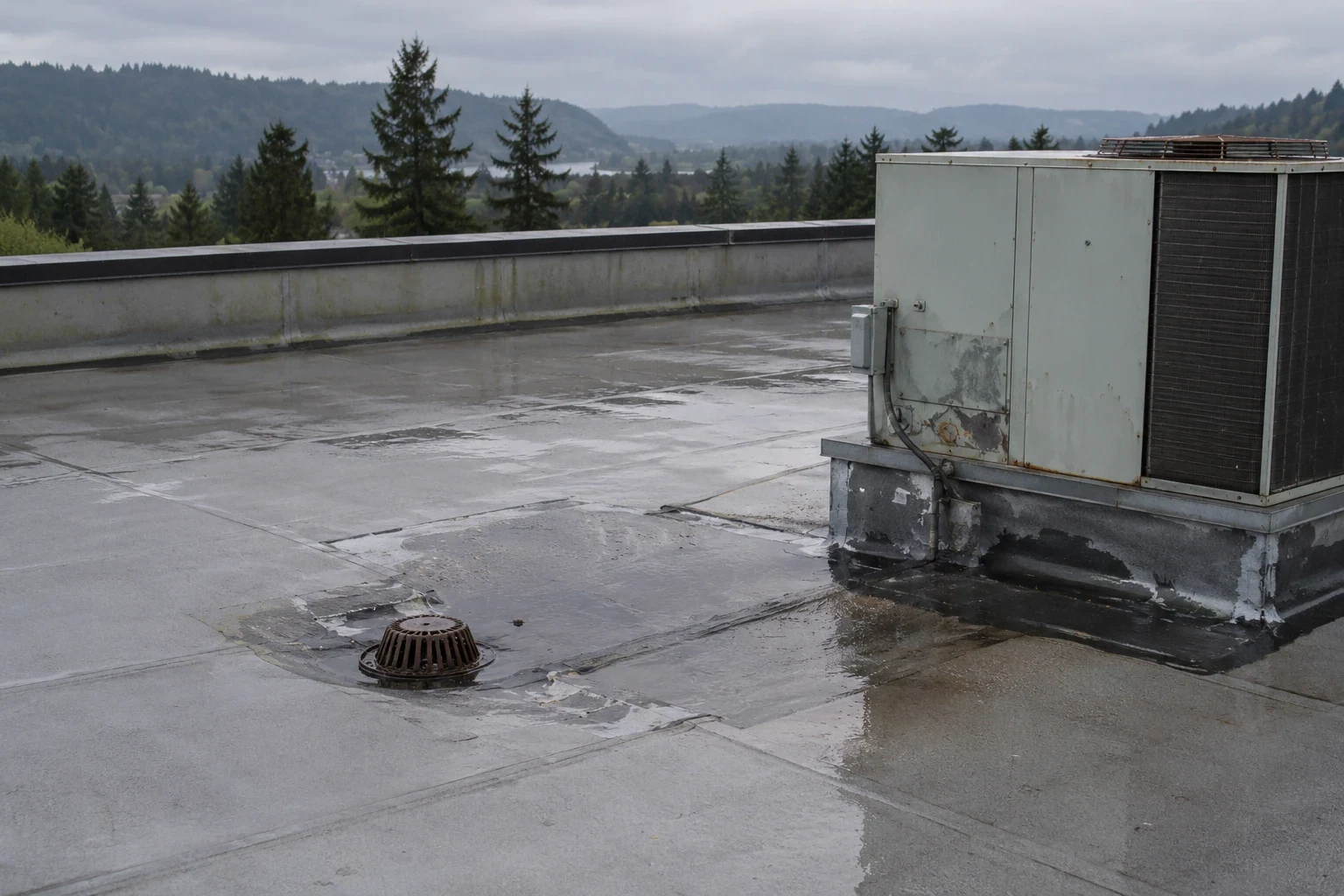
Most leaks start at details. A wall tie-in. A vent boot. A drain collar. A skylight curb. The field of the roof is rarely the culprit on a roof that is not old.
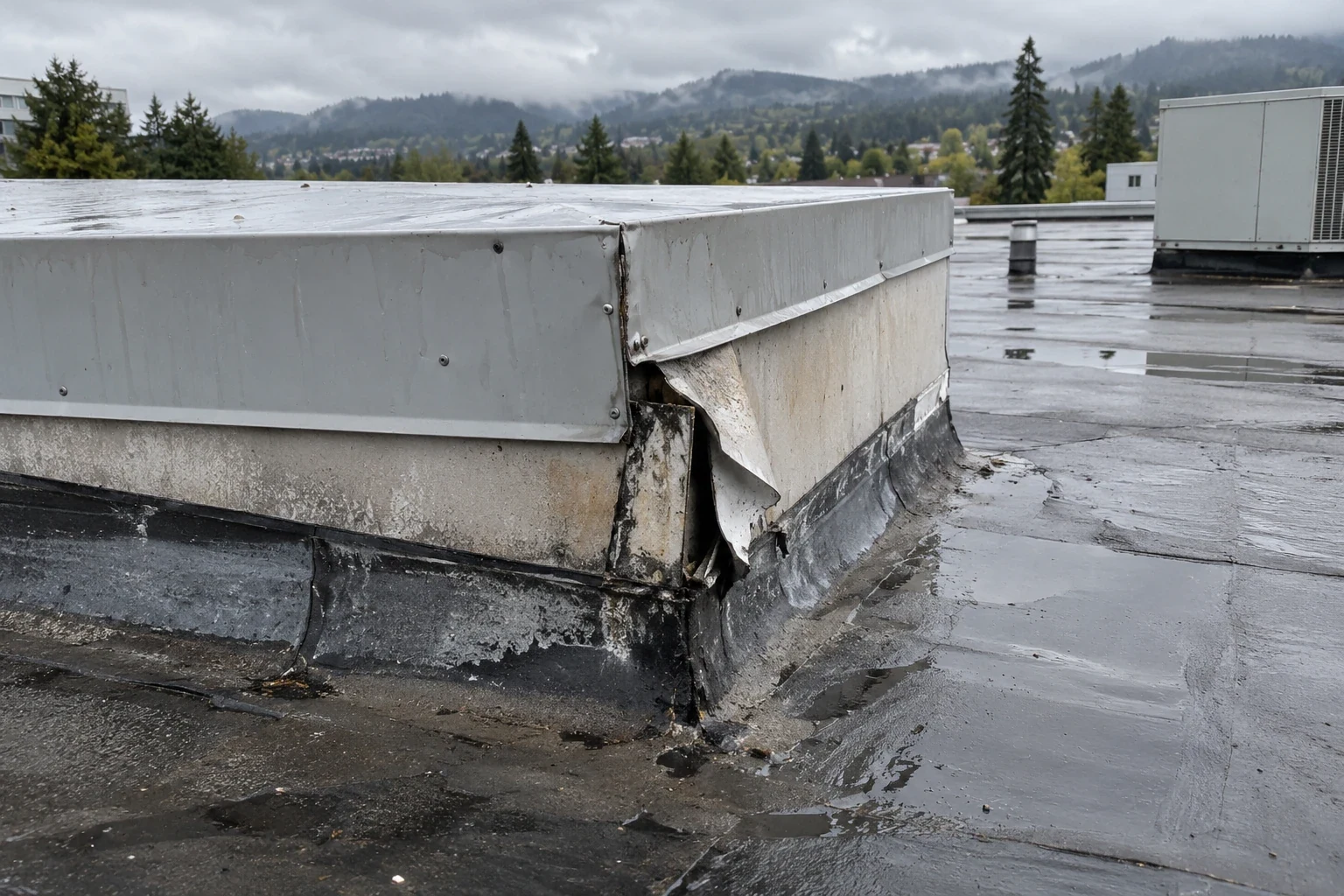
We check flashing failure first: cracked sealant, lifted counterflashing, short base flashing. Then we look at seam failure: open laps, pulled fasteners, ridges at the seam. Base flashing height matters. A flashing that stops three inches above the deck lets wind-driven rain over the top. Raising it adds wall work, and wall work adds a trade, so it gets its own line.
Penetrations get a count. A kitchen vent, a plumbing stack, a rooftop unit curb and a skylight each need a boot or a collar and a counterflashing. We list every one and note its condition. A building with a dozen penetrations has a dozen chances to leak, and the owner can see which three are failing now. Sealant ages in the damp. Bellingham's long wet season and low sun keep joints wet, and sealant that holds in a dry climate gives up here sooner.
Probe and scan
A visual check does not show moisture inside the roof. Insulation can hold water under a sound-looking sheet. An infrared moisture survey maps the damp areas after sunset, when wet board holds heat longer. Probe checks confirm what the scan suggests.
The map tells us how big the problem is. A damp patch around a vent is a local fix. A damp field across the roof is a different decision. Bellingham's year runs to about 34.8 inches of rain with roughly 1,866 sunlit hours, and a roof in this part of the county can be slow to dry as well. We scan before we quote anything larger than a repair.
Scan timing matters. We run it on a clear evening after a warm day, when the roof has soaked up heat and the damp board gives it back slowly. A cold, cloudy night in a Bellingham November gives a poor image, so the survey waits for a better day.
Repair, recover or replace
Three paths, each with a price. A commercial roof repair fixes the defects we find and suits a roof with dry insulation and sound seams. A recover adds a new sheet over a dry old one and saves the tear-off. A replacement strips to the deck and starts over.
The scan and the probe decide which path the roof supports. We present all three side by side with the cost drivers named: area, access, layers, details and phasing. The owner picks. We do not push the largest scope on a roof that needs a small one.
An older building may have layers from different decades. A core cut shows the stack. Deck repair carries a unit price in the contract, because old boards can rot where nobody looks.
Timing enters the choice. A repair can happen in a dry week in nearly any month. A recover or a replacement wants summer, when July runs driest and the deck dries fast. An owner who finds a leak in October can repair it now and plan the larger work for next June. The plan names the month by which the decision is needed.
SR 9 and the staging yard
SR 9 runs north through Nooksack to Sumas and the Sumas-Huntingdon port of entry. A delivery on SR 9 shares the road with freight. Small lots have little room. We schedule trucks off-peak, load only what the crew installs that day and keep dumpsters out of driveways. A roof job should not block a customer's entrance.
The same route reaches Sumas to the north, and a visit to Everson can share a trip. Distance adds travel to the bid as its own line.
A rail station once stood in town, and Sumas was historically a railroad hub. Buildings from that era may carry layers of old roofing, and a core cut tells us what stands on each deck, so the bid reflects it.
Wind and the maintenance plan
Bellingham's gusts reached 67 mph in March 2016, and easterly wind from a bomb cyclone in November 2024 damaged at least 16 Sudden Valley homes. Edge metal takes the first hit, so perimeter fastening goes on every bid.
A yearly preventive maintenance visit keeps small problems small. We clear gutters, check flashings, tighten edge metal and photograph every detail. It costs a fraction of a repair, and it gives the owner a dated record.
Photos from every visit go into one file. After a named storm we compare edges to the earlier set, so the owner sees what moved.
Punch and records
At closeout we walk the roof with the owner. Flashing is tight. Seams are sealed. Gutters flow. The binder holds the trace notes, the scan map, the photos and the warranty papers. Send the roof plan and a note on where the stains show. We will trace the source and price every item before the bid closes.
Commercial Roofing Questions
Why trace a leak before patching it?
Water enters far from the stain. A patch in the wrong place costs the same as a right one and fixes nothing.
What is a hose test?
We wet one section of roof at a time while someone watches the ceiling. It isolates the entry point.
When is a recover better than a replacement?
When the board is dry and the seams hold. A scan and probe checks confirm it.
Why does base flashing height matter?
A short flashing lets wind-driven rain over the top. Raising it adds wall work, so it is priced alone.
How often should a small building be inspected?
Once a year, plus after any named storm. The dated photos build the record.
Send the roof plan and where the stains show
Send the roof plan and a note on where the stains show. We will trace the source and price every termination and repair before the bid closes, so the owner decides what stays in.