Commercial Roofing in Lummi Island, WA
Commercial roofing on Lummi Island, WA: coastal wind, salt exposure, island logistics for crews and materials, and roof work planned around the dry season.
Commercial Roofing in Lummi Island, WA
Commercial roofing on Lummi Island, WA: coastal wind, salt exposure, island logistics for crews and materials, and roof work planned around the dry season.
Service Areas
Lummi Island in Bellingham
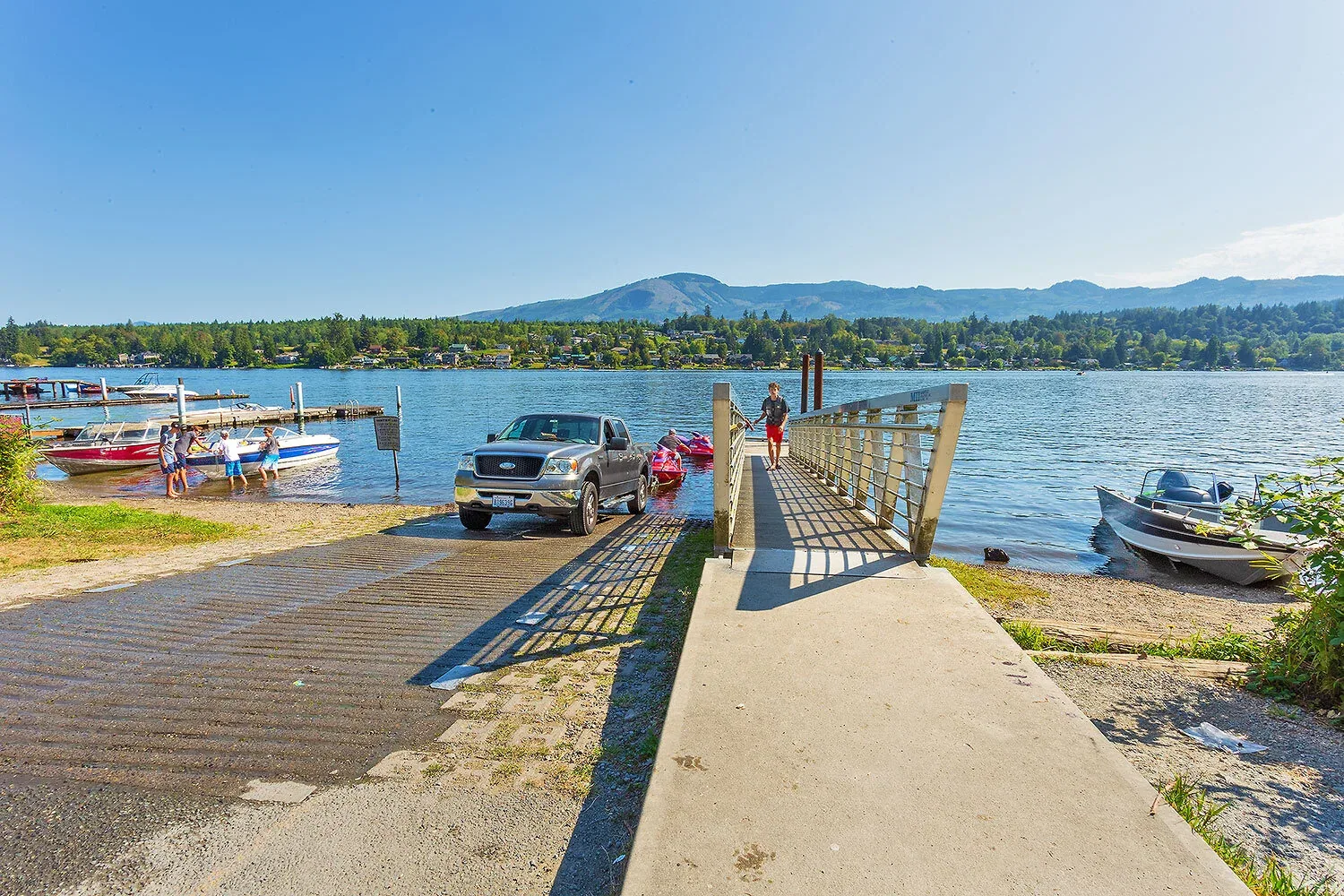
A roof on an island has two bills: the roof and the crossing. Lummi Island, WA is an unincorporated community in Whatcom County, and the county lists it among its island communities on the Salish Sea. Any commercial roofing job there starts with how crew, tools and material reach the site, and that answer sets the schedule before the first panel is ordered.
The county's low points lie at sea level along the Salish Sea, so island roofs see coastal wind. Wind loads the edges first, salt works on the metal, and a crew that cannot get back for a forgotten part loses a day. We plan for all three.
Overview
Lummi Island
Coastal wind on the edge
Open water leaves wind little to slow it. Mainland events show the scale, from 67 mph gusts across Bellingham in March 2016 to the easterlies of a bomb cyclone that hit Sudden Valley in November 2024. Those are mainland events, and they show what a gust does to an unprotected edge. An island roof deserves the same respect.
The edge is the first thing we check. Coping, drip edge, fascia and gutters carry the wind load. Fasteners must bite into sound substrate at tight spacing. We look for lifted laps, torn sealant and metal that has started to work loose.
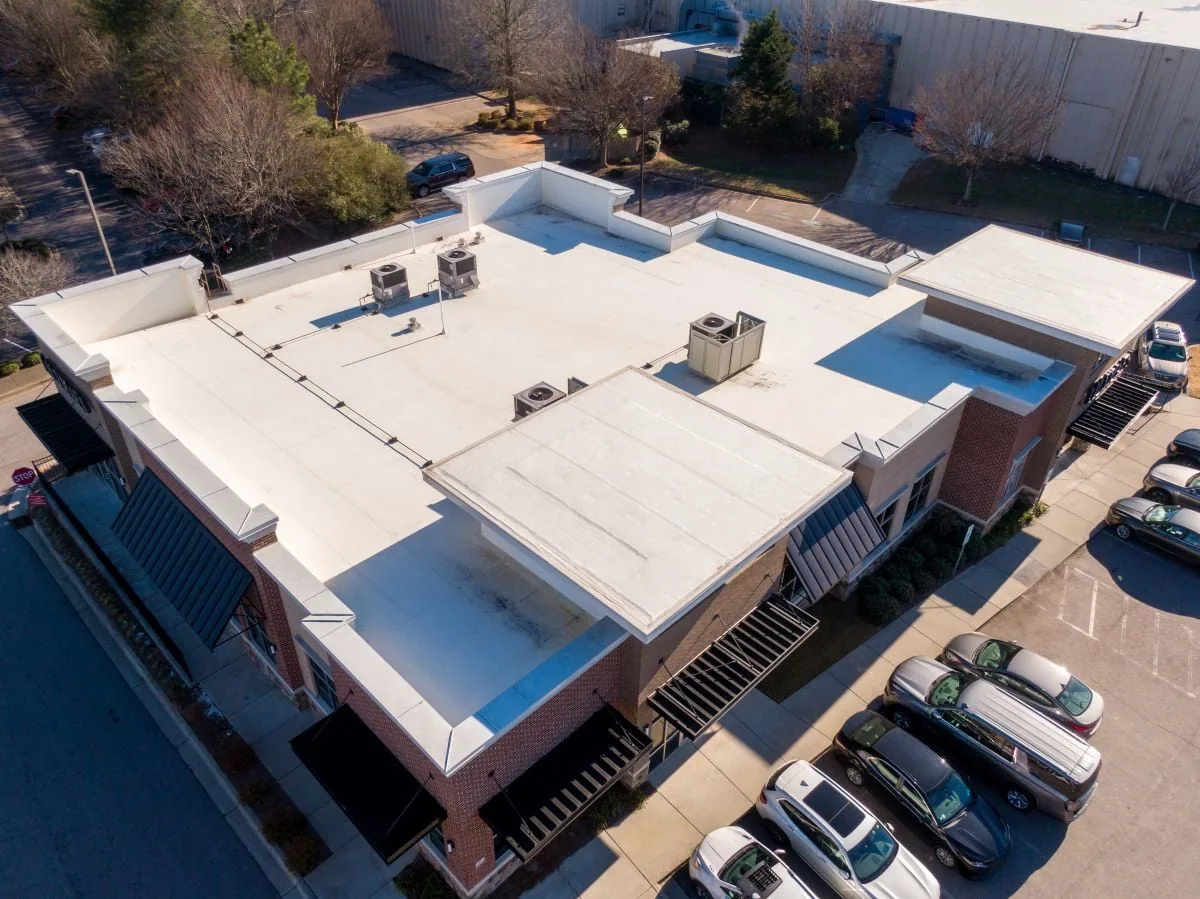
On a membrane roof, the perimeter fastening density follows the wind zone on the spec. On a metal roof, clip spacing and trim fastening do the same job. A tested edge and coping detail goes on every bid as its own line.
Roof-mounted equipment catches wind as well. Vent stacks, small rooftop units and antennas on an exposed roof pull at their curbs and bases. We check hold-downs, reseal bases and tell the owner which pieces need the mechanical trade. A unit that rocks in a breeze will rock a flashing loose.
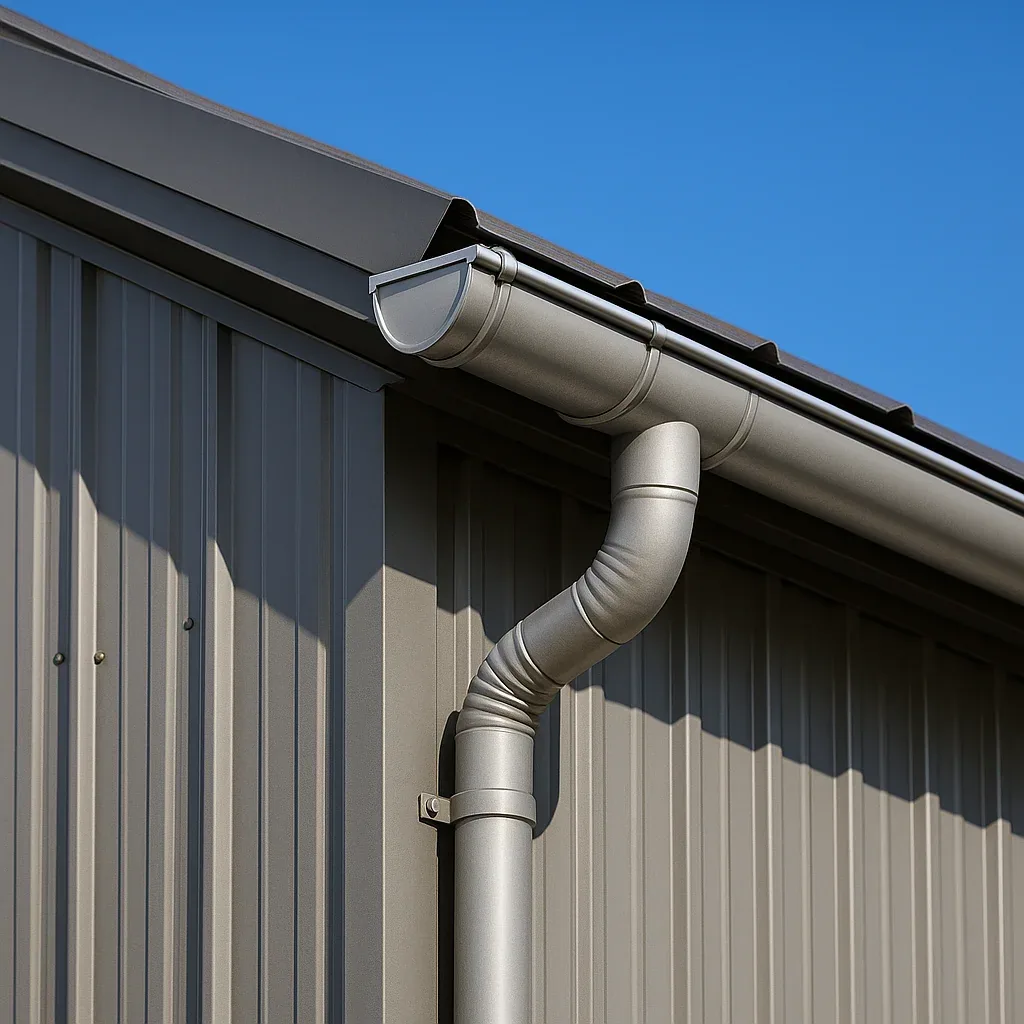
Gutters and downspouts take wind-driven rain sideways. Joints that hold in a calm shower leak in a gale. We check the laps, add sealant where it is missing and strap downspouts to the wall at close spacing.
Salt on the metal
Salt spray rides the wind onto fasteners, edge metal and exposed panel ends, and it turns small scratches into rust streaks. Waterfront roofs on the mainland, such as those along Bellingham's Marine Drive, show the pattern clearly.
Stainless or coated fasteners resist it. Cheap plated screws rust through in a few seasons and loosen the roof. We specify hardware for the exposure, and we price it as a visible line so the owner sees the choice.
Metal finishes matter too. A high-grade coating on panels and trim slows chalking and edge rust. Cut edges get sealed. Aluminum resists salt better than steel and costs more. On a roof that will not be touched for years, the extra cost can be the cheaper option over time.
Waterfront buildings at Semiahmoo face the same spray, and the same stainless-first rule applies.
Getting crew and material there
Island logistics add steps that mainland jobs skip. Material has to be loaded, moved and unloaded on a schedule that matches the crossing. A missing box of fasteners or a short roll of membrane cannot be fetched in an hour. We load a spare of every critical part and check the delivery list against the penetration count before anything leaves the yard.
Equipment is the next question. A crane, a lift or a hoist for a metal run needs to reach the site. We ask early how heavy gear will arrive and whether the site has staging space. If it does not, the job is planned for hand-carry materials, which changes the roof system choice.
Weather can hold a crew on the wrong shore. We build float into the schedule and pick work that can be closed in a short window. Open roofs are the biggest risk, so strips stay small.
Waste leaves the island the same way material arrives. A tear-off creates debris that must be bagged, loaded and hauled. We include the haul-off in the bid and plan the pickup against the crossing schedule. A recover or a coating avoids most of that waste, which is one more reason to scan the existing roof before choosing the system.
Dry months and short days
Bellingham, the market city, gets about 34.8 inches of rain a year, driest in July and wettest in November, with sun hours totaling only about 1,866, which keeps decks damp. These are the market city's numbers, and an island site sees its own weather, so we plan with float rather than a promise.
Installs belong in summer. Adhesives, coatings and welded seams all need dry surfaces. A summer window gives the most days, and crews on an island job want every one.
Winter work is repair work. A leak is located, temporarily sealed and documented. The permanent fix waits for dry weather. A storm damage repair call runs on the crossing as much as on the roof.
Coatings and recoats are a good fit for a sound roof on a salty exposure, since they need no tear-off and no heavy gear. A silicone coating sheds water well on flat sections, and the work can be done in a few good days. The roof has to be dry and sound underneath first.
What we look at on a first walk
On any commercial roof in a coastal setting, the walk covers the same ground.
We probe the membrane or panels for wear. We check fasteners, laps and flashings. We count penetrations and look at each one. We find where water collects and note how the roof drains. We look at the metal for rust and at the edge for lift.
Then we write a ranked list, with a location, a scope and a cost range on every item. If wet insulation is suspected, a moisture survey maps it. The owner picks what proceeds.
Interior signs count. Stained ceilings, rusty fasteners visible from below and damp insulation at the eaves tell us where water has entered. We walk inside as well as on the roof, when the owner allows it, and we pair the findings with the roof plan.
Photographs tie to locations. Each image carries a reference on the roof sketch, so a later crew finds the exact spot. Dated images double as the record for any warranty or insurance question.
What drives the number
The roof system and its condition come first. Hardware for salt and wind comes second. The crossing, the staging and the float come third, and they are the part island owners notice most. Last is the calendar, because dry-month work costs less than wet-month work.
Other coastal work in the county, such as Birch Bay, shares the same exposure and the same hardware list, though the crossing is its own line. Owners with several buildings gain from a multi-site program, where one standard and one schedule spread the fixed costs.
Commercial Roofing Questions
What does an island add to a roofing bid?
Crossing time, spare materials and float for weather. Each is a visible line. We load critical parts twice rather than risk a day's delay.
Which fasteners hold up to salt spray?
Stainless steel or coated hardware made for marine exposure. Plated screws fail early on an island roof, and the bid shows the difference.
Can a crane or lift be used on the island?
Sometimes, depending on access and staging. We ask early and plan for hand-carry materials if heavy gear cannot reach the site.
How do you handle a leak found in winter?
We locate it, seal it temporarily and record it with photos. The permanent repair waits for dry weather. A short list of other items goes with it.
Is a summer start always possible?
It is the goal, but weather and the crossing can shift it. We build float into the schedule and keep strips small so no open roof is left overnight.
Send the roof plan and the access notes
Send the roof plan, photos of any damage and how heavy gear can reach the site. We will price the roof work, the hardware and the logistics as separate lines before the bid closes.