Silicone Roof Coatings in Bellingham, WA
Silicone roof coatings in Bellingham, WA: a liquid membrane that tolerates ponding and damp air, with the substrate checks that decide if it will hold.
Silicone Roof Coatings in Bellingham, WA
Silicone roof coatings in Bellingham, WA: a liquid membrane that tolerates ponding and damp air, with the substrate checks that decide if it will hold.
Roof Systems
Silicone Roof Coatings in Bellingham
Silicone cures by drinking moisture from the air. That one fact sets it apart in Bellingham, WA, where the air stays damp through a long wet season and the sun is scarce. Other coatings need a clear forecast and a bone-dry surface. Silicone tolerates a damp air day and sheds standing water better than most. It does not forgive a wet roof underneath.
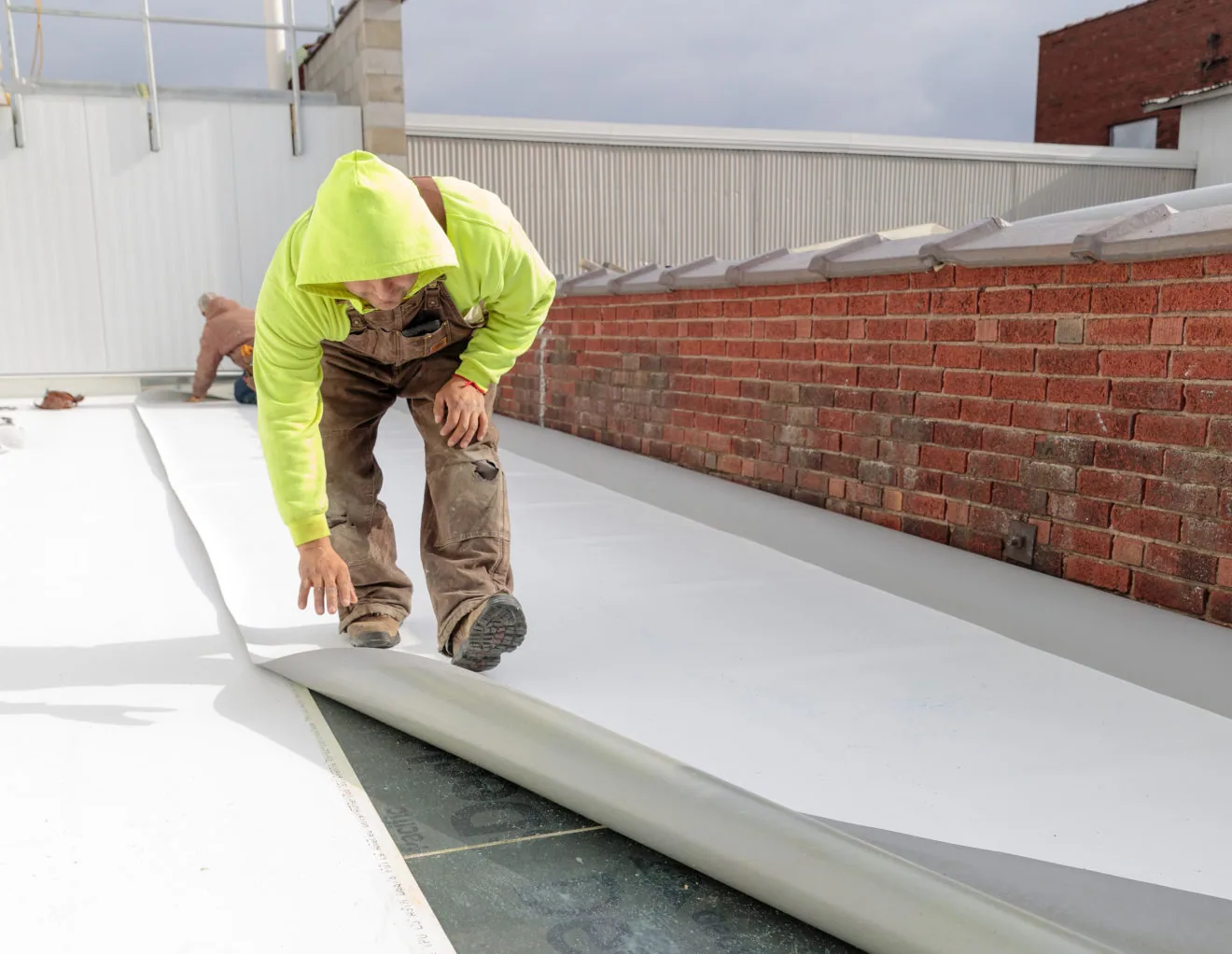
A silicone coating is a liquid membrane rolled or sprayed onto an existing roof. It cures into a flexible, waterproof skin that bonds to metal, single-ply, modified bitumen and foam. Done on a sound roof, it adds years of life without a tear-off. Done on a wet one, it traps the water. We check the roof before we price the coat.
Overview
Silicone Roof Coatings
What silicone does well
Standing water is the big one. Many coatings soften or lose adhesion when ponded. Silicone holds up under puddles, which makes it a practical choice for flat roofs that hold water for a day or two after rain.
It also resists UV breakdown. The polymer does not chalk the way other coatings do, and its flexibility survives the temperature swings of winter. In a market with low sunshine of about 1,866 hours a year, UV matters less than moisture, and silicone handles the moisture.
Application is simple. Rollers or airless spray lay down the material in wide passes, and the coating levels itself as it flows. Fewer joints mean fewer failure points. Cure time depends on humidity, and a cool damp day can slow it.
Compared with a new membrane, the coating's cost is lower and the disruption is smaller. There is no tear-off, no debris and no open deck. That suits occupied buildings where a loud, dusty reroof would close the space.
The tradeoff is limited reach. Silicone adds a skin and some life. It does not add insulation, fix structural problems or replace a membrane that has lost its seams. Where the roof is past that point, a different system is the right route.
The substrate decides
Silicone needs a clean, dry, sound base. Dirt, oil, mildew and loose coating all block adhesion. We power wash, treat moss and algae, and let the roof dry before the first coat.
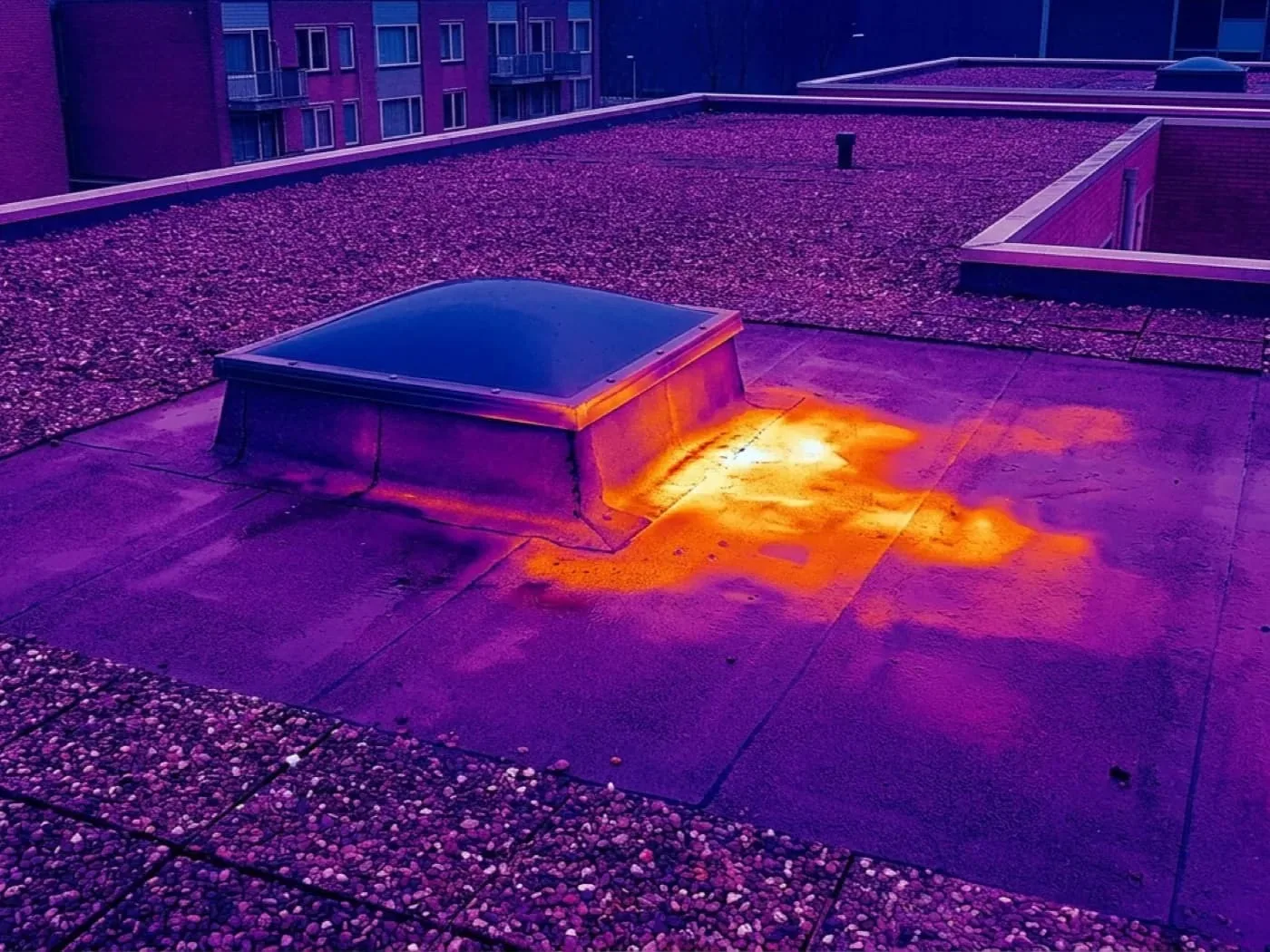
Moisture below is the larger risk. A coating over wet insulation seals the water in and blisters later. A moisture survey maps the wet areas before we commit to the coat, and sections that read wet are cut out and replaced.
Some substrates need a primer. Rusted metal needs a rust-inhibiting base coat. Some single-ply membranes need a tie coat. Silicone also does not accept other coatings over it well. A future recoat of anything but silicone needs a careful adhesion test, so the choice is close to permanent.
Repairs before the coat
A coating does not fix a hole. Open seams, failed flashings and cracked pitch pockets are repaired first, and the coating covers the repair. Reinforcing fabric goes into the wet coat at seams and penetrations to bridge movement.
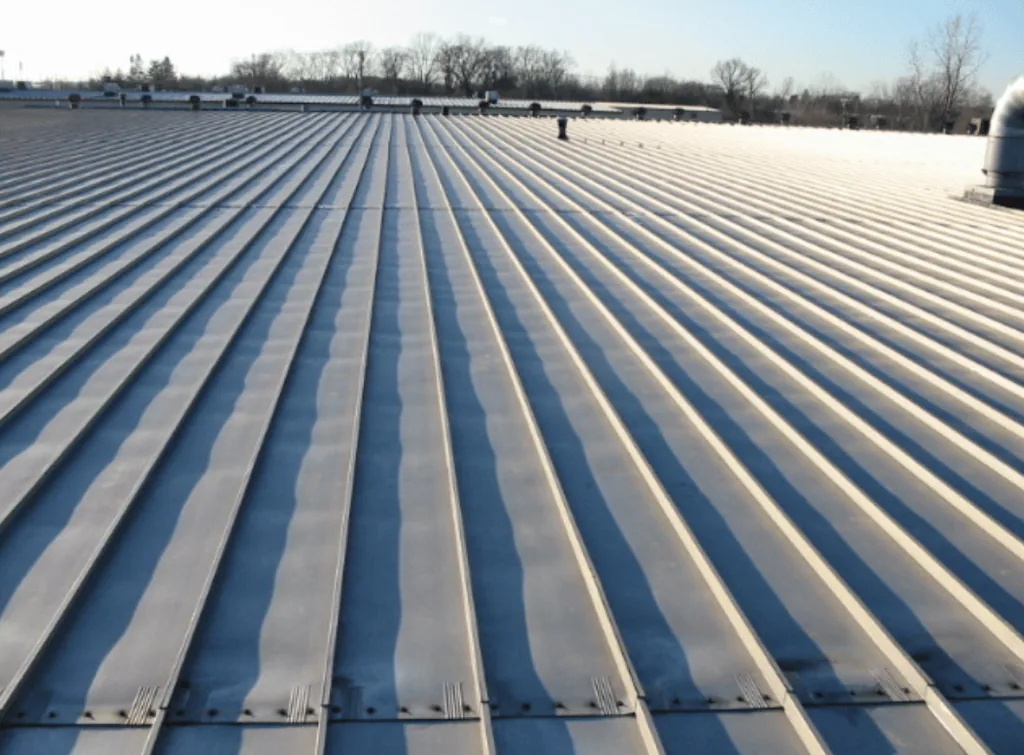
On metal roofs, loose fasteners are re-driven or replaced, and laps are sealed. A coat over loose screws shows the leak again in the next cold cycle. The full path for metal roof retrofit includes this fastener work.
On single-ply roofs, seams are probed and re-welded. On modified bitumen, blisters are cut, dried and patched. The repair list is a bid line, and it often decides whether a coating is worth the price.
Penetrations get their own treatment. Each pipe, vent and curb is cleaned, primed where needed and flashed with fabric and a heavy coat. Pitch pockets are emptied, refilled and capped. A coating that skips these details leaks at every one of them within a season.
Thickness and coverage
Dry film thickness sets the life. A thin coat wears fast. A thick one lasts. The spec names a thickness, and we measure it with a wet-film gauge during application and again after cure.
Coverage rates are quoted in gallons per hundred square feet, and they vary with the roof surface. A rough surface drinks more. A smooth one takes less. We confirm quantity on the roof before the crew starts, because running short mid-pass leaves a thin strip.
Edges, curbs and drains get extra material. These are the first places a thin coat fails. We add a second coat on those details and record the thickness in the log so the owner can see the delivered depth.
Dirt, moss and the wet season
Silicone attracts dirt, which dulls the surface and cuts reflectance. In a wet climate with algae and moss, growth also settles on the coating. A wash once or twice a year keeps it clean and the surface sheds water as intended.
Bellingham takes about 34.8 inches of rain a year, and November is the wettest month it sees. The coating handles it, but installation needs a window. We aim for late spring through early fall, with July the driest month, and avoid cold nights when dew sits on the surface.
Wind-blown debris sticks to uncured silicone. We plan the final coat for a calm day and cover or close nearby openings. Wind gusts like the 67 mph event of March 2016 would ruin a day's work.
Inspection after the first winter catches problems early. We look at laps, drains and penetrations, and we touch up thin spots while the coating is young. A coating with a yearly look lasts longer than one nobody checks, and the record of readings shows the owner the roof's trend.
Drains clog with moss and debris, and a clogged drain turns a ponding-tolerant coating into a long-term pond. We clear sumps at each visit.
Where it makes sense
Aging metal roofs, tired single-ply roofs and sound low-slope membranes are the good candidates. Roofs that pond water are the best fit, because silicone does not break down in a puddle. Big-box and retail roofs in Birchwood, near the Bellis Fair interchange, are worth a look when the membrane is sound but tired.
It beats acrylic where ponding is a factor and costs more per gallon. Over foam, the pair of spray foam and silicone is a common combination. When the old roof is past saving, a full replacement is cheaper in the end.
Waterfront roofs along Marine Drive and in Fairhaven see salt air, and silicone resists it well on a clean substrate. Fasteners and edge metal still need stainless or coated hardware. A coating over rusting plates only hides the rust until the plate lets go.
Healthcare and institutional roofs weigh the odor. Silicone has a mild smell during cure, less than solvent-based products, and the intake plan is still on the bid. Near PeaceHealth St. Joseph or Western Washington University, the intake plan also covers any air handler within reach of the work.
Commercial Roofing Questions
Can silicone go on in damp weather?
It tolerates humidity better than most, but not rain or a wet surface. A damp air day slows the cure and a wet deck blocks adhesion. We hold work on rain days and on mornings with heavy dew.
Why is a moisture scan needed before coating?
Coating seals everything under it. Wet insulation under a coat stays wet and damages the deck. A scan finds the wet sections, which come out before we coat.
Can another coating go over silicone later?
Usually only more silicone. Other coatings struggle to bond to it, and a patch test is needed before any switch. We note this on the closeout.
How thick should the coat be?
As thick as the spec and the roof condition call for, measured wet during the job and dry after. A thin coat ages early. We log readings at a grid of points.
Does silicone get slippery?
Yes, especially when wet or dirty. Granules in the final coat on traffic routes give grip. We place them along service paths to rooftop equipment.
Send the roof photos and the moisture history
Send the drawings, the roof age and any past leak records. We will price the repairs, the coat and the prep as separate lines before the bid closes.