Shopping Center and Strip Retail Roofing in Bellingham, WA
Roof repair and replacement for shopping centers and strip retail in Bellingham, WA, with shared drains, holiday blackouts and phased dry-in priced per bay.
Shopping Center and Strip Retail Roofing in Bellingham, WA
Roof repair and replacement for shopping centers and strip retail in Bellingham, WA, with shared drains, holiday blackouts and phased dry-in priced per bay.
Property Types We Roof
Shopping Center and Strip Retail Roofing in Bellingham
A strip center roof is one long surface shared by many leases. A leak over bay four is a landlord problem, a tenant problem and an insurance problem at once. On a shopping center in Bellingham, WA, the first job is to find out whose roof it is and where each lease line runs. The second job is the weather.
We price retail by the bay and by the blackout date. Send us the drawings, the lease map and the owner's target dry-in window. We will mark every drain, curb and canopy joint before the bid closes.
Overview
Shopping Center and Strip Retail Roofing
Bay by bay
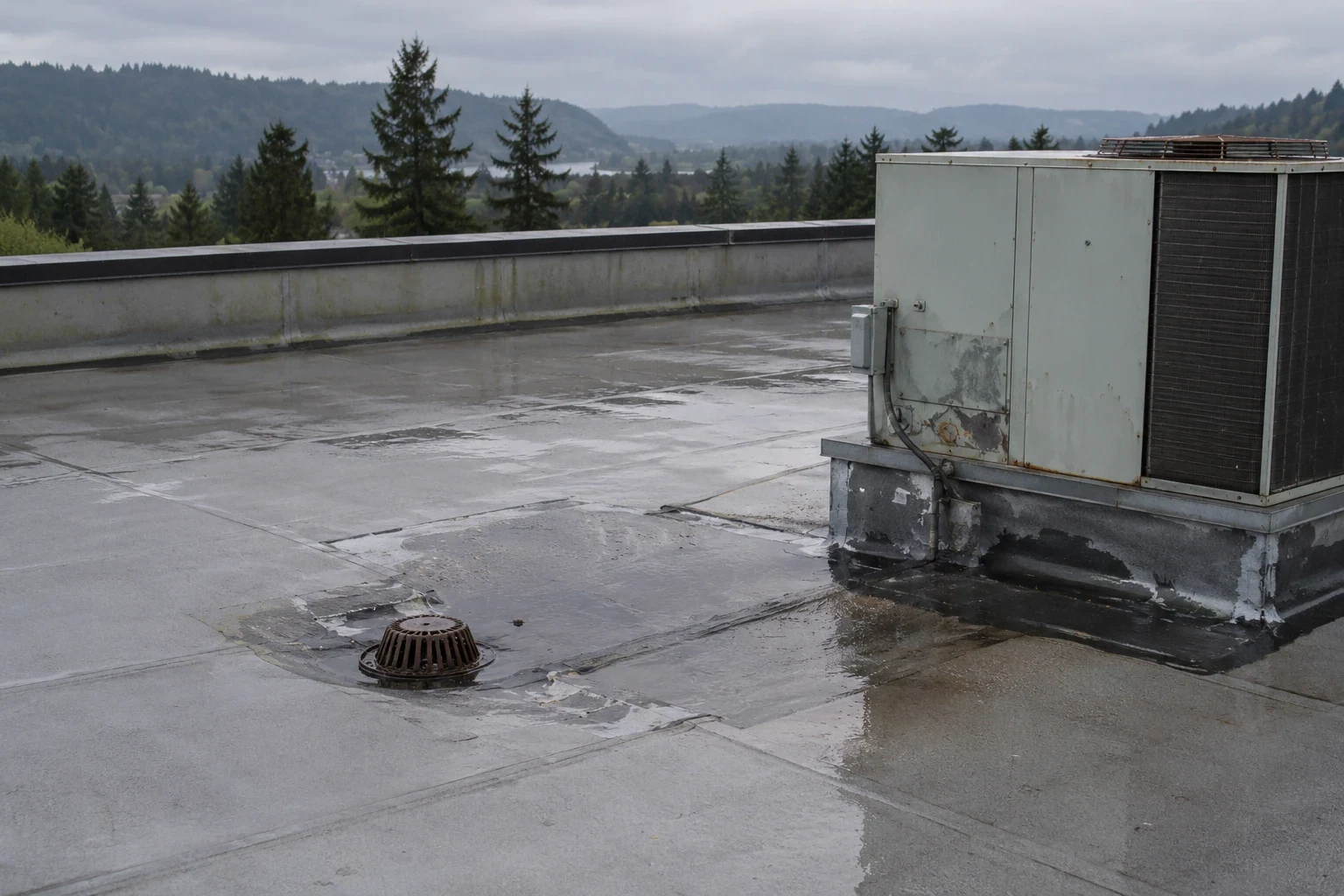
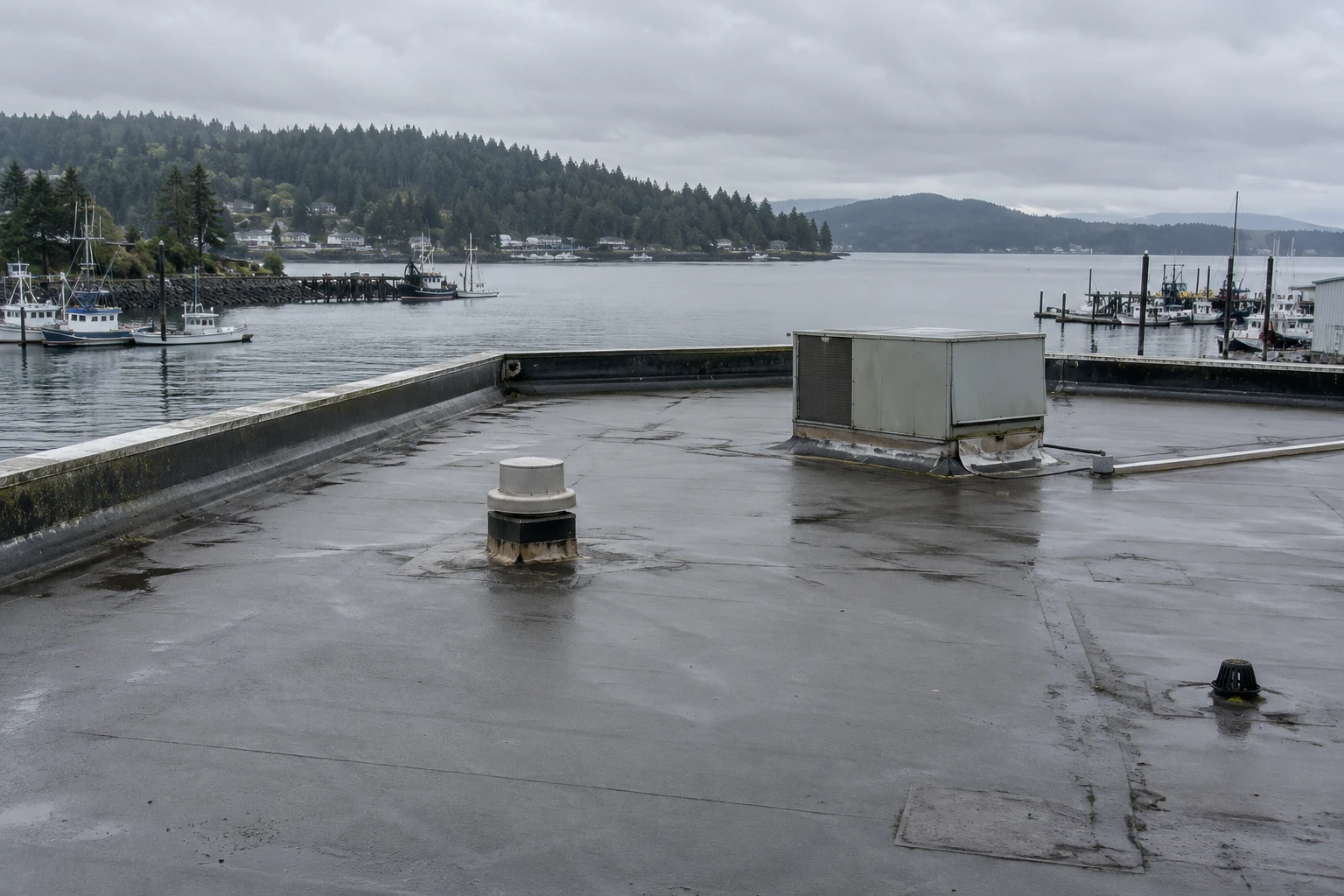
A strip roof is a row of bays under one membrane. Each bay may have its own rooftop unit, vent stack and exhaust. Restaurants add grease fans. Salons add exhaust. Offices add small split systems. The penetrations multiply.
We count them on the first walk. We rate each flashing. We flag units whose curbs sit low and sealant that has aged out. A shared roof also means shared drainage. Water from one bay can run across three. We trace each path to its drain or scupper before we call a cause.
The bid lists work by bay. The owner can see which tenant's equipment drives the cost. That helps with lease clauses on roof access and repairs. A leak repair in one bay often points to a shared drain problem, so we check the whole run.
Lease language matters here. Many leases say the landlord owns the roof and the tenant owns the units. The line between them runs through the curb. A cracked curb sealant can be either side's problem. We document the condition with photos and a date, so the parties can settle who pays without a dispute over what happened.
Big retail on the interstate
Bellis Fair is a one-story enclosed retail center of roughly 773,000 square feet. It opened in 1988 at the I-5 and SR 539 interchange and is surrounded by big-box retail. Target, Kohl's, Dick's and Ashley Furniture sit around it. A cluster like that puts big roofs next to each other, with shared drives and shared drainage.
The scale changes the work. A large flat roof has long drain runs and many penetrations. Phasing must keep stores open. Work near the Guide Meridian corridor and in Birchwood follows this pattern. The first walk, not the address, tells us what any one building carries.
Enclosed centers add skylights and clerestories above common areas. Glazing leaks are hard to trace and easy to blame on the roof field. We water-test the glazing joints and the curbs separately. The result tells the owner which trade should fix what.
What moves the price
Six items move a retail roof price. They are tenant count, penetrations, insulation, drainage, access and blackout dates. The March 15, 2024 energy code decides insulation depth, and each added inch lifts flashing at every tenant's unit. Thicker board lifts flashing heights. Tenant count sets the coordination work. Each tenant gets a notice, a safety plan and a contact. Access depends on parking. Fire lanes and delivery docks limit crane picks. A recover over a dry roof can spare the tenants a tear-off. That keeps stores quieter and cuts days. Readings decide whether it qualifies. Owners see recover and replacement priced next to each other. They sit low, take splash from the lot and face public view. A stained fascia hurts leasing. We price canopy flashing and fascia metal as separate lines so the owner can decide how far to go.
Wet season and holiday blackout
Bellingham sees roughly 34.8 inches of rain a year, and an open bay leaks onto a tenant's stock. November is the wettest month. July is the driest. About 1,866 hours of sun a year leave a deck damp for much of the wet season. Retail adds its own calendar. Holiday selling closes the roof from early November through the new year.
That leaves spring and summer. The window is not as wide as it looks. We map the weeks that remain and book them early. The worst roof goes first.
A leak that cannot wait for summer gets the wet-season method: a small area opened and closed within the day, with material covered. The extra cost sits on the bid, where the owner can set it against the loss from a closed bay.
Spring brings its own issue: pollen and debris clog drains right when the roof work starts. We clear them on day one and test them with water, because a blocked scupper turns one rain into a flooded bay.
Customers, deliveries and noise
Retail customers do not want to see a roofing job. Noise, fumes and falling debris send them elsewhere. We plan to keep the work out of sight and earshot.
Loud tasks go to early hours before stores open. Staging stays behind the building. Debris chutes keep material inside a fence. Customer walkways get covered or closed with clear signs. Deliveries are timed to avoid truck windows. Each step is a bid line, and each reflects what the roof job does to the store. Our occupied building reroofing plan sets these rules with the property manager.
Restaurants need special care. Hot work and exhaust fumes can reach dining rooms. We coordinate fan shutdowns and intake covers with the tenant.
Notice matters as much as method. Tenants get a letter a week ahead, a reminder the evening before, and a phone number that a person answers. A store that knows the schedule can plan deliveries and staff around it.
Wind and storefronts
A 67 mph gust in March 2016 stripped stucco from the Bellingham Home Depot storefront, so canopies and signs get a hard look. Easterlies from the November 2024 bomb cyclone reached Sudden Valley, and a long retail parapet is a sail in wind like that. Tall parapets, signs and large canopies all catch it. Every retail bid lists perimeter fastening separately, and the scope writes out gauge and spacing. Seams get probed and caps get pulled. Canopy flashings get a close look, since leaks there stain storefronts. The owner closes the punch walk and keeps a roof map by bay, the photo set and a penetration log. A big box store or a grocery store in the same center gets its own section of that file.
Signs and rooftop screens get a fastener check. A loose sign base in a gale becomes a claim. We tighten and log them, and we flag any that need the sign contractor.
Commercial Roofing Questions
Who pays for the roof when a tenant's unit causes a leak?
The lease decides. We document which unit and which flashing failed, with photos, so the owner and tenant can settle it.
Can stores stay open during a reroof?
Yes, with phasing, protected walkways and early-hour noise. Each bay gets a leak watch until its section is closed.
When is the best time to reroof a retail center?
Late spring to early fall, outside holiday selling. We confirm blackout dates with the owner before we book the crew.
How do you handle restaurant exhaust on a shared roof?
We coordinate fan shutdowns and intake covers with the tenant, and we choose sheet and sealant that tolerate grease.
What does the owner receive at closeout?
A roof map by bay, photos, a penetration log and a signed punch list. Future tenant work follows the file.
How are canopy leaks different from roof leaks?
They sit low and face the lot, so splash and wind-driven rain reach the flashing first. Fascia metal and sealant joints are the usual cause, and we price them separately.
Send the drawings and the lease map
Send the roof plan, the lease map and your target dry-in window. We will price every drain, curb and termination before the bid closes.