Aircraft Hangar Roofing in Bellingham, WA
Aircraft hangar roofing in Bellingham, WA: door-head flashing, clear-span decks, airfield access, wind uplift and phasing around parked aircraft.
Aircraft Hangar Roofing in Bellingham, WA
Aircraft hangar roofing in Bellingham, WA: door-head flashing, clear-span decks, airfield access, wind uplift and phasing around parked aircraft.
Property Types We Roof
Aircraft Hangar Roofing in Bellingham
A hangar door head is a long span with a track on it and a roof edge above it. Water finds the track. Wind finds the edge. A hangar roof in Bellingham, WA is a clear-span deck with no columns, large doors and tight airfield access. The bid is driven by those three things, not by the membrane.
Aircraft sit under the roof. A drip costs a lot more than a stain. We plan hangar work so the building stays dry at the end of every day, and we price the access and the equipment as separate lines.
Overview
Aircraft Hangar Roofing
Clear span, wide field
A hangar roof has an enormous field and very few penetrations. That sounds simple. It is not. Big fields flex. Insulation boards move. Fasteners pull. A deck that spans a wide room deflects a little under snow and wind, and the membrane has to follow.
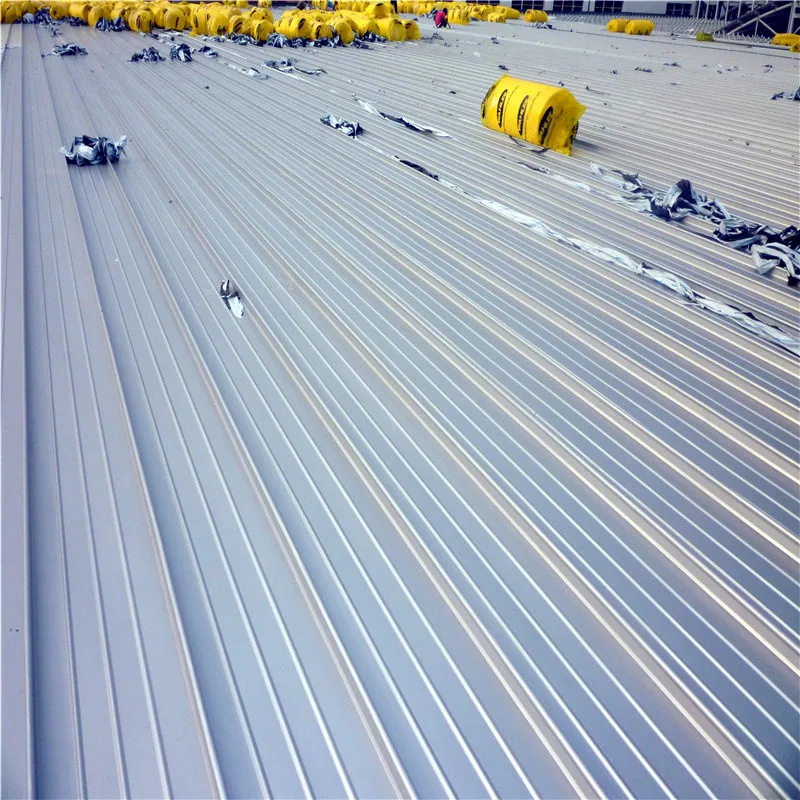
We check the deck type first. Steel deck takes fasteners well. Concrete or wood deck needs a different attachment. The attachment pattern changes with wind zone and span, and a standing seam metal deck system carries its own clip schedule. Edge and corner zones get closer spacing than the field. We count fasteners from the drawings and price the pattern as its own line.
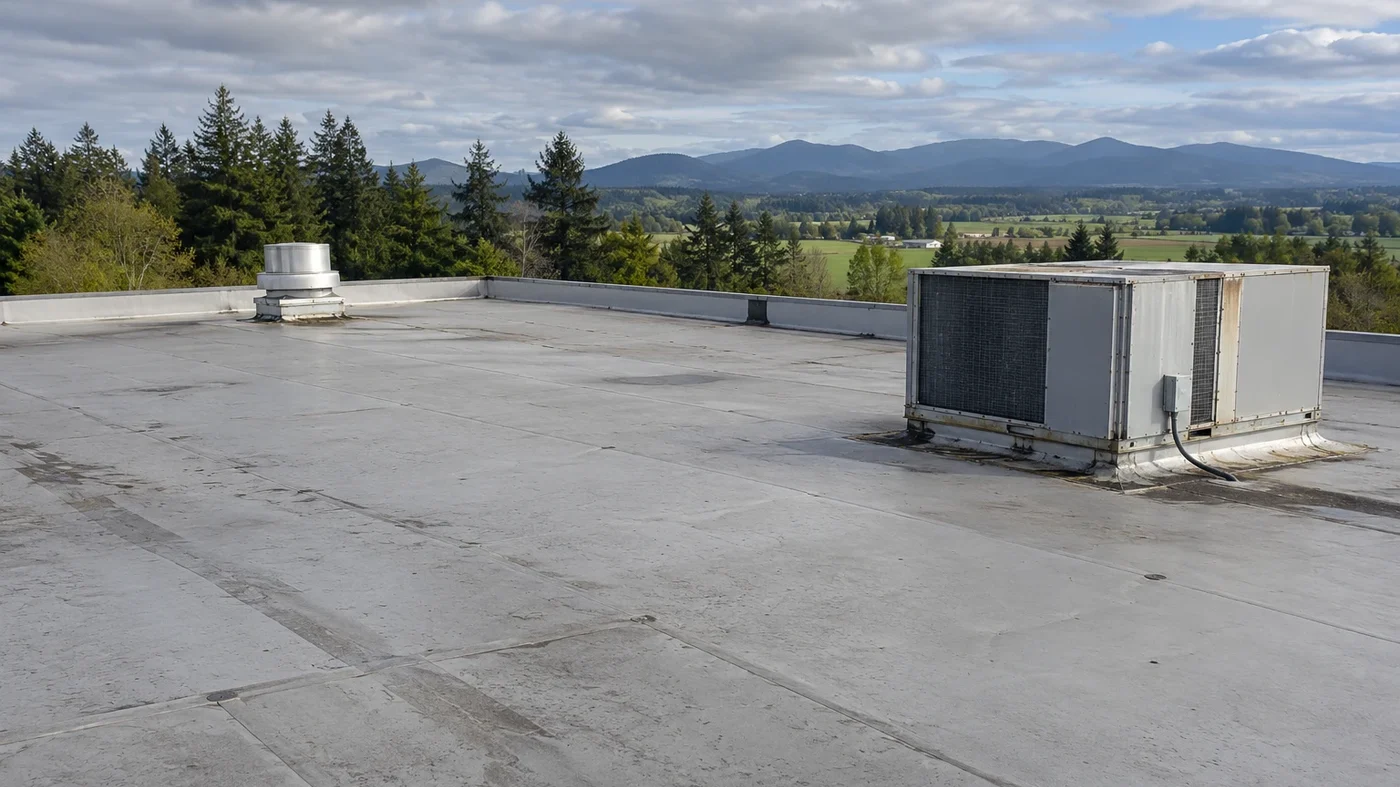
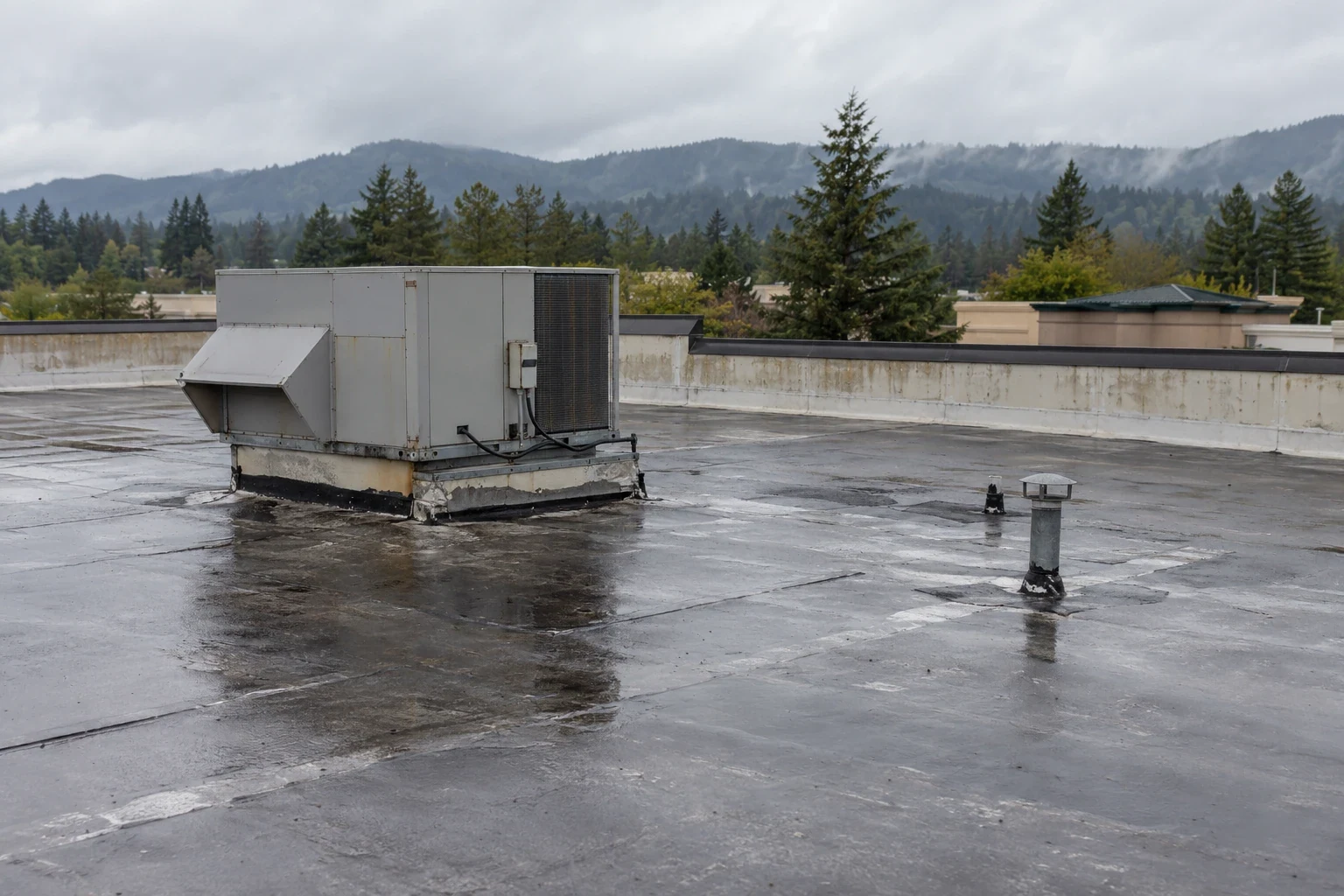
A large field also needs drainage. Slope is often slight. Ponding near a drain bowl ages the sheet. We map drain locations and look for low spots after rain. A tapered insulation line may be worth its cost on a roof this big. That is a bid alternate the owner can accept or drop.
The same logic applies to a big warehouse roof. The difference is the clear span. A hangar has no interior columns to share the load, so a deflection under snow shows up as a ponding line across the whole bay.
The door head costs the most
The door opening is the weak point. Tracks, headers, seals and flashing all sit within a few feet. A door header that sags lets water run into the track. A seal that dries out lets wind drive rain into the hangar floor.
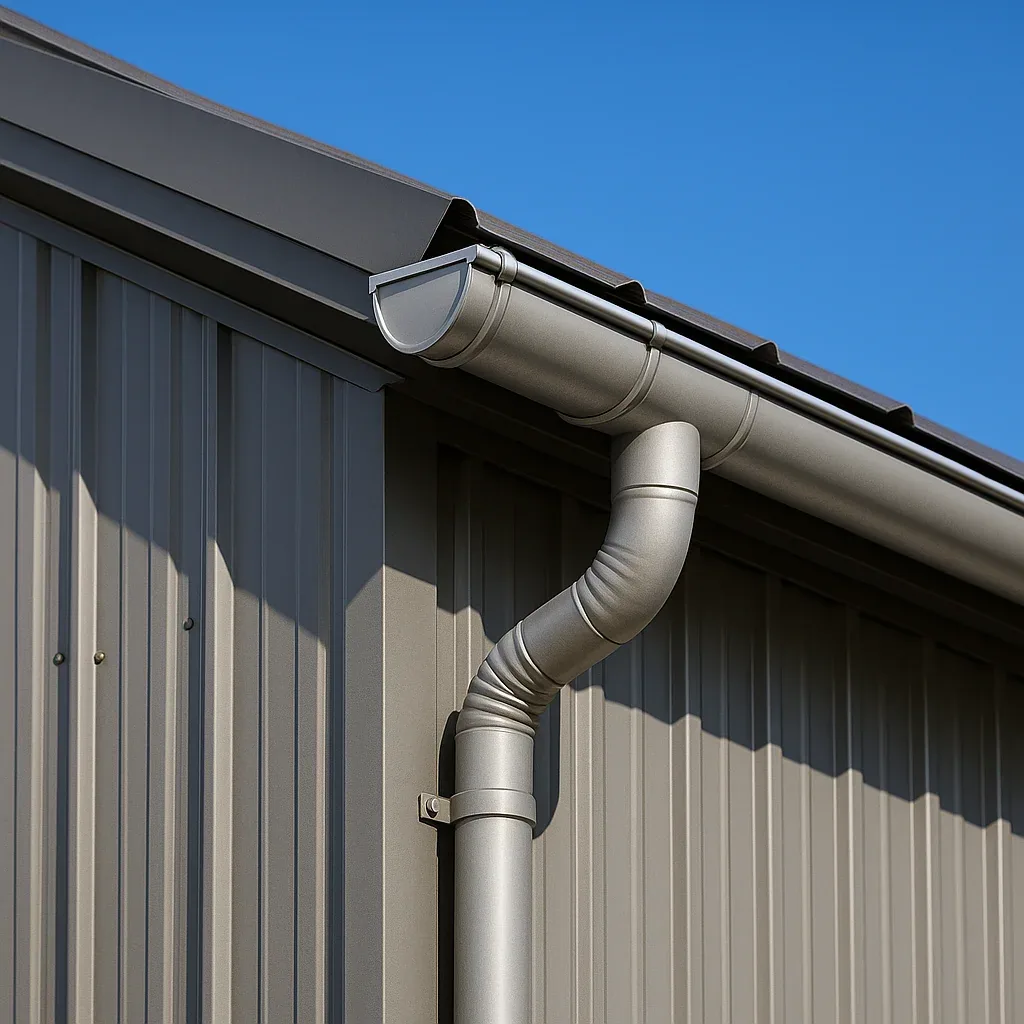
We look at the roof edge above each door, the counterflashing and the gutter or scupper beside it. A coping cap and gutter must be sized for the whole width of roof draining toward the door. A scupper at the door head can throw water on the apron below. We detail it so it clears the door zone.
Moving aircraft means moving doors. We never start door-head work with aircraft in line. The hangar manager sets the days and we keep out of the way on the others.
Drainage at the door deserves its own line. Water that runs off a wide roof section and onto the apron can freeze in a cold snap. Bellingham averages roughly 10 inches of snow, mostly December through February. A scupper and drain layout that moves water away from the door zone keeps the apron clear.
Airfield access is a bid line
The Port of Bellingham owns Bellingham International Airport, which sits roughly three miles northwest of the city on 2,190 acres. Hangars sit inside that fence or beside it. Gates, escorts and badge checks slow material trucks. Crane height and boom position may need approval. A lift near the runway line needs a plan.
We ask three questions before the bid. Who controls the gate? Who approves the crane? When is the apron closed for aircraft movement? The answers decide how many days the job needs. The hours go on the bid so the owner sees what access costs. For work in the Airport Industrial area, the Port's rules apply on top of the usual job rules, and we confirm them early.
Owners and tenants in Irongate and Meridian, close to the airport on the north and west side, can share a visit calendar with airfield work. Crane setups, fuel deliveries and apron closures overlap. A shared calendar saves a day of mobilization.
Wind uplift is the design driver
A hangar is a big flat or low-slope surface with a large open door. Wind can pressurize the interior when a door fails, and that adds uplift from below. Gusts hit 67 mph in March 2016. The November 2024 bomb cyclone brought easterly winds that damaged at least 16 homes in Sudden Valley and kept fire crews on 22 storm incidents.
Perimeter fastening goes on every hangar bid. We also check the door seals and the track flashing, because an open door during a storm loads the roof from inside. The owner should review the door operation procedure after the roof is done. That is a facility step, not a roof step, but it affects the roof.
Door skins and seals are the owner's to maintain, but we photograph them when we are on the roof. A torn seal found in October costs less than a ripped membrane found in November. The photos also help the owner argue a claim if a storm does damage the building.
Fire protection runs through the roof
Many hangars carry suppression piping, detection heads or foam systems at the deck. Roof work near them needs care. We locate the pipes, the hangers and any penetrations before any fastener goes in. A screw through a pipe is an expensive mistake.
Torch work is a no-go in a hangar full of aircraft and fuel vapor. We use mechanically attached or adhered systems, and the hot work permit rule stays strict. The cover board and insulation matter for fire ratings, and the insulation and cover board choice follows the building's rating. The inspector may ask for the listing, so it goes in the closeout binder.
Aircraft stay under the roof
A hangar cannot shut for a month. Planes are inside, work is underway and owners pay for the space. We phase the roof by bay. A section opens, gets torn off, gets dried in and closes by day's end. Aircraft move out of the bay under work when the hangar allows it, or get covered and protected when they cannot.
Bellingham's low sunshine, about 1,866 hours a year, and long wet season shrink the dry window. We aim to finish terminations before October. A tarp can cover an open bay, but it is not a plan. The bid carries standby crew and tarp materials for the weather days.
Inspect from the air first
A hangar roof is large and hard to walk. A drone inspection covers it fast and flags ponding, lifted edges and failed seams before a crew goes up. We follow with probe checks at the suspect spots.
Send the drawings, the roof spec and the access rules. We will price every termination, door-head detail and metal line before the bid closes. Military hangars follow a similar path with stricter rules, as in military hangar and maintenance facility roofing.
Commercial Roofing Questions
Why does a hangar roof need so many fasteners at the edge?
Wind pressure peaks at corners and perimeter, and an open door adds pressure from inside. Spacing tightens there.
Can the work happen with aircraft inside?
Yes, in bays. Planes move or get covered, and each bay closes at day's end.
How does airfield access change the schedule?
Gate escorts, crane approvals and apron closures set when trucks and lifts can move. Those hours go on the bid.
What keeps pipes safe during fastening?
We locate suppression piping and hangers from the drawings and a deck survey before any fastener pattern is laid out.
Is tapered insulation worth it on a hangar?
On a flat deck with slight slope, yes. It moves water to the drains, and the line prices as an alternate.
Send the drawings and the access rules
Send the roof plan, the spec and the airfield access rules. We will price every termination, door-head detail and metal line before the bid closes, so the owner decides what stays in.