Johns Manville Roofing Systems in Bellingham, WA
Installing and repairing Johns Manville commercial roof systems in Bellingham, WA: insulation, single-ply and bituminous assemblies under the 2021 energy code.
Johns Manville Roofing Systems in Bellingham, WA
Installing and repairing Johns Manville commercial roof systems in Bellingham, WA: insulation, single-ply and bituminous assemblies under the 2021 energy code.
Roofing Manufacturers
Johns Manville Roofing Systems in Bellingham
Insulation thickness is the first number on a Johns Manville assembly, and it moves every other number. A thicker board lifts the curb flashing, the wall termination and the drain body. In Bellingham, WA, where Washington's 2021 energy code has applied statewide since March 15, 2024, a replacement roof carries more insulation than the one it replaces. We work those heights out before the first order goes in.
Johns Manville is a manufacturer with a broad commercial range: insulation boards, single-ply membranes in the TPO, PVC and EPDM families, and bituminous systems. We install, repair and maintain roofs of those types. The common thread is the assembly, where board and membrane work as a pair.
Overview
Johns Manville Roofing Systems
The insulation layer
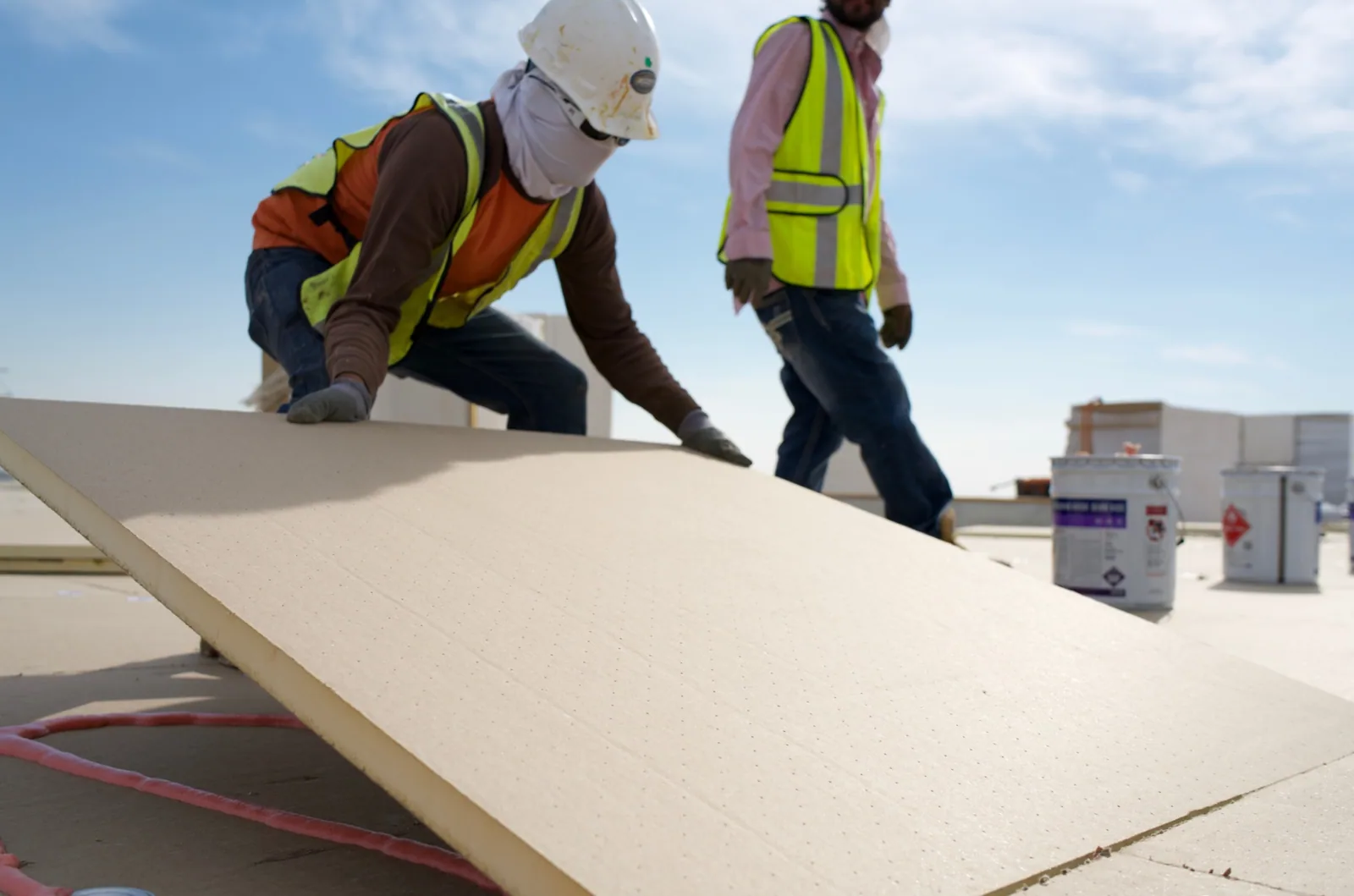
Most low-slope commercial assemblies use rigid polyisocyanurate boards. They are light, stiff and carry a high thermal value per inch. Boards go down in layers with staggered joints, so no seam lines up with the one below.
Tapered boards build slope into a flat roof. They push water toward drains and scuppers and remove the low spots where ponding starts. A tapered plan is drawn board by board, and the order list follows the drawing.
Thermal performance of polyiso can drop in cold, damp conditions, and a wet board is worthless. We stage insulation under cover, install only what can be roofed over the same day and keep tarps on stacks. Wet board goes in the dumpster, not on the roof.
Layer count follows total thickness. Two thinner layers with offset joints perform better than one thick layer, because the joints do not line up and leak heat. They also handle better on the roof, since thick boards are awkward in wind. The layer plan goes on the install drawing, with the fastener length written beside it.
Edges of boards need care. Cut edges should be tight to walls and curbs, and gaps are filled with foam. A gap at a parapet becomes a thermal bridge, and in a wet season it also becomes a path for moisture to enter.
Code and the extra inch
The commercial energy provisions in Chapter 51-11C WAC set insulation levels for roof assemblies, and they came into force statewide on March 15, 2024, alongside the 2021 building and existing-building codes. When a roof is replaced, the new assembly generally meets the current levels.
The design team decides what applies. Our role is to carry the result into the build: board layers, fastener lengths, termination heights. Longer fasteners cost more, and extra layers add labor. These items go on the bid as their own lines.
Where an existing roof is recovered instead of replaced, the code treatment differs, and the design team confirms it. A recover and a replacement each take a different insulation and cover board path.
Air sealing matters as much as thickness. Joints between boards and at walls are sealed so warm interior air does not reach the cold side of the assembly in winter. Condensation inside a roof is a slow leak, and Bellingham's damp climate gives it every chance. The detail is drawn at the wall, the curb and the penetration.
Membranes on top
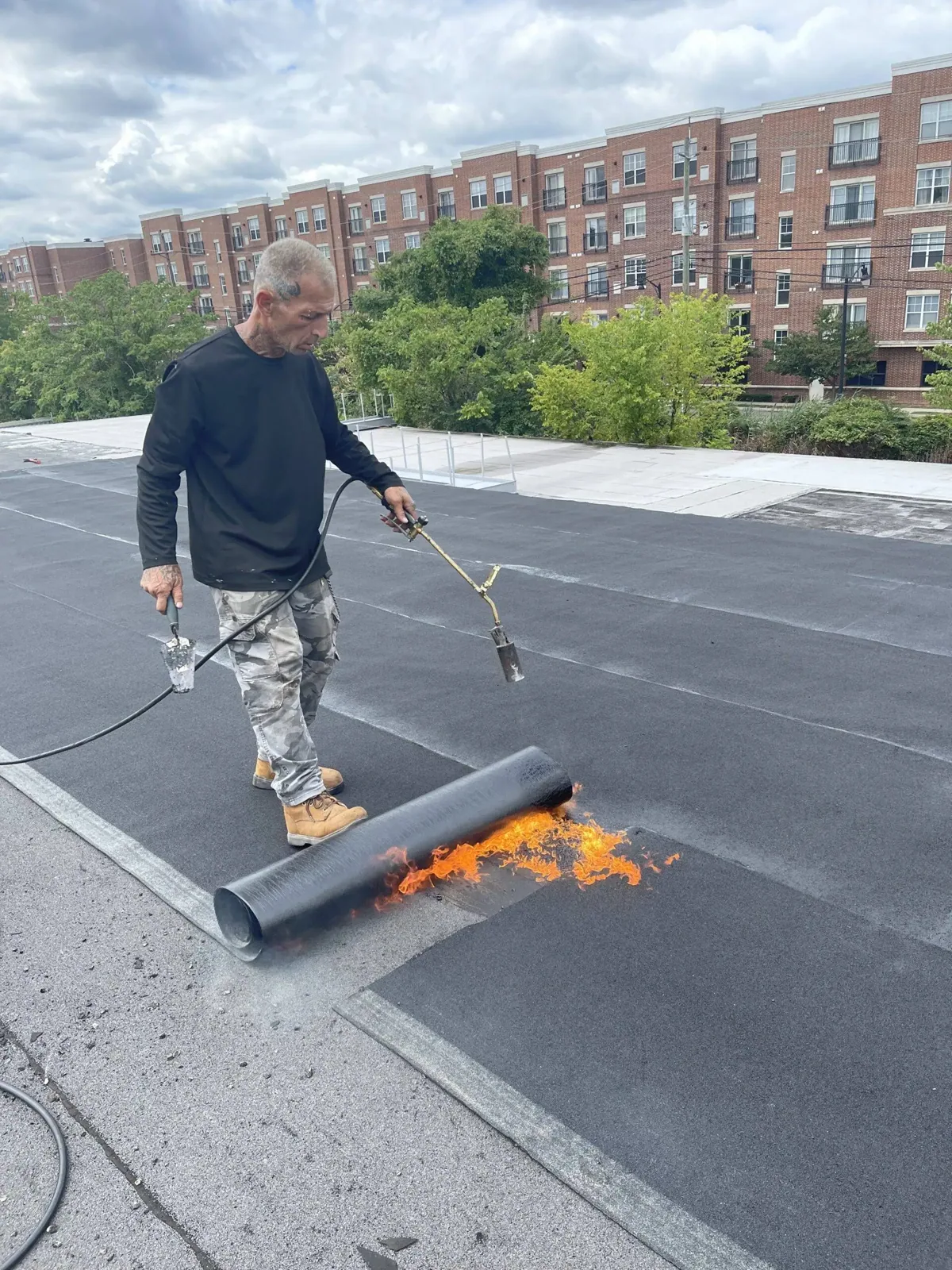
Above the insulation sit the membrane choices. TPO welds with hot air and suits broad roofs. PVC resists chemicals and grease. EPDM is a flexible rubber sheet with taped or glued seams. Modified bitumen adds layers and takes foot traffic well.
A manufacturer with all of these under one roof can match the membrane to the building without changing the insulation partner. A hospital roof, a school roof and a warehouse roof may each get a different top layer over the same type of board.
Each membrane has its own install craft and weather window. We plan the crew and the dry days for the choice, and we tell the general contractor which mornings are real install mornings.
Sister lines from Carlisle SynTec overlap in single-ply families, so the choice of maker often rests on the spec, the local supply and the warranty position. The field craft is the same: a clean, dry deck, probed seams and tested flashing.
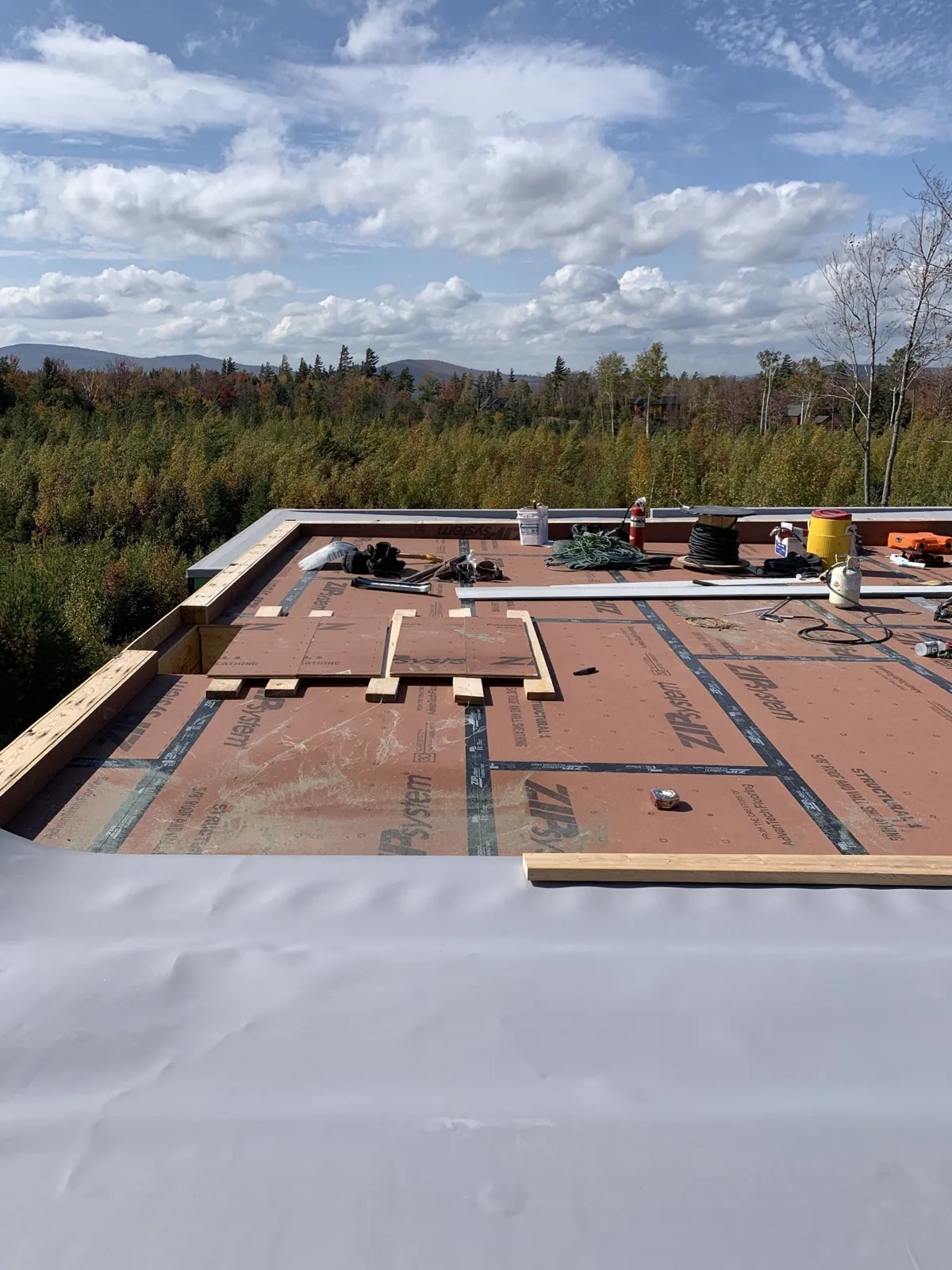
Cover boards deserve a word. A thin board between insulation and membrane protects the foam from foot traffic, fasteners and hail, and gives adhesives a flat surface. On busy roofs it is cheap protection. We list it as its own line so the owner sees what it buys.
Fastening and uplift
Board and membrane are held down by fasteners, adhesive or both. Uplift is highest at corners and edges, so fastening is densest there. The spec names the pattern for each zone.
Roof edges here have been tested: 67 mph in March 2016, and easterly winds through Sudden Valley in the November 2024 bomb cyclone. We follow the fastener schedule and check edge metal for tight spacing.
Fastener length must match the stack. A short fastener bites little into the deck, and a long one can poke through. We verify lengths against the final board thickness and pull a few after setting to check the grip.
Edge metal ties it together. Coping and drip edge hold the membrane at the perimeter, and their fasteners must match the wind zone. A loose cap lets a gust get under the sheet. We test the edge by hand and pull-check selected fasteners.
Keeping an installed system sound
Repairs on an existing assembly begin with identification. We confirm the membrane type and the board below with a core or a sample. A repair done without knowing the stack can seal water into wet insulation.
Moisture scans guide the work. Wet board is cut out and replaced with matching thickness, and the membrane is patched over it. Scattered wet spots can be repaired. Widespread saturation points toward replacement, and the condition report shows the boundary.
Maintenance keeps drains clear, seams sound and flashing tight. Findings are logged beside the warranty record. Compared with another broad-line maker such as Holcim Elevate, the approach in the field is the same: identify, scan, repair, log.
Insulation can be tested without tearing off the roof. An infrared scan on a clear evening shows warm, wet zones, and a few cores confirm the finding. For tall buildings, a drone speeds the survey, and the data feeds a repair map the crew can follow.
Where the assemblies appear
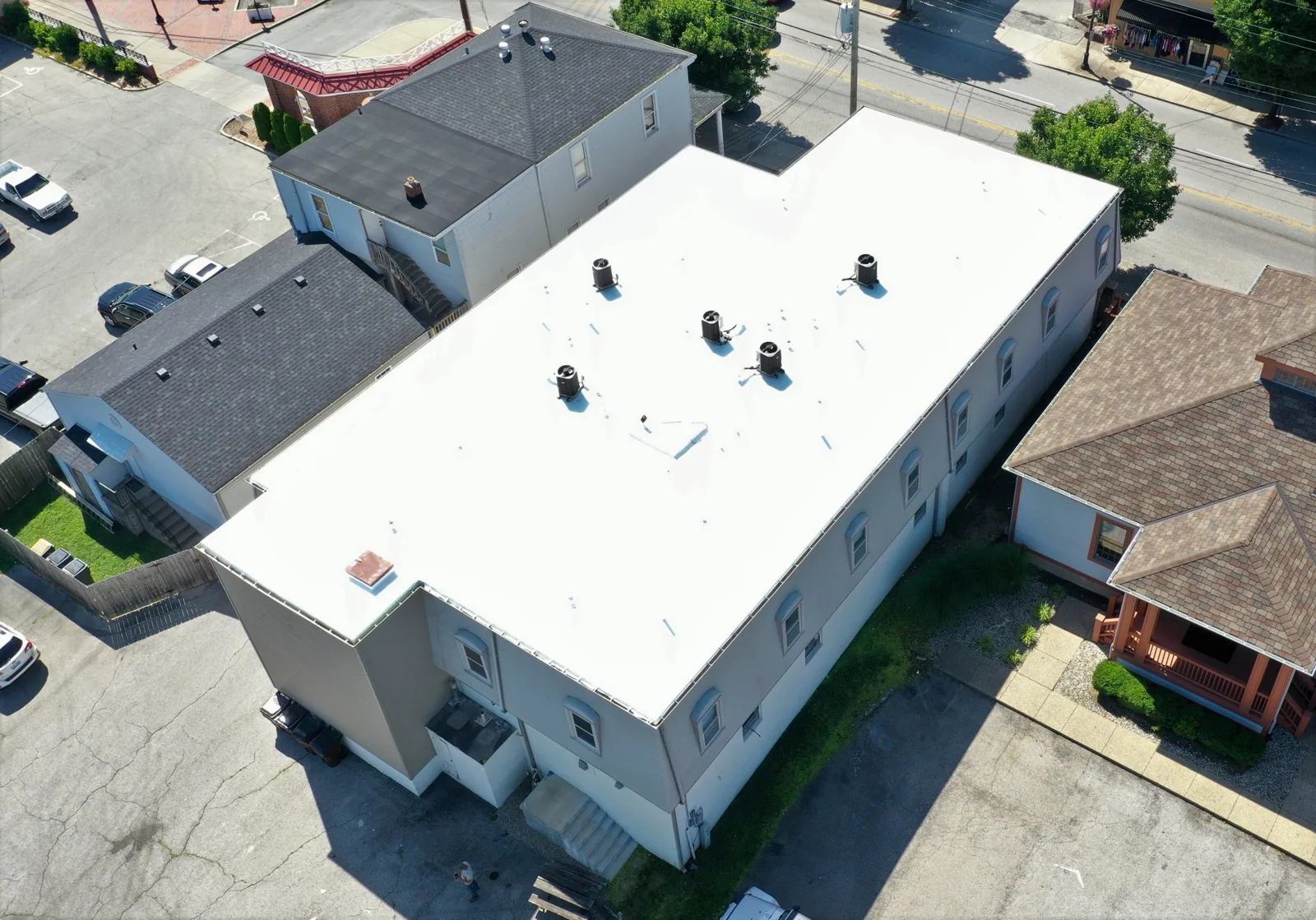
Large commercial roofs are the typical home for insulated assemblies. Retail around Bellis Fair, institutional buildings at Western Washington University and Bellingham Technical College, and industrial buildings in the Port's Marine Drive and Airport parks all use them.
Cold storage and food processing buildings gain the most from extra insulation. Those roofs work against refrigeration load, and heat loss costs money every day. Roofs in Ferndale's industrial zone and along I-5 can fit that profile when the interior is cooled.
For owners with many roofs, a multi-site program sets one standard for insulation and membrane details across the portfolio.
Commercial Roofing Questions
Does the energy code force a thicker roof on every replacement?
It sets the insulation levels the design team applies to a replacement. The result is often thicker than the old roof. We carry the extra height into the flashing and termination plan.
Can I put new membrane over old insulation?
Only if a scan shows it is dry and sound. Wet or crushed board comes out. The design team confirms how the code treats the insulation left in place.
What is tapered insulation for?
To build slope into a flat roof, moving water to drains and removing ponding. It is drawn board by board and ordered from the plan.
How do you protect insulation on a rainy day?
We stage it under tarps and install only what we can cover the same day. Wet board is rejected and replaced.
Which membrane goes on top?
The building decides. TPO suits broad dry roofs, PVC suits grease and chemicals, EPDM suits tight budgets and cold, modified bitumen suits traffic. We price the options when the spec allows.
Send the spec and the insulation schedule
Send the drawings, the named assembly and the target dry-in window. We will price the board, the membrane and the extra flashing height as separate lines before the bid closes.