Roof Warranty Management in Bellingham, WA
Roof warranty management in Bellingham, WA: reading the terms, logging inspections, routing repairs correctly and keeping a manufacturer warranty intact.
Roof Warranty Management in Bellingham, WA
Roof warranty management in Bellingham, WA: reading the terms, logging inspections, routing repairs correctly and keeping a manufacturer warranty intact.
Roofing Capabilities
Roof Warranty Management in Bellingham
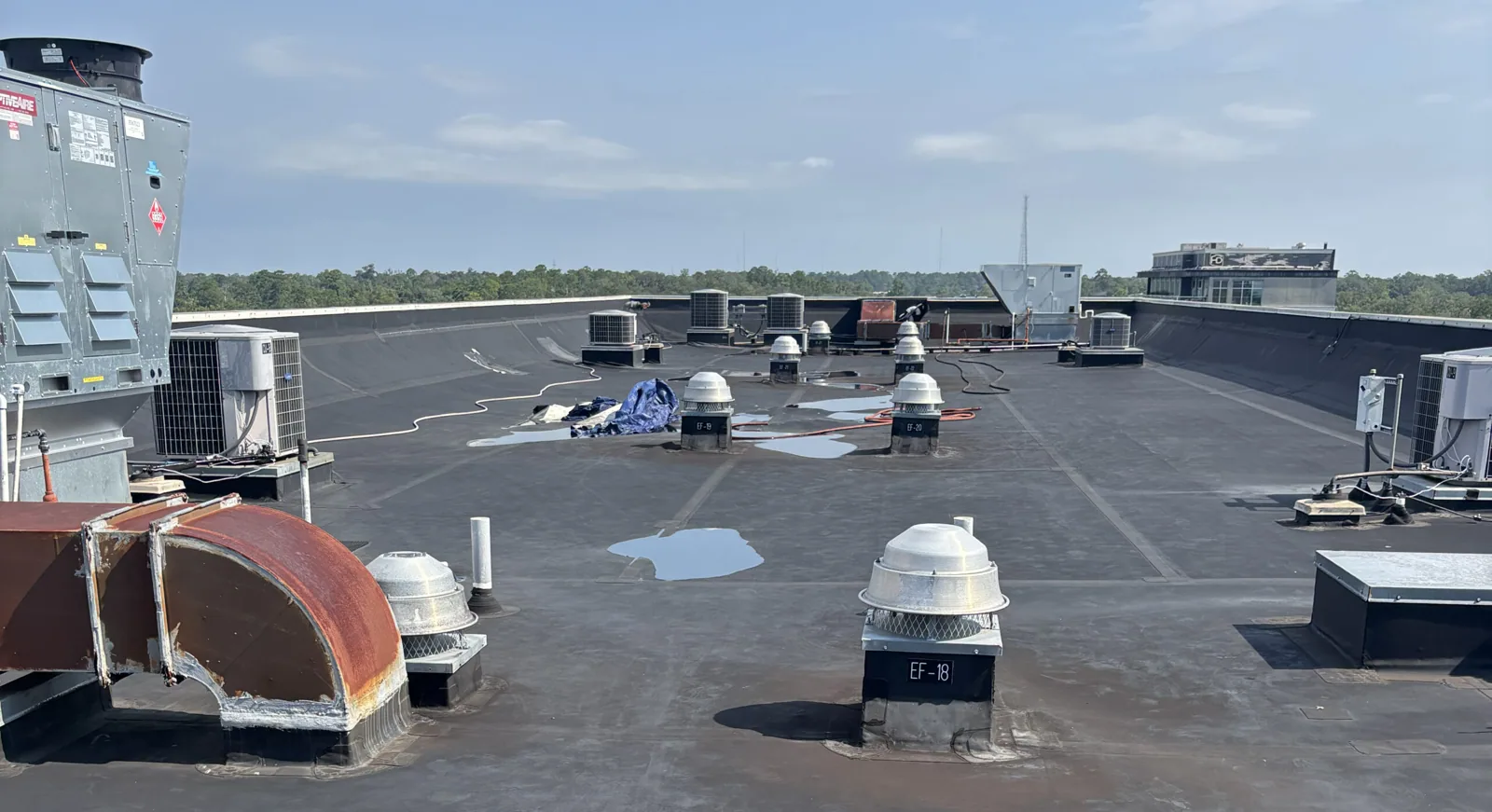
One unapproved rooftop unit swap can void a warranty that took months to earn. A mechanical contractor sets a curb, drills three screws and leaves. Nobody tells the manufacturer, the warranty file records nothing and the next leak lands on the owner. In Bellingham, WA, where rooftop work happens year-round and the roof stays wet, that is how coverage slips away.
Warranty management is paperwork tied to physical work. We read the terms, track the conditions, log the inspections and route every repair through the right channel. The goal is simple: when a claim comes, the file shows the roof was kept the way the document requires.
Overview
Roof Warranty Management
Reading the terms
Commercial roof warranties come in more than one form. Some cover materials only. Others cover materials and labor. Some cover the membrane alone, and others cover the whole assembly including insulation and flashing. The coverage language decides what a claim can recover.
Exclusions matter as much as coverage. Many warranties exclude damage from storms above a stated wind speed, from foot traffic, from ponding water or from chemical exposure. Others exclude damage that follows unapproved penetrations or repairs.
We read the full document, not the cover sheet. We record the dates, the term, the transfer rules and every condition the owner must meet. That summary goes into the building file so the facility team can see it at a glance.
Term length alone says little. A long term with a thin coverage scope is worth less than a shorter one with labor included. We lay the two side by side in the summary so the owner sees what each building actually has.
Wind provisions get a close read. Some documents cap coverage at a design wind speed, and a roof near Sudden Valley or the Marine Drive waterfront sees storms that can approach it. The summary records the limit so the owner knows when a storm calls for a walk.
Conditions that keep it valid
Most warranties ask for the same things. Keep the roof maintained. Report leaks promptly. Use approved methods for repairs. Notify the manufacturer before work that alters the roof. Keep records of all of it.
The maintenance clause is where owners trip. A roof with clogged drains, moss on the membrane or open seams can be judged neglected. Bellingham's low sunshine, about 1,866 hours a year, keeps moss active, and a maintenance program that cleans drains and clears growth supports the file.
Penetration work needs notice. Any new curb, pipe or support is a roof alteration. We flag these in advance and route the flashing to match the manufacturer's detail. The curb and support work goes in the log with date, location and photos.
Access control is a condition in practice. Roof hatches should be locked and keys tracked, because uncontrolled traffic from other trades is the quickest route to a punctured membrane. A sign-in sheet at the hatch costs nothing and shows who was on the roof. Fairhaven and downtown buildings with several tenants benefit most, since more hands means more risk.
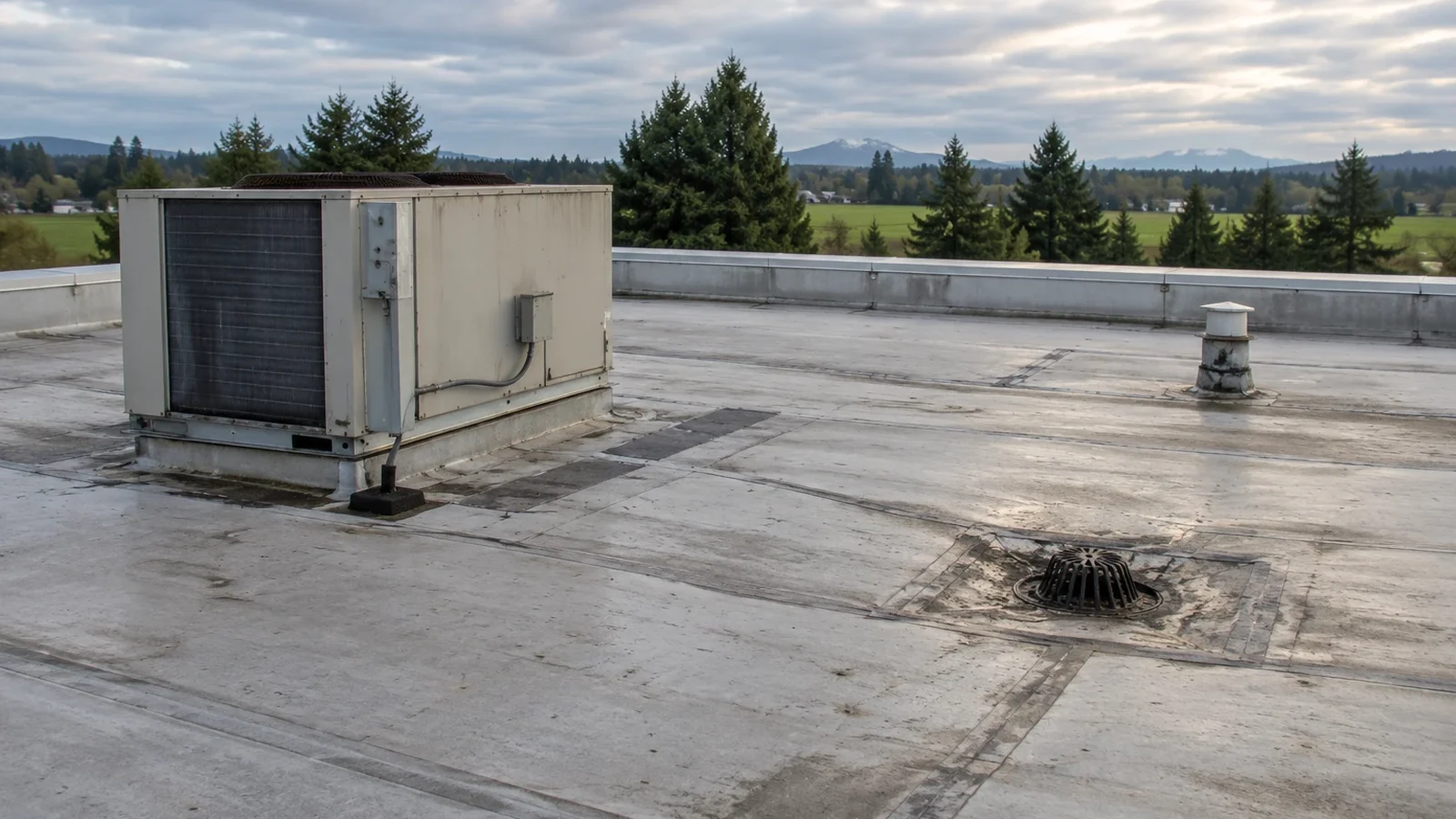
Water management is another. Drains must stay clear and ponding must not persist beyond the allowed period. A roof that holds water for days after rain can fall outside coverage, and Bellingham's long wet season makes that a live concern from November on.
Inspections and the log
A warranty file is only as good as its records. We inspect on a set cycle and after storms, and each visit adds a dated entry with photos. The log shows who was on the roof, what they did and what they found.
Storm events get a special check. Bellingham took 67 mph in March 2016, and a bomb cyclone drove easterlies into Sudden Valley in November 2024. Some warranties set wind limits, and an event near the limit calls for a prompt walk and a written note.
The log also helps with a claim. If a seam fails, the owner can show it was checked recently and found sound, or that the defect was reported when first seen. Both support coverage. Our condition reports supply the evidence in a consistent format.
Photos follow a pattern. Each entry shows the same set of locations: drains, seams at the highest-traffic path, flashing at each wall and the edge metal on the windward side. A pattern lets a reader compare one visit to the next and see change, which is what an adjuster or manufacturer rep looks for.
Routing repairs the right way
Not every repair belongs to the owner. A defect in the first years may be the original installer's responsibility. A material failure may be the manufacturer's. Handing it to a different contractor can complicate that path.
We identify who owns each failure before touching it. If the warranty holder must be notified, we draft the notice with photos and location. If an emergency stop is needed, we do the minimum to protect the building, document it and report it.
Repairs use compatible materials and methods. Flashing details, adhesives and fasteners follow what the manufacturer allows for that system. A repair done with the wrong sealant can create a dispute later. For single-ply systems like TPO, the weld method and cleaning steps matter, and we record them.
Emergency leaks are the hard case. When water is coming in at night, the first job is to stop it, and the second is to protect the file. We use temporary measures that can be removed or incorporated, photograph everything and send notice in the morning. A temporary patch does not harm coverage when it is documented and compatible.
Sale, transfer and turnover
When a property sells, the warranty may transfer, but usually only with notice and sometimes a fee. A buyer in downtown Bellingham or the Port industrial parks should see the file before closing. Our due diligence surveys include a warranty review.
Transfer deadlines are short. Missing one can end coverage. We list the deadline in the file and flag it when a sale is in motion.
When a property manager changes, the file moves with the building. The new manager gets the terms, the log, the contact list and the next inspection date, so nothing relies on memory.
Large owners with several sites, such as those along the I-5 and Guide Meridian corridors, benefit from one dashboard of expiration dates. A cluster of warranties ending in the same year points to a replacement cluster, and the capital plan uses the dates to stagger the work.
What the file cannot do
A warranty is not insurance. It covers specific defects within a term, and many failures fall outside it, such as storm damage or ponding. Those fall to insurance, and our claim documentation work picks up where the warranty stops.
Warranty management does not extend coverage. It protects the coverage already in place. If a roof is out of warranty, the file shifts to the repair record and the capital plan.
For owners with a mix of ages and systems, the file shows which buildings are covered and which are not. That view helps set repair priorities and the next replacement.
Commercial Roofing Questions
What voids a warranty most often?
Unapproved penetrations, repairs by the wrong method and missed maintenance. A rooftop unit swap with no notice is a typical case. We catch these by asking the mechanical trade to tell us before they start.
Do you work on roofs under a manufacturer warranty?
Yes, on repairs and maintenance, following the system's methods and the notice rules. We do not alter the warranty, and we log every visit so the file stays complete.
How soon must a leak be reported?
As soon as it is seen. Many warranties set a short window after discovery. We record the date and photos on the same day and send the notice that week.
Can an old warranty be reinstated?
Usually not once it has lapsed. Some manufacturers allow a review after an inspection, but that is their decision. We prepare the inspection record that supports any request.
Who holds the warranty file?
The owner does. We keep a copy and add entries as work happens. If the building changes hands, the file goes with it.
Send the warranty documents and the roof list
Send the warranty paperwork, the install dates and any repair history. We will build the file, flag the conditions and set the inspection cycle.