Carlisle SynTec Roofing Systems in Bellingham, WA
Installing and repairing Carlisle SynTec single-ply roof systems in Bellingham, WA: EPDM, TPO and PVC sheets, accessories and wet-season details.
Carlisle SynTec Roofing Systems in Bellingham, WA
Installing and repairing Carlisle SynTec single-ply roof systems in Bellingham, WA: EPDM, TPO and PVC sheets, accessories and wet-season details.
Roofing Manufacturers
Carlisle SynTec Roofing Systems in Bellingham
The accessories bag decides the schedule more often than the membrane roll does. Pre-molded corners, pipe boots, seam tape, termination bars and sealants all have to arrive with the sheet, or the flashing day waits. On a Carlisle SynTec single-ply job in Bellingham, WA, we order the bag with the roll and check it against the penetration count before the crew mobilizes.
Carlisle SynTec is a manufacturer of single-ply roofing systems. Its commercial offering is built on membranes in the EPDM, TPO and PVC families, along with insulation, accessories and fastening hardware. We install, repair and maintain roofs of those types, and we price the details with as much care as the field sheet.
Overview
Carlisle SynTec Roofing Systems
Three single-ply families
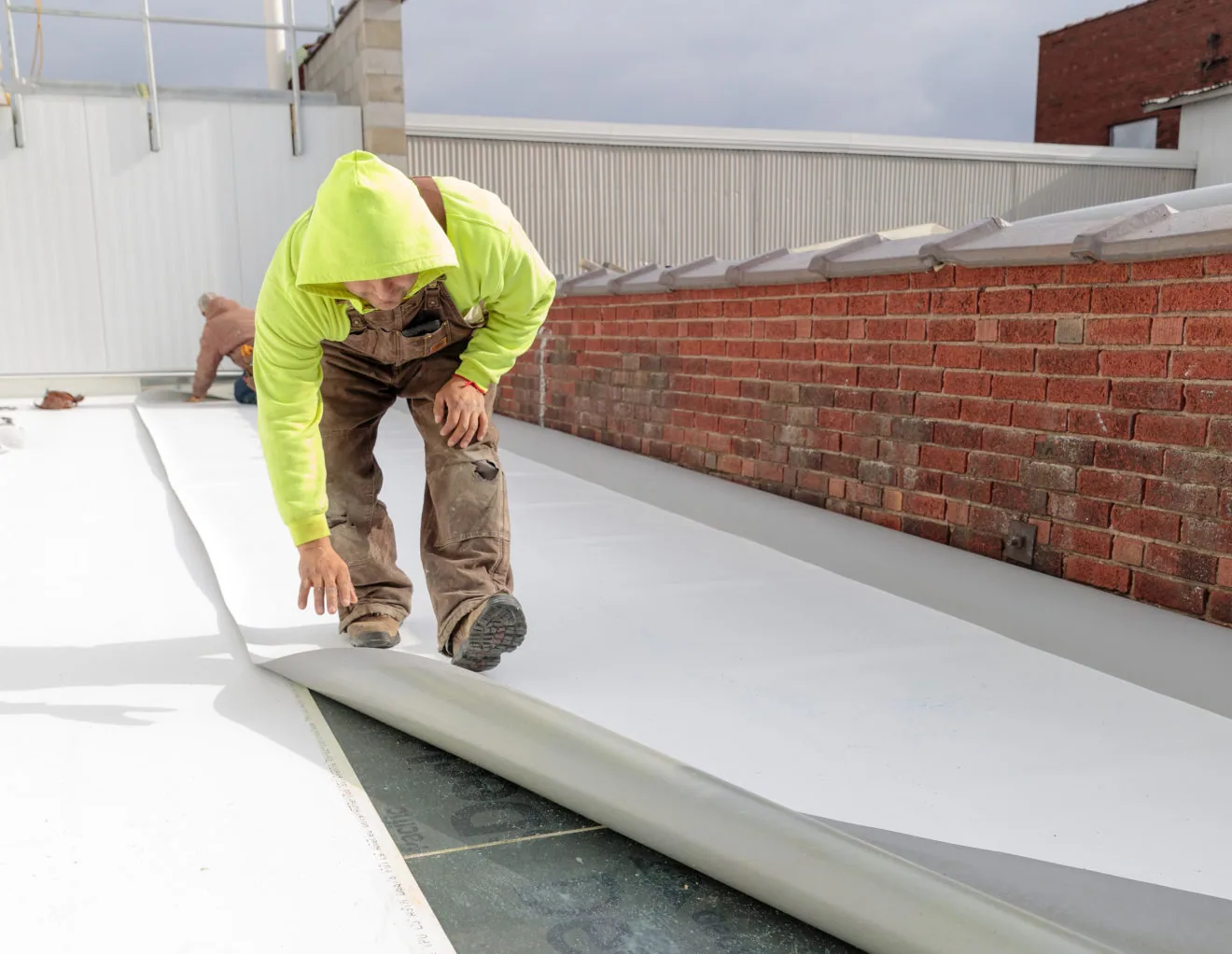
EPDM is a vulcanized rubber sheet, black, flexible in cold and seamed with tape or adhesive. TPO is a thermoplastic that welds with hot air and comes in white or light colors. PVC is a welded thermoplastic with strong chemical and grease resistance. Each family suits a different building.
The pick follows exposure. A school roof with a tight budget often fits EPDM. A broad retail or warehouse roof often fits TPO. A restaurant, a lab or a food plant fits PVC. A manufacturer that offers all three lets the design team choose by building, not by availability.
Each family has its own repair method. Rubber gets primed and taped. Thermoplastics get cleaned and welded. We carry the tools and the materials for each, and we identify the sheet before touching it.
Thickness varies inside each family. Thinner sheets cost less and suit light-duty roofs. Thicker sheets stand up to foot traffic, hail and trade visits, and on a roof crowded with rooftop units the heavier build is usually the cheaper choice over the roof's life, since it resists the wear that thin sheets show at service routes.
Reinforcement matters as well. Polyester scrim adds tear strength, and fiberglass adds dimensional stability. Unreinforced rubber stretches more and suits roofs with odd shapes. The spec names the build, and we confirm it in the submittal.
Attachment and wind
Single-ply sheets go down three ways. Mechanically attached systems use fasteners and plates along the seams. Fully adhered systems bond to the substrate. Ballasted systems rely on stone or pavers.
Wind drives the pick. Wind reached 67 mph in Bellingham in March 2016, and in November 2024 easterly winds from a bomb cyclone crossed Sudden Valley. Perimeter and corner zones see higher uplift, so fastener density rises at the edges. The spec names the rating, and the submittal confirms the pattern.
Ballast adds weight. An older building may not carry it, and a ballasted roof can shift in a big gust if the edge stone is light. We check structural capacity before any ballasted plan and often propose adhesive at the perimeter.
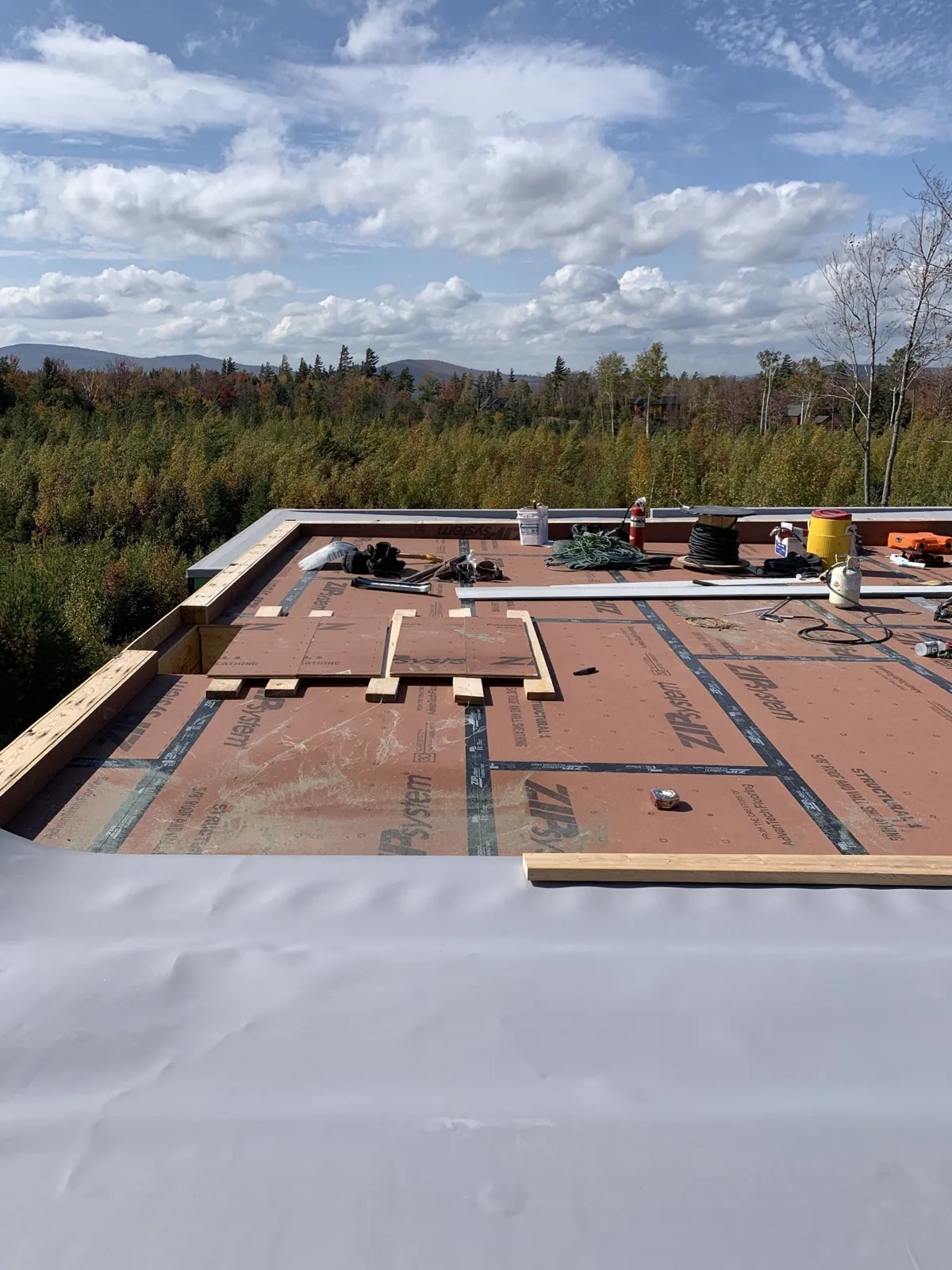
Substrate checks come before any of it. The deck is probed for soft spots, old fasteners are reset or removed and the insulation is verified dry. Single-ply sheets show telegraphed bumps from poor substrates, and those bumps become wear points. A clean, flat base costs a day and saves years.
Accessories and the flashing day
Flashing is the slow part. Every curb, pipe, drain and wall needs a detail. Pre-molded accessories speed it and give a reliable shape. Field-fabricated flashing takes longer and relies on the installer's skill.
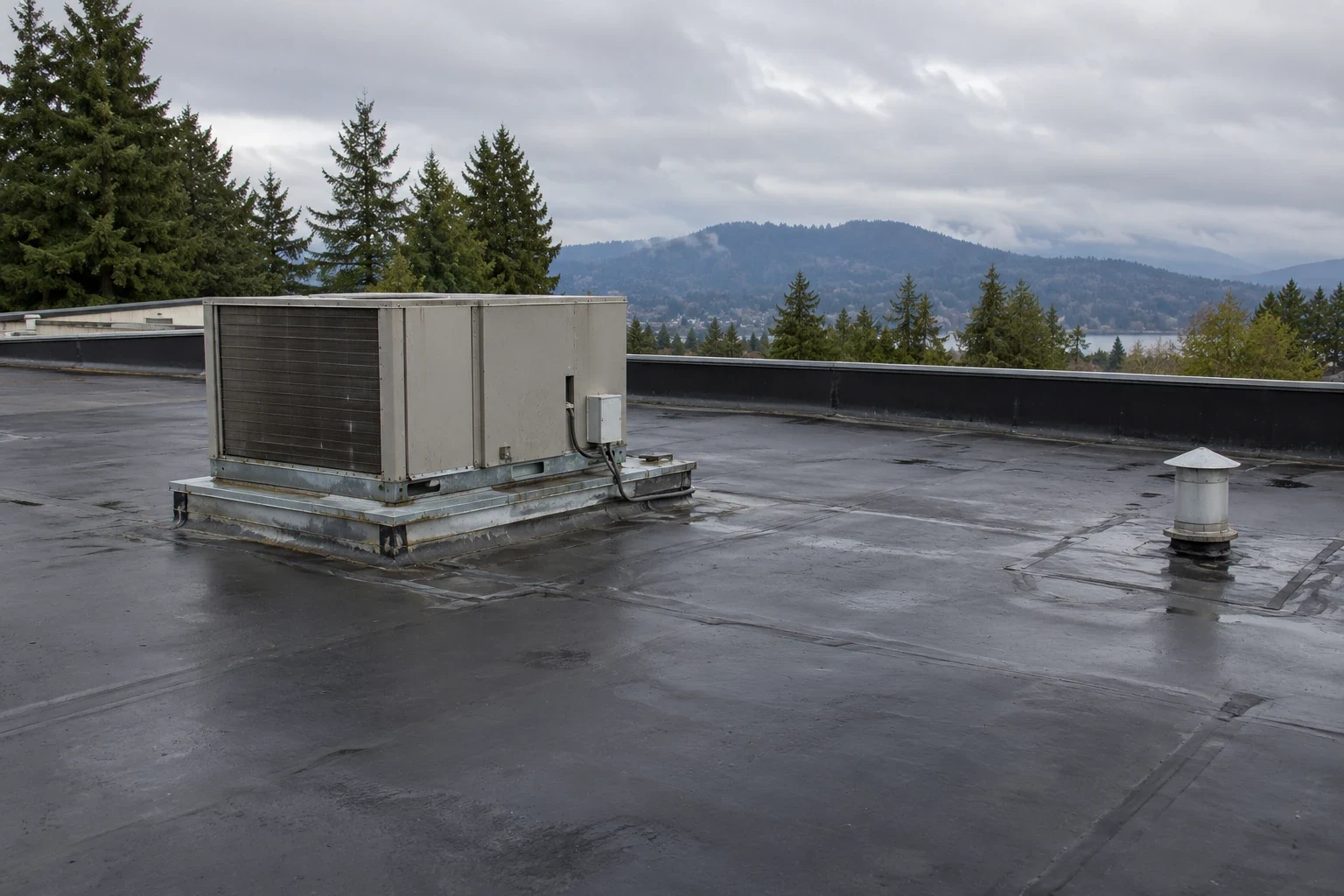
We count penetrations on the plan and match accessories one for one. A rooftop unit curb needs corner pieces and a termination. A drain needs a clamping ring and a sump flashing. A parapet needs a termination bar and counterflashing.
Compatible sealants and primers matter. Using a product from outside the system can void the detail. We stock the system's listed materials and avoid substitutes unless the design team approves them.
Edges close the system. Metal flashing, coping and gutters hold the sheet at the perimeter. A tested edge metal detail matches the manufacturer's published method and the wind rating. A loose coping cap is how an otherwise good single-ply roof starts to peel in a storm.
Lead time shows up here too. Custom-bent metal takes weeks, and prefabricated corners can be backordered. We order accessories and edge metal on the first day of the submittal, so the flashing day does not stall.
Working in a wet season
Bellingham's yearly rain is about 34.8 inches, heaviest in November and lightest in July. The sun gives about 1,866 hours a year, so decks dry slowly. Welding and adhering both need a dry surface.
We size each day's work to what can be closed and sealed. Insulation gets covered the same day. Open edges are tied off. When dew sits on a deck, we wait until a surface check shows dry.
Single-ply sheets give us a way to work in marginal weather. Fully welded thermoplastic seams can be made on cool days if the sheet is dry. Adhered systems need more time and more dry air. The choice of system and the calendar are linked.
Repair and maintenance
Repairs follow the sheet. Open seams are cleaned and rewelded or retaped. Punctures are patched with matching material. Flashing that has pulled away is reset with compatible adhesive and a new termination.
Maintenance keeps the roof inside its conditions. Drains are cleared, moss is removed, walk pads are checked and penetrations are re-sealed. Findings go into the warranty file so the owner has a record.
Comparing another maker's single-ply line, such as Versico, shows how close the families are, since the underlying sheet types overlap. We approach the repair by sheet type first and brand second.
Aging shows in recognizable ways. Seams open, flashing shrinks, surfaces chalk and low spots hold water. We walk the roof, probe the seams, read the flashing and map any ponding. The grade lands in a written report with photos.
When a single-ply roof nears the end of its life, the owner has options. A coating can extend a sound roof. A recover can add a layer over a dry assembly. A full replacement resets the clock. We price the three side by side when the roof allows it.
Where single-ply is specified
Retail and warehouse roofs are the usual candidates, and big-box buildings around Bellis Fair and industrial buildings in the Port's Airport and Marine Drive parks fit when their roofs are low-slope. Schools and college buildings use it for fast installs in the summer window.
Healthcare roofs near PeaceHealth St. Joseph use it where clean, quick installs matter. Roofs near the water, such as at the Marine Drive waterfront, add stainless fasteners and sealed edges to resist salt.
Roofs in Ferndale and Lynden can include process buildings where exposure to oils and cleaning agents points toward PVC, while dry storage in the same towns suits TPO.
Roofs from Holcim Elevate in the same sheet families call for the same field habits: dry surface, clean overlap and probed seams.
Commercial Roofing Questions
Which family fits a restaurant roof?
PVC, because grease and oil attack many other sheets. We ask what vents onto the roof before confirming. A dry warehouse with no exhaust may do fine on TPO.
What arrives with the membrane?
Rolls, accessories, seam materials, fasteners, plates, termination bars, sealants and insulation. We check the delivery against the penetration count and the spec list the day it lands.
Can a different maker's patch go on an existing sheet?
Only if the materials are compatible. We identify the sheet and test the patch on a small area. Mixed materials can fail at the bond line.
How do you handle cold snaps?
We avoid adhesives and tapes below their rated temperature. Welding continues when the sheet is dry. Short cold spells in December through February are managed by choosing the day's task.
What is on the closeout?
Photos, the material list, seam probe results and the maintenance schedule. The owner keeps the file for warranty and future repairs.
Send the spec and the penetration count
Send the drawings, the named system and a count of curbs, drains and pipes. We will price the sheet, the accessories and the weld testing as separate lines before the bid closes.