Holcim Elevate Roofing Systems in Bellingham, WA
Installing and repairing Holcim Elevate (formerly Firestone Building Products) roof systems in Bellingham, WA, with records that follow the name change.
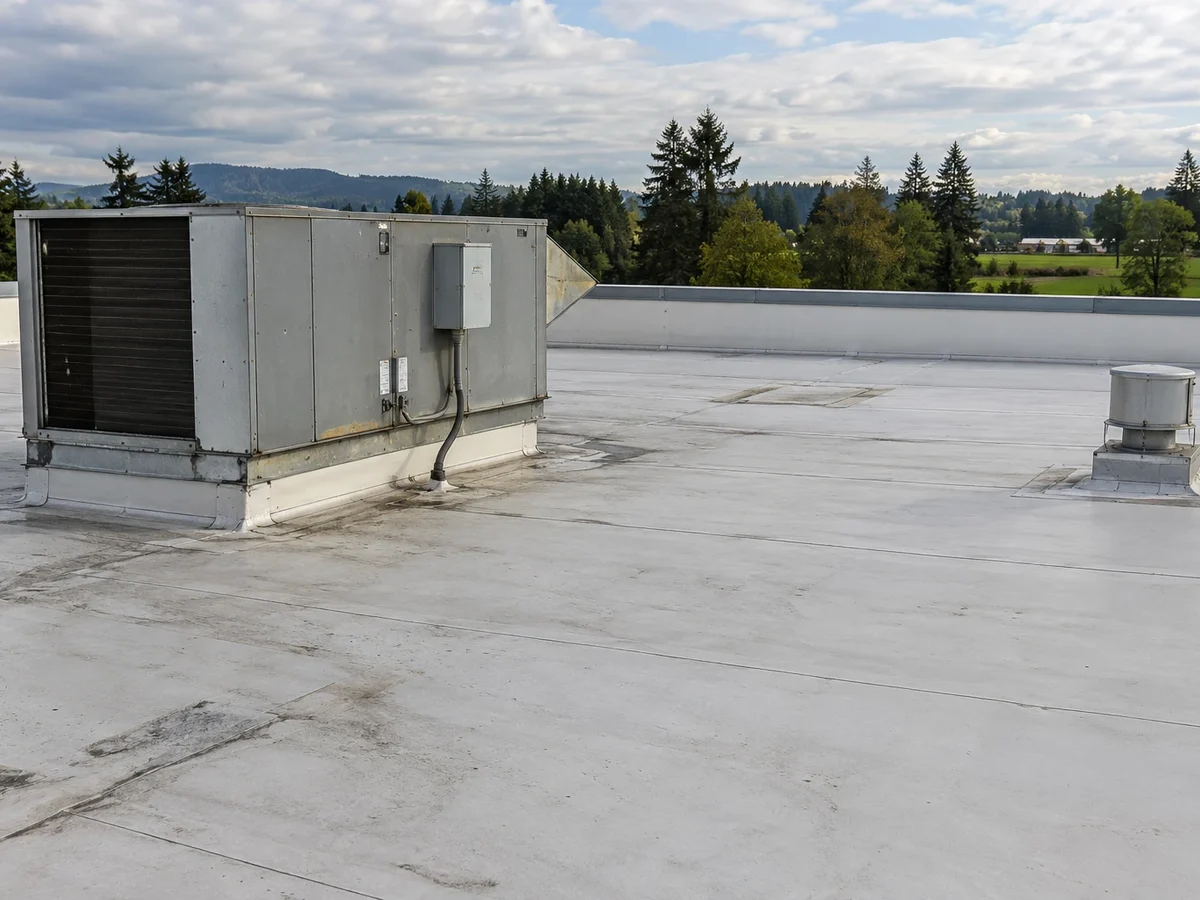
Holcim Elevate Roofing Systems in Bellingham, WA
Installing and repairing Holcim Elevate (formerly Firestone Building Products) roof systems in Bellingham, WA, with records that follow the name change.
Roofing Manufacturers
Holcim Elevate Roofing Systems in Bellingham
The warranty paper says one name and the roof drawings say another. That is the first snag on many Holcim Elevate roofs in Bellingham, WA, because the manufacturer was formerly known as Firestone Building Products, and older records carry the earlier name. A property manager looking for a warranty file under the new name finds nothing, and a leak call loses a day.
Holcim Elevate makes commercial roofing systems across the single-ply families, EPDM, TPO and PVC, along with metal roofing components and rigid insulation. We install, repair and maintain roofs of those types. Part of the job is reading the paper trail so the roof's history follows the building, whatever name is on the cover sheet.
Overview
Holcim Elevate Roofing Systems
Old name, same roof
A name change does not change the sheet on the roof. A membrane installed under the earlier name is still that membrane, with the same seam method, the same flashing details and the same repair path. What changes is the paper: letterhead, contact addresses and sometimes warranty administration.
We open the file for each roof and write down both names. The install date, the system type and the warranty term go on one line. If the owner holds a certificate under the earlier name, we note it and keep a copy in the roof record.
When a repair is needed, we identify the membrane first, not the brand. A core or a sample tells us whether the sheet is rubber or thermoplastic and how thick it is. The method follows the sheet, and the paperwork follows the method.
Contact details change with the name. An old regional office number may route nowhere, and a technical question can sit unanswered. We keep the current contact path in the file and note the date we confirmed it. When a claim or a repair question comes up, the owner is not hunting for a phone number during a storm.
Property sales add a wrinkle. A buyer reading a warranty certificate under the older name may assume it has lapsed. We summarize the terms in plain words, with the dates and the conditions, so a buyer sees what is actually in force before closing.
The sheet families
EPDM is a rubber sheet that stays flexible in cold, runs black and is seamed with tape or adhesive. It is a common pick for schools and tight budgets, and the splice details decide how long a rubber roof stays tight. TPO is a welded thermoplastic, usually white. PVC is a welded thermoplastic with strong grease and chemical resistance.
Each family fits a type of building. A broad, dry roof with many curbs suits TPO. A kitchen exhaust roof suits PVC. A school with a summer window and a budget suits EPDM. A manufacturer that makes all three lets the design team choose by building.
The install craft differs by family. Rubber seams are primed and taped. Thermoplastic seams are welded with hot air and probed. We plan the crew, the tools and the weather window for each, and we tell the general contractor which days will be real install days.
Where Carlisle SynTec sheets share the same families, the repair logic carries over. The practical difference is in the accessories and the published details, which is why the system name goes into the job file before the crew buys a single tube of sealant.
Metal, insulation and accessories
Single-ply sheets sit on insulation, and a manufacturer with insulation in the catalog can supply the full stack. Rigid polyiso boards go down in layers with offset joints, with a cover board over them where traffic or hail is a concern.
Metal components round out the system. Coping, drip edge, fascia and gutters hold the perimeter. A tested edge detail follows the maker's published method and the wind rating. A coping cap that lifts in a gust is how a good membrane starts to peel.
Accessories are the quiet cost. Pre-molded corners, pipe boots, seam tape, sealants and termination bars each have a line on the order. We match them to the penetration count, so the flashing day does not wait on a delivery.
Insulation and code tie in here. On a replacement, insulation depth follows the 2021 state energy code that took hold in March 2024. Extra board raises every curb and wall flashing, and the accessories order reflects the new heights. A flashing sized for the old roof will not reach the new surface.
Wet-season installs
A year in Bellingham brings about 34.8 inches of rain and only about 1,866 hours of sun, so decks stay damp. A membrane laid on a wet deck traps the damp and fails later.
We size each day to what can be closed. Insulation is covered the same day it is laid. Open edges are tied off. When dew sits on the deck, we wait and check with a meter.
Wind is the other test. Wind is the other test: 67 mph in March 2016, then the easterlies of a November 2024 bomb cyclone in Sudden Valley. The spec names the uplift rating for each zone, and the fastener plan follows it, densest at corners and edges.
Cold nights complicate adhesives and tapes. Each has a minimum temperature, and the crew checks it each morning. Hot-air welding tolerates cooler air better, though the sheet must be dry. When the forecast turns, the day's task changes to match, so the crew is never forcing a bond in conditions that will not hold it.
Repair and records
Repairs follow the sheet and are logged. Open seams are cleaned and rewelded or retaped. Flashing is reset with compatible adhesive and a new termination. Punctures get a matching patch.
Roofs under warranty need notice before major work. Our warranty management keeps the file: dates, terms, conditions, photos and the visit log. If the name on the paper has changed, the record notes both.
Compared with Johns Manville, another maker with a broad line, the field practice is the same. Identify the sheet, scan for moisture, repair to the method and document the work. The brand sets the details, and the craft stays constant.
Inspection cadence matters on an aging roof. We walk it each season and after storms, probing seams, reading flashing and mapping ponding. Findings go into a dated condition report. When a roof nears the end of its term, the owner sees it coming and plans the replacement before a leak sets the date.
Where it turns up
Single-ply roofs from makers like this one are common on retail, warehouse and institutional buildings. In Bellingham that includes big-box retail around Bellis Fair, school and campus buildings at Western Washington University and Whatcom Community College, and industrial buildings in the Port's parks.
Roofs near the water, along Marine Drive and Squalicum Harbor, add stainless fasteners and sealed edges to resist salt. In colder foothill towns such as Maple Falls, snow is heavier, so drainage and edge details carry more weight in the design.
Commercial Roofing Questions
My warranty is under the old Firestone name. Is it still valid?
The terms in the document govern, not the name on the building's file. We read the certificate, record both names and note the conditions. Questions on validity go to the manufacturer with our inspection record attached.
Do you need the brand to repair a roof?
We need the sheet type more than the brand. A core or sample identifies it. The method follows the sheet, and the brand sets the details.
How are EPDM and TPO seams different in repair?
Rubber needs primer and seam tape or adhesive. Thermoplastic needs clean surfaces and a hot-air weld. The tools and the weather limits differ.
Can metal edge components be replaced without redoing the roof?
Often yes. We remove the cap, check the substrate, reflash if needed and set new metal with the fastener pattern for the wind zone.
What goes in the roof record?
System type, install date, warranty terms under both names, photos, visit log and open items. The owner keeps it with the building file.
Send the warranty paper and the roof photos
Send any certificate, the install date and photos of the roof. We will identify the system, record both names and price the repair or the replacement as separate lines.