Duro-Last Prefabricated Roofing in Bellingham, WA
Installing and repairing Duro-Last prefabricated PVC roof systems in Bellingham, WA: field measuring, factory panels and short dry-in windows on the roof.
Duro-Last Prefabricated Roofing in Bellingham, WA
Installing and repairing Duro-Last prefabricated PVC roof systems in Bellingham, WA: field measuring, factory panels and short dry-in windows on the roof.
Roofing Manufacturers
Duro-Last Prefabricated Roofing in Bellingham
The measurements are the roof. A prefabricated panel is cut and welded in a factory to the dimensions the field crew sends, so a half-inch error at a parapet becomes a panel that does not fit. In Bellingham, WA, where a lost dry day costs real schedule, the measuring day sets the whole job.
Duro-Last is a manufacturer known for prefabricated PVC roofing: membrane panels fabricated off site to fit the roof, with flashings and pipe boots made in the shop and shipped ready to set. We install, repair and maintain roofs of that type. The field work is shorter than a built-in-place sheet, and the planning before it is longer.
Overview
Duro-Last Prefabricated Roofing
Measuring the roof
Everything starts with a roof survey. We record every wall length, every curb, every pipe, every drain and every change in plane. A sketch or a drone map backs up the tape. Offsets from a datum make the drawing repeatable.
The survey goes to the factory, where panels are cut and welded to match. Penetrations are noted by size and location, so boots and collars can be prefabricated. The more complete the survey, the less improvising on the roof.
Accuracy costs time on site but saves it later. A re-measure after a missed curb delays the order by weeks. We check each dimension twice, photograph each corner and send the data with the sketch. If the roof has crowded equipment, a second visit confirms the layout before the order is placed.
Access sets the measuring day. A locked hatch, a tenant escort or a fall-protection rule adds time to the survey. We book the survey for a dry day, since wet roofs are slippery and tape measures slip. A damp morning can wait.
The PVC underneath
The membrane is a reinforced PVC sheet. PVC resists grease and many chemicals, handles ponded water better than some sheets and welds at the seams. Field seams are fused with hot air, just as on a conventional PVC roof. The same behavior applies to any PVC roof.
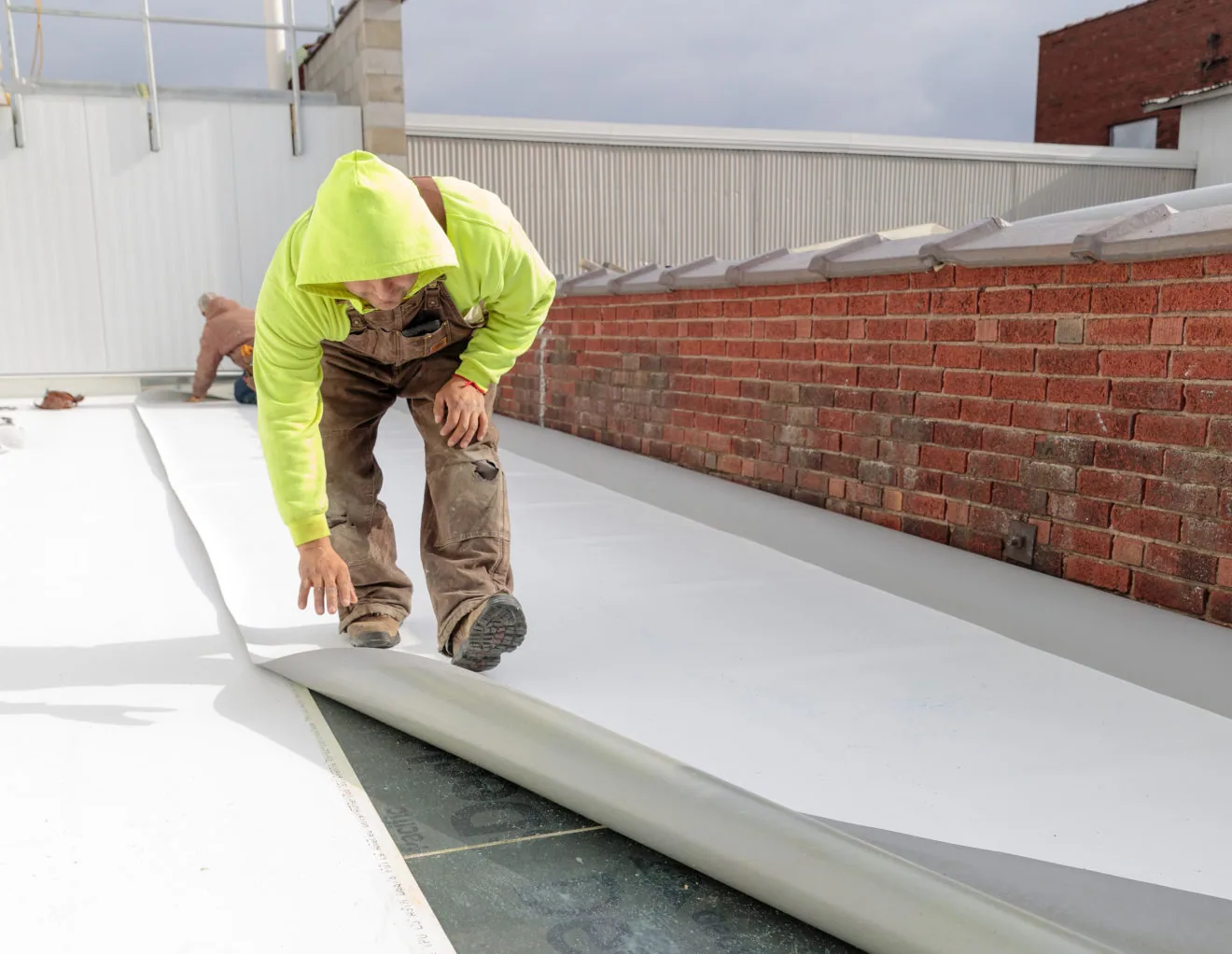
Prefabrication moves much of the welding indoors. Panel seams are made in controlled conditions, free of dew and wind. The field crew welds panel to panel along the roof and finishes the details.
That shifts the weather risk. Fewer field seams mean fewer places for a damp morning to ruin a weld. The remaining seams still need clean, dry sheet, and we test every one with a probe.
Thickness and reinforcement are chosen at order. A thicker sheet takes foot traffic from service techs and the occasional dropped tool. A roof with many rooftop units earns the heavier build. The choice goes on the order sheet and the closeout, so the owner knows what is on the roof.
Compared with sheets sold by Versico, which are built in place from rolls, prefabricated panels trade flexibility for speed. Both are valid. The roof decides.
Lead time and the calendar
Fabrication takes time. After the survey, drawings are approved, panels are made and the order ships. The total from survey to delivery is measured in weeks, and the schedule must carry it.
July is Bellingham's driest month and November its wettest, in a year that brings about 34.8 inches of rain. Backing a July install means a survey in spring. A job surveyed in late summer lands in the wet season.
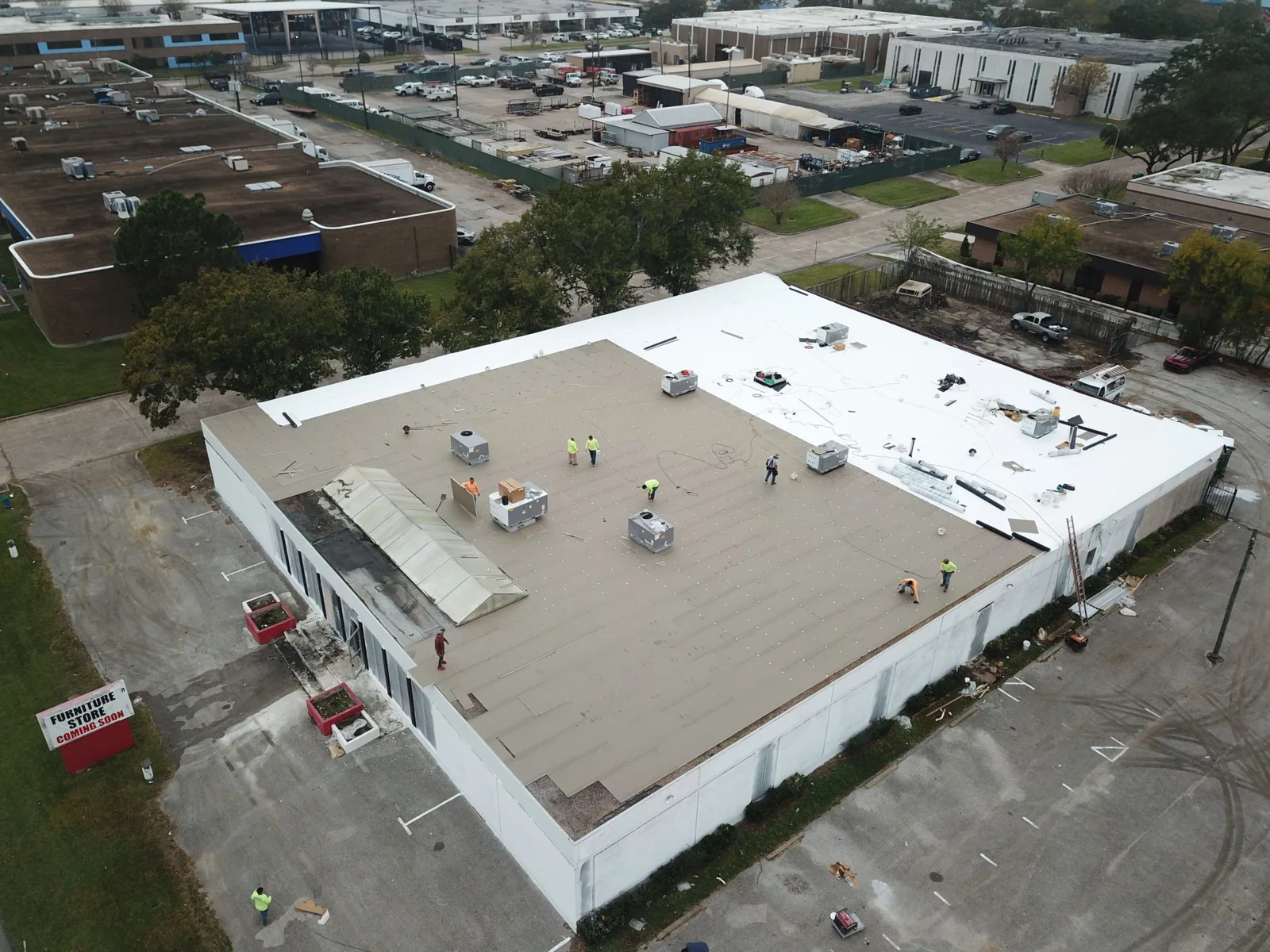
Once panels arrive, the field work moves quickly. A crew can dry in a roof in far fewer days than a built-in-place sheet, which suits Bellingham's short dry windows. We keep the panels under cover until they go on the roof and time the lift to the weather.
Approvals take their own turn. The design team reviews the panel layout, the owner approves the drawings and the factory releases the order. A late approval pushes the delivery. We track each step on the schedule and flag the date at which a missed approval costs the dry window.
Staging is a plan of its own. Panels arrive rolled or folded, and they need a place to sit, under cover, until the crane lifts them. A tight site in downtown Bellingham may need a street permit for the lift. We book the lift and the permit to match the delivery.
Attachment and wind
Panels are fastened mechanically along the seams or adhered, depending on the spec. Fasteners hide under the next panel's lap, and the weld seals over them. Perimeter and corner zones get more fasteners, since uplift is highest there.
Wind is a real input. Wind has tested Bellingham edges: 67 mph gusts in March 2016, and a bomb cyclone with easterly winds in Sudden Valley in November 2024. The fastener pattern follows the rating on the spec, and the edge metal is fastened at close spacing.
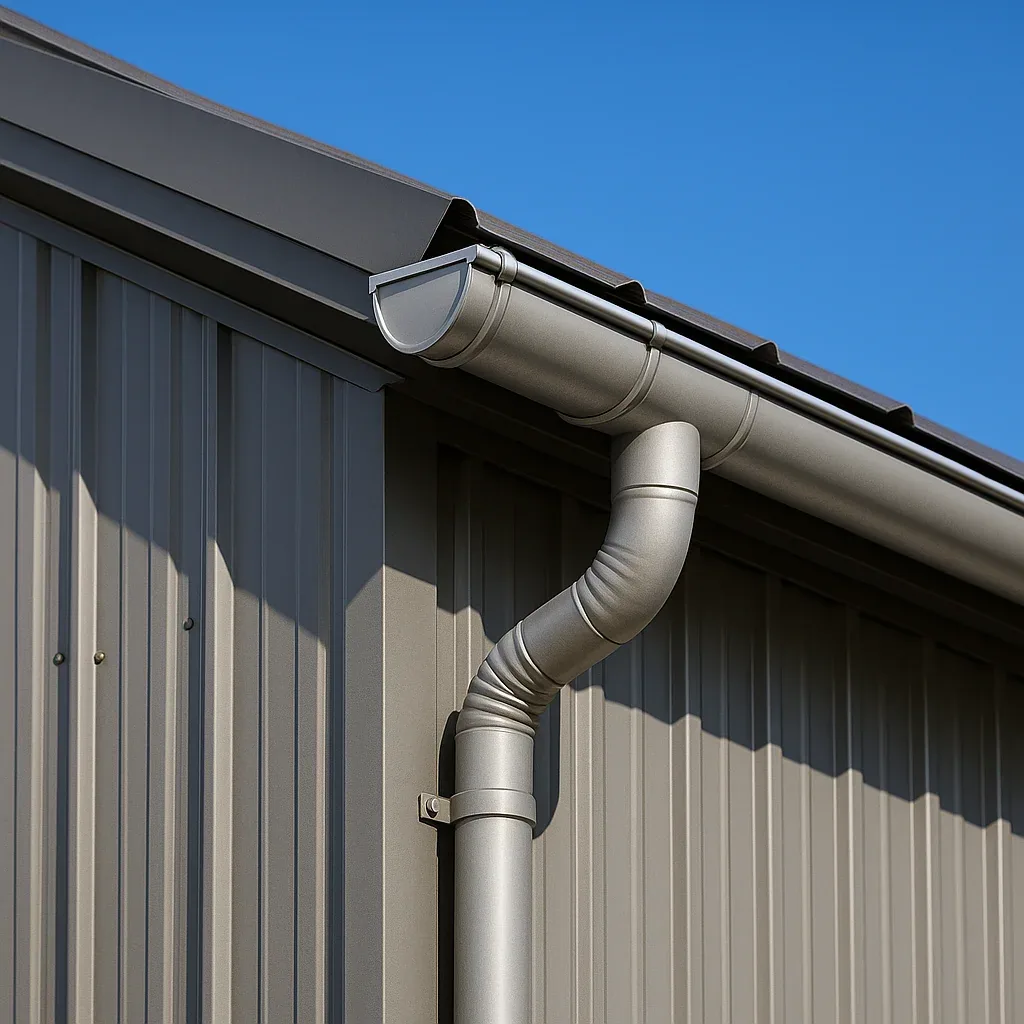
Edge details are prefabricated or field-formed. A tested edge and coping detail goes on every bid. A loose coping cap lets wind under even a well-welded sheet.
Substrate matters. We probe the deck for soft spots, reset old fasteners and verify the insulation is dry, because a prefabricated sheet shows every bump beneath it. A flat base costs a day and pays back for years. A cover board over the insulation gives that flat base and protects the foam.
Repair and maintenance
A prefabricated roof is repaired like any welded PVC roof. A patch is cleaned and welded. A flashing is reset. A boot is replaced with a matching piece. Because panels are labeled and documented, the original drawings help locate seams and penetrations.
Records matter. We keep the survey, the panel layout and the install photos with the roof file. If a leak appears, the layout tells us which seam to probe first. Warranty items go into the warranty file with dates and photos.
Maintenance is simple but not optional. Drains are cleared, moss is removed from shaded corners and walk pads are checked. The low sunshine of about 1,866 hours a year keeps surfaces damp, and growth follows.
Aging shows at details first. Boots shrink, flashing pulls at corners and walk pads wear. We look at those during each visit. Where the roof nears the end of its term, the owner sees it in the report and plans a replacement before a leak sets the date.
Where prefabrication pays
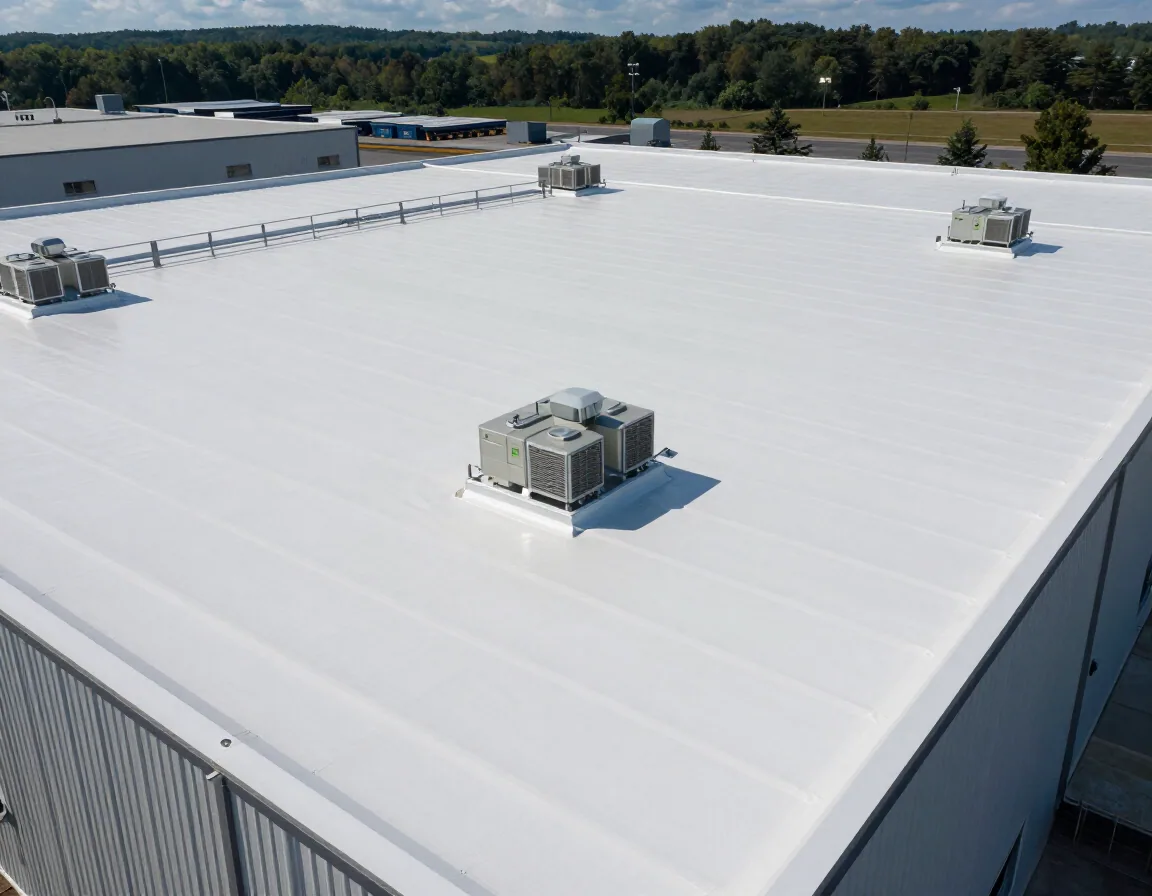
The system shines on roofs with a clear plan: a rectangle with a few curbs and a regular parapet. Small and mid-sized commercial buildings, such as retail strips, restaurants, offices and light-industrial shops, are common fits. Sites in Cordata and along the Guide Meridian corridor have many such buildings.
Restaurant roofs gain from PVC's resistance to grease. Waterfront buildings along Marine Drive gain from its tolerance of salt air, with stainless fasteners at the edge.
Complex roofs with many levels, odd shapes or uncertain geometry may suit a field-welded sheet better. Sika Sarnafil is also PVC but built in place, a useful contrast. The roof shape and the schedule decide.
Small commercial buildings in Ferndale, Birch Bay and Lynden can be the same kind of roof. Short dry windows near the coast make a fast dry-in valuable.
Commercial Roofing Questions
What if the measurements are wrong?
Small errors are trimmed in the field. Large ones mean a remake and a delay. We measure twice, photograph the details and confirm with the factory before the order is released.
How fast does the roof go on?
Quickly once panels arrive. Most field work is placing panels, welding laps and finishing details. The speed helps in a short dry window.
Does prefabrication limit shape?
It works best on clear geometry. Complex shapes can be made, but they raise the measuring risk. We say so at the survey and offer a field-welded option.
Can prefabricated panels be recovered over an old roof?
Yes, over a dry, sound assembly with a separation layer. A moisture scan comes first. Wet insulation comes out.
What does repair look like years later?
A cleaned patch welded in place, or a replaced boot. The original layout drawings help us find seams and penetrations quickly.
Send the roof address and the target install month
Send the address, the building plan if you have one and your target install window. We will schedule the roof survey ahead of the order date and price the panels, the details and the install as separate lines.