Versico Roofing Systems in Bellingham, WA
Installing and repairing Versico single-ply roof systems in Bellingham, WA: recovers over old roofs, separation layers and wet-season attachment choices.
Versico Roofing Systems in Bellingham, WA
Installing and repairing Versico single-ply roof systems in Bellingham, WA: recovers over old roofs, separation layers and wet-season attachment choices.
Roofing Manufacturers
Versico Roofing Systems in Bellingham
The old roof is the first thing a Versico bid has to read. A single-ply sheet laid over a tired membrane saves the tear-off, and it also locks in whatever is under it. In Bellingham, WA, where wet insulation hides under a dry-looking surface after a long winter, the decision to recover or strip is made with a scanner and a core cutter, not with a guess.
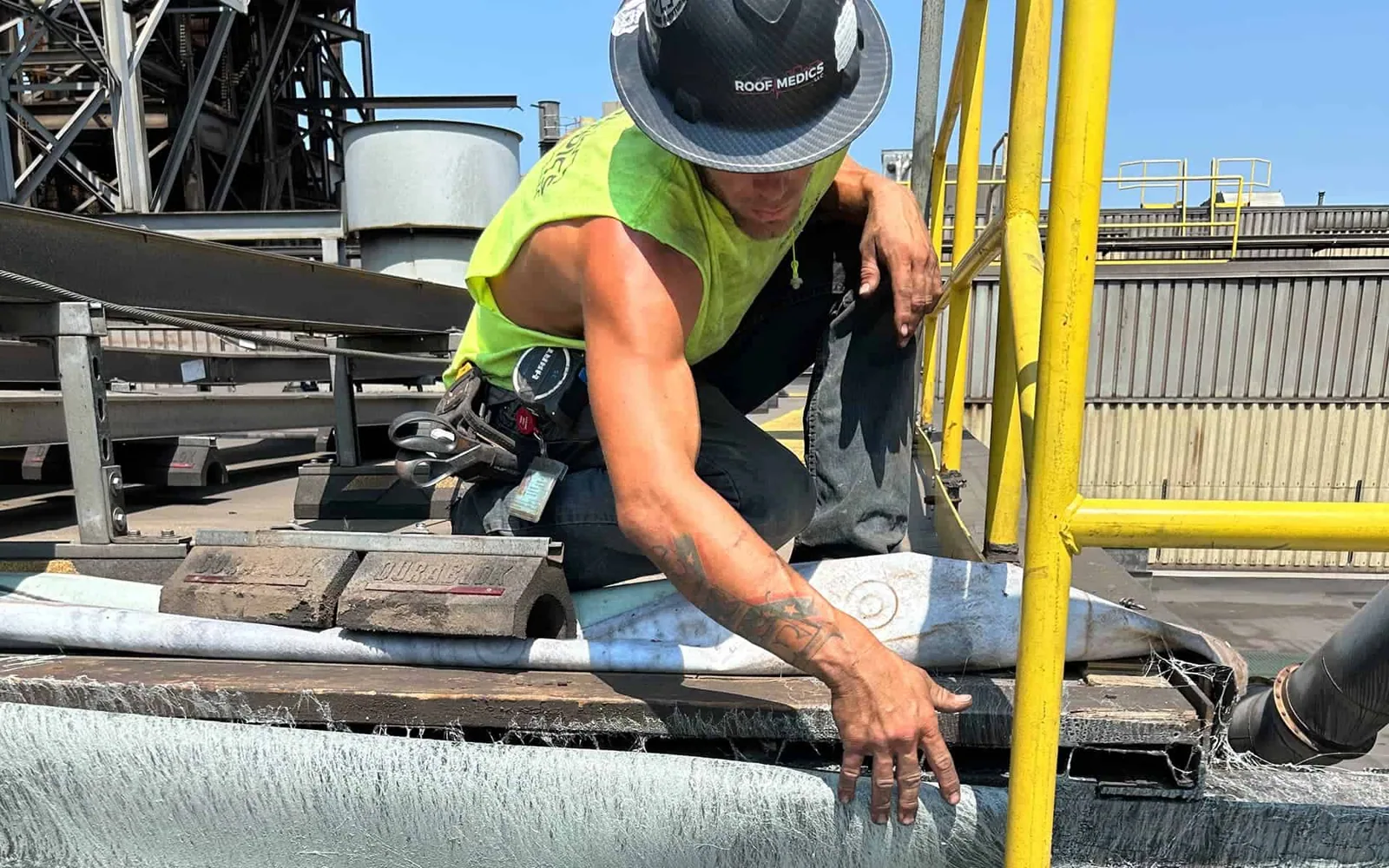
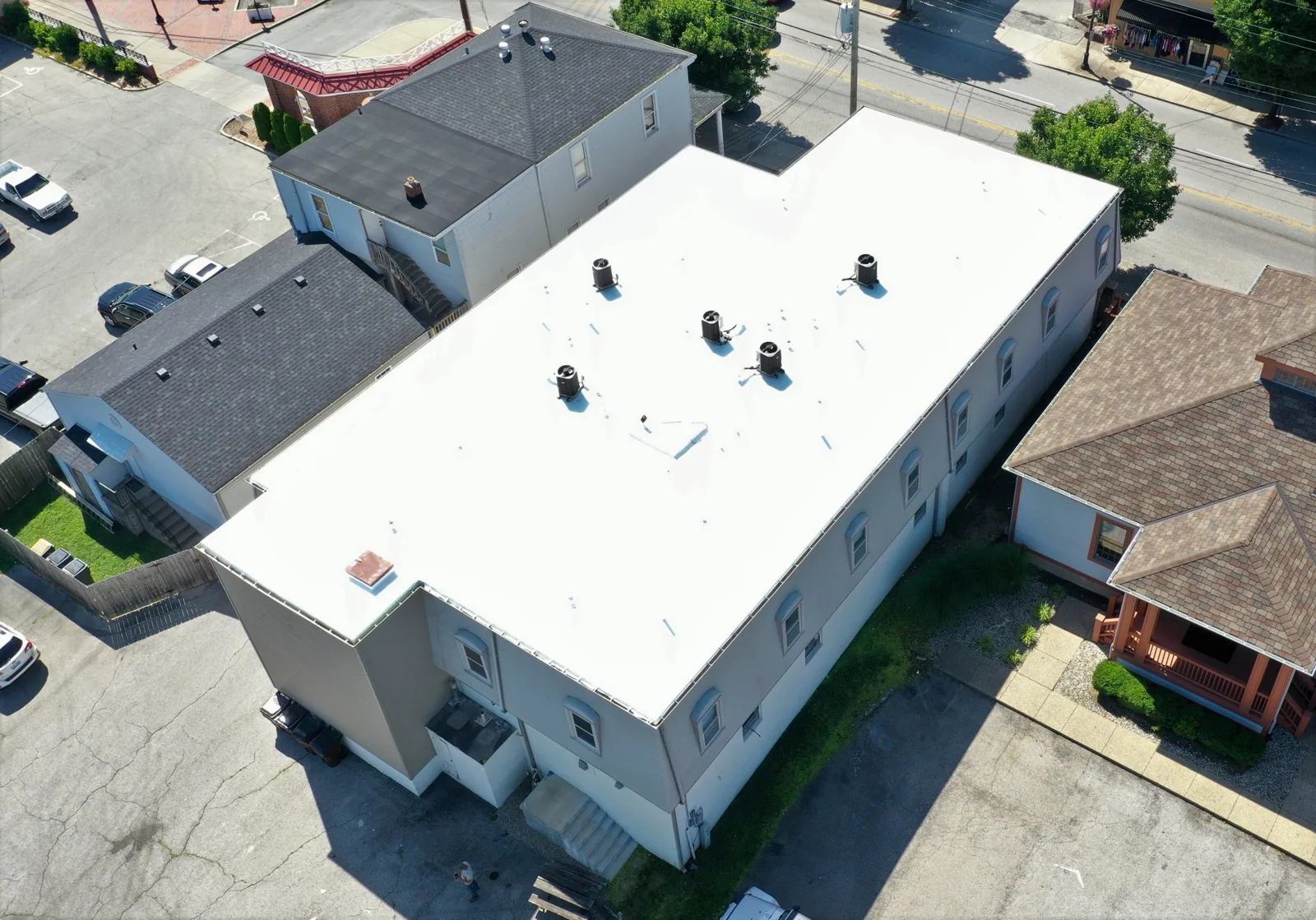
Versico is a manufacturer of single-ply roofing systems in the TPO, EPDM and PVC families, sold with insulation and accessories. We install, repair and maintain roofs of those types. Many of those jobs are reroofs, so the substrate, the separation layer and the attachment method are where the bid is won or lost.
Overview
Versico Roofing Systems
Recover or tear off
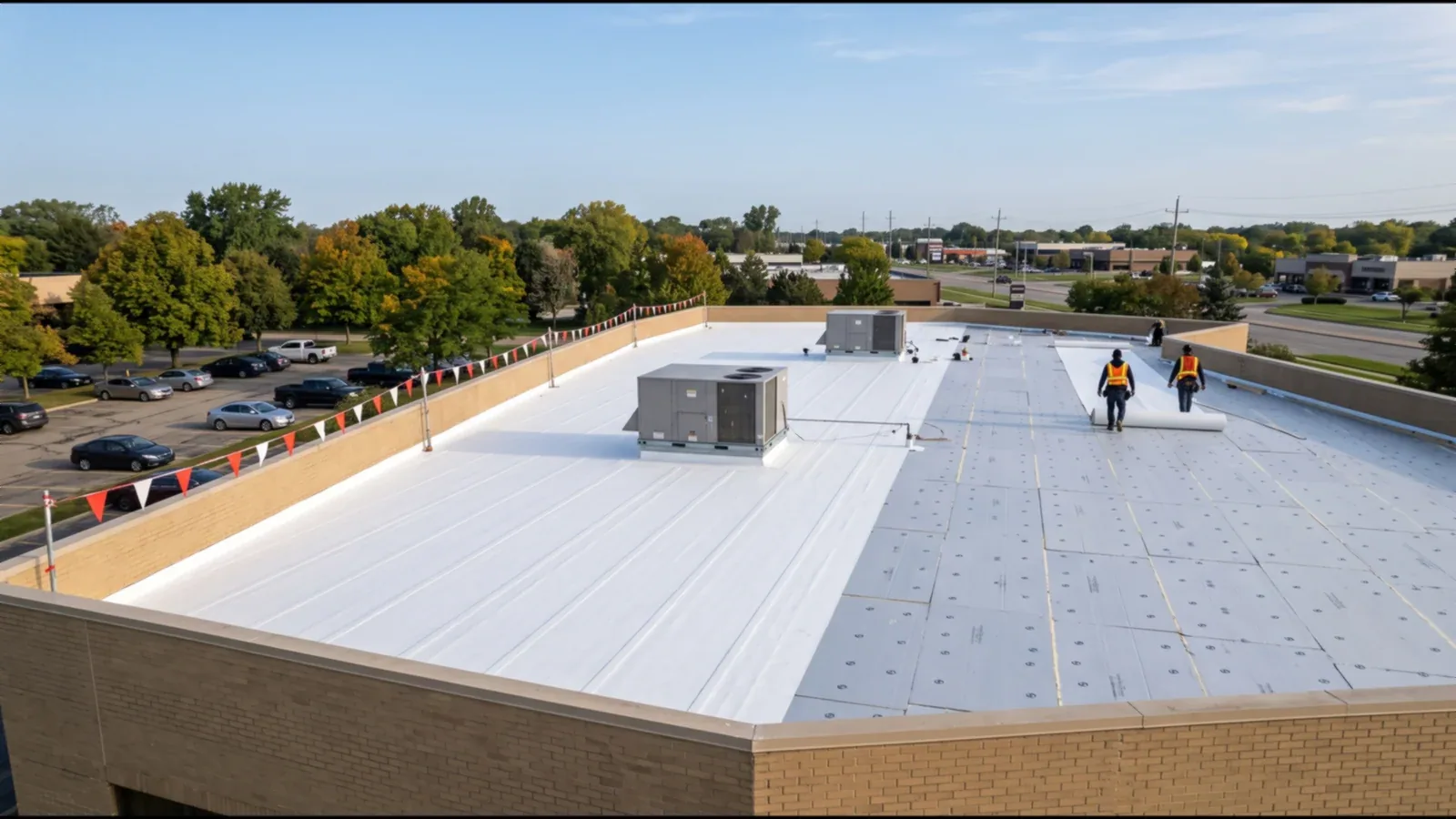
A recover puts a new membrane over the old one, usually with a layer of board between them. It skips the dump fees, shortens the schedule and keeps the building closed in. It only works over a dry, sound assembly with a deck that can take the added weight.
We check before we bid. An infrared scan on a clear evening shows wet zones. Cores confirm the layers and the moisture. A few small wet areas can be cut out and patched. Widespread saturation points toward a full tear-off, which the replacement bid covers.
Layer count limits the choice. Many codes cap the number of roof layers, and the design team confirms what applies. A roof that has already taken one recover often cannot take a second.
Insulation value counts in the recover decision. A recover over existing insulation keeps the old R-value and adds a little from the board. If the design team needs more insulation to meet the 2021 Washington State Energy Code, applied statewide since March 15, 2024, extra board goes in during the recover. That adds height, and the details climb with it.
The roof's age matters too. A recover is a good bet on a roof with ten or fifteen good years left in the deck and insulation. On a roof at the end of its life, a recover buys little, and a tear-off resets everything under it.
What goes between old and new
Old asphalt and new thermoplastic do not always get along. Plasticizers in some sheets migrate into asphalt and soften. A separation layer, usually a glass-faced board or a slip sheet, keeps them apart. Where the old roof is rubber, the board also gives a flat, clean surface.
Cover boards add protection. They shield insulation from foot traffic and hail, and give adhesives a smooth base. On a roof that sees service visits, the board pays for itself.
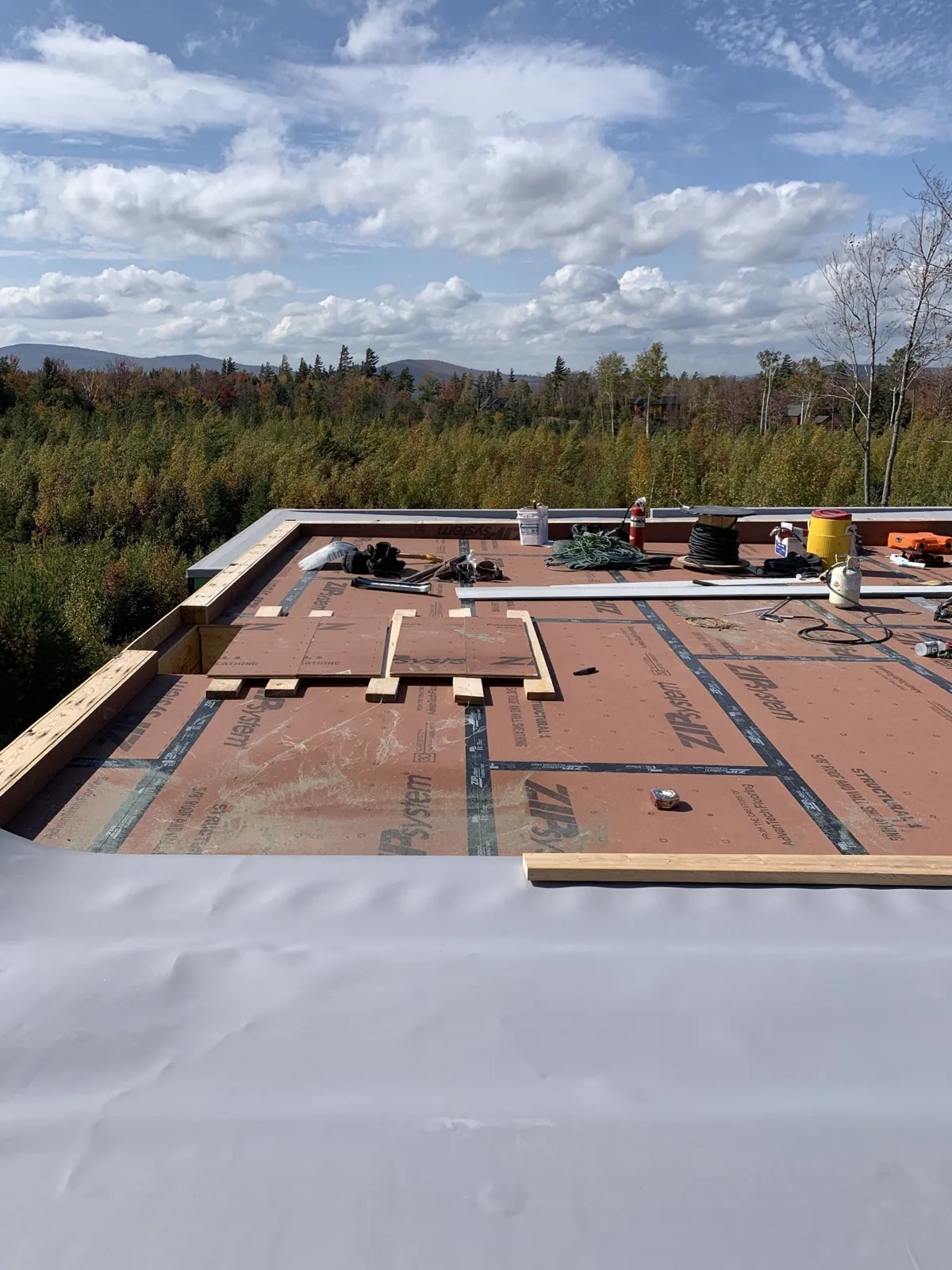
Fasteners run through all of it into the deck. Pull tests on a sample area tell us what the deck will hold. Rusted decks and soft plywood lower the pull-out number, and the fastener pattern or the attachment method changes to suit. A recover is only as sound as the deck under it.
Moisture meters tell the tale on site. We read the board before it goes down and again after it is set. A damp board is rejected. Boards stored on wet ground or under a torn tarp are sent back, since a roof can fail from one bad pallet. Staging area, tarps and pallet lifts are listed on the plan.
Attachment choices
The sheet is held down mechanically, with adhesive or with ballast. Mechanical attachment is fast, and the fasteners sit in the seam under the weld. Full adhesion gives a flat finish and strong uplift performance. Ballast is the cheapest where the structure can carry stone.
Wind sets the pattern. Bellingham logged 67 mph in March 2016, and a bomb cyclone's easterlies reached Sudden Valley in November 2024. The spec lists the uplift pressure for field, perimeter and corner zones, and the fastener count rises toward the edges.
The weather window is tighter for adhered systems. Adhesive must flash off before the sheet is set, and cool, damp air stretches that time. A mechanically attached TPO roof tolerates a marginal morning better.
Fastener corrosion shows on older decks. Galvanized steel deck near the water rusts faster, and fasteners that bite into rusted metal lose pull-out strength. Waterfront roofs along Marine Drive and Fairhaven get a closer deck check and, where needed, a different fastener or a layer of board with adhesive.
Sequencing in the wet season
Rain comes to about 34.8 inches a year in Bellingham, with a wet peak in November and a dry one in July, under about 1,866 hours of sun. A deck can stay damp for days after rain, and a roof built over damp board holds that moisture for years.
On a reroof, the exposure is the tear-off or the board. We open only what the crew can cover the same day. Edges get temporary tie-ins. Material stays under tarps until it goes down.
When forecasts turn, the day's task changes. Flashing work and prep can go ahead in light weather, and field sheet waits for dry air. Dry-in days are scarce, and we put them on the calendar by name.
The lead time on rolls, boards and accessories adds to the calendar. A summer start needs orders in spring. We tie the order date to the dry-in date and tell the general contractor which approvals gate the order. A missing submittal in April can push a July job into October.
Details on an old roof
Existing roofs have existing problems. Curbs rot, flashings shrink and drains clog. A recover raises the surface, so every wall and curb needs a taller flashing. We rebuild or extend those details as part of the scope.
Drains are the usual trouble. A recover covers the sump and changes the flow. We replace or raise drain bodies, check the slope with a level and add tapered board where water has been ponding. A drain with the right flashing ring turns a recover from a risk into a sound roof.
Equipment curbs need attention. A curb that was flashed for the old surface will not reach the new one. The mechanical trade may need to lift the unit while we extend the curb.
Skylights and hatches need the same raise. A hatch curb that sat flush with the old surface sits low after a recover, and rain finds the gap. We extend the curb, reflash and test the seal.
Where recovers show up
Recovers fit owners who want life from a sound roof without a long closure. Warehouses in the Port's Airport and Marine Drive parks, retail buildings around Bellis Fair and school buildings at Western Washington University and Whatcom Community College are typical candidates, once the scan confirms dry insulation.
Compared with Carlisle SynTec, which sells the same sheet families, the install steps are alike. The spec names the maker, and the submittal confirms the accessories and the assembly. For buildings in Birchwood and the north side, the same method applies to roofs of any maker.
Makers with PVC focus, such as Sika Sarnafil, add another thermoplastic option when chemical exposure rules out a lighter sheet. The recover method is the same, and the sheet changes.
Commercial Roofing Questions
How many layers can a roof have?
Code limits the count, and the design team confirms the limit for the building. A roof that already took one recover often cannot take another. Cores tell us how many layers are there.
What if the scan finds wet insulation?
Small wet areas are cut out and patched before the recover. Widespread wetness points toward tear-off. We map the wet zones on the plan so the line between patch and replace is visible.
Why is a separation board needed?
It keeps new thermoplastic from touching old asphalt, protects the insulation and gives a flat base. On a rubber roof it still adds a smooth surface.
Are mechanically attached sheets safe in high wind?
Yes when the pattern matches the rating. Fastener spacing tightens at corners and edges, and we pull-test the deck before ordering.
How long does a recover take compared with tear-off?
Usually fewer days, since there is no stripping or dumping. The weather window is the same. We size daily work to the dry-in.
Send the roof history and the layer count
Send the drawings, the age of the existing roof and any past moisture findings. We will price the recover and the full replacement side by side before the bid closes.