Commercial Roofing in Lynden, WA
Commercial roofing in Lynden, WA for farm and processing buildings: metal panel fasteners, condensation control, harvest-season scheduling and wind edges.
Commercial Roofing in Lynden, WA
Commercial roofing in Lynden, WA for farm and processing buildings: metal panel fasteners, condensation control, harvest-season scheduling and wind edges.
Service Areas
Lynden in Bellingham
A screw gets one chance to hold, and a farm roof has hundreds. Lynden, WA had 15,749 residents in 2020 and sits about 5 miles south of the Canadian border, where berry, dairy and poultry agriculture shape the area, including farm buildings and processing. Many of those buildings share a roof type: long runs of metal panel over large spans. The failure is also shared, and it starts at the fastener.
SR 539 runs from Lynden north to the border and south to Bellingham, and SR 546 runs east to Sumas. A farm owner here has a harvest calendar, a processing line and a tight budget. We write the bid in lines that match all three.
Overview
Lynden
Long metal runs, many screws
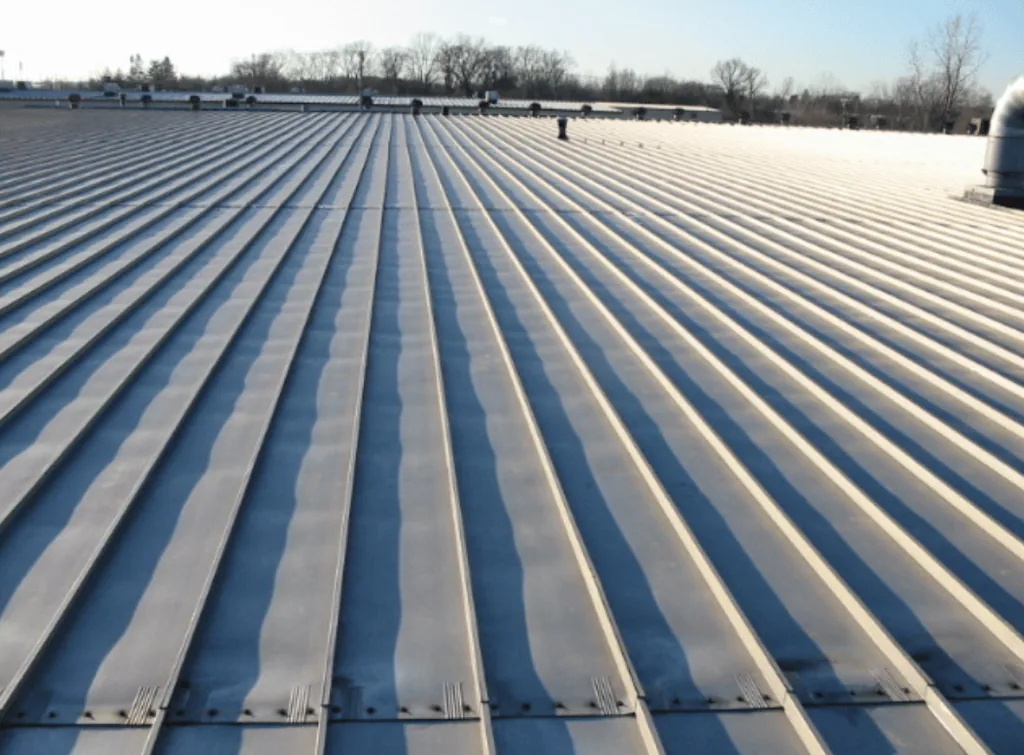
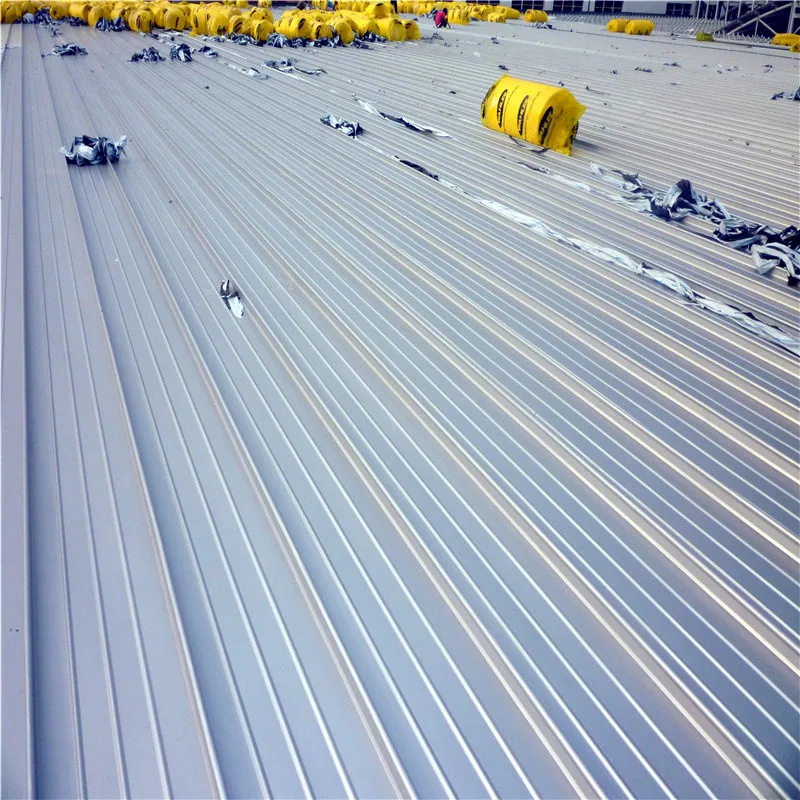
Agricultural buildings use exposed-fastener metal panels because they are cheap and quick. Each panel carries a row of screws with rubber washers. Washers dry out. Panels move with temperature. Holes elongate. A roof with a few thousand fasteners can have a few hundred that fail.
On a first visit we probe a sample of screws in each section. We count loose, backed-out and washerless ones. If failures are scattered, a re-screw with oversize fasteners and fresh lap sealant fixes it. If whole panels are loose, the bid moves to a metal roof retrofit or a replacement. A standing seam roof, with concealed clips, avoids exposed screws altogether and suits an owner who wants a roof that needs less maintenance. The sample count goes into the report so the owner can see why.
Laps leak as often as screws. A cracked lap sealant joint lets water run along the rib. We clean it, rebed it and photograph it.
Condensation looks like a leak
Where a dairy or poultry building runs warm and humid inside, warm, wet air meets a cold metal panel and turns to water. It drips from the underside and looks like a roof leak. Owners patch the roof and the dripping continues.
We check the underside of the panel for the pattern. A drip that follows the panel ribs, shows up on cold mornings and leaves rust halos points to condensation, not a leak. The fix sits in ventilation, insulation or a condensation-control liner. We tell the owner when the problem is inside, so no one pays for a roof repair that cannot work. Where a liner or insulation is added, the bid carries it as its own line.
Processing and cold rooms
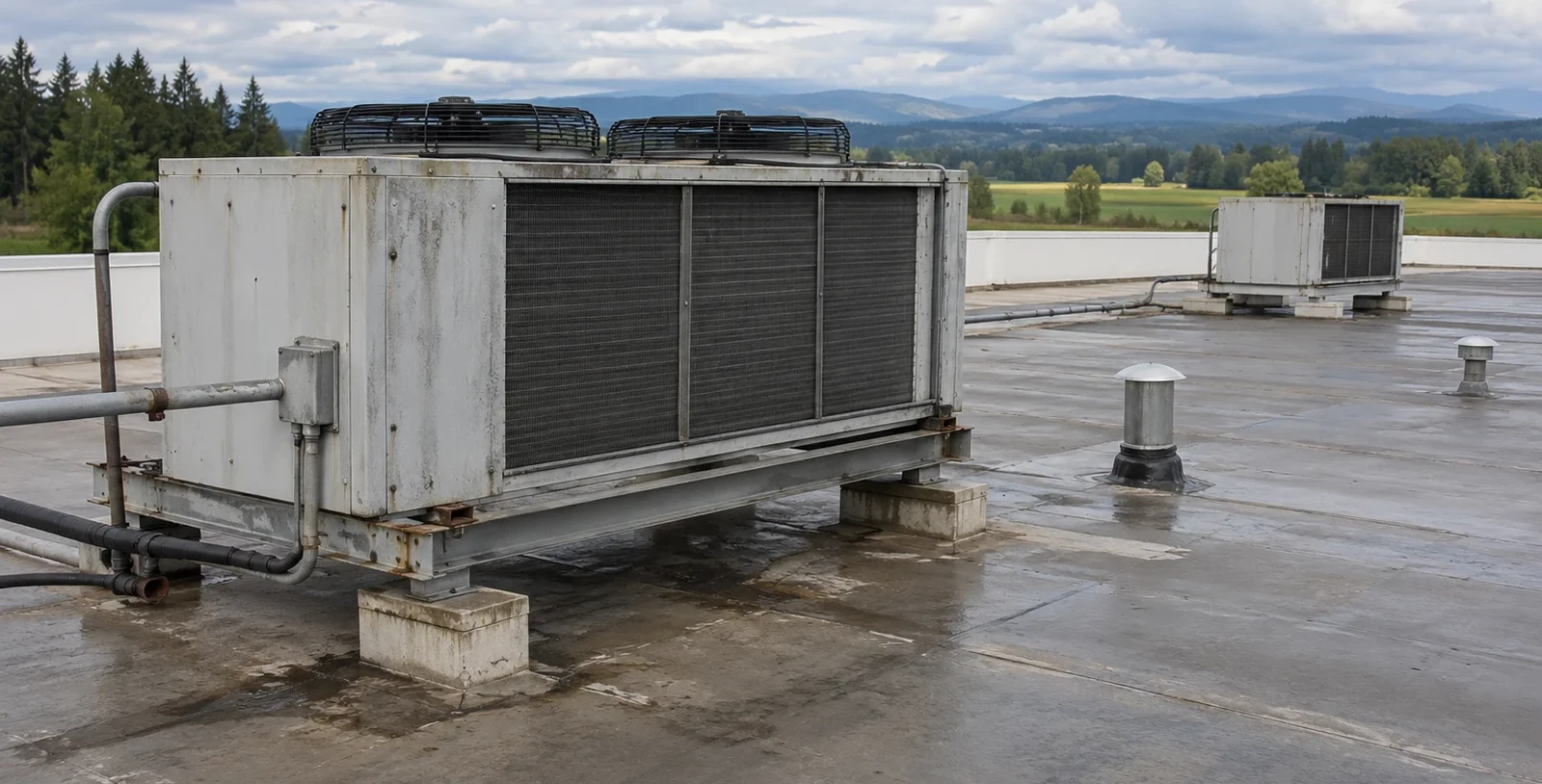
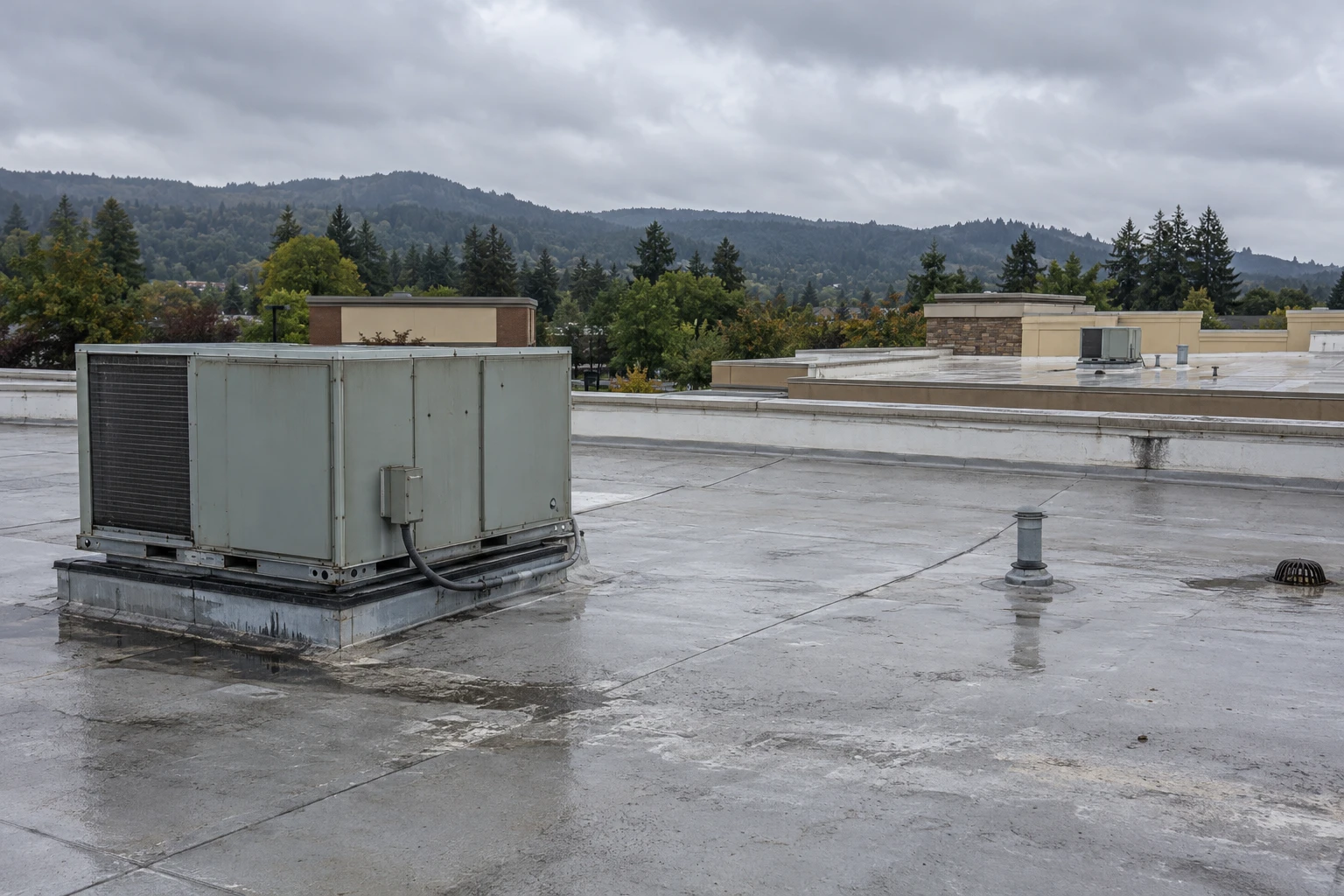
Where processing runs refrigeration, a building has condensers, evaporators and ductwork on or near the roof. Each one sits on a curb. Each curb is a seam. Roof loads from the equipment need a check, and the flashing at every curb needs a look.
Washdown matters. Cleaning crews spray water and chemicals inside the plant, and humidity rises into the roof assembly. A vapor retarder with a hole in it lets that moisture reach the insulation. Cold storage roofing deals with the same issue. We scan for damp insulation before pricing any membrane replacement, because a new sheet over damp board changes nothing.
The harvest calendar rules
Raspberries alone run 60 to 80 million pounds a year in Whatcom County, with dairy and eggs beside them. Harvest weeks are not roofing weeks. Trucks, workers and equipment fill the yard. A crane in the lot blocks the line.
We ask for the calendar before the bid. Roof work lands in the shoulder weeks: late winter, early spring or after the last pick. The long wet season limits those windows, so we reserve crew early. Bellingham's rain totals about 34.8 inches a year, peaking in November and bottoming out in July. July is also harvest. That conflict is real, and we put the days on the bid.
A first visit lists each roof and tags it by use, and the schedule follows the tags.
Wind, snow and gutters
Farm buildings stand in the open. Wind has a long run at the eave and the gable. Regional wind has run as high as 67 mph, in Bellingham in March 2016, and a bomb cyclone's easterlies damaged Sudden Valley homes in November 2024. Eave and rake trim get a continuous cleat and tight fastener spacing. Perimeter fastening goes on every bid. A loose ridge cap lets wind peel back the panels. We check ridge, rake and eave on each building and price the metal as its own line.
Yearly snow in Bellingham comes to roughly 10 inches, most of it falling December through February. Snow slides off a steep metal roof in sheets. It can strip a gutter, bend a downspout or land on a worker. Snow guards belong over doors and walkways.
Gutters on long barns collect a lot of water. A clogged downspout overflows the whole run. We check gutter slope, hangers and outlets. A gutter and edge metal line on the bid names the size and the hanger spacing.
SR 546 runs east from Lynden to Sumas, and a roof along that route gets the same checks on gutters and trim.
What drives the number
On a farm roof, area is the big input. Panel length, rib profile and gauge set the material. Access sets the labor: a barn with a long, steep pitch needs fall protection and slow work. Penetrations add detail time, and each skylight panel or vent stack gets its own boot or curb.
Disposal can be a line too. Old panels are metal and can be hauled, but insulation or liner under them may not be. We separate those items on the bid. A tear-off shows the owner the real cost of a replacement. A retrofit avoids the tear-off but needs a structure check. A re-screw and reseal costs the least and fits the roof that is only tired. The owner sees all three beside each other and picks. We price in that order: repair, retrofit, replace.
Punch and records
At closeout we walk each building with the owner. Fasteners are tight. Laps are sealed. Gutters flow. We photograph the work and record the panel and fastener type for the warranty file. Owners with a mix of buildings can compare options for a warehouse roof or a shed on the same property. For a second site near the border, Blaine sits just north on I-5.
Send the building plans and the harvest calendar, and the fastener count and every metal line get priced before the bid closes.
Warranty files for metal panels ask for the gauge, the finish, the fastener type and the install date. We write all four down and file the photographs with them. A claim ten years out starts with that sheet.
Commercial Roofing Questions
How do you tell condensation from a roof leak?
Pattern and timing. Drips on cold mornings that follow the ribs and leave rust halos point inside, not to the roof.
When is a retrofit better than re-screwing?
When whole panels are loose or the finish is gone. Scattered failures can be fixed with oversize fasteners and fresh sealant.
Can roof work happen during harvest?
It is hard. Yards fill with trucks, so the schedule uses shoulder weeks and blocks the dates the owner names.
Why scan a processing roof before replacing it?
Washdown moisture can saturate insulation under an intact sheet. A scan finds it before the bid.
Do snow guards matter on barns?
Over doors and walkways, yes. Snow slides off steep metal in sheets.
Send the building plans and the harvest calendar
Send the building plans, the roof spec and the harvest calendar. We will return the fastener count and a price for every metal line before the bid closes, so the owner decides what stays in.