Commercial Roofing in Sumas, WA
Commercial roofing in Sumas, WA at the SR 9 border crossing: overnight leak response, shift-aware phasing, layered older roofs and truck-lane staging plans.
Commercial Roofing in Sumas, WA
Commercial roofing in Sumas, WA at the SR 9 border crossing: overnight leak response, shift-aware phasing, layered older roofs and truck-lane staging plans.
Service Areas
Sumas in Bellingham
A leak at two in the morning is still a leak. Sumas, WA had 1,583 residents in 2020 and is the northernmost settlement on SR 9, where the Sumas-Huntingdon port of entry operates 24 hours a day. A town with an all-night crossing keeps odd hours. Operations tied to the border may run on shifts, and the roof above them does not get a day off.
So the bid has two parts. The first is the repair or replacement itself. The second is the clock: how a crew responds at night, how work phases around shifts and how trucks move around a crane. We price both, in lines a manager can read between calls.
Overview
Sumas
Overnight leak response
Calls are answered at any hour, holidays included. A call at night starts with four questions. Where is water entering? What sits below it? Can anyone move it? Is power or product at risk?
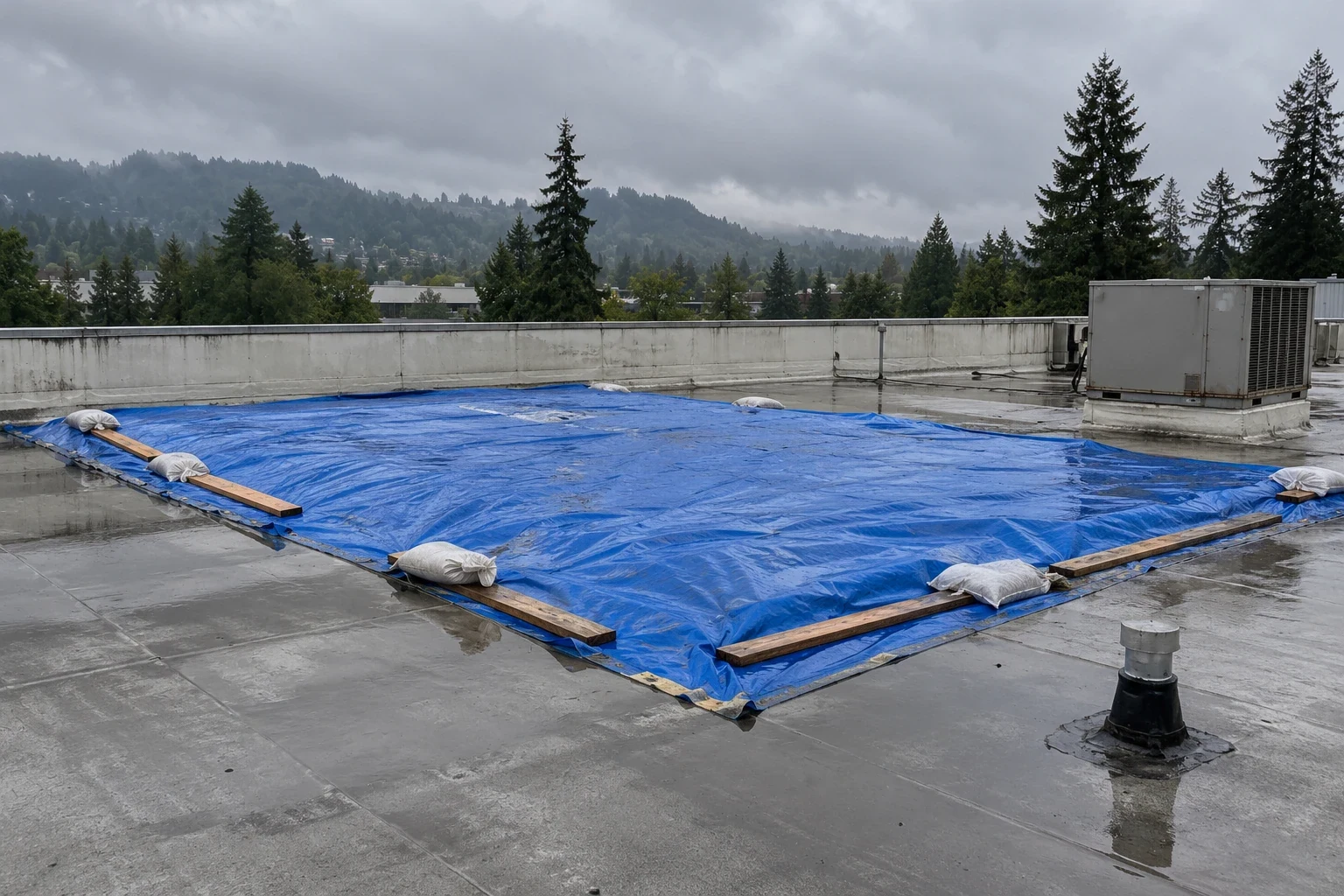
The crew arrives with tarps, temporary sealant and lights. The first goal is to stop the water. The second is to photograph the damage with a date and a location. A permanent fix follows in the dry window, and the temporary work is priced as its own line so a night call never hides inside a larger scope. A dry-in under emergency roof repair follows that order every time.
Roof access at night needs light and care. We set up work lights, keep the crew roped and confirm the walking path before anyone moves. A fall at night costs more than the leak.
Storm calls follow the same path. After a hard wind we run an edge check and write up any lift. A storm damage roof repair scope starts from the photos taken that night, so the owner has a record when the carrier calls.
Phasing around shifts
A building that runs three shifts has no quiet hour. We look for the lightest one and put the loud work there. We also divide the roof into sections that open and close inside a single window, so the crew can start a section after one shift change and finish before the next.
Noise and dust matter indoors. Fumes from adhesives can drift into air intakes. We map the intakes and plan around them, and we use low-odor products where the spec allows. The manager reviews the plan in advance. Where an area cannot tolerate any disruption, we schedule that section for a planned slow period and tell the owner the date.
A logistics operator with freight or brokerage space often cannot pause for a roof. We confirm the shift pattern at the first visit. We ask which bays hold product, which hold people and which hold both. The answer sets the order of the sections and the size of each opening.
Truck lanes and the crane
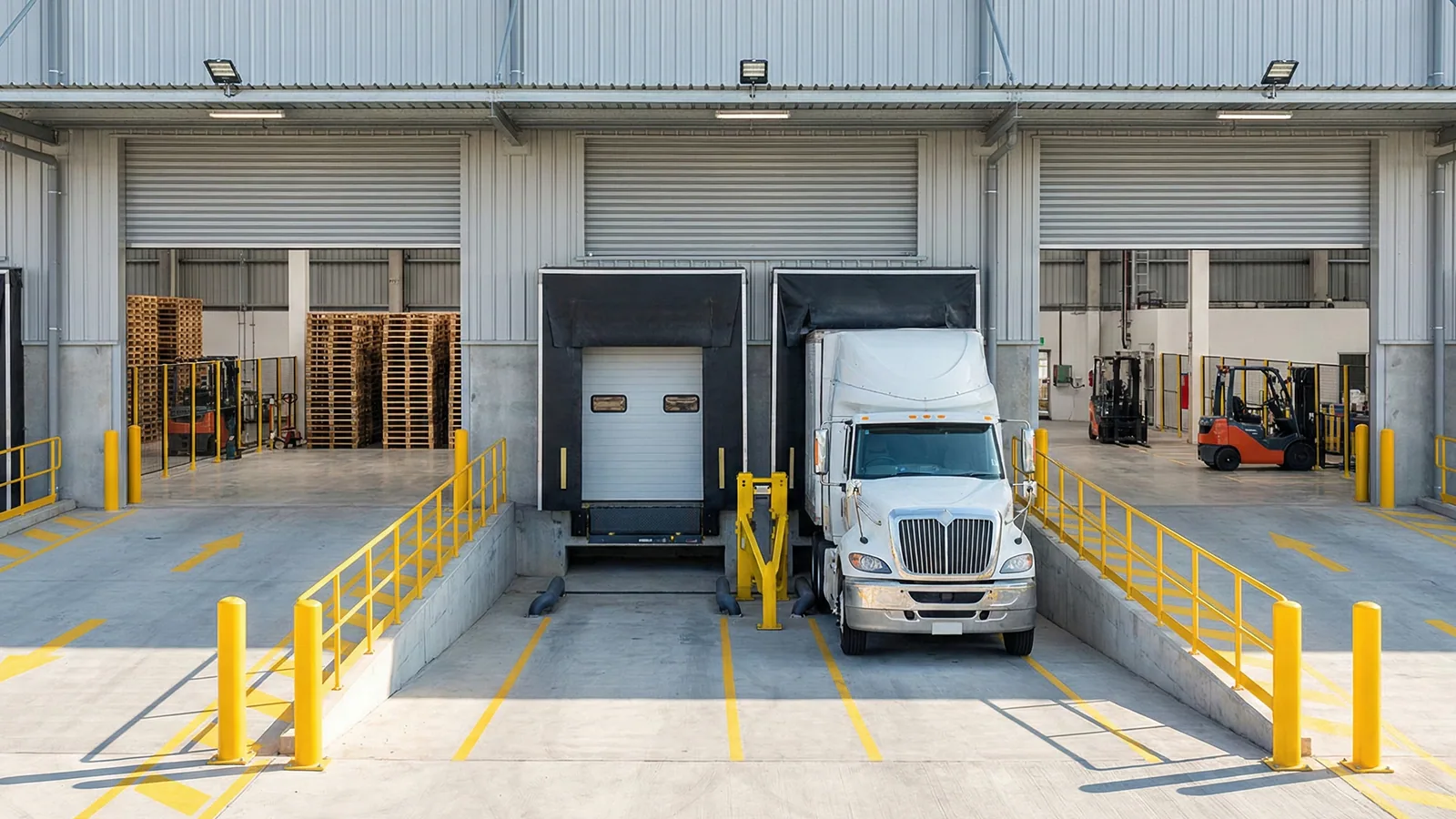
SR 9 carries traffic to the border, and trucks line up. A crane that blocks a lane or a dock stops freight. We plan the crane position with the site manager and mark it on the plan. Material arrives in off-peak hours and stages away from truck paths. We load the roof only with what the crew installs that day.
Dumpsters go where they do not cut a driveway. Debris chutes drop away from walkways. If a lift must cross a lane, we use spotters and set a time. A truck waiting at a blocked entrance costs the operator more than the crane rental, and that cost belongs in the planning.
Border queues change by the hour. A lane that is clear at six may be full by seven. We keep a dispatcher on the phone with the site manager during every lift, and the crane waits when the queue backs up. The cost of those minutes appears as standby on the bid.
Rail-hub age and layered roofs
Sumas was historically a railroad hub. Towns with that history can hold older buildings, and a core cut shows what layers a roof carries. A probe shows whether the board is sound. An older built-up or modified bitumen roof may carry patches from several eras.
A thick stack may leave the deck no margin for another layer, and then a tear-off is the answer. If the layers are thin and dry, a recover saves disposal and keeps the building working. The deck repair unit price goes into the contract, since old boards fail in unexpected places.
Old roofs also hide old decks. A skip-sheathed or plank deck takes fasteners differently from steel or plywood, and pull tests show whether the attachment will hold. We run them before we choose a system. A deck that fails a pull test needs sheathing or a different attachment, and that goes on the bid.
Wind, rain and the dry window
Bellingham's March 2016 gusts hit 67 mph, and by November 2024 a bomb cyclone's easterlies had damaged at least 16 homes in Sudden Valley. Edge metal and parapet caps take the first hit, so perimeter fastening goes on every bid. Bellingham gets about 34.8 inches of rain in a year, and only about 1,866 sunlit hours, with July the driest stretch. We plan terminations and metal for summer, and we carry standby crew and tarps for any open section. A section left open on a night shift is a section that leaks on a night shift.
What drives the number
Night premiums, standby hours and staging time sit beside the usual drivers: area, access, layers and details. We show each on its own line. The operator can see what a night crew costs, what a slow-period schedule saves and what a split-shift plan adds. A recover over a dry roof avoids tear-off. A replacement fixes the deck. A repair-first plan buys time for a larger job in summer.
Nearby routes help the schedule. SR 546 runs east from Lynden to Sumas, and SR 547 links Maple Falls over a low pass to the border town, so a trip to Sumas can take in more than one job. SR 9 also runs south through Nooksack.
Ordering lead time deserves a mention. Edge metal and special panels take weeks, and a late order in a short summer pushes a job into the wet season. The plan lists the order date next to the work date.
Punch and records
The site lead walks the roof with us at closeout and sees tight flashing, flowing drains and tooled sealant. The binder holds photos, the layer log and the after-hours contact sheet. Send the roof plan, the shift schedule and a target window, and every section, night line and metal line gets priced before the bid closes.
Commercial Roofing Questions
Can the work run without stopping a night shift?
Yes. We split the roof into sections that open and close inside one window and put loud work in the lightest hour.
What does a night leak call involve?
Four questions, a crew with tarps and lights, and a photo set. Permanent repair follows in the dry window.
How do you protect truck lanes from a crane?
We fix the crane position with the site manager, stage material off the lanes and use spotters for any crossing.
Are older roofs here risky to recover?
Only if the stack is thick or the board is damp. A core cut and probe checks tell.
Why price standby hours?
A section cannot sit open overnight in the wet season, so standby crew and tarps are part of the job.
Send the roof plan and the shift schedule
Send the roof plan, the shift schedule and your target dry-in window. We will price every section, night line and metal line before the bid closes, so the owner decides what stays in.