Commercial Roofing in Blaine, WA
Commercial roofing in Blaine, WA at the border: freight warehouse roofs, salt-air fasteners, marina buildings and wet-season dry-in days priced by line.
Commercial Roofing in Blaine, WA
Commercial roofing in Blaine, WA at the border: freight warehouse roofs, salt-air fasteners, marina buildings and wet-season dry-in days priced by line.
Service Areas
Blaine in Bellingham
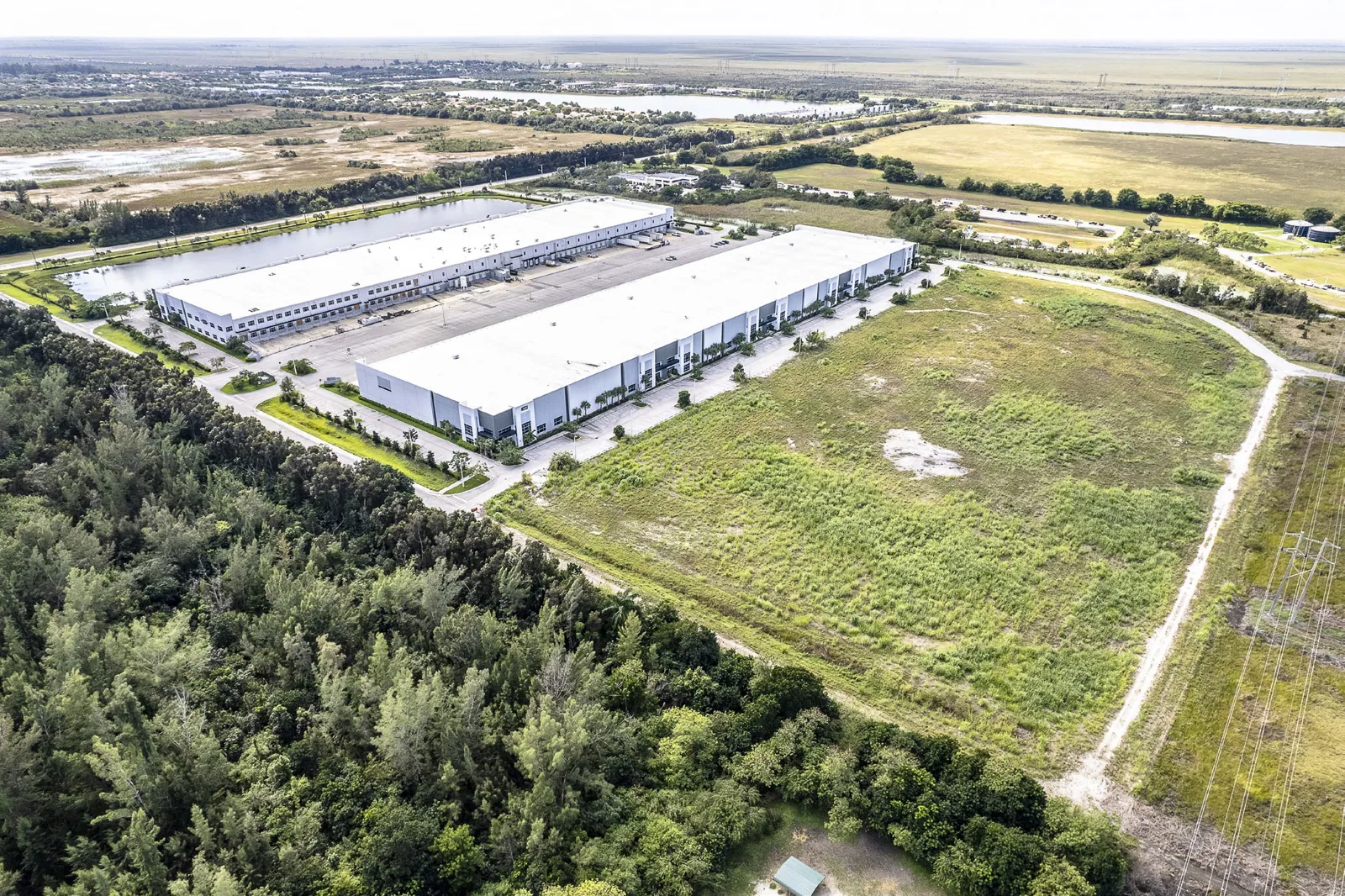
A dock door that never closes is a roof problem too. Blaine, WA is the northernmost city on I-5, with 5,884 residents in 2020, and the Peace Arch and Pacific Highway crossings drive warehouses, freight and parcel services on the city's east side. Freight buildings keep hard hours. Trucks queue. Doors stay open. A leak over a dock costs a shift, and a roof job over one costs another.
The city also gets about 42 inches of precipitation a year and operates two large marinas. That is a maritime climate with salt-air exposure on the waterfront. Roofs here face freight schedules on one side and salt on the other. We price both.
Overview
Blaine
Freight buildings never close
SR 543 serves the Pacific Highway truck crossing in Blaine. Freight moves through the crossing all day. A warehouse that handles cross-border freight has little room to tell its customers to wait for a reroof. Dock doors open on the operator's schedule, and forklifts cross the same slab under the work.
So the roof is phased. A bay opens, a section tears off, the section dries in and closes before the shift turns over. We plan the crane away from dock aprons and truck lanes. We stage materials where they do not block a swing. Deliveries come in off-peak hours the operator names.
A distribution center roof and a warehouse roof share the same worry: rack and product directly under the deck. A drip over a pallet of parcels is a claim. We put dry-in standby on every open section.
Parcel operations add a second clock. Sort windows run to a deadline, and a leak that stops a sort costs more than the repair. We ask for the sort schedule and place the noisy work outside it. A lift that lands during a sort is a lift that waits. Those waiting hours go on the bid as standby so nobody argues about them later.
Dock edges and the parapet
The dock side of a warehouse takes the most abuse. Door headers, canopies and parapets all sit at the same wall. Trucks back in and brush the canopy. Wind drives rain at the headers. Parapet caps work loose.
We inspect every dock-door header, canopy edge and coping cap. We check base flashing height and counterflashing laps. Where a canopy has been hit, we repair the metal and reseal the joint. A coping cap and edge metal line goes on the bid with the lineal footage, so the owner sees what the dock side costs apart from the field.
Drains matter as well. A parapet roof depends on scuppers and interior drains. A scupper three inches too high holds a pond against the wall. We measure and reset where needed.
Dock seals and shelters matter for the roof too. A torn dock shelter lets wind into the building, and a pressurized warehouse pushes up on the deck from below. We note the condition of each shelter in the report, even though the owner's dock vendor fixes them.
Salt air on the waterfront
Blaine's waterfront and marinas bring salt to the air. Salt speeds corrosion on fasteners, trim and rooftop equipment. A bare galvanized screw near the water begins to stain in a season.
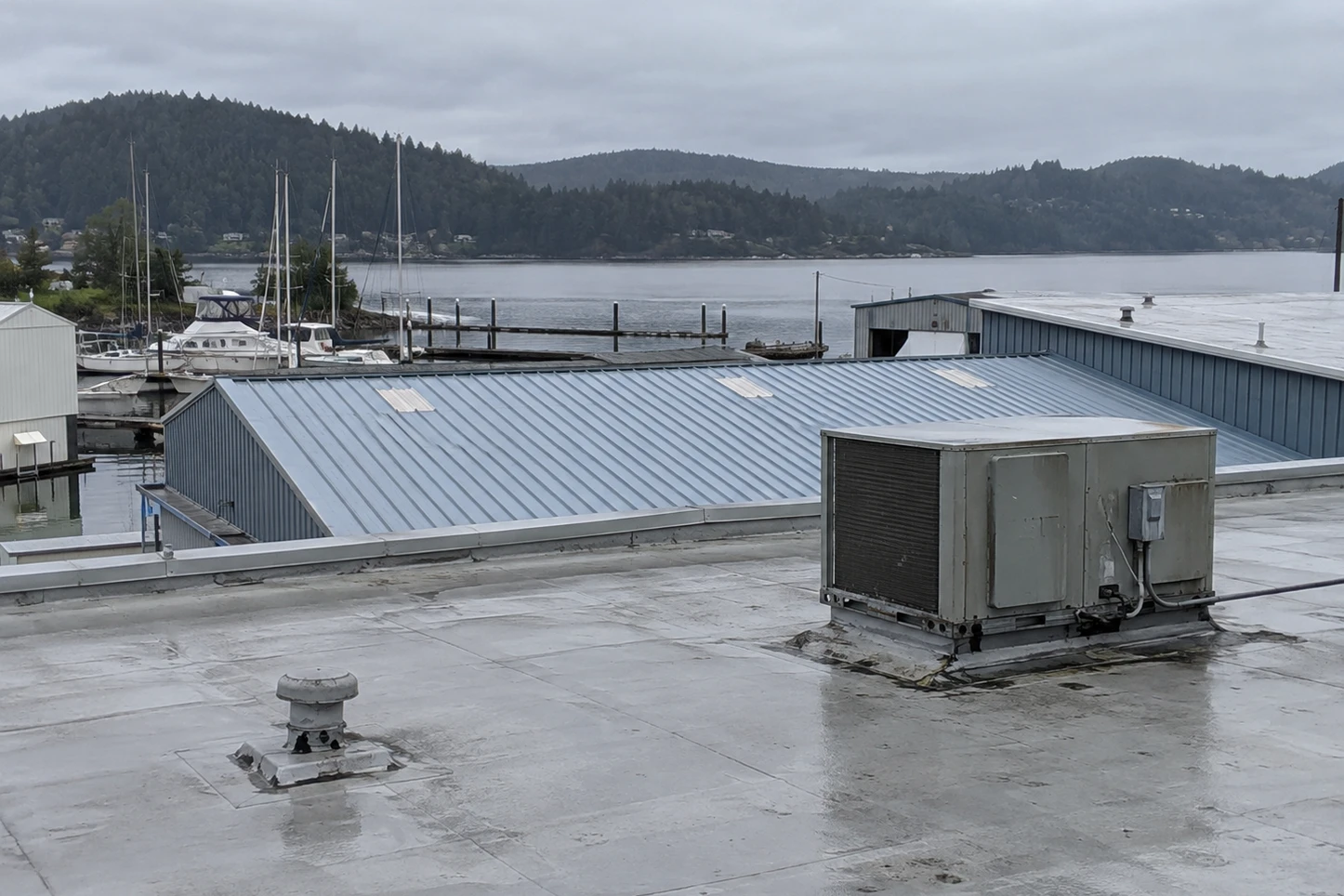
For marina and waterfront buildings we specify coated or stainless fasteners, marine-rated sealants and coated metal trim. We look for rust bleed at screws, white corrosion on aluminum and chalking on painted metal. Each finding gets a photo and a count. The corrosion line is a small piece of the bid and a large piece of the life.
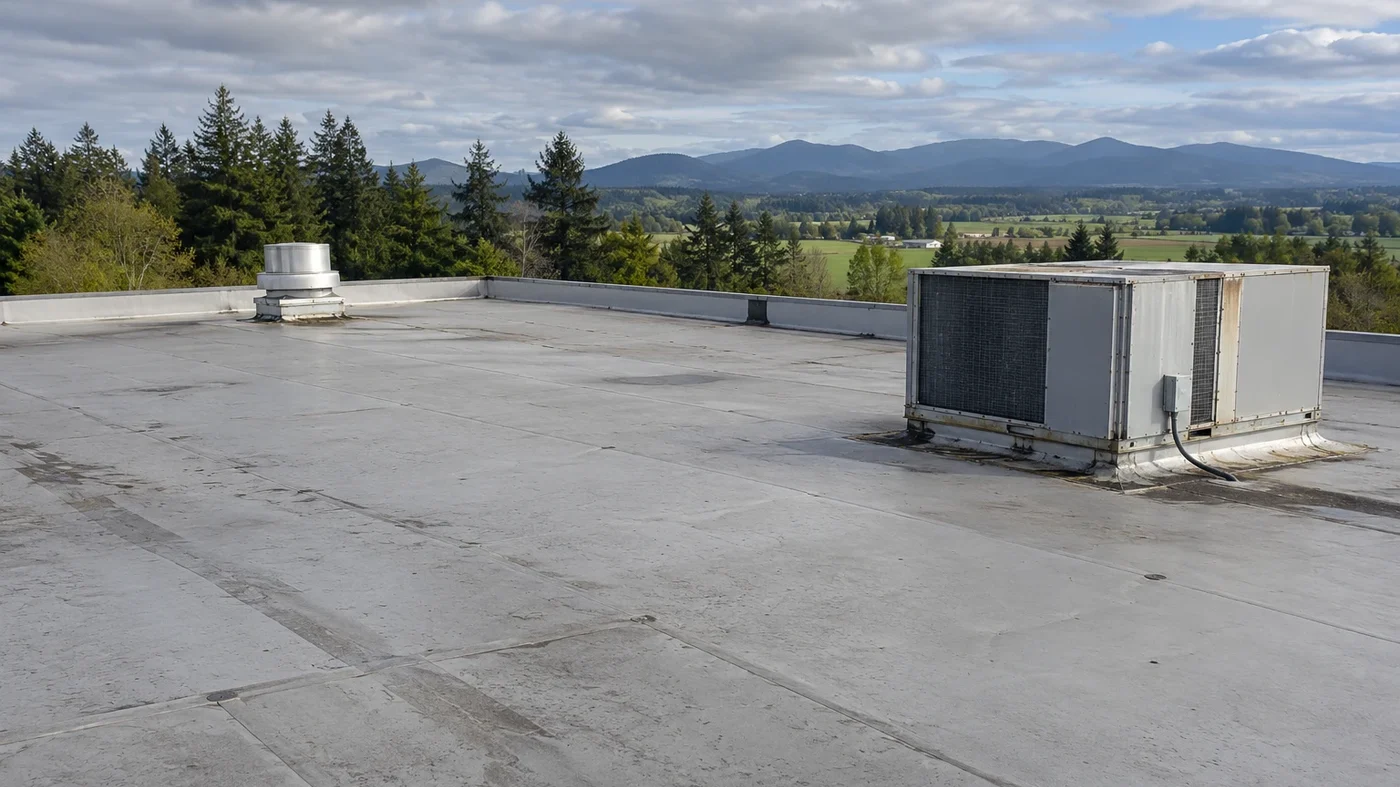
Rooftop equipment corrodes too. Condensers and fan housings near the water carry coastal coatings, and their curbs need sealant that handles salt. We list each unit and note its condition.
Marinas bring their own roof types. Covered slips, boat sheds and harbor offices use light metal over open frames, and wind loads those roofs from below as well as above. We check the clips and purlin connections for corrosion and note any loose panel.
Wet season and dry-in days
Blaine's 42 inches of precipitation is wetter than Bellingham's 34.8. Blaine also gets about 9 inches of snow a year. Bellingham's sunshine totals only about 1,866 hours. A roof here dries slowly, and a damp deck can hold a crew for a morning.
We plan terminations and metal for summer. July is Bellingham's driest month. We carry standby crew and tarp material for every open bay. Snow guards and gutter hangers go in before December.
Interior drains fed by long runs of pipe need a flush before the wet season. Debris and grit collect at elbows. A flushed line costs an hour. A backed-up line floods a roof that was designed to drain, and the water finds the lowest seam.
Wind off the water
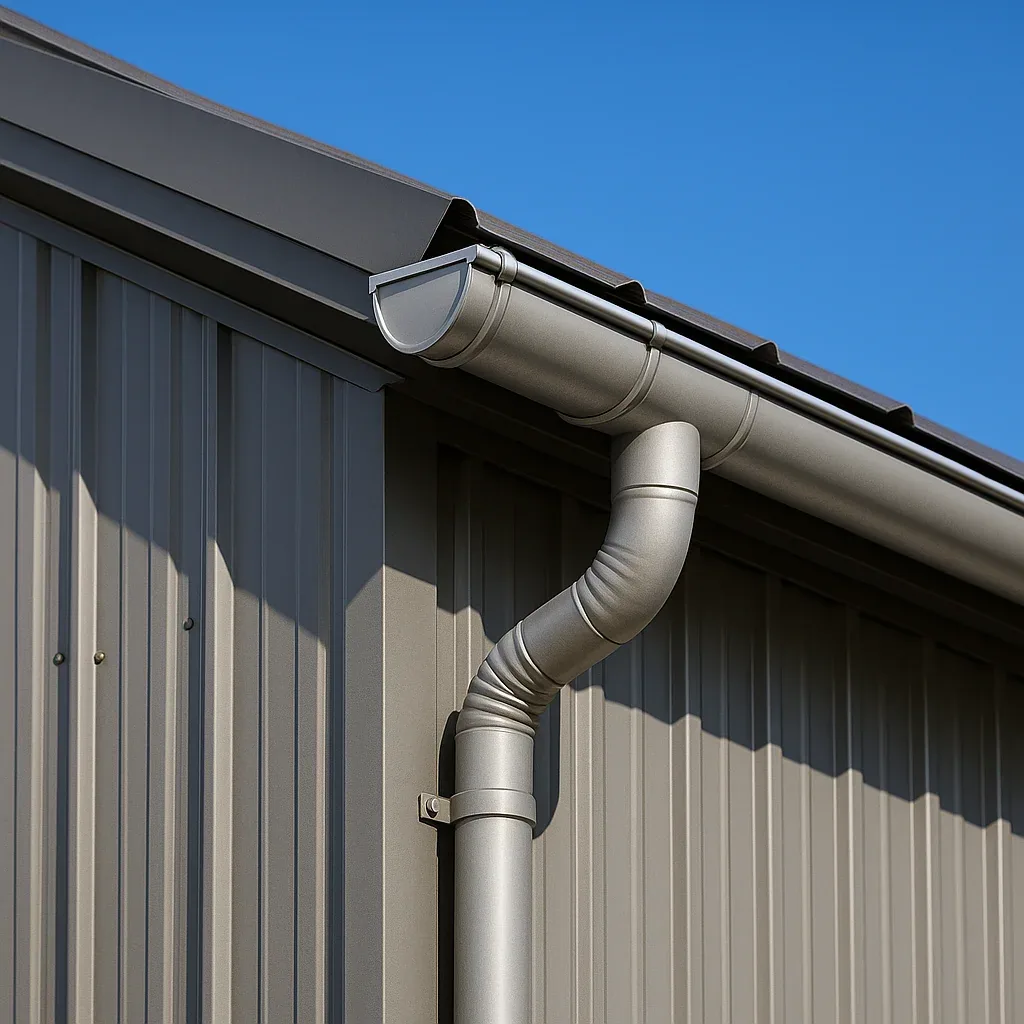
March 2016 brought 67 mph gusts to Bellingham, and in November 2024 a bomb cyclone moved easterly winds across the region, damaging at least 16 Sudden Valley homes. Those are Bellingham-area events, and a building at Blaine's water's edge or on open ground has little to break the wind either way. Every bid carries perimeter fastening, with the densest pattern at the corners. We check ridge caps, rake trim and drip edge on pitched metal, and coping on flat roofs. Loose edges let wind under the sheet.
After a named storm, we run a quick check of the edges and photograph any change. The photos make an insurance claim easier and tell the owner whether a minor repair can wait for dry weather.
What drives the number
On a freight roof the big inputs are area, tear-off depth and the number of phases. A roof that closes in three phases costs more in mobilization than one that closes in one. A shift-driven schedule adds standby. Dock edges add lineal footage. Salt-rated hardware adds a small premium per fastener.
We show each as a line. The owner sees base roof, edge metal, corrosion hardware, phasing and standby on separate rows, and picks what stays in. A recover over a dry, sound roof saves the tear-off and keeps the building working. A full replacement costs more, and takes longer, but fixes the deck as well.
Punch and records
At closeout we walk the roof with the operator. Doors operate. Drains flow. Sealant is tooled. The binder holds photos, warranty forms and the corrosion log. A yearly visit clears debris and checks the dock side first.
Owners with buildings along the SR 548 route to Birch Bay or on the way to Semiahmoo can fold those visits into one trip. Send the roof plan, the dock schedule and the target dry-in window. We will price every termination and metal line before the bid closes. The same method fits a logistics operator's buildings in Ferndale.
Commercial Roofing Questions
Can a freight warehouse stay open during a reroof?
Yes, by bay. Each section closes before the shift turns, and the crane stays off the truck lanes.
Why are dock edges priced separately?
Headers, canopies and coping take the most damage. Their footage and repair type vary, so they get their own line.
What fasteners suit a marina roof?
Coated or stainless screws with marine-rated sealant. Bare galvanized hardware stains in a season.
Does Blaine's rainfall change the plan?
It narrows the dry window. Terminations and metal move to summer, and standby crew covers open bays.
When should snow guards go on?
Before December, when the first snow arrives. Over doors and walkways they matter most.
Send the roof plan and the dock schedule
Send the roof plan, the dock schedule and your target dry-in window. We will price every termination, dock edge and metal line before the bid closes, so the owner decides what stays in.