Acrylic Roof Coatings in Bellingham, WA
Acrylic roof coatings in Bellingham, WA: water-based, reflective and budget-friendly, with the rain-free cure window and drainage limits that govern the job.
Acrylic Roof Coatings in Bellingham, WA
Acrylic roof coatings in Bellingham, WA: water-based, reflective and budget-friendly, with the rain-free cure window and drainage limits that govern the job.
Roof Systems
Acrylic Roof Coatings in Bellingham
An acrylic coating needs about a day without rain. In Bellingham, WA, that is a real ask. From November on the rain is frequent, and a coat applied at noon and rained on at four is a coat that washes off the roof. So the calendar is the first thing we price, before gallons or labor.
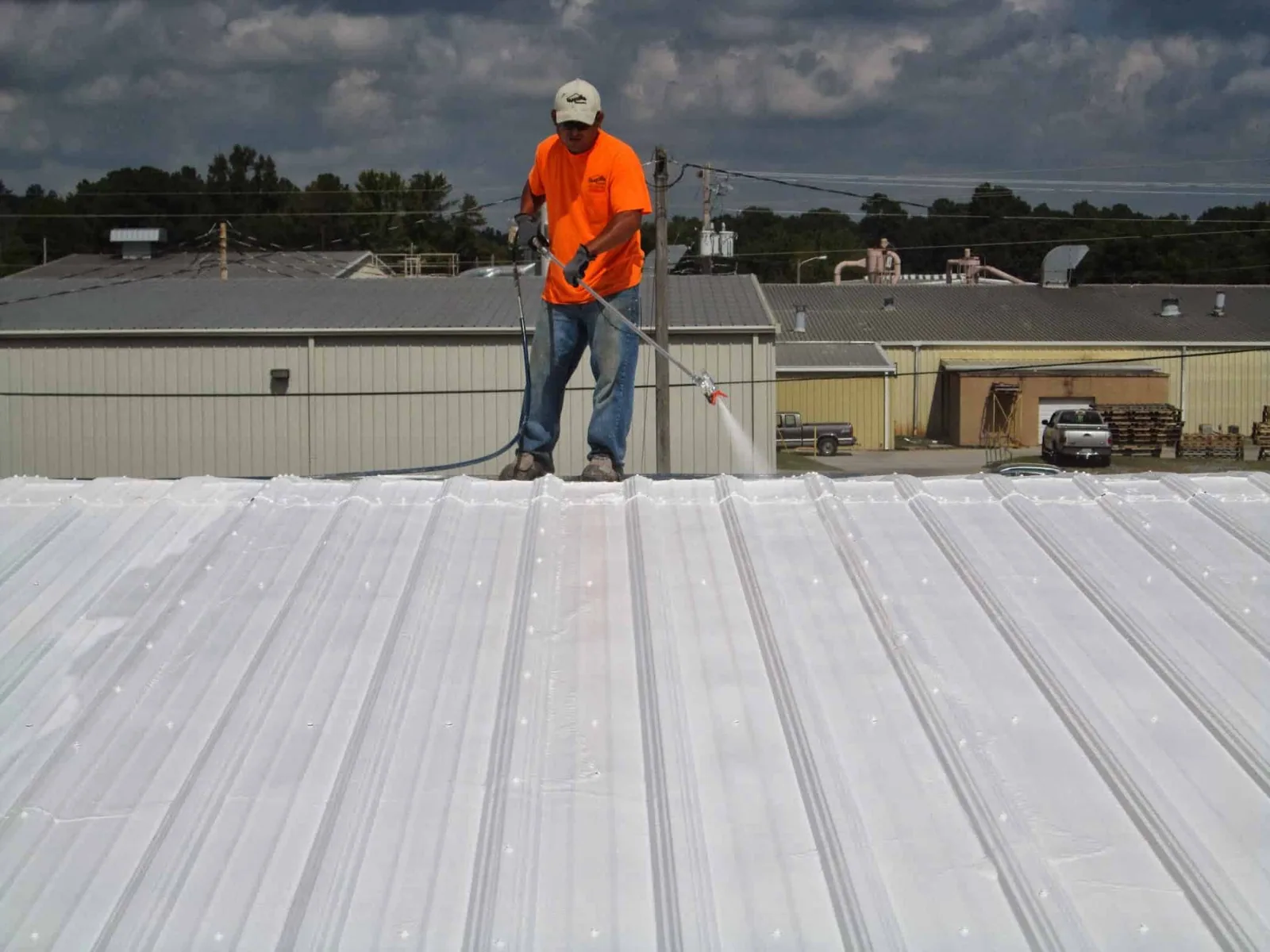
Acrylic roof coating is a water-based, elastomeric liquid. It rolls or sprays onto a sound roof, dries into a white or tinted skin and extends the life of the membrane beneath it. It costs less per gallon than silicone and cleans up with water. It also asks more of the weather and the roof slope. When the roof fits, it is one of the most economical ways to restore an aging surface.
Overview
Acrylic Roof Coatings
Water-based, with limits
Acrylic cures as water leaves the film. That means warm, dry air and a clean, dry surface help it set. Rain before cure can wash it away or leave streaks. Dew can soften it overnight.
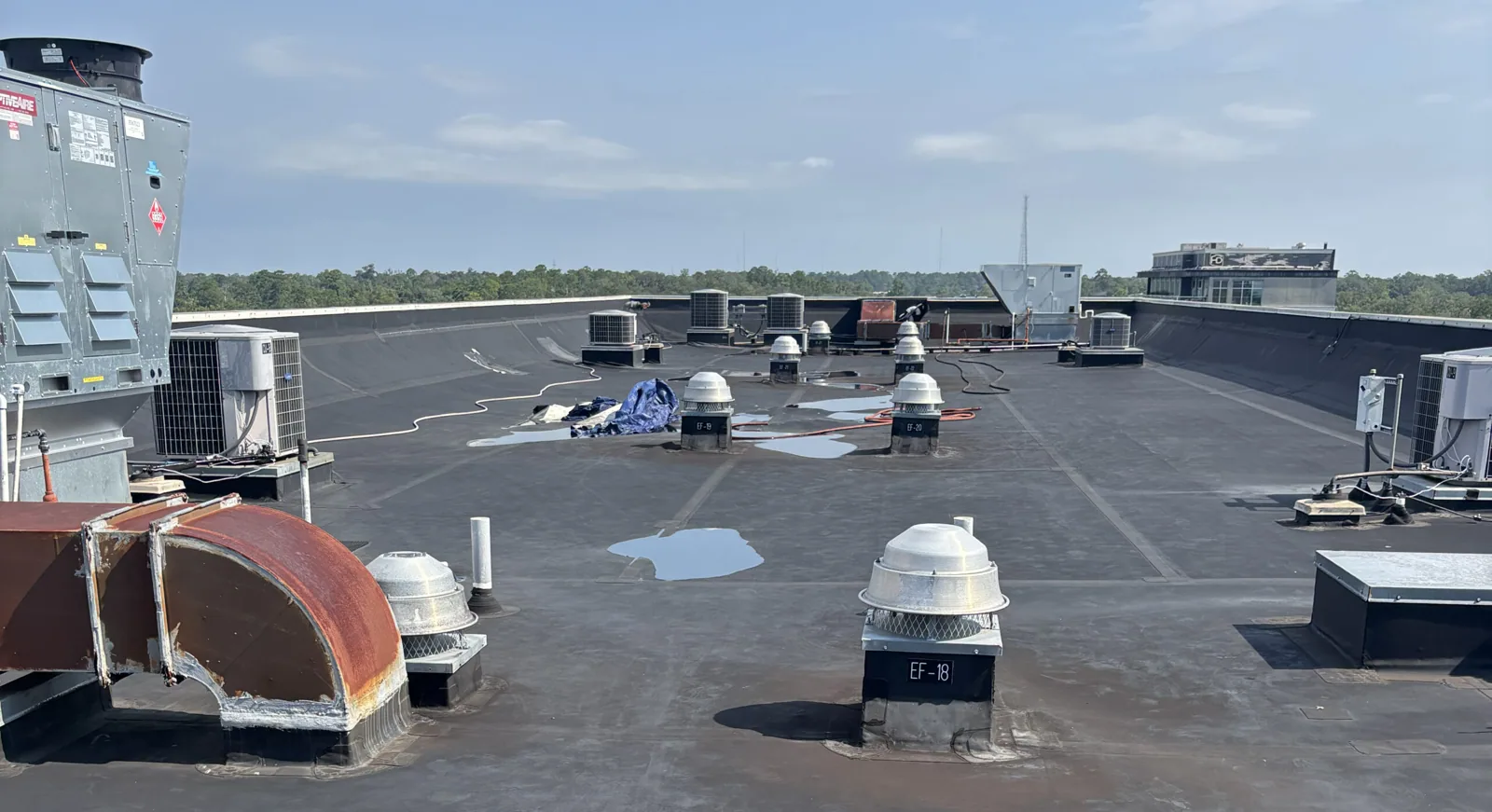
The coating handles normal wet and dry cycles well once cured. It does not like standing water. Ponding for more than a couple of days can soften it, lift it and cause blisters. For a roof that ponds, silicone is the better pick, and we say so.
Cold slows everything. Below the product's minimum temperature, the film will not form. In Bellingham, late spring through early fall, with July the driest month, gives the best chance. November, the wettest month, is a poor time for any acrylic coat.
Humidity matters as much as rain. Water-based films dry by evaporation, and air near saturation slows it. A foggy morning can hold a coat tacky until afternoon. We use a moisture meter on the surface and a dew point reading on the air before each pass, and we shift the start time when readings are marginal.
Prep is most of the job
A coating sticks to what is under it. We power wash the roof, remove loose material and treat moss and algae, which are common in this climate because about 1,866 hours of sun a year keeps surfaces damp. Dirt and mildew left behind block adhesion.
Repairs come before the coat. Open seams, cracked flashings and loose fasteners are fixed. Reinforcing fabric goes into the wet coating at seams, curbs and penetrations to bridge movement. A coating does not close a hole, and a skipped repair shows up as a leak under a new roof skin.
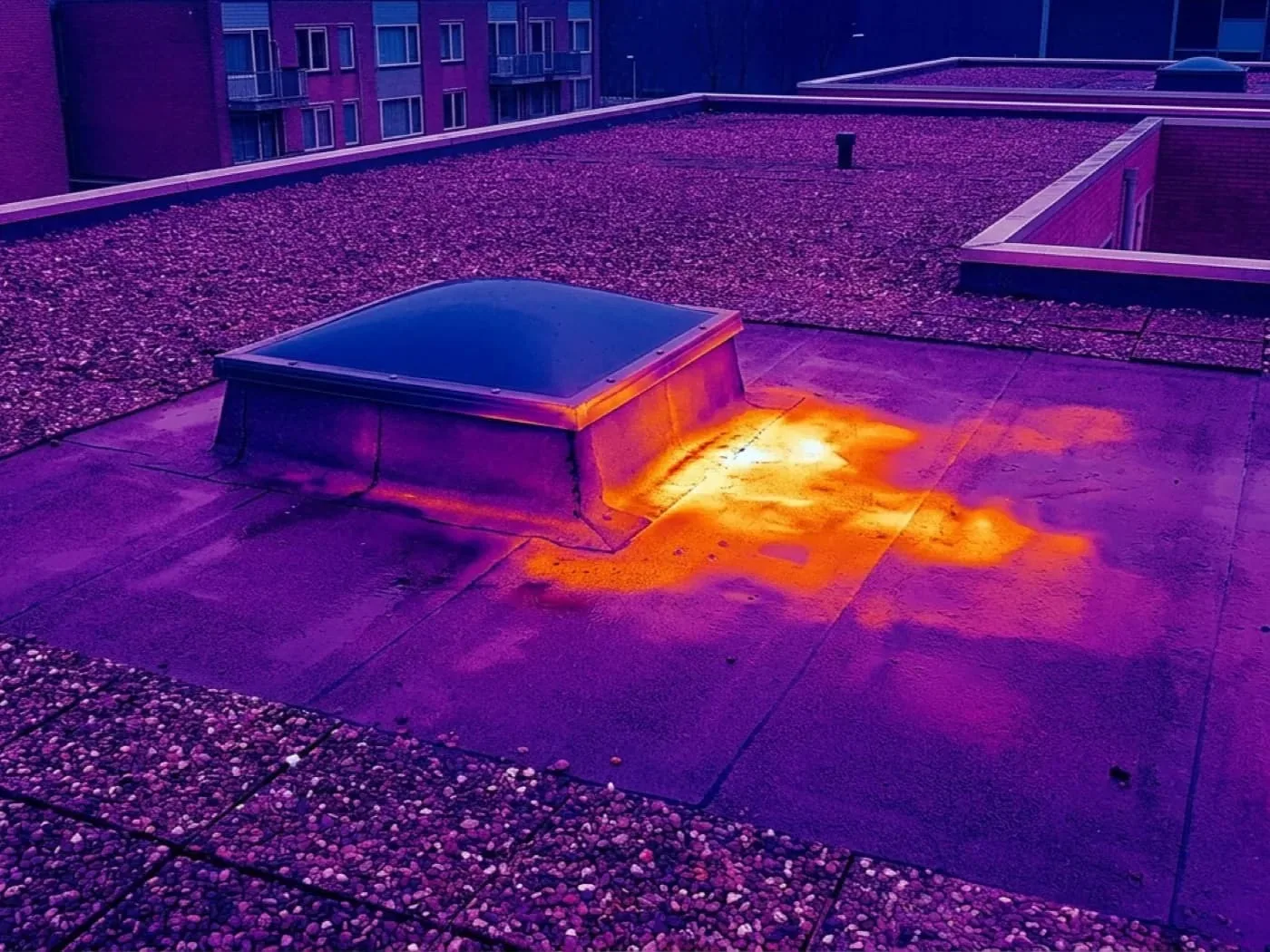
Moisture below is the larger risk. A moisture survey shows where insulation is wet, and those areas come out. Coating over a wet assembly traps the water and rots the deck. We do not coat a roof until the scan says it is dry.
Rust on metal needs its own step. We wire brush or abrade loose scale, treat the bare steel with a rust-converting primer and spot-prime fasteners. Painting over active rust gives a coat that peels in sheets. The prep line on the bid shows the hours, so the owner sees where the money goes.
Cleaning also tells us about the roof. A wash reveals soft membrane, open seams and previously hidden damage. If the wash exposes more than the survey showed, we stop and re-price rather than coat over it.
Coats, thickness and primer
Most acrylic jobs use a base coat, a reinforcing layer where needed and a top coat. Each layer cures before the next goes on. Primers help on metal, rusted surfaces and some old membranes.
Thickness sets the life. The spec names a dry film thickness, and we check it with a gauge. Material is bought by the gallon, and coverage depends on the surface. A rough roof takes more than a smooth one.
Edges and details get extra material. Parapet bases, curbs, drains and seams all see more wear. We double the coat at those spots and record the thickness in the daily log.
The final surface is white or light-tinted and reflective. In a low-sun market the cooling gain is smaller than in hot cities, though it still lowers roof temperature on warm afternoons.
Application method changes the look and the speed. Rollers give control and push material into rough surfaces. Airless spray covers big areas fast but needs wind control to avoid overspray. On a windy site, rollers win. On a sheltered roof with a long continuous field, spray saves days.
Wear, wash and recoat
Acrylic wears at traffic paths and ponding spots. Moss grows on the surface in wet years, and dirt settles in. A wash once or twice a year keeps the surface clean and the reflectance up.
A recoat extends life. Because acrylic bonds well to itself, the same product can go back on after cleaning. That is an advantage over silicone, which is picky about what goes over it. We set a recoat interval in the closeout and record the thickness so the owner can plan.
After windstorms, we check edges and seams. The March 2016 gusts reached 67 mph, and a coating lifts first at a loose edge. A maintenance program catches small lifts before water gets under them.
Drains and sumps need attention in every visit. Moss and grit collect there, and a slow drain turns a coating that dislikes ponding into a problem. We clear the sumps, check the strainers and flag any low spots that hold water past a day.
What it goes over
Acrylic bonds to many surfaces. Metal roofs, modified bitumen, built-up, single-ply and foam can all take it, with the right primer and prep. On old modified bitumen, it seals and reflects. On spray foam, it protects against UV.
Some surfaces are poor matches. Roofs that pond water, roofs with a heavy chemical film and roofs with deep rust or wet insulation need another answer. We test an area for adhesion before a full coat.
Cleaning through recoating follows the same sequence as any roof coating restoration, and the cost of a coat is a fraction of replacement.
Where it suits the budget
Flat and low-slope roofs in decent shape, with good drainage, are the sweet spot. Retail and light-industrial roofs along the Guide Meridian corridor and near the Bellis Fair interchange are the typical candidates when the owner wants to extend life without a tear-off.
Institutional owners weigh it as well. A roof at Whatcom Community College or Bellingham Technical College may suit a coat when the membrane is sound, though each roof must pass the moisture and slope test first.
When a roof is past coating, we recommend a replacement and show the comparison on the bid.
Commercial Roofing Questions
How long must it stay dry after the coat?
Plan for a full rain-free day at minimum, more in cool or humid air. We read the forecast and the dew point and apply the last coat only when the evening and night look clear.
Will acrylic hold up where water ponds?
Not well. Standing water softens the film and lifts it. On ponding roofs we fix the drainage first or choose silicone.
Can I recoat acrylic later?
Yes. It bonds well to itself after cleaning. We note the interval in the closeout and record the thickness so the next recoat is planned.
Does the roof need to be cleaned first?
Always. Moss, algae and dirt block adhesion. Power washing and biocide treatment are line items, and the roof must dry before the first coat.
What does a coating cost compared with replacement?
Less, usually by a wide margin, when the roof is sound. Cost follows area, repair count and prep. We price both options so the gap is visible.
Send the roof photos and the slope notes
Send the drawings, the roof age and any history of ponding. We will price the prep, the repairs and the coat as separate lines before the bid closes.