Roof Coating and Restoration in Bellingham, WA
Silicone and acrylic roof coatings for sound Bellingham, WA commercial roofs: cure windows, moss prep, bid lines and when replacement is the cheaper call.
Roof Coating and Restoration in Bellingham, WA
Silicone and acrylic roof coatings for sound Bellingham, WA commercial roofs: cure windows, moss prep, bid lines and when replacement is the cheaper call.
Commercial Roofing Services
Roof Coating and Restoration in Bellingham
A coating cures on sun and dry air. Bellingham, WA has less of both than most places. The city logs about 1,866 hours of sunshine a year, and July is the driest month. That makes the cure window the biggest line in any coating bid. The material is the smaller part. The days it needs are the expensive part.
A coating restores a roof that is still sound. It seals small defects, renews the surface and adds years. It does not fix a saturated roof. Know which one you own before you spend a dollar on drums.
Overview
Roof Coating and Restoration
Does the roof qualify
Three tests decide it. Is the insulation dry? Are the seams and flashings intact? Does the deck drain?
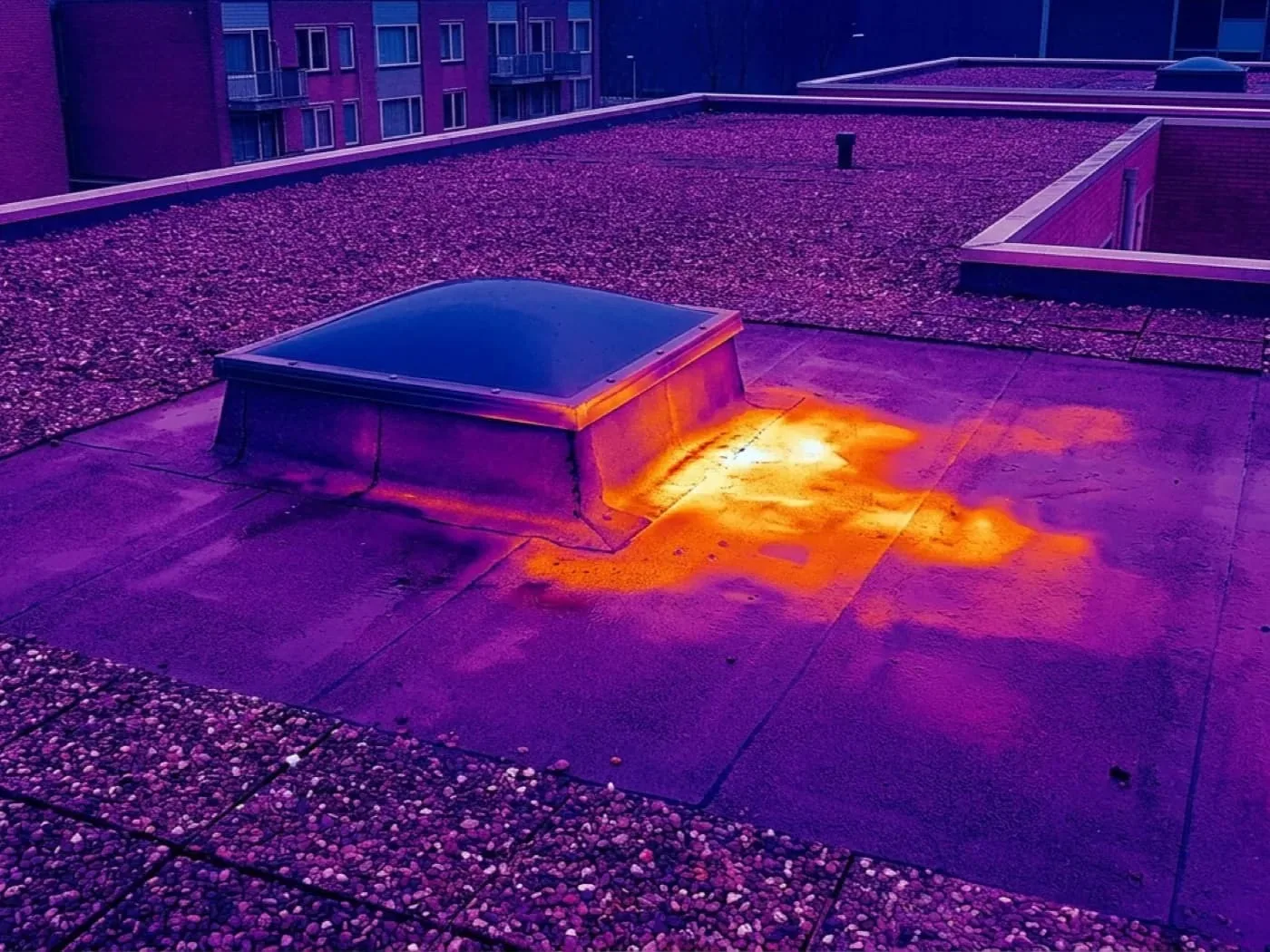
We answer the first with an infrared moisture survey and a few core cuts. Dry board means the roof can take a coating. Saturated board means it cannot. A coating over damp insulation traps the water and speeds the next failure. We say so on the bid, and we price a replacement instead.
Seams get a probe check. Open laps get reinforced before the coating goes on. Flashings get re-detailed. If more than a small share of the field needs that treatment, the repair cost climbs and the comparison with a new roof tightens. We show both numbers side by side.
Age is a poor guide. Condition is the guide. A twelve-year-old sheet that was washed and kept can take a coating. A seven-year-old sheet that ponded and was walked hard may not. We grade the surface, the seams and the drainage separately. A roof can pass two and fail the third. When it does, we price the fix for the third or the full replacement, and let the owner pick.
Silicone or acrylic
Wet climate favors silicone. It tolerates standing water. It sheds moss better than most alternatives and stays flexible in cold snaps. Acrylic is cheaper and easier to apply. It does better on roofs that drain well, and it can soften under long ponding.
Check the substrate before choosing. Silicone will not bond over some earlier coatings. Acrylic residue and oily dust both cause failures. We test adhesion on a small patch first. Results go in the file. A silicone coating suits low spots and long wet seasons. An acrylic coating suits a steeper, well-drained roof with a tight budget.
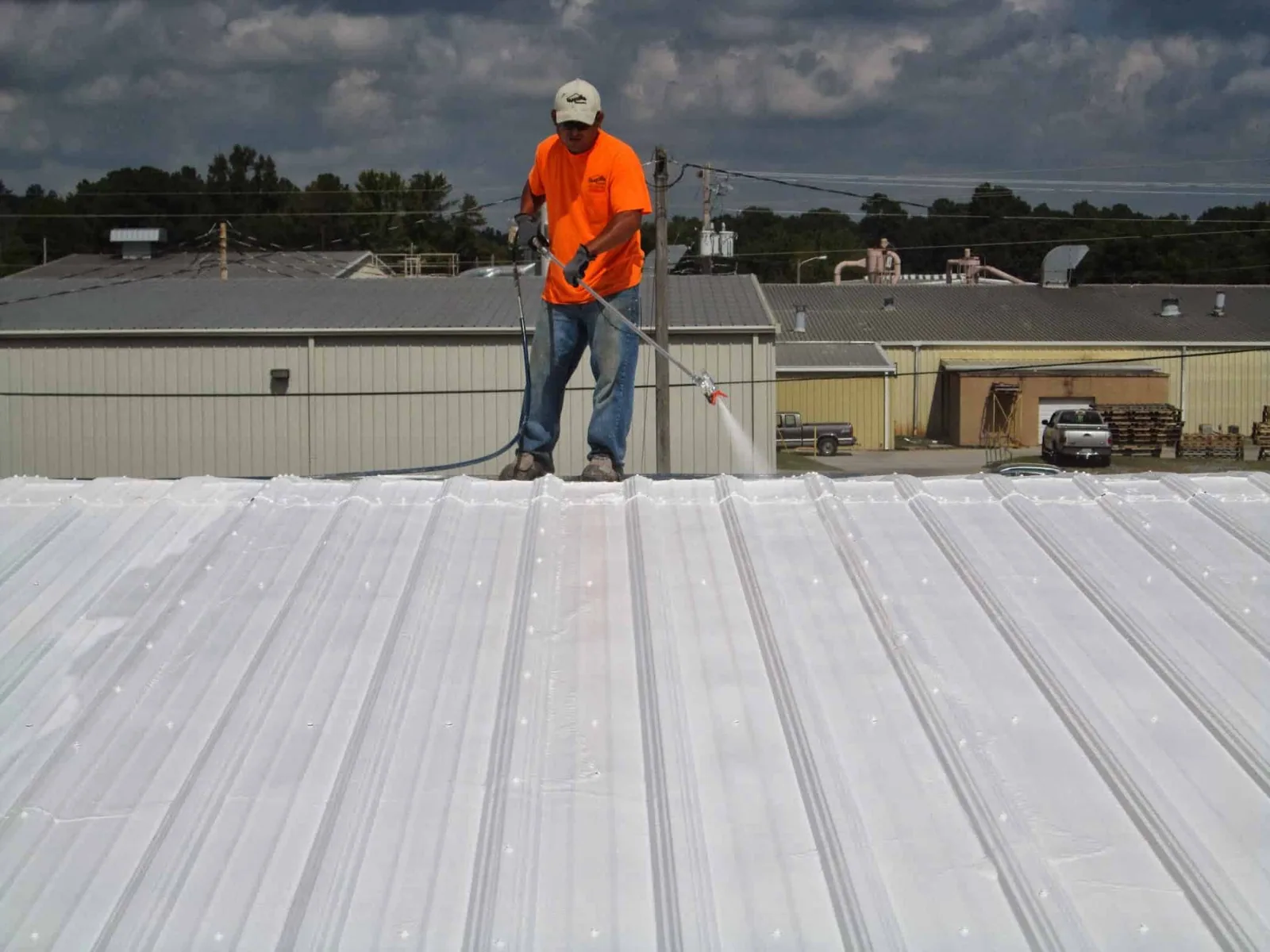
Thickness is the other number. A coating is measured in mils, wet and dry. Too thin and it wears through in a few seasons. Too thick and it cracks or traps solvent. We set the target on the bid, check wet film at each pass and record the dry result. That record is the proof the owner paid for the coverage and got it.
Prep is the bid
Most of the labor is not the coating. It is the wash. Bellingham roofs carry moss, algae and fine grit. All of it stops adhesion. We pressure wash, treat the growth and let the deck dry. Drying is where the schedule slips. A damp deck after a wet week can lose a day, then another.
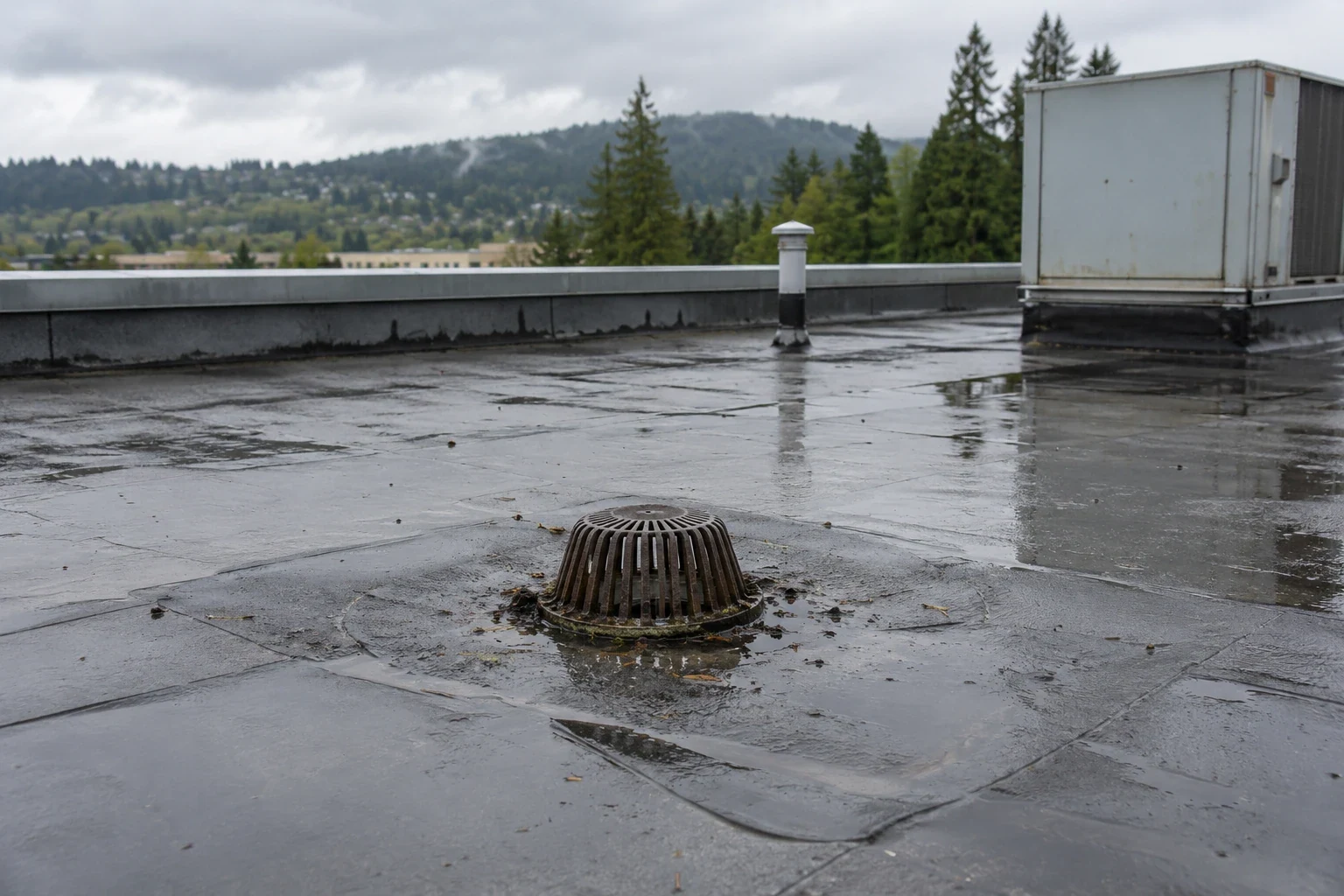
After the wash comes the repair. Fasteners reseated. Seams reinforced with fabric and mastic. Penetrations sealed. Drains cleaned. Low spots marked. Each step is a bid line. You see what the prep costs before you see what the coat costs.
Edge metal and curbs get coated too, but only after repair. A rusted coping cap takes a primer, not a topcoat. A rotted curb gets rebuilt first. Those are separate lines, priced by the foot or by the unit. Skipping them to hit a price makes the new coating fail at the exact spot where water enters.
The cure window
Plan the job for July and August. Those are the driest months, and the deck dries fast. Start early in the morning once the dew burns off. Stop when the evening damp returns. Coating over a damp deck blisters. Rain on a fresh coat washes it out.
September is possible but risky. The forecast turns. A job that slips into October may need to wait for the next summer, and the roof sits with open repairs over the winter. We tell the owner that on day one. If the calendar is already late, a short-term repair now and a coating next July can cost less than a rushed job.
Cool mornings in late summer can fall below the cure range. Dew sits on the deck until mid-morning. So the real working day is short. Count on a few productive hours at the start and end of the shift in August and a little longer in July. That is why large roofs get phased. Each section is washed, repaired and coated in sequence, and the crew does not open more than the weather allows. For ongoing upkeep after the coat goes down, a maintenance program keeps drains and seams clear.
What it costs and what it returns
Price moves with prep, penetration count, thickness and repair volume. Square footage matters less than condition. A clean roof with tight seams coats quickly. A roof full of patches does not.
Against replacement, a coating usually costs less and avoids tear-off waste and exposure days. Energy code can matter too. Washington's 2021 energy code took effect statewide on March 15, 2024, and a full replacement may trigger insulation requirements that a coating does not. We check which rule applies before the bid.
The coating buys years, not a new roof. We record thickness and date. The roof register then shows when to inspect and when to recoat. That turns a surprise into a calendar entry.
The warranty angle deserves a line on the bid. Coating manufacturers offer systems with terms tied to thickness and substrate. Existing sheet warranties may end when a coating goes on. We lay out which warranty applies after the work and what it requires. No one should learn that on the day of a claim.
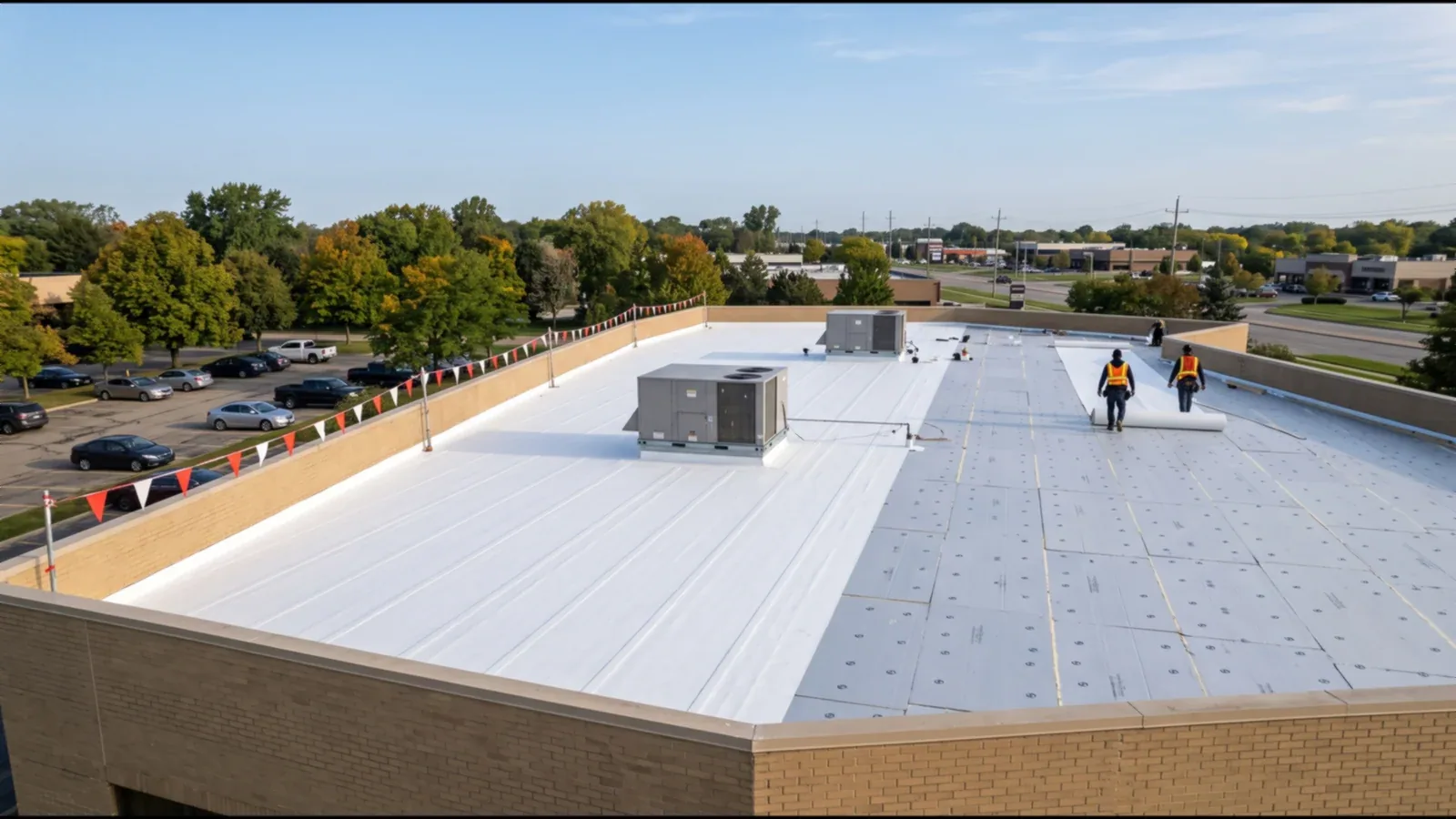
A recover over the old sheet is the other middle path. When a coating will not do and a tear-off is more than the budget allows, a roof recover may fit. It needs dry insulation and a sound deck, and it adds weight. We compare it against a coating on the same page of the bid.
Where coatings fit here
Wide, simple roofs suit coatings. Where a roof on the Marine Drive waterfront or at the Airport Industrial Park is a broad field with few details, prep stays low. Retail roofs with many rooftop units, as around Bellis Fair, cost more to prep. Older light-industrial buildings, the kind breweries often occupy, are good candidates when the roof is sound.
Near the water, salt air attacks metal. Blaine's waterfront has that exposure. A coating can slow the corrosion on a metal roof, but only after rust is treated. We cut out what is gone.
Occupied buildings take coatings well. Application is quiet compared with tear-off. Odor is the issue. We choose low-odor products where tenants are sensitive, and we shut off or cover air intakes during application. Hospitals and clinics get the closest coordination, since fumes travel to patient areas through fresh-air intakes.
Commercial Roofing Questions
How many dry days does a coating job need?
A mid-size roof wants several in a row: one to wash and dry, one to repair, then the coat and its cure. Forecast gaps stretch that. We build float into the schedule.
Can I coat a roof that already has a leak?
Only after the source is found and fixed. A coating seals small defects, not an open flashing. We repair the detail first and coat after.
Does a coating void the existing warranty?
It can. Some manufacturers limit what goes on top. We read the terms and tell you what changes before the work starts.
What decides whether silicone beats acrylic?
Drainage and the existing surface. Ponding and moss favor silicone. A clean, well-drained roof with a tight budget favors acrylic.
How long before the roof needs another coat?
It varies with thickness and exposure. We record thickness at install and check it at each visit. The check sets the recoat date.
Send drawings, the roof spec and your target window
Send the roof plan, age and any leak history. We will test the substrate and price every prep and coating line before the bid closes.