Auto Dealership Roofing in Bellingham, WA
Auto dealership roofing in Bellingham, WA: showroom glass lines, service bay exhaust, canopy edges and sales-hour phasing, priced as separate bid lines.
Auto Dealership Roofing in Bellingham, WA
Auto dealership roofing in Bellingham, WA: showroom glass lines, service bay exhaust, canopy edges and sales-hour phasing, priced as separate bid lines.
Property Types We Roof
Auto Dealership Roofing in Bellingham
The glass line of a showroom is a flashing line. Where the storefront meets the parapet, one failed joint drips on a car that costs more than the roof repair. A dealership roof in Bellingham, WA covers three different buildings under one sign: the showroom, the service shop and the canopy. Each has its own roof, its own exposure and its own bid line.
The customer sees the ceiling. The service manager sees the exhaust. The owner sees the lease or the floor plan note and the cost of a closed lane. We price the roof so all three can read it.
Overview
Auto Dealership Roofing
Three roofs, one lot
The showroom is usually a flat or low-slope roof with a high parapet and a lot of glass below. The service shop is a bigger, plainer roof with exhaust and makeup air. The canopy over the delivery lane or the service drive is a light structure with edges that take every gust.
We survey each one separately. The showroom gets a close look at counterflashing, parapet caps and the corners where glass walls meet masonry. The shop roof gets a drain count and a unit count. The canopy gets a fastener check and a drainage check. The report lists them in that order, because the showroom leak costs the most.
Age differs among them too. A showroom is often remodeled for a new brand, and the new finish may have covered up old roof work. We ask the facilities lead for the renovation history and compare it with what we see on the roof.
The glass line leaks first
Water finds a storefront head where roof flashing, wall sealant and glass framing all meet. Three trades own that joint. Roofing. Glazing. Masonry. Each blames the others. We set the roof side of it right and photograph it, and we tell the owner which trade needs to touch the rest.
A low base flashing is a leak waiting for a wind-driven rain. Annual rain in Bellingham is about 34.8 inches, and November brings the most of it. We check base flashing height and counterflashing laps at every glass wall. Where the parapet is low, we raise it. Raising it adds wall work, and wall work adds a trade. The bid shows it as its own line so the owner can compare the number against the repair.
Glass walls also move. A tall storefront flexes in wind and with temperature, and a rigid flashing cracks along that movement. We use a flexible termination at the glass head and leave room for the wall to breathe. That detail costs a little more labor and saves a callback. Insulation height under the new membrane can change the flashing height, so we measure it before we order.
Shop exhaust and makeup air
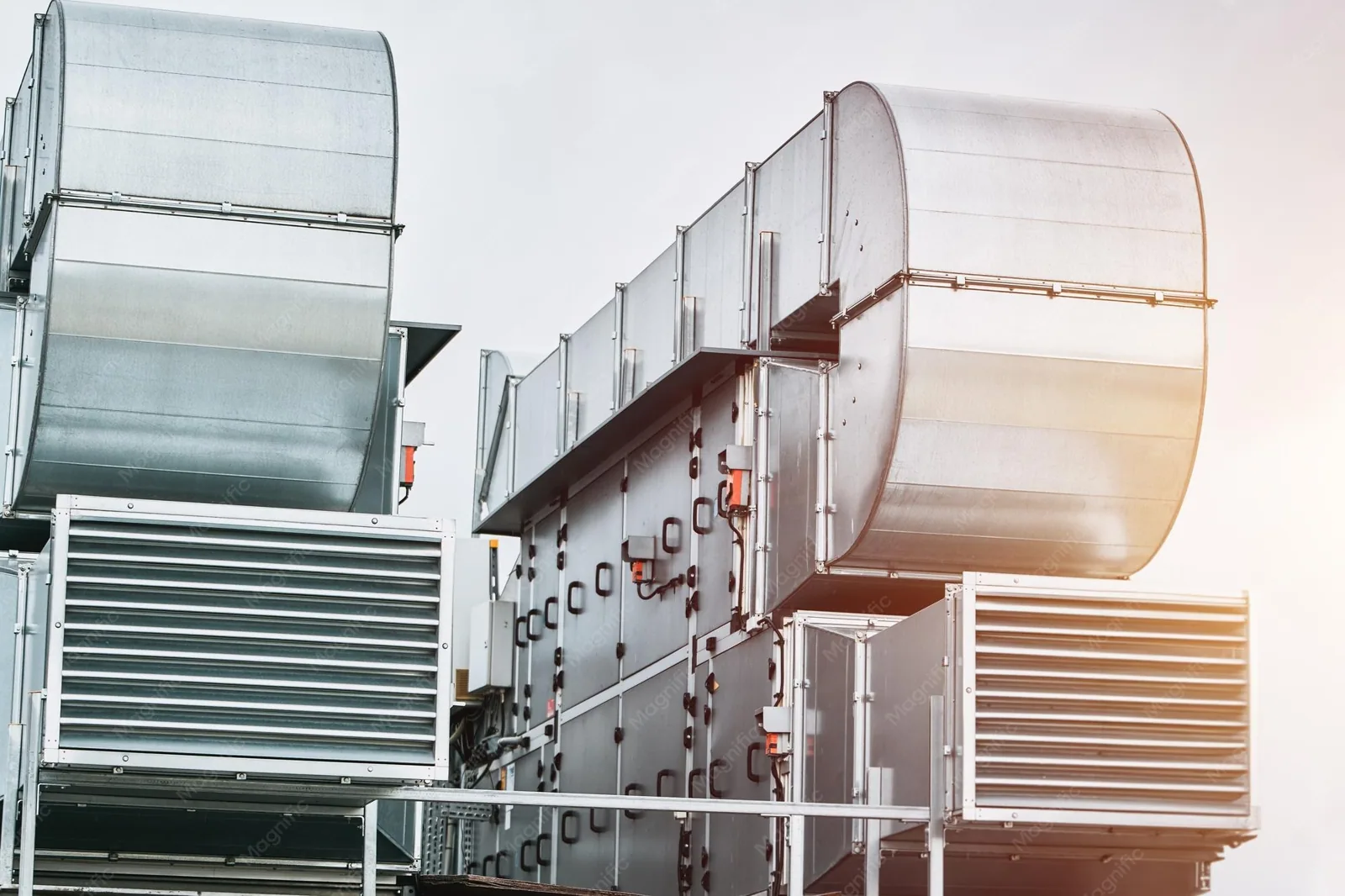
The service shop moves a lot of air. Exhaust fans pull fumes out. Makeup air units push fresh air in. Both sit on the roof, and both leave a stain line. Oil mist and heat are hard on membrane near a fan.
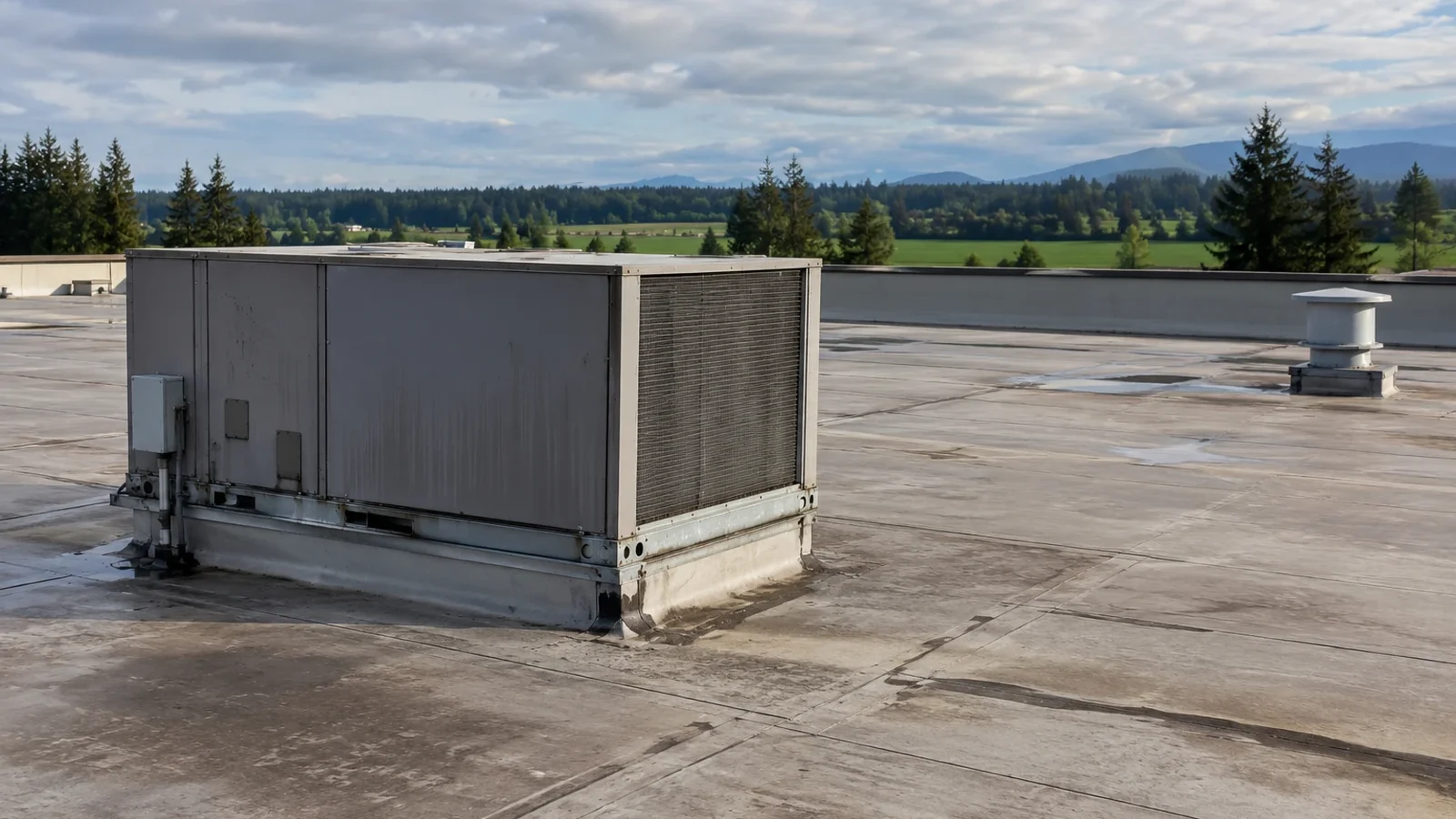
We look at the curbs and the curb flashing first. A curb that was set before the membrane was laid, or one that has shifted, leaks along its base. The detail work sits under rooftop equipment curbs and supports, priced one curb at a time. The membrane near a fan may need a heavier sheet or a protection pad. A white TPO field with a walk pad at the service route holds up well. If oils are heavy, we look at a different sheet.
Penetrations for lifts, compressors and paint booths come with their own boots. We list each one.
Fumes matter inside too. Adhesives and solvents used in roofing can drift into makeup air intakes. We locate every intake and plan the work so those units are off or covered while fumes are present. The service manager signs off on the shutdown window.
The canopy takes the wind
A canopy over a service drive has no wall to hide behind. Wind hits the edge and the underside at once. Gusts of 67 mph hit Bellingham in March 2016 and tore stucco from a Home Depot storefront. Then in November 2024 a bomb cyclone sent easterly winds across the region, and at least 16 homes in Sudden Valley took damage.
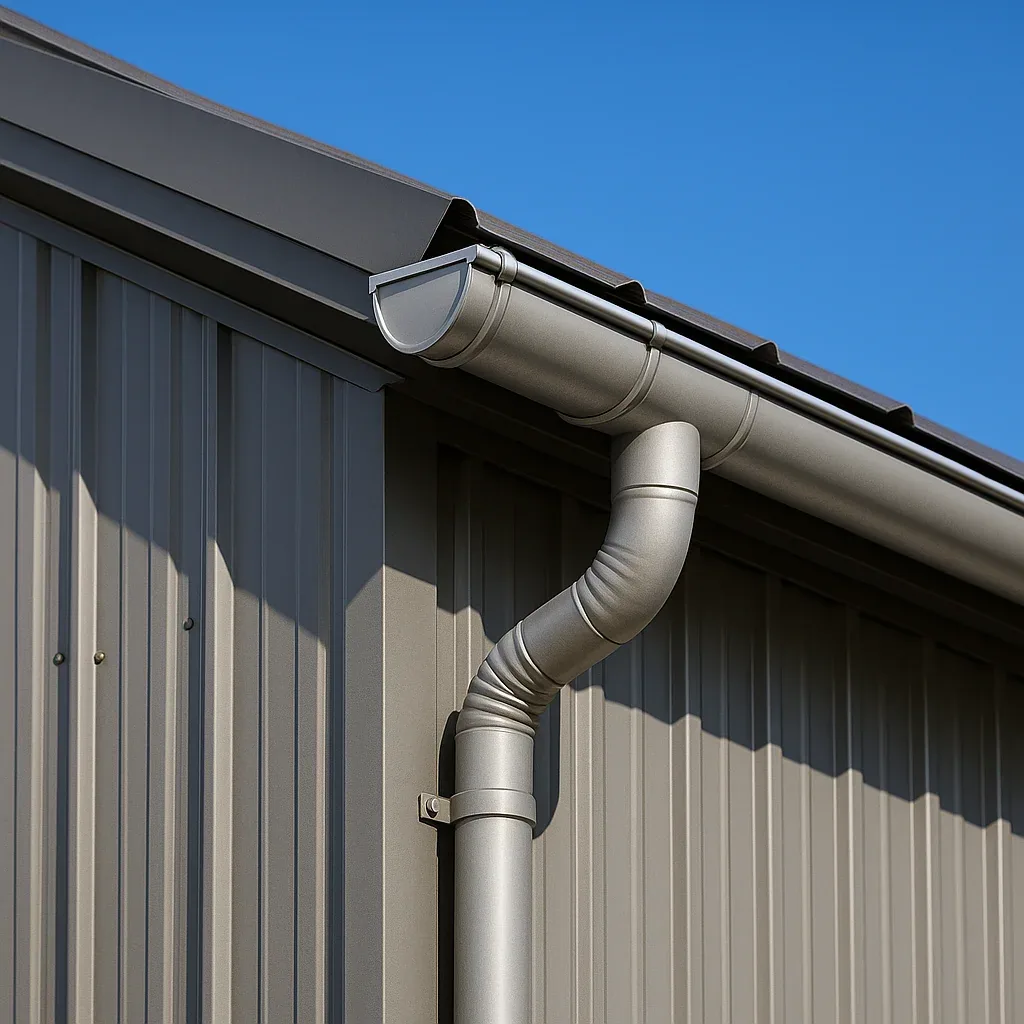
We inspect the edge metal and gutters on every canopy. Fasteners get counted. Drip edge gets checked for lift. Perimeter fastening goes on the bid as its own item. An owner who sees the number can decide how much wind protection to buy. A loose canopy edge also becomes a falling object over customers' cars. That risk makes this line one to keep.
Canopy drainage gets its own look. A canopy usually has one downspout at a column. If it clogs, water pools on a light structure that was never meant to carry a pond. We open the outlet, flush the line and check the slope. Snow adds weight in December through February, when Bellingham sees roughly 10 inches. Sliding snow also drops onto the lane below, which matters when customers walk there.
Large flat roofs near the retail corridors
A dealership near the busy commercial routes shares their roof conditions. The Guide Meridian corridor carries SR 539 through retail country, with Bellis Fair Mall, about 773,000 square feet, at the I-5 interchange and tenants such as Target, Kohl's, Dick's and Ashley Furniture around it. Roofs in that setting tend to be large and flat, the same family as big-box retail roofing.
Large flat roofs share a pattern. Drains matter more than the field. Ponding near a drain bowl ages the membrane. Buildings in Birchwood, close to the Bellis Fair interchange, follow the same rule: clear the drains and the roof lasts.
Sales hours set the schedule
A dealership sells all day and all week. Saturday is the big day. Tear-off noise over the showroom kills a sales conversation. A crane in the customer lot costs inventory space. We map the work in sections. Showroom work happens early or on slow weekdays. Shop work goes by bay. The canopy goes when the service drive can close for a day.
The long wet season shrinks real dry-in days, so we aim to close terminations before October. A showroom with an open section in a November storm is a bad week for everyone. We carry tarps and crew for same-day dry-in on every open area.
Deliveries to the dealership use the same lanes as the crew. New inventory arrives on carriers that need turning room. We stage materials away from the carrier route and coordinate arrival times with the parts manager. A pallet blocking a service door can cost more than an hour of crew time.
Punch and paperwork
At closeout, we walk the roofs with the general manager. Counterflashing is tight. Sealant is tooled. Drains flow. The closeout binder has photos, warranty forms and the manufacturer letter. Send the plans, the roof spec and the sales calendar you cannot lose. We will price every termination before the bid closes, and the owner picks what stays in. The same sequence works on a shopping center roof with a busy lot.
Commercial Roofing Questions
Which part of a dealership roof leaks most often?
The showroom glass line. Roof flashing, wall sealant and glass framing meet there, and any one of them can fail.
Can the work avoid Saturdays?
Yes. Showroom sections run on slow weekdays, and the schedule blocks the sales days the dealer names.
What protects the lot during a crane lift?
A lift plan that sets the crane position, the cordoned area and the hours. Inventory moves before the lift.
How do you handle shop exhaust?
We flash each curb, protect the membrane near the fans and list every penetration on the bid.
What does a canopy repair cost to price?
Fastener count and edge metal length. We measure both before the bid.
Send the plans and the sales calendar
Send the roof plan, the spec and the sales dates you cannot lose. We will price every termination and metal line before the bid closes, so the owner decides what stays in.