Soprema Roofing Systems in Bellingham, WA
Installing and repairing Soprema bituminous and liquid-applied roof systems in Bellingham, WA, with flashing resins, layered membranes and dry-day planning.
Soprema Roofing Systems in Bellingham, WA
Installing and repairing Soprema bituminous and liquid-applied roof systems in Bellingham, WA, with flashing resins, layered membranes and dry-day planning.
Roofing Manufacturers
Soprema Roofing Systems in Bellingham
Liquid flashing does the work that sheet cannot reach. Around a cluster of pipes, behind a rooftop frame or at the corner of an odd parapet, a brushed-on resin cures into a continuous skin where a sheet would need ten cuts and ten seams. On a Soprema job in Bellingham, WA, that resin is often the difference between a roof that passes a leak test and one that weeps in January.
Soprema is a manufacturer whose commercial range centers on modified bitumen membranes and liquid-applied waterproofing, with insulation and accessories alongside. We install, repair and maintain roofs of those types. The bid separates the field membrane from the details, since the details take the days.
Overview
Soprema Roofing Systems
Layered bituminous membranes
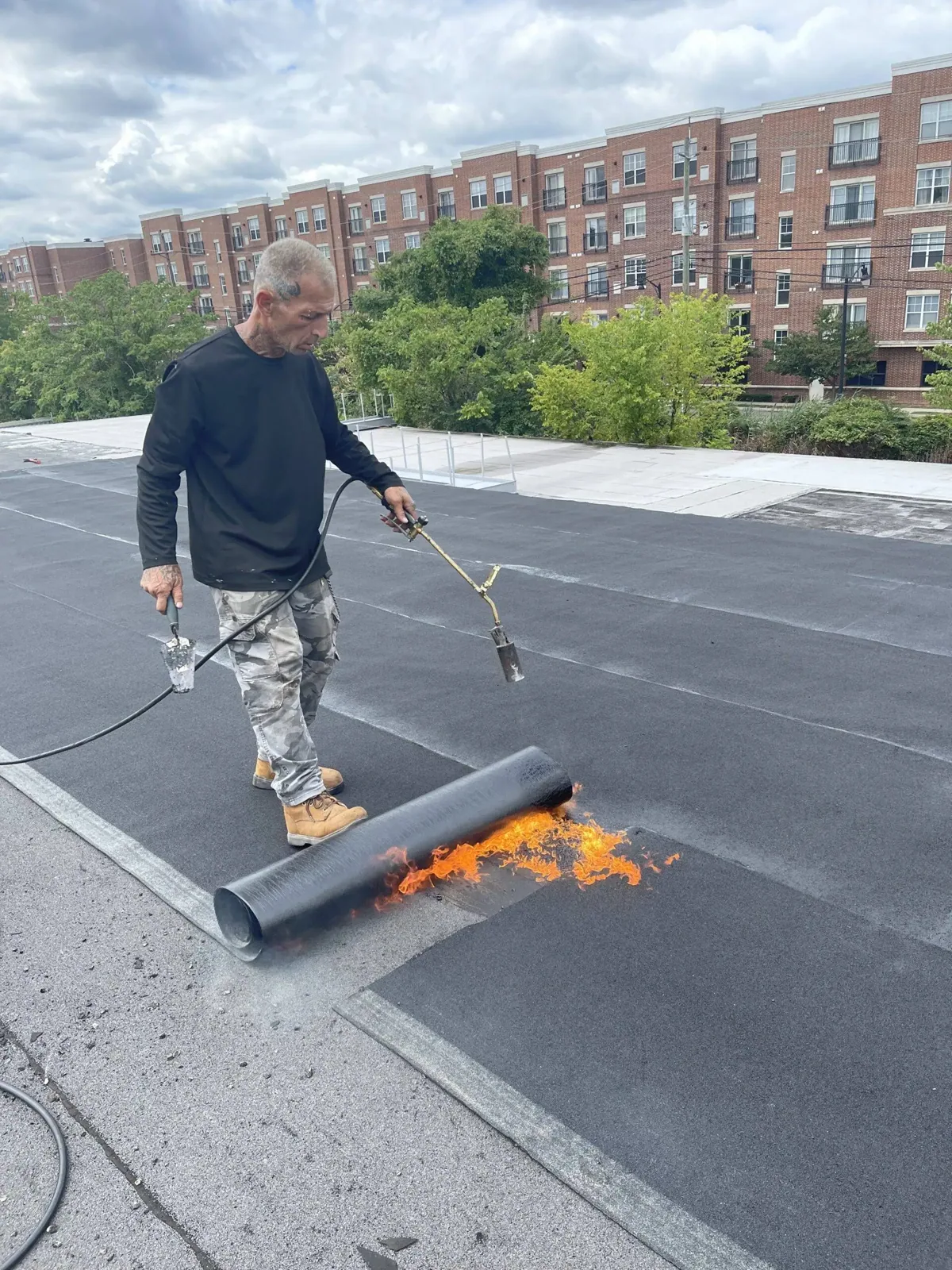
Modified bitumen is asphalt blended with polymer and reinforced with fabric. Rolls go down in two or three layers, each offset from the last, with a granulated or coated cap sheet on top. SBS sheets stay flexible in cold. APP sheets resist heat and are usually torch-applied.
Install methods vary. Torch application melts the roll underside and presses it down. Cold adhesive avoids the flame. Self-adhered sheets peel and stick to a primed substrate. Each has a weather window and a fire plan. Our modified bitumen work sets the method with the owner and the insurer before the contract.
The layers give redundancy. A defect in one ply is covered by the next. That is why the system tolerates foot traffic and rooftop service visits, and why owners with busy roofs keep choosing it.
Cap sheet choice shows at the surface. Granulated caps protect the asphalt from UV and give color. Smooth caps take a coating. Metal-faced caps are used at flashing. The spec names the finish, and we check it on the submittal.
Weight is real. Three plies and a cap weigh more than a single-ply, and an older deck may not have margin. We ask for structural notes before quoting a multi-ply build over a deck that already carries a roof. Where capacity is short, a lighter self-adhered build or a single-ply system may fit better.
Liquid-applied details
A liquid-applied membrane is a resin that is rolled or brushed on and cures into a flexible layer. It bonds to metal, concrete, masonry and many membranes. Reinforcing fabric goes into the first coat at seams and corners.
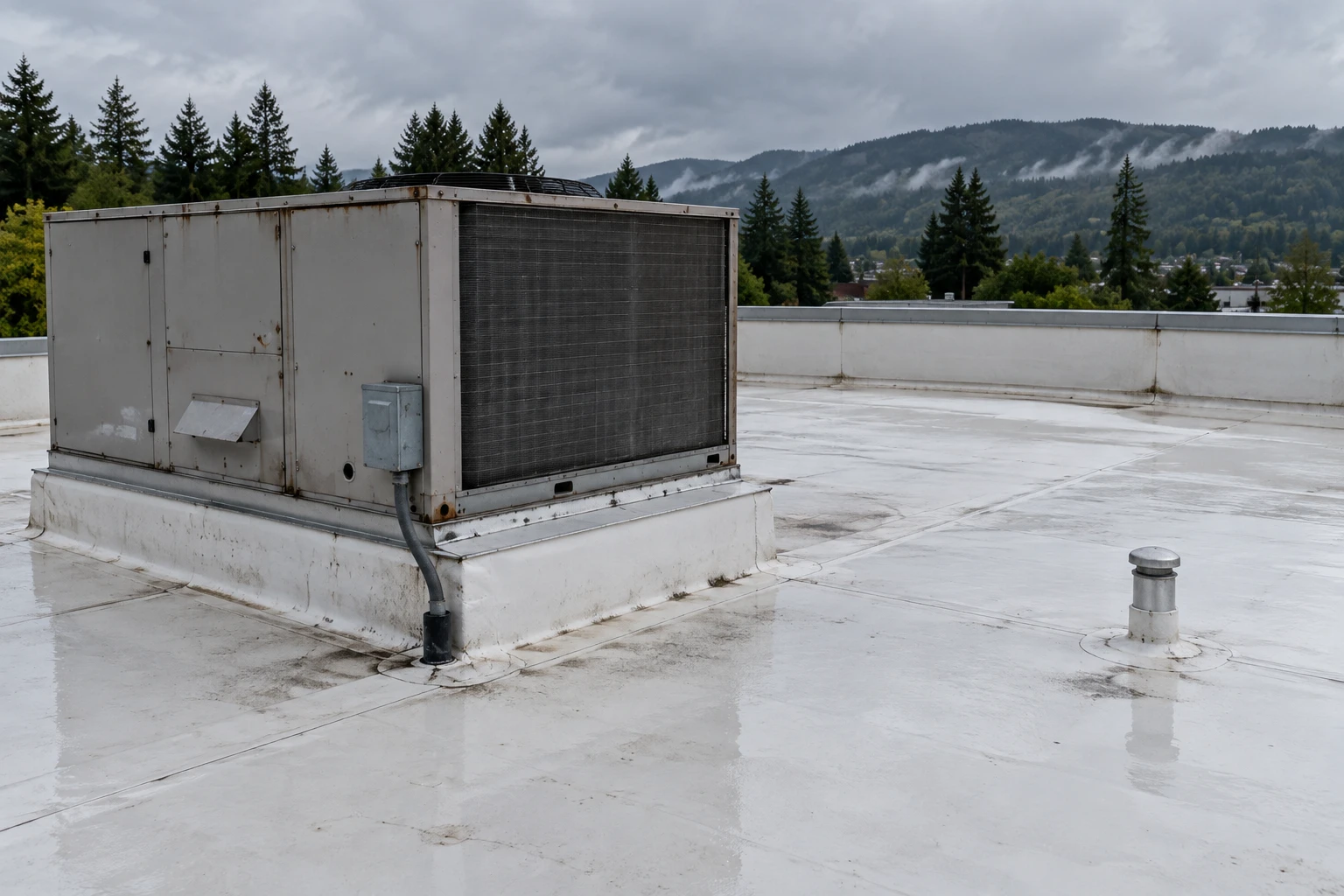
Details are where it shines. Pipe clusters, equipment frames, drain surrounds and irregular transitions can be sealed without a seam. The resin flows around the shape, and a second coat builds thickness.
Cure depends on moisture and temperature. Many resins cure with humidity in the air, which suits Bellingham, though the surface must be dry to take the bond. We test an area, check the primer and watch the dew point. A dry July day finishes in hours. A damp November day may not cure before dark.
Thickness is measured, not guessed. Resin is applied by the gallon per square foot, and a wet-film gauge confirms the depth as it goes down. A second reading after cure confirms the dry film. The numbers go into the daily log so the owner can see what was delivered at each detail.
Recoating works because new resin bonds to old when the surface is clean. A well-kept liquid detail can be refreshed rather than removed, which is a real saving over a rip-out. We set a check interval and write it into the closeout.
Surface prep and primer
Bond depends on the surface. Concrete is ground or shot-blasted and checked for moisture. Metal is cleaned and primed. Old bitumen is cleaned of dust and loose granules. Each substrate gets its own primer.
A moisture check on concrete and masonry comes first. A trapped film of water blisters the resin later. We use a meter and a plastic-sheet test, and we hold the work if readings are high.
Primer has an open time. Too soon, and the coating does not bond. Too late, and the primer must be redone. The crew reads the data sheet and sets the sequence. Rain on primed surfaces means starting over, so we watch the forecast closely.
Fasteners and old sealant get attention before resin. Loose fasteners are re-driven. Old caulk is cut out. Rust is wire brushed and primed. A resin over a poor base peels in sheets, and the fix then costs more than the prep would have.
Wind, edges and wet days
Bellingham's year brings about 34.8 inches of rain, with November the peak, and roughly 1,866 sunlit hours slow drying. Torch work and resin work each need dry surfaces, and the calendar leans toward summer.
Edges face the wind: 67 mph gusts in March 2016, and easterly winds across Sudden Valley in the 2024 bomb cyclone. Bituminous roofs hold edges with metal flashing and tight fastening. A tested edge and coping detail goes on every bid.
We size each day to what can be closed. Layers are laid and sealed before the crew leaves. Open edges get tie-ins. A shower on an open ply can undo a day of work, so the crew stops early when the forecast narrows.
Fire planning is part of the schedule on torch jobs. A fire watch stays on the roof for a set period after the last flame, and extinguishers sit at each work area. Hot work permits go on file. The time cost is real, and it shows on the bid as its own line.
Repair on installed roofs
Bituminous roofs give out at laps, flashings and ponds, and blisters form where trapped moisture expands. Granules wear at traffic paths. Repairs cut out and dry the damage, patch with matching sheet and seal the edges.
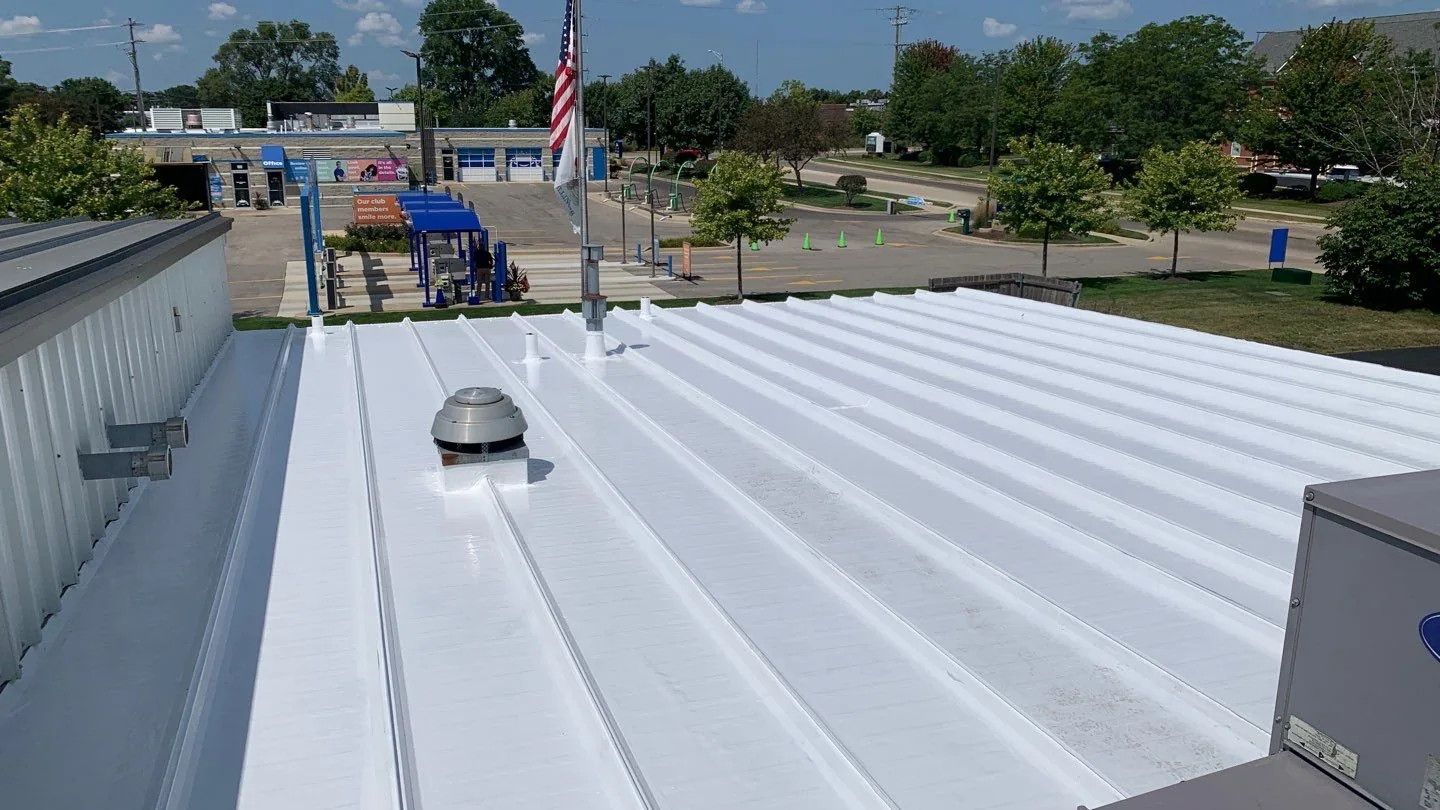
Liquid-applied repair suits cracked flashings and small areas. The resin goes over a cleaned, primed surface with fabric at cracks. For wider restoration, a coating over a sound roof extends life, as in roof coating restoration.
A moisture survey guides the choice. Small wet areas are cut and patched. Widespread saturation points toward replacement. Records go into the warranty file so the owner has a trail.
Granules wash into drains and sumps, and grit piling in a strainer says the cap is wearing. Maintenance visits clear it and log the trend, which tells the owner when a coating or replacement is due.
Where it fits
Layered roofs suit buildings with foot traffic and equipment. Hospital roofs near PeaceHealth St. Joseph, school roofs at Bellingham Technical College and Western Washington University and industrial roofs in the Port's Marine Drive park all carry service visits.
Liquid flashing fits crowded rooftops and old buildings with odd parapets, such as those in Fairhaven and downtown. Where a historic district sets design rules for new buildings, as in Fairhaven, details matter even more.
Compared with GAF, which also offers bituminous and coating categories, the install craft is the same, and the spec decides the maker.
Another layered-roof maker, Johns Manville, offers bituminous and single-ply lines in one catalog, and roofs from either follow the same dry-surface rule before a resin or a torch comes out.
Commercial Roofing Questions
When is liquid flashing better than sheet flashing?
At crowded penetrations, odd corners and transitions between materials. A continuous resin skin avoids many cuts and seams. On straight runs, sheet flashing is faster.
What stops a torch install?
Rain, a wet deck, high wind and any restriction on open flame at the site. We offer cold-applied and self-adhered options when flame is limited.
How do you check a deck for moisture before resin?
With a meter and a plastic-sheet test left overnight. High readings mean we wait. Resin over a damp deck blisters.
Can resin go over old bitumen?
Often yes, after cleaning and a bond test. We test a small area and read the result before coating the full detail.
How long does the cure take?
From hours on a dry, warm day to a full day or more in cool, damp air. We schedule coats so each cures before the next, and cover work at day's end.
Send the detail drawings and the penetration count
Send the drawings, the roof spec and a list of penetrations and transitions. We will price the field membrane, the liquid details and the weather days as separate lines before the bid closes.